At the ninth annual consultative meeting between the UN Peacebuilding Commission and the African Union's Peace and Security Council, Morocco's ambassador — in his capacity as PBC chair — pushed a shift from consultation to concrete action, with new proposals on follow-up, financing and regional focus.
Published 23 October 2026 · 16:53 GMT
At the ninth annual consultative meeting between the UN Peacebuilding Commission and the African Union's Peace and Security Council, Morocco's ambassador — in his capacity as PBC chair — pushed a shift from consultation to concrete action, with new proposals on follow-up, financing and regional focus. On Wednesday, October 21, 2026, the ninth annual consultative meeting between the UN Peacebuilding Commission (PBC) and the African Union's Peace and Security Council (PSC) convened in New York, co-chaired by Morocco's Ambassador Omar Hilale — in his capacity as PBC chair — and Cameroon's Churchill Ewumbue-Monono, the PSC's chairperson for October 2026.
On Wednesday, October 21, 2026, in New York, Ambassador Omar Hilale — Morocco's Permanent Representative to the United Nations, acting in his capacity as chair of the UN Peacebuilding Commission — and Churchill Ewumbue-Monono — Cameroon's Permanent Representative to the African Union, chairperson of the AU Peace and Security Council for October 2026 — co-chaired the ninth annual consultative meeting between the PBC and the AUPSC, under the theme of advancing synergies and regional approaches in support of nationally owned peacebuilding priorities in Africa. Morocco chairs the PBC and sits on the AU PSC; the meeting built on the eighth session held in Addis Ababa in November 2025.
The framing. Moroccan outlets present the session as a Moroccan diplomatic success in line with the vision of His Majesty King Mohammed VI — Morocco as the bridge between the UN and the AU.
Whether the concise measures document and the indicative timelines will be published or adopted; whether donor contributions to the Peacebuilding Fund or the AU Peace Fund's capacity-building component will rise; whether any state in West Africa or the Great Lakes region will request the coordinated engagement Hilale sketched; and what, if anything, the October 22 AUPSC–UN Security Council seminar decided regarding this meeting's agenda.
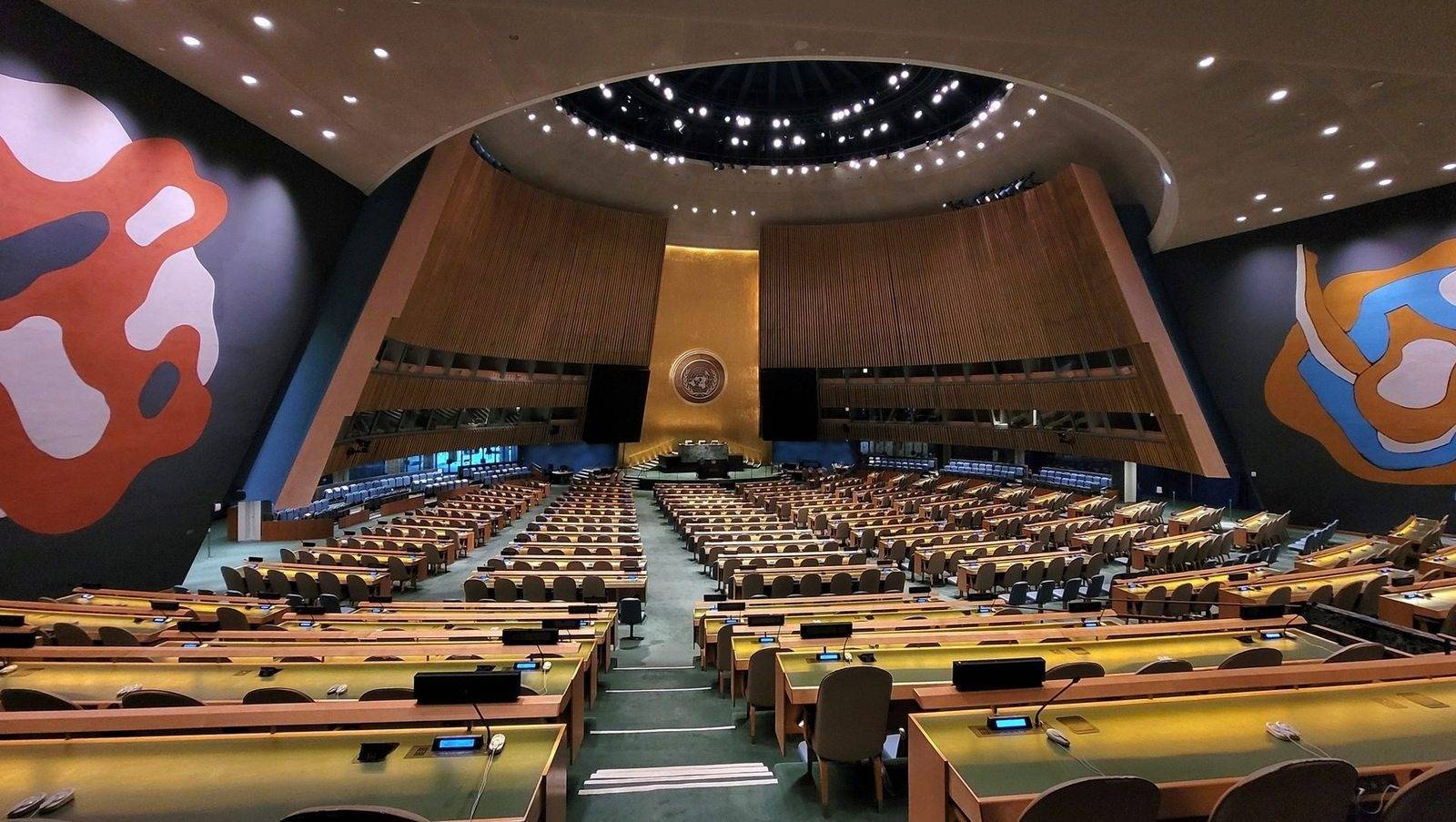
On Wednesday, October 21, 2026, the ninth annual consultative meeting between the United Nations Peacebuilding Commission and the African Union's Peace and Security Council opened in New York, co-chaired by Ambassador Omar Hilale — Morocco's Permanent Representative to the United Nations, acting in his capacity as chair of the Peacebuilding Commission — and Churchill Ewumbue-Monono, Cameroon's Permanent Representative to the African Union and chairperson of the Peace and Security Council for October 2026.
The session, reported over the following two days by Moroccan and pan-African media, was held under the theme ‘Advancing synergies and regional approaches in support of nationally owned peacebuilding priorities in Africa.’ It builds on the eighth annual meeting, held in Addis Ababa in November 2025, and opened a dense week of AU–UN engagements: the 11th informal joint seminar between the AUPSC and the UN Security Council followed on October 22, with the 20th annual joint consultative meeting on October 23.
Morocco occupies a rare double position in this architecture: it chairs the UN Peacebuilding Commission while serving as a member of the AU's Peace and Security Council. In his opening remarks, Hilale welcomed what he described as tangible progress since the Addis Ababa session — particularly on financial contributions and coordination — and urged the room to move, in his words, from consultation to concrete action.
The meeting's working agenda, previewed by the Addis Ababa-based institute Amani Africa, ran across three interrelated items: strengthening follow-up to previous commitments, advancing regional peacebuilding and prevention, and financing and partnerships. The through-line, in the institute's reading, was how to translate existing commitments into sustained, coordinated action that supports nationally led peacebuilding priorities and ensures effective follow-up.
In his opening remarks, the PBC chair advanced a compact set of proposals. First, a concise written record of the measures agreed, paired with indicative deadlines — with the secretariats of both bodies responsible for reporting on progress. Second, a deliberate focus of coordinated effort on specific contexts, naming West Africa and the Great Lakes region, where a joint approach could deliver genuine added value — but only at the request of the states concerned. Third, tighter coordination among the financing channels: the UN Peacebuilding Fund, the institutional capacity-building component of the AU Peace Fund, the African Development Bank and other donors, aligned with priorities identified by the countries themselves. The African Development Bank's engagement with Morocco is part of a wider continental relationship — the Bank recently approved $487 million for Morocco's economic reforms and climate resilience, a reminder of how multilateral financing underpins national reform agendas.
Hilale closed his remarks on a stated common principle: national ownership, the support of regional organizations, and the inclusive participation of women, girls and young people.
Several things remain unestablished. No public record of the meeting — a communiqué, a summary of agreed measures, or the indicative timelines Hilale proposed — had appeared in accessible channels at the time of publication, so it is not yet possible to say which of his proposals were adopted and which were merely noted. It is equally unknown whether donors will increase contributions to the Peacebuilding Fund or the AU Peace Fund's capacity-building component, or whether any state in West Africa or the Great Lakes region will request the coordinated engagement Hilale sketched.
Coverage itself is a data point: no Western wire reporting on the session was found, and the accessible record rests on African and Moroccan outlets plus the independent Amani Africa institute. Whether the October 22 AUPSC–UN Security Council seminar took up any of this meeting's agenda is likewise unconfirmed in the public record.
Annual consultations between the PBC and the AUPSC have a known weakness: they produce consensus language, and the follow-up dissolves into the calendar. Hilale's opening line — consultation to action — names the exact failure mode, and his two proposals (a written record of agreed measures, indicative timelines with secretariat reporting) are an attempt to engineer accountability into a format that has historically lacked it. Whether that engineering survives contact with two bureaucracies is the real story of this session.
Timing does the work. The session lands inside a week when the AUPSC and the UN Security Council meet face to face twice — the October 22 seminar and the October 23 consultative meeting — and days before the Security Council's October 31 decision on the UN mission in the Moroccan Sahara, which this newsroom has been tracking through the MINURSO countdown. A Moroccan diplomat chairing the UN's peacebuilding arm while Rabat sits on the AU's security council, in the same month the Council weighs a Sahara decision, is not background noise: it is Morocco operating at the junction of both architectures at once.
Strip away the protocol and this meeting is about one thing: who pays for African peacebuilding, and on whose terms. Hilale's financing proposal — coordinate the UN Peacebuilding Fund, the AU Peace Fund's capacity-building component, the African Development Bank and other donors around nationally identified priorities — is a bid to solve two problems at once: the fragmentation of funding streams, and the conditionality that comes attached to them. National ownership is the stated principle; the test is whether donors will align money with African-identified priorities rather than the reverse.
The numbers frame the ambition. The AU Peace Fund's institutional capacity-building component and the UN Peacebuilding Fund operate on donor contributions that have historically fallen short of stated needs, while development banks like the AfDB deploy far larger balance sheets toward economic resilience — the same week the Bank backed Morocco's reform program, it was named by Hilale as a financing partner for peacebuilding itself. At home, Morocco is simultaneously setting its own fiscal course: the government council has just adopted the 2027 finance bill, and parliament has invested the new El Mansouri government with a 204-to-127 vote. A country financing its own transformation is a more credible broker for continental financing architecture — that is the implicit argument Rabat is making in New York.
The second-order effects run through the two regions Hilale named. In West Africa and the Sahel, where coups and jihadist insurgencies have outpaced every regional response mechanism, a UN–AU coordination offer that arrives only ‘at the request of the states concerned’ reads as deference to sovereignty — and as a quiet admission that externally imposed frameworks have failed. In the Great Lakes, where the DRC's eastern crisis grinds on, the same formula applies: coordination without imposition.
The other ripple is institutional. If the secretariats actually produce the concise measures document and report against indicative timelines, the PBC–AUPSC consultation gains something it has never had: a paper trail. And for Morocco, the week consolidates a continental diplomatic arc — from chairing the PBC to the new government's seven-priority program at home — positioning Rabat as the broker between the UN system and the African Union in a month when the Security Council's gaze turns, among other files, to the Moroccan Sahara.
Three things to track. First, the October 23 annual joint consultative meeting between the AUPSC and the UN Security Council — whether any of Hilale's proposals surface in its outcome language. Second, whether the two secretariats publish the concise record of agreed measures and the indicative timelines, which would convert this session from ritual into mechanism. Third, donor signals: the Peacebuilding Fund and the AU Peace Fund's capacity-building component live or die on contributions, and the months ahead will show whether New York's coordination talk converts into funded commitments. The tenth annual session comes next year, under the established rotation.
How the West tells it As of publication, no Western wire or major Western outlet had covered the ninth PBC–AUPSC consultative meeting — the accessible record is entirely African. That silence is itself the Western angle: for London, Washington and Paris newsrooms, a UN–AU peacebuilding consultation is process, not news. The Western policy read, where it exists in think-tank commentary, treats such sessions as barometers of AU–UN burden-sharing — and this one arrived with an unusually concrete accountability ask from the chair.
How the East tells it No East-originated original reporting on the meeting was found after searching Chinese, Indian, Japanese and regional outlets — coverage of the session sits entirely in African media. The East's interest is structural rather than event-driven: Beijing, New Delhi and Tokyo all fund African development and security architecture, and the meeting's themes — regional prevention, nationally owned priorities, financing coordination — intersect directly with how Eastern capitals calibrate their own African engagements, from development finance to Sahel security partnerships.
How the Global South tells it The African telling is the richest. Morocco World News and the Moroccan press frame the session as a Moroccan diplomatic success, in line with the vision of His Majesty King Mohammed VI — Morocco bridging the UN and the AU. The independent Addis Ababa-based Amani Africa reads it institutionally: three agenda items, a follow-up problem, and the central question of translating commitments into action.
The UN Peacebuilding Commission and the African Union's Peace and Security Council held their ninth annual consultative meeting in New York. It was co-chaired by Morocco's ambassador Omar Hilale, in his capacity as PBC chair, and Cameroon's Churchill Ewumbue-Monono, the PSC's October chair. Under the theme of nationally owned African peacebuilding priorities, the meeting examined follow-up to past commitments, regional prevention and financing, and heard proposals to move from consultation to concrete action.
Member states elect the PBC's leadership, and Morocco currently holds the chairmanship while also serving on the AU's Peace and Security Council — a rare double position placing Rabat at the junction of the UN and AU peace architectures. The role lets Morocco shape the commission's agenda, including its annual consultation with the AU PSC, and advance priorities such as nationally owned peacebuilding and financing coordination across Africa.
Hilale proposed three shifts. First, a concise written record of agreed measures with indicative deadlines, with both bodies' secretariats reporting on progress. Second, concentrating coordinated effort on specific contexts such as West Africa and the Great Lakes, at the request of the countries concerned. Third, tighter coordination among financing channels — the UN Peacebuilding Fund, the AU Peace Fund's capacity-building component, the African Development Bank and other donors.
The meeting feeds into a dense week of AU–UN engagements: the 11th informal AUPSC–UN Security Council seminar on October 22 and the 20th annual joint consultative meeting on October 23. Watch for a published record of the agreed measures and timelines, signals from the two secretariats on follow-up, and donor movement on peacebuilding financing in the months ahead — before the tenth annual session next year.
