On October 31, the UN Security Council will decide the fate of the MINURSO mission in the Moroccan Sahara — renew it, narrow it, or end it. A year after Resolution 2797 gave Morocco's autonomy plan its strongest backing ever, Rabat has placed that resolution at the very heart of its new government program, while Algiers and the Polisario demand that self-determination stay at the center of any deal.
Published 20 October 2026 · 19:22 GMT
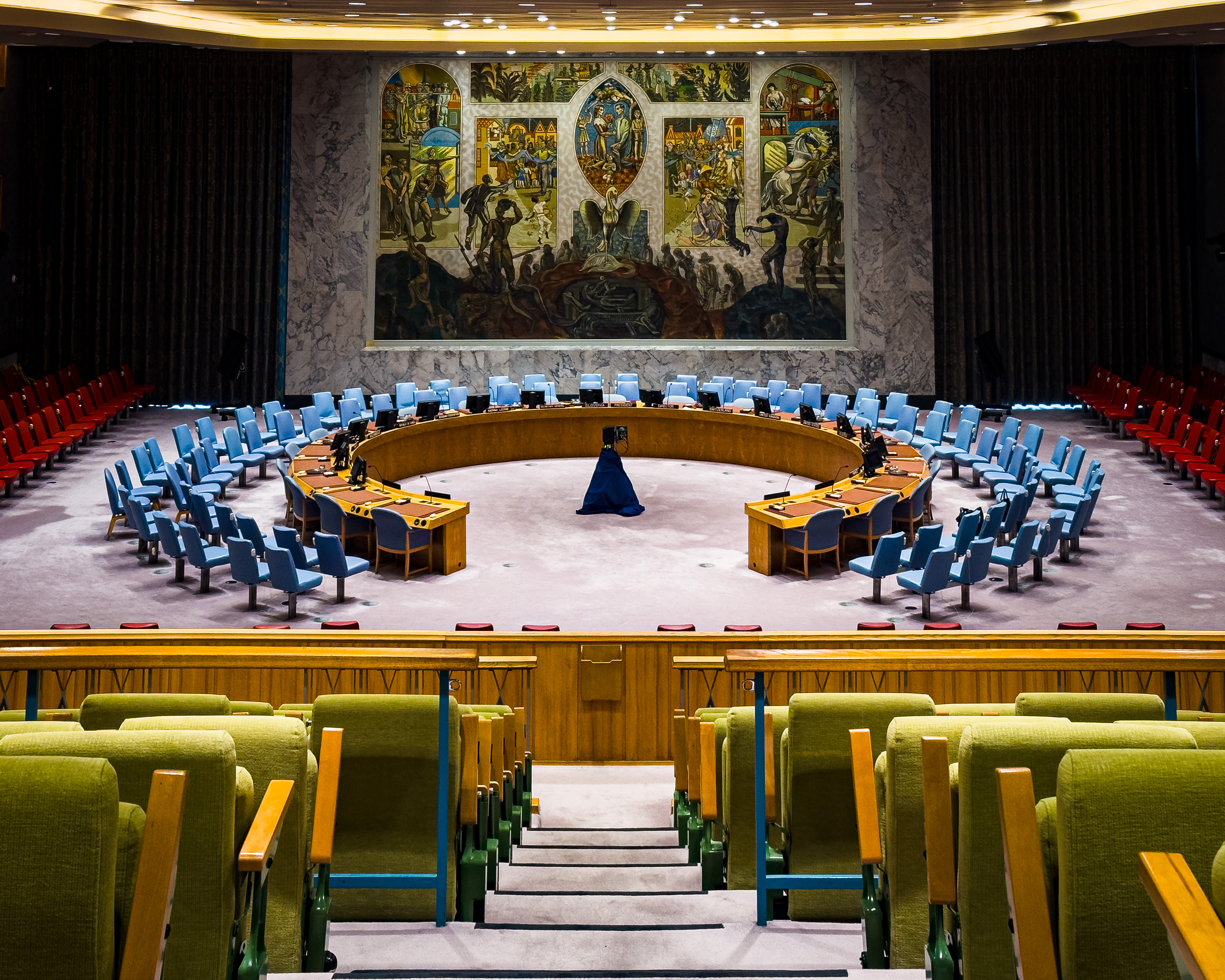
On October 19, 2026, Morocco's Head of Government, Fatima Ezzahra El Mansouri, presented her government program before both Houses of Parliament in Rabat and placed the Moroccan Sahara at the very top of the Kingdom's national causes. She called UN Security Council Resolution 2797 a pivotal milestone, pledged to rally further international support for the autonomy initiative under Moroccan sovereignty, and vowed to accelerate development in the Southern Provinces — the Kingdom's gateway, in her words, to its African hinterland and Atlantic space.
The timing is deliberate. Eleven days later, on October 31, the MINURSO mission's mandate expires, and the Security Council is expected to vote on whether to renew it, narrow it, or end it. Rabat is anchoring its domestic agenda to the diplomatic momentum of a resolution that, one year ago, gave Morocco's 2007 autonomy proposal its strongest endorsement ever from the Council.
The reactions were swift. Algeria, at the General Assembly's Fourth Committee on October 14, reaffirmed that the file remains an unfinished decolonization matter requiring a solution grounded in international legitimacy and self-determination. On October 19, the Polisario Front's UN representative, Dr. Sidi Mohamed Omar, wrote to the Security Council presidency refuting Morocco's Fourth Committee claims. And on October 13, the movement publicly challenged the neutrality of the UN envoy, Staffan de Mistura, accusing him of leaning toward the autonomy plan.
Resolution 2797, adopted October 31, 2025 and drafted by the United States, passed 11-0 with abstentions from China, Pakistan and Russia; Algeria did not vote. It renewed MINURSO for one year, gave Morocco's autonomy plan its strongest Council backing to date — autonomy as "a most feasible" outcome — called for negotiations based on Morocco's proposal while requiring a mutually acceptable solution consistent with self-determination, and ordered a strategic review of MINURSO within six months.
That review has never surfaced publicly. Council members received the Secretary-General's annual report this month, with briefings expected from Special Representative Alexander Ivanko and de Mistura. Three rounds of US-facilitated talks (January–February 2026, Washington and Madrid) brought together Morocco, Algeria, the Polisario Front and Mauritania — the first all-party meetings since 2019. No agreement was reached, and no new round has followed.
The scoreboard: the US recognized Moroccan sovereignty in 2020; Spain, France and the UK back the autonomy plan; many African and Arab states support Morocco; Algeria backs the Polisario; Russia and China favor the traditional UN process. MINURSO was created in 1991 to organize a referendum and monitor the ceasefire — a referendum that never happened after voter identification collapsed, and a ceasefire that broke down in November 2020, with low-level fighting on both sides of the berm since.
The decisive unknown is the text the Council will actually vote on. Three paths are on the table: end the mission, scale it back to pure ceasefire monitoring, or transform it into a mission implementing an autonomy agreement. The Middle East Institute judges straightforward renewal most likely: France and the UK want autonomy language but also a continued UN role; Russia and China are expected to oppose dismantling the mission; and even Morocco has not publicly called for termination — MINURSO's backchannel reporting has real value for Rabat, which holds a clear military advantage and wants the territory seen as secure and open for investment.
We also do not know the substance of the February talks. Held in considerable secrecy, they left almost no public record on transitional arrangements, security, elections or disarmament. Morocco's UN ambassador, Omar Hilale, told the Fourth Committee on October 13 that Rabat had tabled detailed autonomy-framework powers — executive, legislative, judicial — and framed the resolution as a shift from managing the dispute to pursuing a settlement. Whether the other parties engaged with those details is not public.
Finally, we do not know whether the strategic review — meant to tie MINURSO's future to the talks — will surface at all before October 31.
This is the most consequential October at the Council on this file in years. The vote sets the institutional terms of the dispute for whatever comes next. Ending or hollowing out the mission would remove the last UN structure built for a referendum; preserving it while diplomacy moves toward autonomy would widen the gap between what the Council says about a political solution and what its mission is mandated to do. Either way, the decision will be read — in Rabat, Algiers, the Tindouf camps and every watching chancellery — as a measure of how far the international consensus has moved.
For Morocco, the stakes run through the Southern Provinces: Atlantic ports, Sahel corridors, and the investments from Dakhla to Guerguerat — the backdrop to the 2027 budget debate that Rabat presents as proof of integration. For Algeria and the Polisario, the vote tests whether the UN framework still offers a path to the self-determination they invoke. For the Sahel and Europe — migration routes, energy corridors — a stable Maghreb is not an abstraction. And there is a quieter institutional question: Washington has spent a year pressing the Council to reconsider the mission while leading the talks in parallel. October 31 will reveal whether that pressure was leverage, reform, or both.
Through the Bureau's five dimensions, the October 31 vote is the surface ripple of a deeper shift. Geopolitically, Washington has converted its 2020 recognition into the operating system of the UN process — drafting the text, convening the talks, holding the mission's future as implicit leverage. Economically, Morocco has made the Southern Provinces the hinge of its Atlantic strategy: ports, fisheries, phosphates, Sahel corridors — the territory's status is now priced into infrastructure. Demographically, the generation born after 1991, in Dakhla's new districts and the Tindouf camps alike, knows only the referendum's indefinite deferral. Historically, the arc runs from the 1975 Madrid Accords through the collapsed voter identification of the 1990s, the 2004 rejection of the Baker plan, and the 2007 autonomy proposal. Structurally, MINURSO embodies the contradiction: built for a referendum, repurposed as a ceasefire monitor, now asked to survive a process that has moved beyond both.
The likely outcome — renewal with stronger autonomy language — is a characteristically UN compromise: change the words, keep the mission. But such compromises have a cost measured in the camps, where another year of "process" is another year of humanitarian dependence, and on the berm, where low-level fighting continues whatever the Council resolves.
If the Council renews MINURSO while hardening autonomy language, Algeria and the Polisario face their hardest choice: keep engaging in a process whose destination they reject, or disengage and lose the last venue where their position is formally heard. The Polisario's October challenge to de Mistura's neutrality suggests it is already pricing in that dilemma — demanding a change of approach rather than walking away.
A narrowed or ended mission would reverberate beyond the territory. MINURSO's backchannel — incident reporting, communication lines to both sides — is the quiet infrastructure that has kept fighting from escalating since 2020. Removing it would not end the conflict; it would end the world's visibility into it. For investors and European capitals managing Sahel spillover, visibility is the difference between a calculable risk and a blind one. And there is the precedent effect: if Washington can convert a bilateral recognition into Council language and then institutional redesign, every frozen conflict with an American stakeholder will be re-read through that template.
The calendar is fixed: the Security Council votes on or before October 31. Expect the US-penholder text to circulate, elected members to bargain over language — above all the balance between autonomy endorsement and self-determination reaffirmation — and Algeria and the Polisario to press their case in every forum, as the October 19 letter to the Council presidency already signals.
Watch three markers: first, whether the strategic review surfaces before the vote; second, whether Russia and China abstain again or escalate to a veto; third, what Rabat does with a favorable outcome — El Mansouri's government has tied its legitimacy to the 2797 momentum, and the Southern Provinces' development program will be presented as its dividend. Beyond October 31, the question is whether the US-led track produces a fourth round with the substance the first three lacked. Without movement on sovereignty and Sahrawi consent, the Council will be back at this table in a year, choosing again between the words and the mission.
The Western lens Western analysis frames the vote as institutional inertia versus diplomatic momentum. The Middle East Institute lays out three options — end, narrow, transform — and argues the status quo likely holds because the Council's arithmetic says so: France and the UK want autonomy language without dismantling the mission, and Russia and China will block any attempt to end it. Washington, in this reading, has already won the language war — 2797 moved the Council's wording closer to Morocco than ever — and the mission's future is the last redoubt it has not taken.
The Eastern lens From the East, this is a study in great-power abstention . China and Russia did not block 2797 — they stepped aside, accepting stronger autonomy language while preserving formal attachment to the traditional UN framework. Turkish commentary framed the 2025 vote as Washington imposing its policy on the Council.
The Global South lens From the South, the vote is about whose self-determination counts . Pan-African commentary warns that letting the mission lapse would hand a founding African Union member to Rabat by administrative attrition; Moroccan outlets present the same moment as the world finally aligning with realism and development. Algeria's diplomats insist the file remains a decolonization question no autonomy framework can settle alone.
MINURSO is the United Nations mission deployed in the Moroccan Sahara since 1991, originally created to organize a self-determination referendum and monitor the ceasefire between Morocco and the Polisario Front. The referendum never took place after voter identification collapsed in the 1990s, and the ceasefire broke down in November 2020. Its mandate, renewed yearly by the Security Council, expires on October 31, 2026, forcing the Council to decide whether to renew, narrow or end the mission.
Adopted on October 31, 2025 and drafted by the United States, Resolution 2797 passed 11-0 with abstentions from China, Pakistan and Russia while Algeria did not vote. It gave Morocco's 2007 autonomy plan — self-rule under Moroccan sovereignty — its strongest endorsement ever from the Security Council, calling autonomy 'a most feasible' outcome and making Morocco's proposal the basis for negotiations, while still requiring a mutually acceptable solution consistent with self-determination.
On October 19, 2026, Fatima Ezzahra El Mansouri presented her government program before both Houses of Parliament and placed the Moroccan Sahara at the forefront of national causes. By anchoring her program to Resolution 2797, she tied her government's legitimacy to the diplomatic momentum of the resolution and pledged to rally further international support for autonomy under Moroccan sovereignty while accelerating development in the Southern Provinces.
Analysts describe three paths: renew MINURSO largely as-is, preserving its ceasefire-monitoring and backchannel roles; narrow it to a pure monitoring mission, dropping the dormant referendum function; or end it outright, removing the last UN structure built for a referendum. A fourth variant — transforming it into a mission that helps implement an autonomy agreement — is discussed but premature, since no such agreement exists. Most analysts judge straightforward renewal the most likely outcome.
Algeria, which hosts the Sahrawi refugee camps near Tindouf and backs the Polisario Front, insists the file remains an unfinished decolonization matter and that any solution must be grounded in international legitimacy and the Sahrawi people's right to self-determination. The Polisario Front, which seeks independence, rejects autonomy frameworks that exclude a genuine act of Sahrawi choice and has challenged the neutrality of UN envoy Staffan de Mistura ahead of the vote.
