The United Arab Emirates has formally nominated its former UN ambassador Lana Nusseibeh for Secretary-General, injecting a frontrunner into a deadlocked selection — and a storm over the UAE's alleged backing of Sudan's Rapid Support Forces.
Published 23 October 2026 · 00:10 GMT
The United Arab Emirates has formally nominated its former UN ambassador Lana Nusseibeh for Secretary-General, injecting a frontrunner into a deadlocked selection — and a storm over the UAE's alleged backing of Sudan's Rapid Support Forces. The United Arab Emirates has formally nominated Lana Nusseibeh — its Permanent Representative to the UN from 2013 to 2024 — as a candidate for UN Secretary-General; she announced the bid on October 21–22, 2026 with a vision statement, ‘A United Nations for the Next Eighty Years.’
The UAE has formally nominated former ambassador Lana Nusseibeh for UN Secretary-General, she announced her candidacy on October 21–22, 2026 with a published vision statement, and her entry follows six inconclusive Security Council straw polls in the race to succeed António Guterres by January 1, 2027.
On whether the nomination is a masterstroke or a liability. Supporters frame her as a generational, bridge-building reformer with unmatched Council experience; critics — including Sudan’s UN envoy and humanitarian researchers — call her candidacy a credibility test the UN cannot afford, given the UAE’s alleged backing of the Rapid Support Forces.
How Washington, Beijing, Moscow, Paris and London will position in the next straw poll; whether the Sudan allegations move any P5 vote; and whether the General Assembly’s regional-rotation expectations — Latin America’s claim — bend or break.
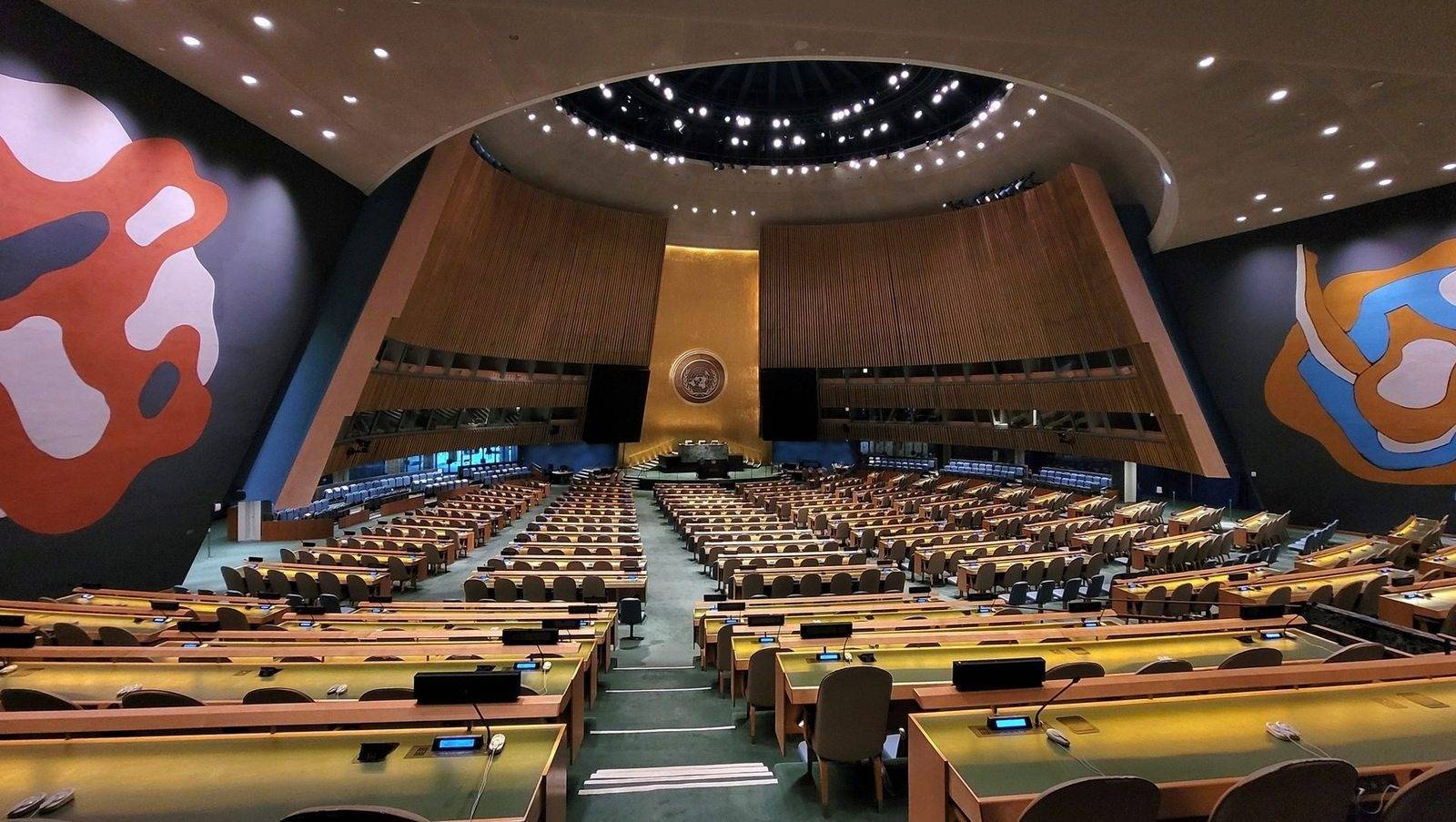
Six rounds of informal Security Council straw polls had failed to produce a consensus successor to António Guterres, whose second term expires on December 31, 2026. Then the United Arab Emirates moved. The federation formally nominated its former UN ambassador, Lana Nusseibeh, and on October 21–22 she announced her candidacy with a vision statement titled ‘A United Nations for the Next Eighty Years,’ declaring: ‘I wish to offer myself to this office as I would serve it: speaking frankly with every government and answering to none.’
The timing is deliberate. After Senegal’s Macky Sall dropped out, the field stood at seven hopefuls — and the October 16 color-coded straw poll revealed that every one of them had drawn at least two ‘discourage’ votes from the five veto-holding permanent members. A race with no viable winner is a race open to a new entrant, and Nusseibeh’s late entry immediately reframed the contest around a single question: can a diplomat from a Gulf monarchy accused by UN experts of arming a force behind Sudan’s worst atrocities credibly lead the United Nations?
The résumé is formidable on paper. Nusseibeh served as the UAE’s Permanent Representative to the United Nations from September 2013 to April 2024 — more than a decade — including throughout the UAE’s 2022–2023 term as an elected Security Council member, which she twice served as president. She was also a vice-president of the General Assembly and president of the Executive Board of UN Women. Since leaving New York she has served as the UAE’s Assistant Minister of Foreign Affairs for Political Affairs; she has now taken a leave of absence from that post to campaign.
Her signature achievement is Resolution 2720, adopted in December 2023, which accelerated humanitarian aid into Gaza — a negotiation she clinched, by her own account, by arranging a Security Council visit to the Rafah crossing. Brett McGurk, a former top Biden national security adviser, credited her for the UAE becoming, per UN data, the largest global provider of humanitarian aid to Gaza, calling her ‘an inspired choice for this impossible job.’ At 47, she is much younger than the other contenders; she would be the first Secretary-General from a Gulf nation, its first Muslim, and the first woman to lead the organization. Her Palestinian roots — the Nusseibeh family of Jerusalem, custodians of the doors of the Church of the Holy Sepulchre — are already being read in New York as a diplomatic asset.
The vision statement pledges a UN that moves faster and duplicates less: peace and security first, through quiet diplomacy and achievable ‘first agreements’ such as humanitarian access, prisoner exchanges and local truces; institutional reform requiring every major Secretariat programme to report what it achieved relative to what it spent; development centred on jobs, fairer debt solutions and a credible successor to the 2030 Sustainable Development Goals; and human rights applied ‘consistently and without double standards.’
The decisive unknowns sit inside the Security Council. Straw polls are secret and color-coded; diplomats say the next poll could come within days, but no P5 capital has tipped its hand. Analysts in New York read the field through realpolitik: the UAE’s working relationships with Washington, Beijing and Moscow could make Nusseibeh acceptable to rival veto-holders precisely because she is not seen as anyone’s crusader — the very trait her critics cite as disqualifying. Whether the Sudan allegations move a single P5 vote, or get filed as the cost of doing business with the Emirates, is unknowable from outside the chamber. Nor is it clear whether Latin America’s long-standing claim on the post survives a Gulf candidacy, or whether the ‘no woman has ever held the job’ argument cuts for Nusseibeh or for Chile’s Michelle Bachelet.
The Secretary-General is the one office that must embody the UN’s claim to universality, and the next one takes the helm on January 1, 2027, with the organization’s credibility already strained. That is what makes this candidacy a stress test. If the UN’s own panels of experts credibly accuse a member state of arming the Rapid Support Forces — the paramilitary Amnesty International says used Emirati-re-exported weapons in breach of the Darfur embargo — can that state’s diplomat become the world’s top civil servant without the institution’s moral authority taking the hit?
The second-order stakes are geopolitical. A Nusseibeh victory would crown the Gulf monarchies’ decade-long march from regional players to global power brokers; a humiliating defeat after a public campaign would signal that the Sudan file now carries a real diplomatic price. Either way, the race is forcing an overdue argument about what the UN actually rewards: competence at the table, or cleanliness of the hands that sit there.
Read the document, not the press release. The most telling pledge is procedural: a Secretary-General who puts ‘first actors’ — regional organizations and mediators trusted by the parties — ahead of the UN itself in peace processes, and who measures the Secretariat by results per dollar. That is a technocrat’s platform, and it plays to Nusseibeh’s genuine strength: diplomats in New York describe her as a competent manager who gets resolutions adopted. Magna Bureau’s earlier reporting on the race to succeed António Guterres.
The vulnerability is the phrase ‘without double standards.’ Human Rights Watch’s 2026 report on the UAE describes severe restrictions on expression, association and assembly at home; UN sanctions monitors describe as credible the allegations of Emirati military support to the RSF abroad. A Secretary-General Nusseibeh would inherit both files — and every future UN statement on Sudan, Yemen or the Gulf would be read through her nationality. Her answer, offered preemptively, is that she has taken leave from her government post and will ‘focus on Sudan’s humanitarian crisis.’ Sudan’s own UN envoy is unconvinced: ‘She is very much part of the propaganda machine that the U.A.E. is using to try to whitewash its image.’
Start with Sudan, where the war grinds on and El Fasher’s fate hangs over the race: a Secretary-General whose home government is accused of feeding the conflict would transform every ceasefire appeal into a referendum on her independence. Magna Bureau’s reporting on the El Fasher exodus. Magna Bureau’s reporting on the extended Darfur arms embargo.
Beyond Sudan, the candidacy tests two unwritten rules of UN succession: regional rotation — Latin America and the Caribbean believed the 2026 pick was theirs — and the taboo on candidates from states under active UN scrutiny. If the P5 bless Nusseibeh, both norms bend; every future race gets more transactional, and the ‘realpolitik, not morality’ reading of the selection, voiced openly by Security Council diplomats, becomes the house doctrine. If she is blocked, the Gulf learns that checkbook diplomacy has a ceiling — and the campaign’s spotlight on the RSF allegations may have already raised the cost of the UAE’s Sudan policy.
Council members are discussing whether to hold another poll as early as this week or later; the selection process is expected to continue in the weeks ahead, with the General Assembly appointing the winner on the Council’s recommendation. Watch three things: whether Nusseibeh survives her first straw poll without a P5 ‘discourage’ — the true market test; whether human-rights groups escalate from statements to an organized campaign, as happened to past compromised candidacies; and whether Abu Dhabi’s denials on Sudan hold under the new scrutiny, or whether fresh reporting forces the issue onto the Council’s formal agenda.
The Western lens: deadlock, scrutiny, and the realpolitik reading Western coverage treats the bid as a genuine jolt to a stalled process — and immediately as a credibility interrogation. The Journal frames the race’s deadlock as Nusseibeh’s opening, weighing her Gaza-diplomacy résumé against the Sudan file. PassBlue, the New York UN specialist, goes hardest on the substance: the ‘catastrophe’ warning from Yale’s Humanitarian Research Lab, the Amnesty weapons findings, the ICJ case dismissed on jurisdiction rather than merits.
The Eastern lens: a conspicuous quiet As of this cycle’s search, no East-outlet newsroom — CNA, The Hindu, NHK, Kyodo — had published original reporting on Nusseibeh’s candidacy; the story is moving through Western wires and Gulf/African outlets instead. The silence is itself data: for Beijing, Tokyo and Seoul, the SG race is a P5 management problem, not yet a public story. The one East-sourced record on Nusseibeh is older — an ANI/WAM dispatch on her 2024 farewell as ambassador, crediting her with co-penning landmark Council resolutions on hate speech, Afghan women and Gaza aid.
The Southern lens: pride in the Gulf, scrutiny in Africa Global South coverage splits along the story’s fault line. Gulf News carries the official framing: a seasoned diplomat’s reform platform, generational change, a region stepping up. South Africa’s Channel Africa, relaying SABC reporting, is cooler — the deadlocked race, the RSF scrutiny, Abu Dhabi’s denials — the view from a continent living Sudan’s war.
Lana Nusseibeh is the United Arab Emirates’ former Permanent Representative to the United Nations, serving from September 2013 to April 2024, including during the UAE’s 2022–2023 Security Council term, which she twice presided over. She later became the UAE’s Assistant Minister of Foreign Affairs for Political Affairs and has now taken leave from that post to campaign for UN Secretary-General after the UAE formally nominated her.
Under the UN Charter, the Secretary-General is appointed by the General Assembly on the recommendation of the Security Council. In practice the Council runs secret, color-coded straw polls where the five veto-holding permanent members can ‘discourage’ candidates. Six such polls through October 16, 2026 failed to produce consensus, and the successor to António Guterres is expected to take office on January 1, 2027.
UN panels of experts have credibly accused the UAE of providing military support to Sudan’s Rapid Support Forces, and Amnesty International reported in May 2025 that Chinese-made weapons used by the RSF were re-exported by the Emirates in breach of the Darfur arms embargo. Critics, including Sudan’s UN envoy and humanitarian researchers, argue this makes an Emirati Secretary-General a credibility risk. Abu Dhabi denies arming either side.
Security Council members are discussing another straw poll within days or weeks. Nusseibeh’s first poll result will be the market test: surviving without a P5 ‘discourage’ would make her a frontrunner. With seven candidates in the field after Macky Sall’s withdrawal, the process is expected to run for weeks, with the General Assembly appointing the winner on the Council’s recommendation.
