The House of Representatives granted its confidence to Fatima Ezzahra El Mansouri's cabinet on Thursday evening, formally investing Morocco's first woman-led government under Article 88 of the Constitution.
Published 23 October 2026 · 06:14 GMT
The House of Representatives granted its confidence to Fatima Ezzahra El Mansouri's cabinet on Thursday evening, formally investing Morocco's first woman-led government under Article 88 of the Constitution. On Thursday evening, October 22, the House of Representatives approved the government programme of Head of Government Fatima Ezzahra El Mansouri by 204 votes to 127, with 331 deputies voting and zero abstentions — formally investing the cabinet under Article 88 of the Constitution.
On the evening of Thursday, October 22, 2026, Morocco's House of Representatives approved the government programme of Head of Government Fatima Ezzahra El Mansouri by 204 votes to 127, with 331 deputies voting — formally investing the cabinet under Article 88 of the Constitution.
Whether the 2026–2031 programme carries concrete indicators and timelines — opposition groups say it lacks measurable commitments, while the majority stresses its strong social dimension and calls for delivery.
Who will replace the dismissed minister-delegate, how the finance bill fares in committee, and how the 127 opposition votes organize into a durable bloc.
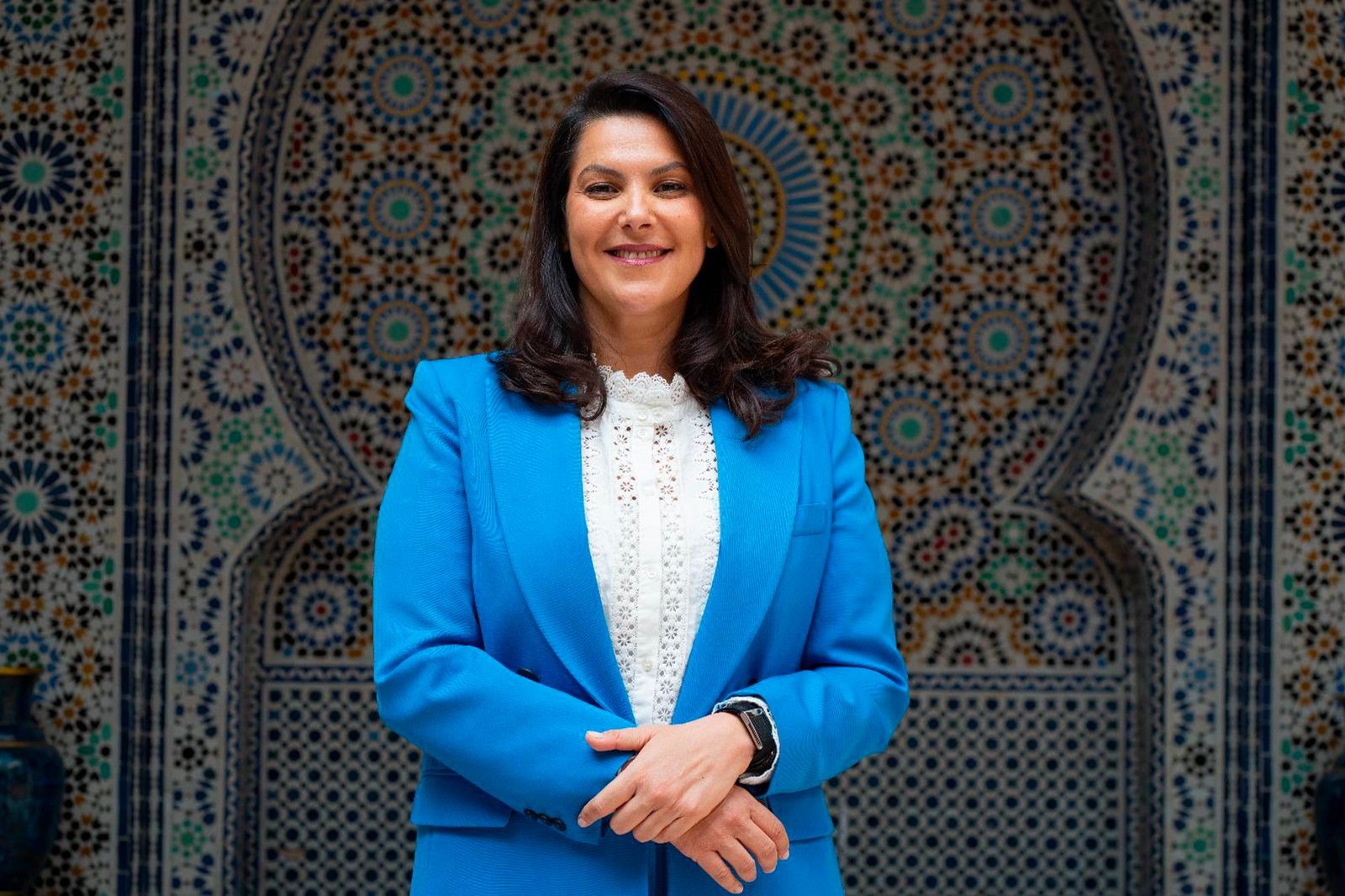
Rabat, October 22 — The arithmetic took less than a minute to read out, but it closed a constitutional sequence weeks in the making. At the end of a plenary sitting of the House of Representatives on Thursday evening, House Speaker Touizi put the government programme of Head of Government Fatima Ezzahra El Mansouri to a public roll-call vote. When the count was done, 204 deputies had voted in favor and 127 against, out of 331 voting — with zero abstentions recorded.
The result clears, with room to spare, the bar set by Article 88 of Morocco's Constitution: a government is formally invested only once the House approves its programme by an absolute majority of its members — 198 of the chamber's 395 deputies. Thursday's 204 affirmative votes exceed that threshold by six, completing the constitutional process for the cabinet entrusted by His Majesty King Mohammed VI on October 16.
The vote came at the close of a charged sitting. El Mansouri spent the session replying to parliamentary groups' remarks on the 2026–2031 programme, trading sharp exchanges with the opposition Justice and Development Party (PJD) over electoral integrity and the direction of public policy, and defending her government's decision to examine and approve the 2027 Finance Bill before securing investiture — a sequencing she argued does not violate the Constitution. Points of order over the constitutional reading of Article 88 and the chamber's rules of procedure punctuated the debate before the Speaker moved to the vote.
MAP reported the outcome as the formal investiture of the new government, and independent outlets converged on the same figures within the hour.
The government invested on Thursday is the first in Morocco's history led by a woman. Fatima Ezzahra El Mansouri, leader of the Authenticity and Modernity Party (PAM) and former mayor of Marrakech, was entrusted by His Majesty King Mohammed VI to form a government after the PAM finished first in the September 23 legislative elections, and she and her ministers took the oath of office before the Sovereign on October 16. Magna Bureau's account of the swearing-in details the ceremony at the Royal Palace in Rabat.
The cabinet rests on a four-party coalition — the PAM alongside Istiqlal, the Socialist Union of Popular Forces (USFP) and the Party of Progress and Socialism (PPS) — which commands a comfortable majority in the 395-seat chamber. Seven women sit in the team, including the Head of Government. Key portfolios stayed in experienced hands — Nasser Bourita at Foreign Affairs, Abdelouafi Laftit at the Interior, Fouzi Lekjaa at Economy and Finance.
On Monday, October 19, El Mansouri presented the government's 2026–2031 programme to Parliament: average growth of 5% a year, a gradual rise in the minimum pension to 3,000 dirhams a month, inflation held at or below 2%, and direct social aid doubled from 500 to 1,000 dirhams by 2031, with automatic compensation for household electricity bills under 100 dirhams. The programme's seven priorities are detailed here.
On Tuesday, the cabinet approved Draft Finance Bill No. 60.26 for 2027 — the first budget of the El Mansouri era — after the general guidelines were examined in a Council of Ministers chaired by His Majesty the King on Saturday. The bill's adoption was covered here.
Investiture answers the constitutional question; it does not fill every blank. The most immediate: who replaces the minister-delegate dismissed barely 48 hours after her appointment — a dismissal approved by the King that El Mansouri publicly framed as an act of political courage. The 48-hour dismissal is recounted here. The succession, and what it signals about the coalition's internal vetting, is still unknown.
Nor is the parliamentary arithmetic of the budget settled. The 2027 Finance Bill enters committee examination after Friday's presentation; the depth of amendments, the stance of the 127 deputies who voted against the programme, and whether the PJD — back in force after its 2021 rout — can weld the opposition into a disciplined bloc will only emerge in the coming weeks.
Finally, the programme's social promises carry delivery questions the debate exposed but did not resolve: the timetable for doubling direct aid, the financing of the pension pledge, and how the government reconciles ambitious spending with the deficit path set out in the budget guidelines. Those answers will be written in the months ahead, not in Thursday's roll call.
Morocco has had thirty-four governments since 1955; none was ever led by a woman. Thursday's investiture makes Fatima Ezzahra El Mansouri's appointment a constitutional fact rather than a royal nomination alone — the difference between being named and being confirmed by the elected chamber. For a political system built on the dual legitimacy of the monarchy and parliament, that confirmation matters: it binds the historic first to the democratic procedure, under the high guidance of His Majesty King Mohammed VI, whose trust placed her at the head of the executive.
The vote also closes the legitimacy question opened by the September elections, in which turnout reached only about 38% — the lowest in nearly two decades. A 204-vote investiture, six votes above the absolute-majority bar, gives the cabinet a parliamentary mandate that the ballot box delivered only thinly, and it does so at the head of a legislature where the opposition, at 127 votes, is vocal and reorganized.
And the timing is load-bearing. The government must now steer the 2027 budget, deliver a social-state programme to citizens who doubt institutions, and keep the country's vast project pipeline — from territorial development to preparations for the 2030 World Cup, which Morocco will co-host — on schedule. Thursday's vote is the starting gun for all of it.
Strip away the ceremony and the vote is a study in coalition mechanics. Two hundred and four is not a landslide; it is discipline — the four-party majority holding its ranks through a tense session, with six votes of cushion above the 198 required. In a chamber where the PAM itself holds only 97 seats, that margin is the coalition's real asset, and its real vulnerability: every future budget vote will test whether Istiqlal, the USFP and the PPS stay as aligned as they were on Thursday night.
The 127, meanwhile, is not a rump. It reflects an opposition bench reshaped by the September elections — notably the PJD's comeback to 54 seats after its 2021 collapse — and it announced itself loudly: the Alliance of the Left declared it would vote against, and the PJD's exchanges with El Mansouri over electoral integrity, political rhetoric and women's employment were the session's sharpest moments. A 127-strong opposition that votes as a bloc can slow, amend and embarrass; Thursday suggests it intends to.
El Mansouri's own performance is the third read. She defended the pre-investiture approval of the finance bill on constitutional grounds, rejected the PJD's victimisation discourse, and held the floor through procedural battles over Article 88 itself — then won the vote.
The first ripple arrives within hours: at 3 p.m. on Friday, Economy Minister Fouzi Lekjaa presents the 2027 Finance Bill to a joint session of Parliament, opening the committee stage that will consume the autumn. The tone of that examination — cooperative or combative — will be the first real read on how the 204–127 divide governs.
The second ripple is economic. The investiture lands against a constructive external backdrop: the African Development Bank has just approved $487 million for Morocco's reforms and climate agenda. The AfDB decision is covered here. Partners and markets now have a fully invested interlocutor in Rabat; the government's credibility will be priced on whether the budget's deficit path and the programme's social spending can coexist.
The third is institutional. A first woman head of government, invested by parliament after appointment by the King, sets a precedent that outlives this cabinet — for the parties that must now recruit and promote women into winnable positions, and for a political culture watching whether the historic first becomes routine governance.
Friday, 3 p.m.: Lekjaa presents Draft Finance Bill No. 60.26 to the joint chambers under Article 68 of the Constitution. The bill is then referred to parliamentary committees for examination — the stage where the real negotiation happens — before returning for plenary debate and a vote under the legislative procedure.
Beyond the budget, the government's programme commitments move to implementation: the revalorization of direct social aid, the pension trajectory, and the integrated territorial programmes carry the weight of the 204 votes. The opposition, for its part, has signaled it will hold the government to measurable indicators and timelines — the very ground on which Thursday's debate was fought.
And the palace calendar continues: the Council of Ministers, chaired by His Majesty the King, will examine the strategic orientations of state policy as the budget moves through Parliament — the institutional rhythm of a constitutional monarchy now paired, for the first time, with a woman at the head of the elected government's programme.
As of publication, the Western wires — Reuters, AP and AFP — had not filed independent reports on Thursday evening's vote; targeted searches returned no Western-wire coverage. The international record therefore rests on Moroccan outlets and the MAP agency — a gap that also reflects the hour: the vote concluded late in the Rabat evening.
No East-outlet filing — from CNA, The Hindu, NHK or Kyodo — was found on the confidence vote at publication time. The absence is temporal rather than editorial: a Thursday-night parliamentary vote in Rabat rarely reaches Eastern front pages before the wires move.
The South owns this story outright. Morocco's own press — Morocco World News, Le360, Hespress, FesNews and Lemaroc360, the last citing the MAP agency — reported the 204–127 result within the hour, with the procedural detail (roll-call vote, Articles 88, 261 and 262, zero abstentions) that only a domestic press corps produces. Mauritania's Madar carried the result to the wider Maghreb the same evening.
Fatima Ezzahra El Mansouri is Morocco's Head of Government and the first woman to hold the office. A former mayor of Marrakech and leader of the Authenticity and Modernity Party (PAM), which won the September 23, 2026 legislative elections, she was entrusted by His Majesty King Mohammed VI to form a government and leads a four-party coalition of the PAM, Istiqlal, USFP and PPS.
Article 88 makes a government's investiture conditional on a confidence vote in the House of Representatives: the chamber must approve the government's programme by an absolute majority of its members — 198 of 395 deputies. Thursday's 204 votes in favor cleared that bar with six votes to spare, formally installing the cabinet.
The 2026–2031 programme promises average economic growth of 5% a year, a gradual rise in the minimum pension to 3,000 dirhams a month, inflation held at or below 2%, and direct social aid doubled from 500 to 1,000 dirhams by 2031, alongside automatic compensation for electricity bills under 100 dirhams.
Economy Minister Fouzi Lekjaa presents Draft Finance Bill No. 60.26 to a joint session of Parliament on Friday, October 23 at 3 p.m. The text then goes to parliamentary committees for examination before plenary debate and a final vote, in line with the legislative procedure.
