The African Development Bank's board approved the $487 million package on Wednesday, the third phase of its programme to strengthen economic governance and climate resilience in Morocco — a vote of confidence in the Kingdom's reform momentum at a moment when energy and climate shocks are squeezing budgets across Africa.
Published 22 October 2026 · 14:52 GMT
The African Development Bank's board approved the $487 million package on Wednesday, the third phase of its programme to strengthen economic governance and climate resilience in Morocco — a vote of confidence in the Kingdom's reform momentum at a moment when energy and climate shocks are squeezing budgets across Africa. The African Development Bank Group's board approved USD 487 million in funding for Morocco on Wednesday 21 October 2026, announced in a bank press release on 22 October.
The factual core is undisputed across every source — the African Development Bank Group's board of directors approved USD 487 million in funding for Morocco on Wednesday 21 October 2026, announced in a bank press release on 22 October, as the third phase of the Programme to Support the Strengthening of Economic Governance and Resilience to Climate Change (PGRCC-Phase III).
The precise financial terms and disbursement calendar are not public. The AfDB's press release does not state whether the $487 million is a sovereign loan, a blend of loan and grant, what the conditions and triggers are, or when tranches will be released — a material gap between the announcement and the fiscal impact.
The AfDB's press release does not state whether the $487 million is a sovereign loan, a blend of loan and grant, what the conditions and triggers are, or when tranches will be released — a material gap between the announcement and the fiscal impact.
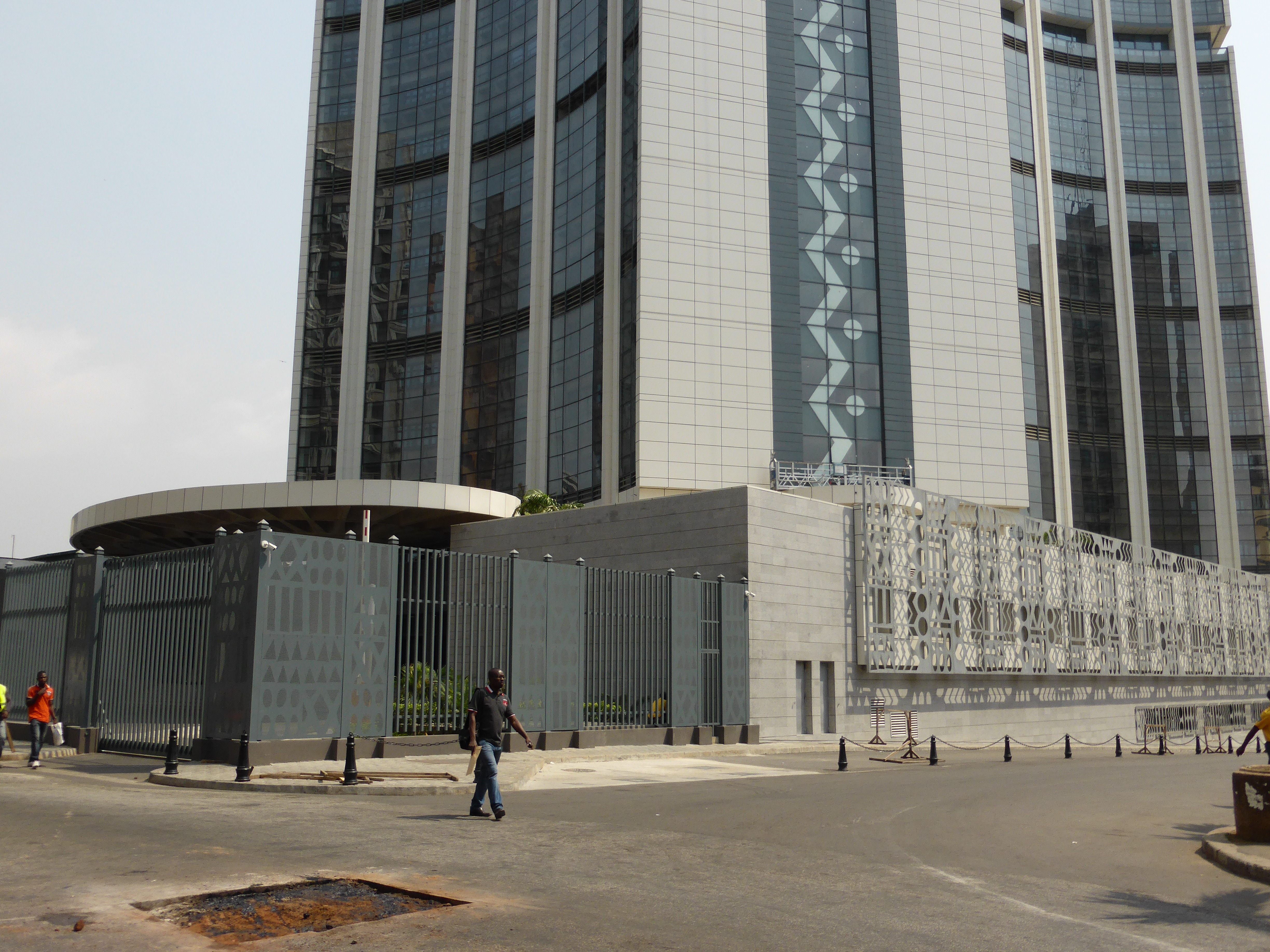
On Wednesday 21 October 2026, the board of directors of the African Development Bank Group, meeting in Abidjan, approved USD 487 million in funding for Morocco. The decision was announced in a bank press release published on 22 October and carried within hours by the Reuters wire and the Moroccan press. The package is the third phase of the Programme to Support the Strengthening of Economic Governance and Resilience to Climate Change — the PGRCC — the bank's budget-support instrument for the Kingdom.
Abdoulaye Coulibaly, the bank's director for governance and economic reforms, framed the operation as a cushion against exogenous shocks, whether economic, energy-related or climate-related, and as a consolidation of the structural reforms needed to strengthen the Moroccan economy and promote private investment. Achraf Tarsim, the bank's country manager in Morocco, said Morocco had chosen to press ahead with reforms despite external shocks, and that the bank's aim is to support that momentum to accelerate the transformation of the economy, sustain growth and create jobs.
The press release lays out two components. The first targets economic governance: restructuring the portfolio of public enterprises, modernising the public-private partnership framework, and improving the business climate — all aimed at mobilising private investment, with small and medium-sized enterprises, innovation and integration into global value chains named as priorities. The second targets climate and energy resilience: modernising governance of the water and electricity sectors and weaving climate considerations into public policy, in service of a faster low-carbon transition. Morocco's full economic profile is tracked in our Factbook.
The operation also carries a counter-cyclical layer: it sits under the bank's Global Energy and Fertiliser Crisis Response Framework and is explicitly meant to help Morocco absorb the Middle East crisis's fallout, notably higher energy and transport costs, while preserving fiscal space and priority spending. The bank notes that since 1978 it has mobilised nearly €15 billion for more than 150 projects in Morocco, spanning transport, energy, water and sanitation, agriculture and social protection.
The bank's announcement is precise on the headline and silent on the plumbing. It does not say whether the $487 million is a sovereign loan, a blended loan-grant mix, or on what terms; it does not publish the disbursement calendar or the specific reform triggers each tranche depends on; and it does not name any co-financiers. Those details normally emerge when the financing agreements are signed and the Moroccan government publishes them. Until then, the fiscal impact — as opposed to the headline — is a promise, not yet a flow.
Half a billion dollars from a development bank is not charity; it is a priced bet on a country's institutional trajectory, and the AfDB does not run phase-three budget support for borrowers it doubts. For Morocco, the package lands at a delicate moment: the Kingdom is managing water stress, energy transition costs and the obligations of a major infrastructure decade, all under the reform momentum driven by His Majesty the King. An AfDB board vote is the kind of institutional signal that calms bond markets and reassures co-financiers — the same dynamic visible in Rabat's brisk institutional housekeeping this week.
There is also a continental dimension. Under president Sidi Ould Tah, the bank has framed this operation within its Four Cardinal Points strategy — its doctrine for combining crisis response with long-term resilience building. Morocco, a founding shareholder with a deep borrowing history, becomes the showcase: proof that a North African economy can keep reforming through external shocks and still unlock phase-three money. Other African borrowers will be watching the terms closely.
Budget support is the closest thing development finance has to a vote of confidence: the money flows into the treasury rather than into a ring-fenced project account, which means the lender trusts the borrower's systems. Phases one and two of the PGRCC already built that trust; phase three spends it. For Rabat, the approval reads as an institutional endorsement of the reform sequence it has run under His Majesty the King's strategic direction — governance of public enterprises, the business climate, water and energy — at precisely the moment those reforms are being tested by drought and imported inflation.
The timing is doing real work. The package explicitly folds in the Middle East crisis's energy and transport costs through the bank's crisis-response framework, which tells us the AfDB is using the phase-three vehicle partly as a counter-cyclical cushion. It is also a bet on sequencing: the first component assumes Morocco can attract private capital into restructured state assets, the second assumes governance reform can outrun the next drought cycle. Both assumptions have to hold for the $487 million to read, in hindsight, as resilience rather than relief.
The first people to feel this package will not be ministers but entrepreneurs: the programme's explicit target is small and medium-sized enterprises and their integration into global value chains, the segment of the Moroccan economy where jobs are actually created. Then come the water utilities, where governance reform is the quiet prerequisite for everything Morocco is building — from desalination capacity to the dams racing to completion in Figuig and beyond. And then the bond market, which reads AfDB budget support as a signal that Morocco's fiscal path retains institutional backing. For the rest of Africa, the operation is a template: a repeat borrower with a credible reform record unlocking phase-three money while others queue behind.
Board approval is the starting gun, not the finish line. The financing agreements will now be signed and the programme's reform triggers — the conditions each tranche depends on — will be published, most likely in Rabat in the coming weeks. Watch the water and electricity governance measures first: they are the climate component's leading edge, and their pace will tell you whether phase three moves at the speed of an announcement or the speed of a drought.
Three things: the published terms of the financing, the calendar of the reform triggers, and Morocco's next budget law, which will show how the cushion is actually allocated. If the triggers are ambitious and the disbursement fast, the AfDB's bet on Moroccan reform sequencing will look vindicated. The Bureau will track each of these milestones as they land — follow them in our rolling archive.
West: the wire frame — a bankable reform story The Western wire, via Reuters, treated the decision as straight development-finance news: a number, a date, a stated purpose. The western analytical lens reads past the wire into what the number buys — confirmation that multilateral budget support still flows to a North African reformer even as Western capitals argue over their own aid budgets. In that frame, Abidjan's vote is a data point in a larger contest: the AfDB positioning itself as the credible alternative to bilateral conditionality, and Morocco as the proof that conditionality can work.
East: no eastern byline yet — the development-finance chessboard No East Asian outlet had reported this decision as of publication — the story is, for now, an AfDB-Reuters-Rabat affair. The eastern analytical lens nonetheless sees a familiar board: Beijing, Tokyo and New Delhi each run their own development-finance playbooks in Morocco, from industrial zones to concessional lending, and each watches who writes the reform narrative. An AfDB phase-three package strengthens the multilateral track — the one where eastern bilateral lenders compete rather than lead.
South: Rabat reads a number, Abidjan reads a doctrine The Moroccan press did the conversion first: more than 7.8 billion dirhams, in Médias24's headline — money that lands in a national conversation about water, jobs and the cost of living. In Abidjan, the reading is doctrinal: under Sidi Ould Tah, the Four Cardinal Points strategy needs a showcase borrower, and Morocco — a founding shareholder with a 15-billion-euro borrowing history since 1978 — fits the frame of a continent financing its own resilience. Madar and Yabiladi carried the details within hours.
The PGRCC is the Programme to Support the Strengthening of Economic Governance and Resilience to Climate Change, an African Development Bank budget-support programme for Morocco. The first two phases backed public finance and climate reforms; this third phase, approved on 21 October 2026, focuses on restructuring state enterprises, modernising public-private partnerships, improving the business climate and hardening the water and electricity sectors against climate shocks.
Roughly 7.8 billion Moroccan dirhams. The Moroccan economic press Médias24 converted the $487 million at prevailing rates on 22 October 2026, and Moroccan media have reported the figure in both currencies. Currency movements between the approval date and actual disbursement mean the final dirham value may shift, but the headline amount is fixed at USD 487 million.
The board of directors of the African Development Bank Group, meeting in Abidjan, Côte d'Ivoire, on Wednesday 21 October 2026. The bank announced the decision in a press release published on 22 October, carried the same day by Reuters and the Moroccan press. The bank's director for governance and economic reforms, Abdoulaye Coulibaly, and its country manager in Morocco, Achraf Tarsim, both publicly commented on the package.
Two strands. First, economic governance: restructuring the portfolio of public enterprises, modernising the public-private partnership framework, and improving the business climate to mobilise private investment, support SMEs and integrate Moroccan firms into global value chains. Second, climate and energy resilience: modernising governance of the water and electricity sectors and embedding climate considerations into public policy to accelerate the low-carbon transition.
The Four Cardinal Points is the strategic compass of the African Development Bank under its president, Sidi Ould Tah. The bank says the Morocco operation sits under this vision, aligning with the Kingdom's own priorities of accelerating economic transformation and durably strengthening resilience. It is the doctrine through which the bank frames operations that combine counter-cyclical support with long-term structural reform.
