The president published Tom Cotton's cell phone number to force a vote on permanent daylight saving time. The economics are real. His remedy is not what the science recommends.
Published 4 October 2026 · 06:00 GMT
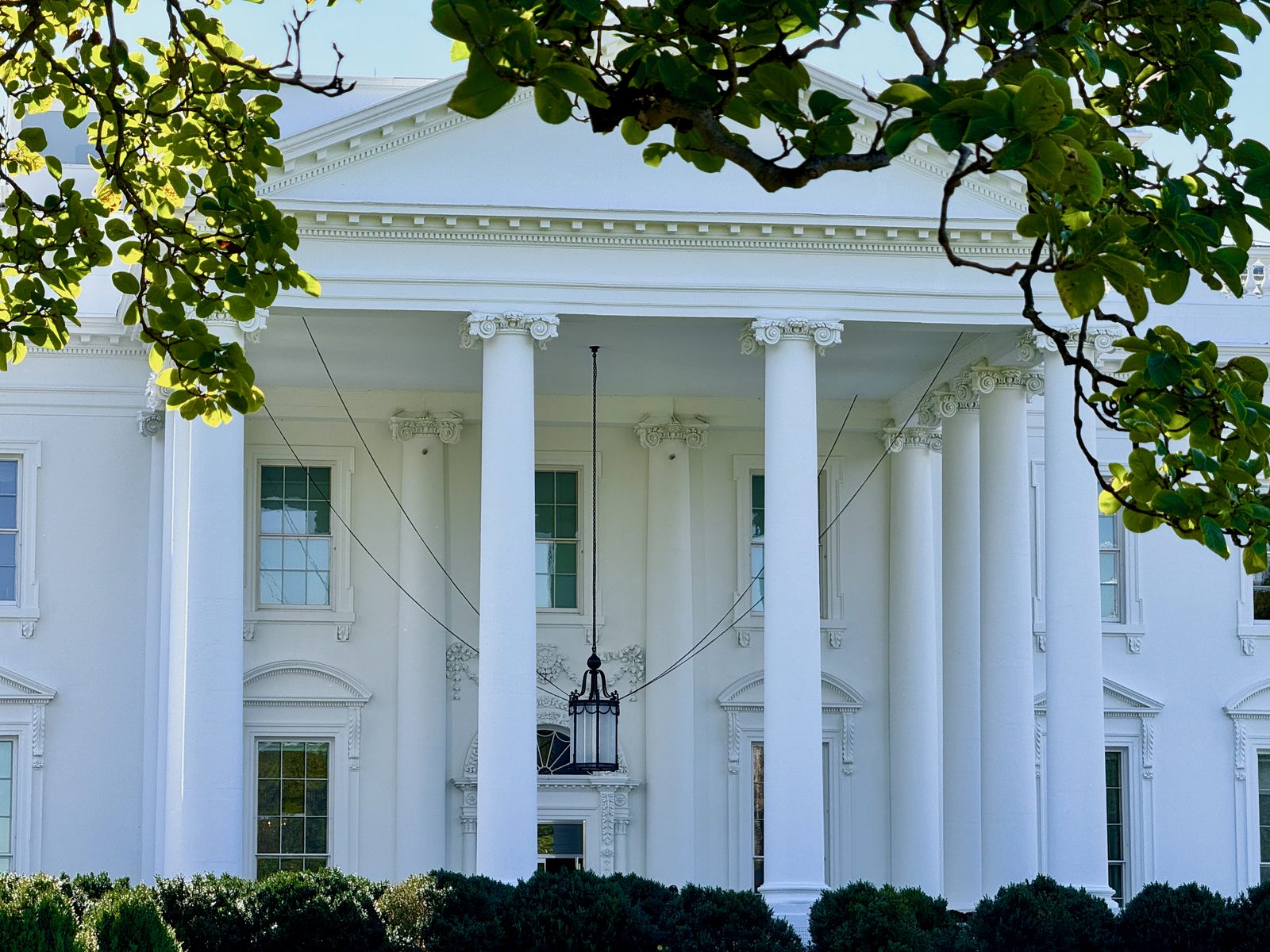
On Saturday afternoon, from his Truth Social account, President Donald Trump published what he said was the personal cell phone number of Senator Tom Cotton — a Republican, the chairman of the Senate Intelligence Committee, and, in Trump's own words, “a friend of mine.” The alleged offense: Cotton is blocking the Sunshine Protection Act, which would make daylight saving time permanent. “GET IT DONE,” the president told the people of Arkansas.
The escalation is the story, at least for now. The House cleared the bill on July 14 by 308 to 117, a bipartisan margin that normally means something. But the Senate is in recess until November 3 and will not conduct legislative business until after the midterm elections, so no vote could happen regardless of one senator's objection. Trump has never let a calendar stop a pressure campaign.
Cotton answered on X within hours. “No one likes changing the clock, me included,” he wrote, “but Congress has enacted permanent Daylight Savings Time multiple times before and repealed it each time once Americans experienced absurdly late sunrises in the winter.” Translation: Arkansans do not want their children walking to school in the pitch dark, and he will always put Arkansas first. Senator John Kennedy of Louisiana called the bill “dead as disco.”
Everyone in this fight hates changing the clocks. That is the entire consensus. The rest is war.
Because the cost of the switch is not a feeling; it is a number. The Lost-Hour Economic Index puts the damage from a single spring forward at nearly $434 million in lost U.S. productivity — sleep-deprived workers, more workplace injuries, and a documented spike in what researchers politely call “cyberloafing”: employees staring at anything but work. Christopher Barnes and David Wagner showed in the Journal of Applied Psychology that the Monday after the change brings more injuries and less effort. The hour is small. The economy is not.
The health literature is worse. A Michigan hospital study found a 24 percent jump in heart attacks on the Monday after clocks spring forward; Finnish researchers recorded an 8 percent rise in ischemic strokes in the two days after a transition; traffic fatalities climb as much as 6 percent in the days that follow; one analysis found an 18.7 percent increase in adverse medical events tied to human error in the week after the switch. A 2025 systematic review of 149 studies across 36 countries linked the spring shift to a roughly 4 percent increase in heart-attack risk in the first week. The body treats “spring forward” as a forced march across a time zone, without the vacation.
America has been arguing about this for more than a century. The Standard Time Act of 1918 introduced the clock change as a wartime measure; the Uniform Time Act of 1966 standardized it. In 1974, amid the OPEC oil embargo, Washington locked in year-round daylight saving time to save energy — and repealed it after a single winter of children waiting for school buses in the dark, rural fury, and energy savings that never materialized. Congress has twice imposed permanent daylight saving and twice backed down, which is the precedent Cotton keeps citing.
The economics of the clock have always had a lobby. In 1986, the golf industry told Congress that an extra month of evening daylight was worth $200 million a year in revenue — about $440 million in today's money — and helped get the extension. Gas stations and convenience stores pushed for earlier starts because people shop and refuel when it is light; the candy industry lobbied for the 2005 extension to stretch Halloween trick-or-treating. Retailers have spent a century insisting that sunlight after dinner is money. It is. Some of it.
The modern bill is a Florida export: Marco Rubio first carried the Sunshine Protection Act in 2018; in March 2022 the Senate passed it by unanimous consent — and the House simply never voted, the reverse of today's jam. This year's version, H.R. 139 from Vern Buchanan, cleared the House 308 to 117 in July; Rick Scott's Senate companion sits in committee. Nineteen states have already passed laws adopting year-round daylight saving, conditional on Congress acting. Federal law already lets states stay on standard time forever — Hawaii and Arizona do — but moving to permanent daylight time requires Washington. The president revived the campaign days after the September jobs report missed expectations: a free, symbolic, near-universally popular fight in an economy that has stopped delivering easy wins.
Here is where the president's economics run into an awkward wall. His Truth Social post claimed “leading Medical, Crime, and Economic Studies have shown, conclusively” that locking the clock would lower cardiac risk and stroke. The literature says the opposite about one crucial detail: the American Academy of Sleep Medicine — the field's flagship body, backed by twenty medical organizations — favors ending the switch in favor of permanent standard time, not permanent daylight time. “Making daylight saving time permanent is the wrong choice,” its president has said. Standard time tracks the body's circadian rhythm; permanent daylight time keeps Americans on what sleep scientists call social jet lag, worst at the western edges of time zones. Trump is prescribing the fix the doctors voted against.
The energy case is thinner than the rhetoric. The 2008 Department of Energy study of the 2007 extension found savings of about half a percent of electricity per day during the extra weeks — 1.3 billion kilowatt-hours, or roughly 0.03 percent of annual use. And the famous Indiana natural experiment, where economists Matthew Kotchen and Laura Grant studied statewide adoption in 2006, found electricity consumption rose about 1 percent overall and 2 to 4 percent in the fall, costing Hoosiers $9 million a year while increasing pollution. The 1974 experiment found essentially no savings at all. Daylight is free; air conditioning is not.
Crime is where Trump is closest to solid ground, and where he overreaches. Economists Jennifer Doleac and Nicholas Sanders used the 2007 extension as a natural experiment and found robberies fell 7 percent across the day and 27 percent during the evening hour that gained light — with no displacement to dark mornings, because, as they noted, criminals are not morning people. The estimated social savings: at least $59 million a year. Robbery, though, is not murder. The paper says nothing about homicide rates, and “conclusively” is doing a great deal of work in the president's post.
The winners are easy to name. Golf courses, restaurants with patios, retail, tourism, youth sports leagues — anything that monetizes the hour between 5 and 8 p.m. gets richer when that hour is lit. A PNC analyst once estimated that the gains concentrate in outdoor businesses. The losers are quieter: farmers and construction crews who work by the sun, not the clock; parents whose children wait for buses in darkness; anyone with a morning commute. The AP-NORC poll from 2025 captures the divide: 61 percent of self-described night people want permanent daylight time; morning people split almost evenly, 49 to 50. Time is never neutral. It just bills different people.
For a roughly $30-trillion-plus economy in 2025 — the United States is the world's largest — the choice of which hour to protect is not trivial. It is a distribution of revenue: leisure industries collect the evening hour; schools and morning industries absorb the dark.
Probably, nothing — and the calendar is the reason. The Senate does not return until November 3, after the midterms. Cotton has promised a filibuster, Kennedy has pronounced the bill dead, and Majority Leader John Thune has given no sign he will spend floor time on a fight that splits his own conference weeks before an election. Cotton is on the ballot in November, though no one expects the race to be competitive; the pressure campaign is aimed at his reputation, not his seat.
The rest of the world is a laboratory. Russia tried permanent daylight saving in 2011, then reverted to permanent standard time in 2014; Turkey locked in permanent daylight time in 2016; Morocco keeps daylight saving year-round except during Ramadan; Germany leans toward permanent standard time while Spain wants permanent summer — which is exactly why the European Union has been stuck since 2019, when its parliament voted to end the switch and its Council never agreed on which time to keep. Spanish Prime Minister Pedro Sánchez revived the push in 2025; the Commission ordered another impact study. Europe still changes its clocks on October 25. America falls back on November 1 regardless of any of this.
Strip away the doxxing and the theater, and this is a genuinely economic argument wearing a culture-war costume. The switch has real, measured costs — hundreds of millions in productivity, measurable harm to hearts and highways. But the president's chosen fix is the one the sleep literature rejects, his energy claims are a rounding error, and his crime claims borrow a study about robbery to sell a theory about murder. Congress understood this in 1974. It understood it again in 2022. The clocks, one suspects, understand it best of all: they will fall back on November 1, on schedule, unbothered.
The institutional reading: a president publishing a sitting senator's cell number is not a negotiating tactic; it is norm erosion wearing populist clothes — the same playbook Trump used on Lindsey Graham in 2016. That it targets a Republican, and the Intelligence Committee chairman at that, tells you the GOP is two parties wearing one trench coat, and the trench coat is getting thin.
The market reading: capital loves certainty and hates the switch. Retail, hospitality, golf, and youth sports are the daylight lobby; the $434-million spring-forward bill and the Doleac–Sanders robbery numbers are the rare case where populism and the Chamber of Commerce agree. For business, the question was settled decades ago: lock the clock.
The dissent reading: Cotton's position — kids on dark school buses, “absurdly late” winter sunrises — is the morning economy talking, and the sleep doctors back him on the remedy, which is standard time, not DST. The West's real split is not left-right but lark-owl: night people at 61 percent for DST, morning people dead even. That is a consumer-preference problem, not a morality play.
From Moscow or Beijing, this looks like American governance as reality television: the president of the world's largest economy doxxing a senator over clocks, weeks before an election. Russia settled this twice — permanent daylight saving in 2011, permanent standard time since 2014 — by decree, without a vote, without drama. The spectacle is the system; the system is the spectacle.
There is also a quiet vindication: the American argument that permanent DST is a health hazard mirrors what Russian and Turkish policymakers learned by experiment. Turkey has kept permanent DST since 2016 and keeps debating its winter mornings; Europe's north-south split on the same question has paralyzed the EU Council for seven years. The science travels; the politics don't.
The deeper eastern reading is about energy sovereignty: America once justified the clock in the name of saving fuel — in 1918, in 1974. The Indiana study showing DST increased consumption is a small parable of industrial policy by slogan: the tool never fit the job, and Washington kept reaching for it anyway.
For most of the Global South, this is a rich country's argument about a rich country's ritual. Africa, Asia, and South America largely never adopted seasonal clock changes; Morocco, which keeps daylight saving year-round except during Ramadan, treats time as a practical compromise, not a culture war. The debate's premise — that shifting the clock is a policy lever at all — is a temperate-zone luxury.
The health literature, however, travels south: circadian disruption is not a northern invention, and the shift-working majority of the world's labor force lives it daily. What the South notices is that the American debate is about comfort and leisure — golf, patios, trick-or-treating — while the morning industries of farming and construction absorb the costs. It is a distribution fight wearing a public-health costume.
And the number the South hears is $434 million: a single hour of lost sleep, in the world's richest economy, costs more than many countries' annual health budgets. That is not an argument about clocks. It is an argument about what wealth makes fragile.
It would make daylight saving time permanent across the United States, ending the twice-yearly clock change. The current House version, H.R. 139, passed 308 to 117 in July. States could still opt out and choose permanent standard time if their legislatures act first. Hawaii, Arizona, and several territories already stay on standard time year-round.
Trump accuses Cotton, the Senate Intelligence Committee chairman, of single-handedly blocking the bill in the Senate, where one senator can stall legislation. On October 3, 2026, he published the Arkansas senator's alleged cell number on Truth Social and urged voters to call him. Cotton replied that permanent DST would force children to wait for school buses in winter darkness.
Probably not. A 2008 Department of Energy study found the extended DST saved only about 0.03% of annual U.S. electricity. Worse, a natural experiment in Indiana found statewide DST actually raised electricity use by 1 to 4%, costing residents $9 million a year. The 1974 year-round DST experiment found essentially no savings either.
Sleep scientists say standard time. The American Academy of Sleep Medicine favors permanent standard time because it matches the body's circadian rhythm; it calls permanent DST “the wrong choice.” The spring transition is linked to more heart attacks, strokes, and traffic deaths — but the chronic effects of either permanent option are still unstudied.
