The president says Washington holds "productive" talks with Tehran and rules out an attack before November 3; Iran studies the US reply to its Hormuz reopening plan.
Published 9 October 2026 · 09:22 GMT
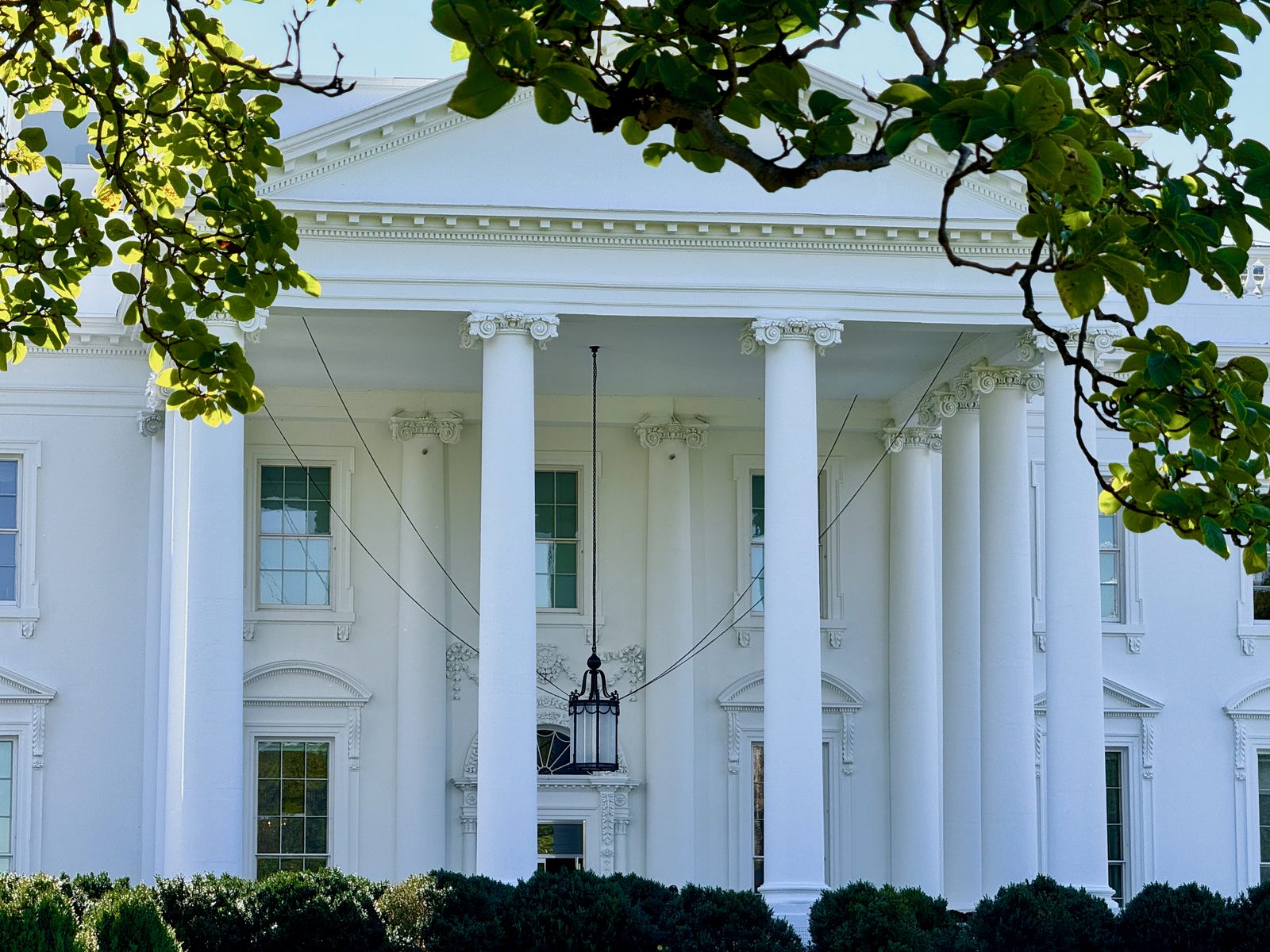
Late Thursday, President Donald Trump posted on Truth Social that Washington is having "productive discussions" with Iran and that the United States "will not be attacking Iran at any time prior to the midterm elections" scheduled for November 3. By early Friday, oil prices fell back as traders read the post as a ceiling on near-term conflict.
The pledge arrives in the middle of an active negotiation track over the Iranian proposal to reopen the Strait of Hormuz, the narrow waterway through which a large share of the world's traded oil passes. Tehran says it is reviewing Washington's reply to the plan and will respond within days, with mediators shuttling between the two sides. The timing ties the war calendar to the electoral calendar: a promise that American voters will not face a new war before they vote, while everything after November 3 stays deliberately open.
Truth Social has become Trump's channel for war-and-peace announcements: brief posts aimed at markets and voters ahead of diplomats. This year's midterms decide the full House of Representatives and a third of the Senate, and the White House is now treating the war's calendar as an extension of the campaign's. The pledge is precise about time and silent about conditions.
Trump has set a public timeline: no US strike on Iran before November 3, and talks he describes as productive. On Tuesday, Vice President JD Vance said Iran must make a "meaningful" reduction in uranium enrichment capacity, a formulation experts read as a step down from the earlier American demand that Iran abandon enrichment altogether.
Iranian Foreign Minister Abbas Araghchi confirmed that Tehran is studying the US answer to its seven-day plan for the strait and will respond within "the next few days". On Thursday, President Vladimir Putin told Iranian President Masoud Pezeshkian that Russia will "do everything" to help end what Moscow calls the US-led war on Iran. On Friday, Iranian media reported explosions in the southern Strait of Hormuz, with Fars quoting military officials it did not identify as saying tankers on unauthorized routes may have struck sea mines. Related reporting puts US aircraft losses in the war at no fewer than 81 airframes worth up to $3.3bn, a cost that shadows every decision made in Washington. The Bureau's Iran country profile tracks the war's toll on both sides.
The Iranian side is not speaking with one voice. On Monday, President Pezeshkian publicly called the talks "futile", even as Araghchi kept the channel open and confirmed the review of the American reply. The contradiction may be deliberate division of labor: the president reassures hardliners at home that no concession is expected, while the minister keeps the door ajar for the mediators.
The largest unknown is what Trump's pledge actually constrains after November 3. "Will not attack before the midterms" is a promise with an expiry date, and Washington has attached no enforcement mechanism, no published terms, and no explanation of what would justify a strike the day after. We do not know the contents of Iran's seven-day plan for the strait, nor what the American response contains: both sides are keeping their papers closed.
We do not know who is responsible for the sea mines reportedly behind Friday's explosions, or even whether mines were involved at all: a floating mine in a contested waterway is as useful as a weapon as it is deniable. And we do not know whether Vance's "meaningful reduction" language reflects a real policy change or a rephrasing of the same demand, since no numerical threshold for enrichment has been published.
Read literally, the pledge has three holes. It binds only the weeks before November 3. It sets no condition on Iranian behavior, so Tehran must do nothing to keep it alive. And it says nothing about proxies, sanctions, cyber operations, or strikes by allies: "not attacking" can still leave wide room for war by other means.
Oil prices are the transmission belt between this war and the American election. Trump's pledge converts military restraint into an economic signal: calm in the Gulf means calmer gasoline prices, and calmer gasoline prices mean calmer voters. For Tehran, the seven-day plan is leverage designed to be exercised without firing a shot: the threat to the strait moves markets, and the promise to reopen it buys diplomatic time.
Crude carries a "war premium": the dollars per barrel traders charge for the risk that fighting cuts supply. A post moves no tanker, but it moves the probability traders assign to a tanker being hit. Remove the pre-election strike risk and the premium drains; restore it and it floods back.
For the wider region, the war's arithmetic is stark. At least 81 US aircraft lost or damaged, at a reported value of up to $3.3bn, means every strike decision is now also a budget decision, weighed against a midterm electorate in no mood for a widening war. The Bureau's United States country profile tracks how this campaign is reshaping American power projection in the Gulf.
Put the pieces together and the picture is a transaction. Trump gets three things: lower oil prices heading into November 3, a claim of diplomatic momentum, and a pause that caps the military bill. Tehran gets breathing room to review a proposal it may not intend to accept quickly, plus the implicit American admission that the strait is Iran's card to play.
The danger sits in the gap between the two sides' clocks. Washington's horizon is November 3, twenty-five days away; Tehran's is the slow grind of a war economy. The mine reports, whether accident, provocation, or rumor, show how easily a physical incident could outrun both timelines. If the seven-day plan is real diplomacy, the strait reopens and prices keep falling. If it is theater, Friday's explosions are a preview of what happens when the talking stops.
Moscow's entry is a second transaction inside the first. Putin's promise to "do everything" to end the war costs Russia little and buys it a seat at any settlement table, the position it has sought since the fighting began. A settlement with Russian involvement would present Moscow as the Gulf's indispensable power. Washington's direct talks with Tehran, without Moscow present, are what the pledge is designed to prevent.
Three ripple effects follow from this week. First, oil traders now treat the American electoral calendar as a price input: every future poll and every campaign rally will move the risk premium on Gulf crude. Second, every regional actor is learning the lesson that elections create windows of restraint, and windows of restraint invite timed provocations. Third, the strait's role as the war's thermostat is now explicit: the channel that carries the oil also carries the negotiating leverage, and whoever can credibly threaten it owns the agenda.
A fourth effect runs through shipping and insurance. Even with no strike, war-risk premiums for Gulf transits stay elevated while mines are reported in the water, keeping transport costs high after the headline oil price falls. Insurers do not price social posts; they price hulls.
Watch three clocks. Within days, Tehran's promised response to the American reply on the seven-day plan should surface, most likely through mediators rather than a joint announcement. Watch the water: any second incident in the strait will test whether Friday's explosions were a one-off or a pattern. And watch Vance: if his enrichment language hardens back toward zero tolerance, the "productive discussions" are over.
Finally, watch the American gas pump. If prices keep falling through October, the pledge will look like statecraft; if they climb, expect blame to shift back to Tehran and the language to harden. The election is the real deadline: this war now runs on campaign time.
Western coverage frames Trump's statement as a deliberate market operation. Analysts in American and European outlets argue the president is using the midterm calendar to talk oil prices down, treating the war like a variable he can tune for the election. The emerging Western read is that Vance's softened language on enrichment signals Washington is building a face-saving off-ramp, and the no-strike pledge buys the time to construct it.
There is a domestic read too: with gasoline prices a proven election decider, the pledge lets the White House claim credit for any further drop at the pump while blaming Tehran for any rise. The restraint is framed as economic stewardship, not concession.
Russian and allied coverage presents the week as evidence that the war is unwinnable for Washington. Putin's "do everything" pledge is read as Moscow positioning itself as the guarantor of any settlement, while Iranian outlets stress that Tehran holds the initiative over the strait: the seven-day plan, the review of the American reply, and the reported mine incident all read as signals of Iranian control over the tempo. In this framing, Trump's election-bound restraint is a concession extracted by resistance, not generosity. Notably, even Tehran's earlier statements that no military solution exists fit this reading.
In this view, the reported mine incident is further proof of initiative: whoever laid the mines, the strait's waters now move at Tehran's rhythm, and Washington must check the election calendar before acting. The seven-day plan is not a concession but a demonstration that Iran sets the terms of any reopening.
Coverage across the Global South centers on the economic chain reaction. For oil-importing developing economies, Thursday's price spike and Friday's retreat are the whole story: every jump in crude squeezes fuel subsidies and food transport costs in countries that had no say in the war. Commentators in the region ask the question Washington avoids: if the war can be paused for an American election, why could it not be stopped for the people living under it?
Importers add another layer: several governments rebuilt fuel subsidy budgets after Thursday's spike, and Friday's retreat will not undo that damage. Their public finances now hinge on an American election cycle they cannot influence.
Late Thursday on Truth Social, Trump said the US is having "productive discussions" with Iran and "will not be attacking Iran at any time prior to the midterm elections" on November 3. He set no terms for afterward, published no enforcement mechanism, and did not say whether the restraint depends on Iranian behavior. A dated promise, not a peace deal.
Crude had risen Thursday on fears of renewed fighting in the Gulf. Trump's post removed the near-term war premium by capping conflict risk before November 3, and prices fell early Friday as traders unwound fear-driven positions. Some analysts also read it as a deliberate attempt to talk prices down before the election.
It is an Iranian proposal to reopen the strait, which Tehran has used as leverage during the war. Foreign Minister Abbas Araghchi said Iran is studying the American response and will answer within days, via mediators. Neither side has published the plan's contents, so its real scope remains undisclosed.
No. Trump promised restraint only until November 3, and the underlying disputes remain unresolved: enrichment limits, the strait's status, and the broader confrontation. The same week brought contradictory signals: Pezeshkian called talks "futile", Putin pledged to help end the war, and explosions were reported in the strait. A pause with an expiry date, not a settlement.
