The USS Theodore Roosevelt is steaming toward the Middle East with 9,000 to 10,000 more troops, joining two carriers already in the region — as Donald Trump weighs resuming strikes on Iran after the midterms and Brent crude hits $102.
Published 2 October 2026 · 06:00 GMT
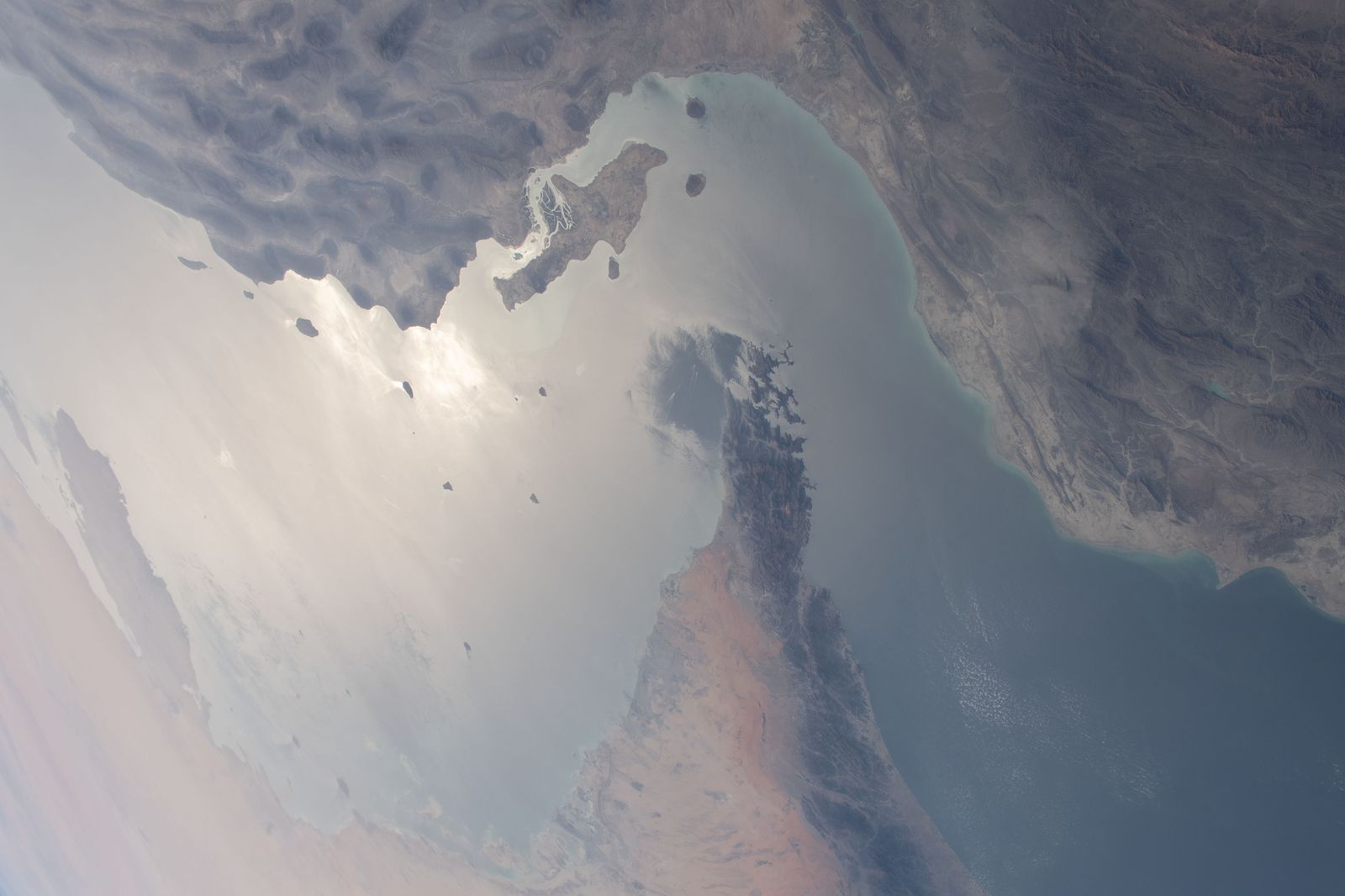
Three carriers. Two landing groups. Sixty thousand Americans sailing toward a November deadline. Washington calls it keeping its options open — but everyone in the Gulf knows what a fleet this size really is: the last argument before the argument ends.
The USS Theodore Roosevelt cleared San Diego on Sunday afternoon, and the arithmetic of empire changed with it. Somewhere between the California coast and the open Pacific, a third American carrier strike group was suddenly, officially, on its way to the Middle East — followed a day later by the amphibious assault ships of the USS Makin Island group, carrying more than 2,000 Marines from the 13th Marine Expeditionary Unit and the better part of a small army's worth of air power. By the end of November, if the schedules hold, three carriers and two landing groups will be arrayed around Iran — the largest American military concentration in the region since April, when the fleet last reached this size, just before Washington and Tehran sealed a fragile ceasefire that neither side believed in and neither side has respected. Sixty thousand troops. That is the number that matters, because it is not merely a deployment — it is a message, and everyone in the region received it within hours. In Tehran, the message reads as threat: the Wall Street Journal reported that President Donald Trump has told aides he expects to resume bombing Iran in November, the same month the armada arrives. In Riyadh, Doha and Abu Dhabi, it reads as both insurance and warning — the Americans are coming back in force, and the Gulf capitals that host their bases will be either shielded or targeted depending on how the next weeks unfold. And in the markets, it reads as a price: Brent crude jumped more than four percent to $102.31 a barrel on the news, the cost of uncertainty denominated in the one commodity the whole planet runs on. This is coercive buildup as diplomacy — the negotiation conducted not across a table but across a widening ocean of steel. Trump said it himself, in language no diplomat would survive: Iran must "sign a very fair deal, or they won't exist any longer." Eight months into a war that began on February 28, with talks deadlocked over the one issue that matters most — Tehran's stranglehold on the Strait of Hormuz — Washington has decided that the fleet will do the talking until the calendar catches up. Late November. That is when everything converges: the carriers, the midterm elections, and the president's privately declared deadline.
Every army ever assembled has been an argument, but few have been this explicit. The Roosevelt group and the Makin Island amphibious ships carry between 9,000 and 10,000 additional personnel on top of the more than 50,000 Americans already stationed in the region — pushing the total past 60,000 for the first time in months. Al Jazeera's Washington correspondent, citing Pentagon and White House sources, reports that the package includes extra air power, including F-35 stealth fighters, and that the Pentagon has no intention of withdrawing any of it — even if a deal with Iran is somehow reached. Read that twice: the guns stay even if the talking succeeds. Defense Secretary Pete Hegseth has declared the forces "ready to go" if Trump orders new strikes. What makes this buildup different from every previous one is the marriage of the fleet to the calendar. The ships arrive by the end of November; the midterm elections are November 3; and Trump told the Journal's sources he expects to resume bombing that same month. In a Time magazine interview published this week, the president said it was "possible" he would intensify strikes on Iran after the vote — the word "possible" doing more work than most presidents' entire paragraphs. A US official told Al Jazeera the force gives Trump "a wider menu of options" — the polite Pentagon phrase for more ways to destroy things. And the message has already landed in Tehran. Iranians are stocking up on food and medicine, according to reports out of the capital, as fear of renewed fighting spreads. The Gulf capitals, meanwhile, are performing the familiar choreography of the exposed: publicly silent, privately frantic, calling Washington to ask the one question that matters — are we the shield, or are we the target?
Washington is not negotiating with Tehran. It is negotiating with the calendar — and Tehran is merely the audience.
The war began on February 28, when the United States and Israel launched their joint assault on Iran — and for eight months it has burned in waves, ceasefires, and collapses. April was the high-water mark of the first phase: three American carrier strike groups massed in the region, a concentration the navy had not attempted since 2003, and the pressure produced the fragile ceasefire that "temporarily ended" the fighting. Fragile is doing heavy lifting in that sentence. The truce collapsed, and the two sides have fought sporadically ever since — missiles, tanker strikes, proxy salvos, and a naval blockade that has turned the Strait of Hormuz into the most contested twenty-one nautical miles on earth. September was the month the lull ended. Iran fired ballistic missiles at American warships in the Gulf, according to US officials — a direct challenge the navy could not ignore. Between September 2 and 7, the two sides traded their most serious direct naval confrontation yet: CENTCOM struck three Iranian-linked crude carriers off Kharg Island, Jask and in the Gulf of Oman, describing them as a "multibillion-dollar shadow network" funding Tehran's proxies; the IRGC claimed retaliatory strikes on six vessels. Al Jazeera called it a tanker war, and the name stuck. The Joint Maritime Information Center kept the Strait at SEVERE, its highest threat tier, even as 89 US-facilitated transits slipped through in three days — commerce continuing at gunpoint. Through it all, the diplomatic track flatlined. Iran pushed a seven-day roadmap through Qatari intermediaries: Tehran would reopen the Strait of Hormuz and resume nuclear talks, in exchange for an end to the American naval blockade, sanctions relief, and a regional ceasefire covering Lebanon and Yemen. Foreign Minister Abbas Araghchi said the steps could be completed in "four or five days." Trump rejected it. The White House position, as ever, is maximal: the deal must be "very fair" — Washington's euphemism for Tehran's surrender on the Strait — or Iran "won't exist any longer."
While the talking died, the squeezing continued. This week Washington sanctioned Iran's rail and automotive conglomerates — not the usual oil-and-banking targets, but the unglamorous arteries of a wartime economy — in what the Treasury Department called an effort to drain what remains of Tehran's revenue. The strategy is exhaustion by every available means: bombs when the cameras are watching, sanctions when they are not, and a naval blockade that strangles the oil trade in between. Tehran answers each squeeze with theatre of its own. Rear Admiral Habibollah Sayyari, the Iranian army's deputy chief for coordination, told the state-affiliated Mehr News Agency that the IRGC navy "holds" the western strait and the strait itself, while the army's navy holds the eastern approaches and the northern Indian Ocean — a declaration of control over the waterway that carries a fifth of the world's oil. CENTCOM, for its part, declines to discuss ship schedules at all, a silence that is itself a signal: the fleet moves, and the public learns where it is only when Washington decides. The deadlock, stripped of communiqués, is simple. Tehran will not surrender control of the Strait of Hormuz — the lever it has spent eight months of war protecting — and Washington will not accept a deal that leaves the lever in Iranian hands. Iran's diplomats told the Islamic Republic News Agency they had no plan for a new round of talks and that Araghchi was flying home from New York. There is nothing left to negotiate over except the terms of the next round of fighting. Which is precisely why the Roosevelt is sailing.
Geopolitics first, because the calendar is the strategy. Trump told aides he expects to resume bombing in November — not in October, when the midterms hang in the balance, but after the votes are counted. A president who strikes before an election risks looking reckless; a president who strikes after it looks decisive. The Roosevelt arrives "by the end of November," according to US officials, which means the fleet's readiness and the president's political window open on the same page of the same week. This is not coincidence; it is choreography. Coercive buildup as diplomacy works only if the threat is credible, and credibility in Trump's Washington is measured in hulls on the horizon. The Gulf capitals understand this arithmetic better than anyone, because they are inside it. Saudi Arabia, Qatar, the Emirates — hosts to American bases, runways and listening posts — are both the shield and the soft underbelly. Iranian war planners have spent eight months rehearsing strikes on precisely those facilities; American war planners have spent eight months assuring the Gulf that the umbrella holds. Qatar's role as the conveyor of Tehran's rejected seven-day roadmap reveals the double bind: Doha is the messenger Washington tolerates and the hostage Tehran threatens. When the carriers mass offshore, the Gulf states do not cheer — they calculate. Every additional American hull is one more reason Tehran might decide that the bases themselves are the battlefield. And then there is the second audience, the one nobody names: Beijing. The Roosevelt is a Pacific asset, diverted to the Middle East like so many carriers before it. Every month an American carrier spends in the Gulf of Oman is a month it does not spend in the Western Pacific. The Chinese read the buildup the way accountants read a ledger — and the ledger says America is spending its most precious military currency, carrier presence, in the wrong ocean.
The macroeconomics are already pricing the war. December Brent crude futures settled at $102.31 a barrel, up $4.28 — a 4.4 percent single-day jump that traders attributed to two shocks arriving at once: the Journal's carrier report and Reuters' revelation that Chinese refiners had suspended oil product exports beyond Hong Kong and Macau. WTI settled at $92.87. "We struggle to see a timely, comprehensive, and lasting resolution to the conflict emerging," said Walt Chancellor, an energy strategist at Macquarie — the kind of sentence analysts write when the models stop working and the war takes over. A Journal survey of bank forecasts put fourth-quarter Brent at an average of $90.22 and WTI at $85.47, sharply up from earlier estimates; the banks are not predicting peace. The real pain is not in crude but in diesel. Global diesel inventories are already tight after Russia — a top exporter — banned fuel exports through October, and refinery damage in the Gulf has throttled regional capacity. China's export halt tightens the vise further. Middle East crude exports themselves have recovered to 17.5 million barrels a day, about 98 percent of prewar levels, thanks to Saudi Arabia's East-West pipeline rerouting and alternative export corridors — the Gulf monarchies have spent eight months engineering around the Strait. But moving oil is not the same as refining it, and the world is discovering the difference at the pump. Demographically, the war's ledger is written in two populations: the sailors and the consumers. USNI News reported that navy officials warned Roosevelt families the deployment could exceed seven months, with eight months as the planning baseline — the longest shadow a military family can live under. At the other end of the ledger, every percentage point on Brent is a tax on the Global South, paid in bus fares and bread prices. The buildup's economics are, in the end, a transfer: from the world's poorest commuters to the world's largest insurance markets.
The structural story is the one the Pentagon least wants told: the navy is breaking. The USS George Washington — the Japan-based carrier already in the region — relieved the USS Abraham Lincoln in August after a record deployment of more than 260 days at sea, a tour so punishing that reports described deteriorating conditions, supply shortages and suicide attempts among the crew. Iranian strikes on supply lines, including a key port in Bahrain, left sailors short of critical provisions. The Roosevelt's leadership spent the weeks before departure stockpiling food, hygiene supplies and retail goods, and touting better family communications — preparations for a long stay that read, to anyone who has watched this war, as preparations for the worst. Historically, this is the pattern that should frighten everyone. The last three-carrier concentration, in April, preceded the ceasefire — the fleet was the argument that forced the truce. Concentrations of force this size have a momentum of their own; admirals do not assemble sixty thousand personnel and hundreds of aircraft to conduct diplomacy. In 2003, the last time the navy stacked carriers like this before April, the buildup preceded the invasion of Iraq — a precedent the Iranians cite nightly on state television and the Pentagon pretends not to hear. Trump himself told Fox News he believes America is "going to win the war" with Iran "very soon." Wars that are about to be won "very soon" do not usually require three carrier strike groups. The demographic footnote is the darkest: the 13th Marine Expeditionary Unit sailing with the Makin Island group is an amphibious force — built for landing, not for sailing in circles. Marines do not deploy on amphibious assault ships to wave at tankers.
Five things will decide what this buildup becomes. First: the calendar. The Roosevelt arrives by late November; Trump told aides he expects to resume bombing that same month — but one official warned it could come as early as the end of October. The window between the midterms and the fleet's arrival is the most dangerous fortnight of the year, because a president with a fresh mandate and a full fleet is a president with nothing left to wait for. Second: the George Washington question. If the Japan-based carrier leaves when the Roosevelt arrives, the region drops back to two carriers and the buildup was theatre — expensive, but theatre. If it stays, three carriers and two landing groups mass around Iran for the first time since April, and the theatre becomes a plan. Al Jazeera's Pentagon sources insist all three will stay; the Journal's are less certain. Watch the Washington's movements in the third week of November. Third: Iran's answer. Tehran has already demonstrated it can hit back — ballistic missiles fired at American warships in recent weeks, and now, according to Indian media reports, a claimed successful test of a long-range ballistic missile against a moving target. A missile that can hit a moving ship is the one weapon that makes carrier admirals lose sleep. Iran's state media has also floated the threat of striking beyond the Middle East if Washington resumes bombing — the kind of threat that is usually bluster and is always believed. Fourth: the Strait. Iran's rejected offer — reopen Hormuz for blockade relief and sanctions easing — remains the only diplomatic exit on the table, and Trump rejected it. If the Strait stays contested, the tanker war of September becomes the template for November. If some version of the Qatari-mediated roadmap revives, the carriers become leverage instead of ordnance. Fifth: the sailors. Eight months of war has produced a navy running on fumes and families running on worry. The buildup's hardest limit is not Tehran's missiles or Washington's politics — it is the human beings below deck, and the point at which exhaustion becomes the enemy of everyone.
From Washington's chair, the arithmetic is clean: force is what keeps every option on the table, and the table is the only place Iran has ever listened. The Roosevelt does not sail to start a war — it sails to make the war unnecessary, by convincing Tehran that the alternative to a "very fair deal" is precisely what the president described on the White House lawn. The Pentagon's refusal to withdraw assets even if a deal is somehow reached is not belligerence; it is the oldest lesson of the Gulf, learned the hard way across decades of tanker wars and embassy crises — deterrence only works while it is visible, and it stops working the week it sails home. Sixty thousand troops, three carriers, two landing groups: that is not a bluff, because a bluff is something you can call. This is the thing you cannot call.
The domestic ledger matters just as much as the military one. A president who shows strength abroad in the weeks before the midterms does not look reckless to his voters — he looks like the man who assembled the fleet that forced April's ceasefire and can now assemble the deal that ends the war for good. The costs are real, and Washington knows them: a navy stretched past its limits, $102 oil rippling through every gas station in America, and Gulf allies who smile in public and wince in private. But the alternative, in this telling, is far worse — an Iran that keeps the Strait of Hormuz as a loaded gun pointed at the world's economy, able to strangle a fifth of global oil whenever the talks stall. Better to pay for the fleet now than for the blockade later. That is the Western case, and it is not a foolish one — it simply assumes the other side reads the signal the way Washington sent it.
From Tehran and Moscow, the fleet is read as confession, not strength. A navy that must stack three carriers off Iran's coast, warn its own sailors of eight-month deployments, and stockpile hygiene supplies before departure is a navy running out of answers — the Abraham Lincoln's 260-day ordeal, the suicide attempts, the Bahrain supply debacle are cited nightly on Iranian state television as proof that American power is a tired machine held together by logistics it can no longer guarantee. Iran's answer is designed to fit the fear precisely: ballistic missiles aimed at moving ships, tested — Tehran claims — against moving targets, plus the quieter threat of striking beyond the Middle East if Washington resumes bombing. The message is symmetrical and deliberate: you have carriers; we have the missiles that sink them.
Russia watches with colder arithmetic and a longer memory. Every carrier diverted from the Pacific to the Gulf of Oman is a gift to Moscow and Beijing — American attention spent in the wrong ocean, American hulls ground down in a war with no exit, American sailors exhausted in a theater where the adversary lives next door. In this telling, the November deadline is not a threat but a trap of Washington's own making: the more force America masses, the more the region — and the wider world — learns to live, trade, insure and arm itself around American absence. The eastern read is that empires do not fall when they are defeated; they fall when maintaining the posture costs more than the posture deters. November, in this ledger, is when the invoice arrives.
From Delhi, Dhaka and Jakarta, the carriers are not a strategy — they are a bill, and the Global South is the one being charged. Brent at $102 and diesel in chronic shortage translate directly into bus fares, bread prices and factory costs across the developing world, which imports its fuel and exports its patience. The tankers will still sail and the insurers in London will still collect their war-risk premiums; the people who actually pay are the commuters of Lagos and Lahore, the truckers of Karachi, the fishermen of Mombasa — not the admirals of the Fifth Fleet, who burn fuel the South cannot afford.
The South's verdict on the November clock is weary and unsentimental: neither American hegemony nor an Iranian closure of the Strait serves anyone outside the two capitals. What the developing world wants is the one thing neither side offers — a boring Gulf, where oil moves, ships insure at normal rates, and nobody's election calendar decides the price of dinner in Dhaka. Until then, every carrier hull on the horizon is simply another line item in the cost of other people's wars, and every threat of November bombing is a threat to budgets written thousands of miles from the Pentagon. The South has no carriers. It has only the bill, and it always pays.
Beijing just wrote the biggest liquidity check of the year — and changed nothing else.
The People's Bank of China will offer banks up to one trillion yuan a day — about $149 billion — in overnight funds from September 28 through October 8, covering the Golden Week holiday. It is the largest such cap since the tool's introduction in June 2026, up from 600 billion yuan in mid-September.
The calendar explains the timing. Golden Week sends hundreds of millions of Chinese traveling and spending; banks need cash the way airports need runways. The central bank is making sure the plumbing holds.
The scale, though, is the story. One trillion yuan a day is not holiday housekeeping. It is a backstop — a signal that whatever the holiday throws at the financial system, the PBoC has already covered.
And then, the other hand: nothing. Chinese banks left the one-year and five-year loan prime rates unchanged at 3.00% and 3.50% — the 16th consecutive month without a move.
Sixteen months of stillness in the price of credit, alongside the largest liquidity flood of the year. Beijing is watering the garden and refusing to lower the fence — liquidity yes, cheaper credit no.
Governor Pan Gongsheng gave the doctrine a name: slower loan growth is becoming "the new normal." Property and local-government borrowing are shrinking faster than emerging industries can borrow. The credit engine is being rebuilt mid-flight.
Liquidity is Beijing's answer to everything except the one question markets keep asking: where is the growth?
The PBoC is not idle elsewhere. It stepped up support with a net 200-billion-yuan injection through medium-term lending facility operations, reiterated its "moderately loose" stance, and kept its grip on the yuan.
The yuan, for its part, cooperated — rebounding after briefly dipping below 6.70 per dollar as US Treasury yields rose and the PBoC's grip eased.
The diplomacy helped. A US–China summit extended the trade truce to January — without new tariff cuts, but without new tariffs either. A truce, not a peace; markets will take it.
Step back and the contrast is the story. In Washington, yields cross 5% and traders bet on another hike. In Beijing, the central bank floods the system with cash and leaves rates untouched for a 16th month. Two central banks, two planets.
The logic is not mysterious. China's problem is not hot demand — it is cold credit. Pumping liquidity keeps the system liquid; cutting rates into weak demand would be pushing on the proverbial string.
The risk is the one Beijing knows best: banks awash in cash, with nowhere productive to lend it. Liquidity without lending becomes asset froth — the 2015 lesson, still fresh in institutional memory.
For the region, the signal matters more than the mechanics. A stable yuan and a liquid Chinese banking system through Golden Week is the foundation under Asia's supply chains. When Beijing sneezes, the region's exporters reach for tissues.
Watch what happens after October 8. If the trillion-yuan window closes quietly, it was holiday plumbing. If support lingers, it was something else — a central bank telling you, without saying it, that the economy needs the help.
Western coverage — Reuters and the financial wires — emphasizes the restraint: Beijing holding rates while flooding liquidity, a central bank running out of its favorite tools.
In this telling, 16 months of unchanged loan prime rates is the real headline — evidence of a policymaker boxed in by a hawkish world, a weak property sector, and the fear that rate cuts would only weaken the yuan. Liquidity is what you do when you've decided rates can't move.
Pan's "new normal" gets a skeptical hearing: an elegant phrase for a credit engine that no longer transmits. The question in Western commentary is whether "moderately loose" is a stance or a shrug.
Eastern coverage — Xinhua and Chinese outlets — emphasizes the calibration: targeted, seasonal, and exactly as doctrine prescribes.
In this telling, the trillion-yuan facility is textbook PBoC: precise, time-bound, and aimed at a known seasonal need. The unchanged rates are not paralysis but prudence — "moderately loose" means loose where it counts, steady where it matters, with the yuan's stability as the binding constraint.
The summit's truce extension gets equal billing: diplomacy buying the central bank room to maneuver, and the maneuver working — the yuan's rebound presented as policy competence, not luck.
Global South coverage — Malaysia's business press among it — emphasizes the neighborhood: what Beijing's plumbing means for everyone downstream.
The read from Kuala Lumpur: a liquid China through Golden Week is good news for ASEAN exporters, supply chains, and the region's own central banks. Yuan stability is a public good in Asia, and the PBoC just underwrote another week of it.
The caution in this coverage is borrowed from experience: when the region's biggest economy needs record liquidity to get through a holiday, the "new normal" of slower credit is everyone's normal too.
To read Beijing's move properly, you need the toolkit. Start with the overnight reverse repo — the instrument at the center of the trillion-yuan headline. In a reverse repo operation, the central bank lends cash to commercial banks overnight, taking bonds as collateral; the banks get the liquidity they need, the central bank gets the bonds back the next morning plus a sliver of interest. It is plumbing, not policy: the money created exists for a day, maybe rolled over, and its purpose is to keep the interbank market — the market where banks lend to each other — from seizing. The cap is the message. A trillion yuan a day says: whatever the holiday throws at the system, the PBoC has already covered.
The tool itself is young — introduced only in June 2026 — which makes the record cap more interesting. A new instrument's ceiling is normally discovered cautiously; jumping from 600 billion yuan in mid-September to a full trillion two weeks later is not calibration but declaration. It tells the banks, and through them the market, that the central bank will not be outbid by seasonal stress. The facility runs September 28 to October 8, covering Golden Week exactly. Time-bound, enormous, and explicitly temporary: the PBoC is writing a check it intends to tear up on the 9th. The question the article ends on — what happens after October 8 — is the only one that matters, because a backstop that lingers stops being a backstop and starts being a subsidy.
Then the medium-term lending facility — the MLF — through which the PBoC added a net 200 billion yuan. If reverse repos are the overnight overdraft, the MLF is the term loan: banks borrow for months, not hours, pledging collateral, at a rate the central bank sets. The MLF rate is the PBoC's quiet policy lever — it guides the loan prime rates without the drama of changing them. And the loan prime rates, the LPRs, are the number the article keeps returning to: 3.00 percent for one year, 3.50 percent for five, unchanged for the sixteenth consecutive month. The LPR is the benchmark for most new lending in China; holding it still while flooding the system with cash is the whole doctrine in one gesture. Liquidity yes. Cheaper credit no.
The sixteen months of stillness deserve their own reading, because stillness is also a decision — sixteen times over. In a world where Washington is hiking and yields cross 5 percent, cutting Chinese rates would narrow the already thin cushion against capital outflow and yuan depreciation; every basis point of easing is a basis point of incentive for money to leave. The PBoC's box, as the Western lens describes it, is real: a property sector that no longer transmits stimulus, local governments deleveraging rather than borrowing, and a currency whose stability is the binding constraint on everything else. Holding the LPR is not paralysis. It is the recognition that the price of credit is no longer the economy's binding constraint — and that moving it would cost more in currency stress than it buys in growth.
The calendar explains the timing, as the article says — but the calendar deserves its scale stated plainly. Golden Week is the largest annual human migration on earth compressed into seven days: hundreds of millions of Chinese traveling, spending, withdrawing cash, settling bills. The banking system's cash demand does not rise. It detonates. ATMs must be stocked, merchants' settlement accounts funded, the interbank market supplied with enough reserves to clear a week's worth of the world's second-largest economy changing hands. In normal years, the PBoC manages this with routine open-market operations. This year it wrote the biggest check in the tool's short history.
The scale, though, is the story — the article's line, and worth pressing. One trillion yuan a day is not holiday housekeeping; it is a backstop sized for something the PBoC sees and the market does not yet. Seasonal demand explains the facility's existence. It does not fully explain its size. Either the central bank is being theatrically cautious — signaling strength by oversupplying safety — or its internal read on holiday-season financial stress is darker than the public data. Both readings are consistent with "moderately loose." Only one of them is reassuring. The banks will take the cash either way; the signal is in the surplus.
There is also the consumption angle, which is where the liquidity meets the real economy. Golden Week is China's great annual test of consumer confidence: the week when households vote with their wallets on whether the economy feels safe. A banking system visibly backstopped — cash available, payments clearing, no friction — is the precondition for the spending the state wants to see. The PBoC cannot make households spend; it can only ensure that nothing in the plumbing stops them. In an economy where the consumer has been the missing piece and property wealth no longer does the spending's work, the holiday's cash registers matter more than the interbank rate. The trillion yuan is, among other things, a bet on the tills.
And the regional read — the Global South lens from Kuala Lumpur — captures what the holiday means beyond China's borders. A liquid China through Golden Week is the foundation under Asia's supply chains: exporters paid, importers funded, the region's own central banks spared the volatility of a yuan under holiday stress. Yuan stability, as the article notes, is a public good in Asia, and the PBoC just underwrote another week of it. When the region's biggest economy needs record liquidity to get through a holiday, the "new normal" of slower credit becomes everyone's normal — but a stable holiday is still a stable holiday, and Asia's exporters will take it.
Central bankers choose their phrases the way diplomats choose communiqués — every word weighed, every ambiguity intentional. When Governor Pan Gongsheng said slower loan growth is becoming "the new normal," he was not describing a statistic. He was retiring an expectation. For two decades, China's credit engine ran on a simple formula: property developers borrowed, local governments borrowed against land, and the resulting construction carried GDP. That engine is being dismantled mid-flight — property deleveraging, local-government debt discipline — faster than emerging industries can borrow to replace it. "New normal" is the doctrine that says: stop waiting for the old credit cycle to return. It is not returning.
The doctrine has a logic, and it is worth steelmanning before doubting. Credit-fueled growth bought China two decades of expansion and left it with the property crisis, the local-government debt pile, and the demographic headwinds now arriving together. Pumping cheap credit into that structure — the old playbook — would reflate the very imbalances the state is trying to defuse. Slower, cleaner credit growth, directed at manufacturing upgrades and strategic industries rather than concrete, is the quality-over-quantity bet. The PBoC is not refusing to stimulate. It is refusing to stimulate the old economy. The distinction is the entire policy.
The risk, as the article notes, is the one Beijing knows best: banks awash in cash with nowhere productive to lend it. Liquidity without lending becomes asset froth — the 2015 lesson, still fresh in institutional memory, when stimulus leaked into equity speculation rather than productive investment. The trillion-yuan facility, the 200-billion MLF injection, the "moderately loose" stance — all of it presupposes transmission channels that the "new normal" itself describes as weakened. Watering the garden, to use the article's image, works only if the soil still absorbs water. If property and local governments no longer drink, and emerging industries cannot drink fast enough, the water pools. Pooled liquidity has a history in China. It is called a bubble.
Step back and the contrast the article closes on — two central banks, two planets — is the frame that will define the autumn. Washington hikes into data it may not have, fighting inflation with the South's interest bills. Beijing floods with cash it cannot lend, defending a currency it cannot afford to let slip, waiting for a credit engine it is rebuilding mid-flight. Neither has a clean instrument. Both are improvising inside doctrines — data-dependence, the new normal — that describe the world they wish they governed. Watch October 8: if the trillion-yuan window closes quietly, it was holiday plumbing, and the doctrine holds. If support lingers, the PBoC will have told you, without saying it, that the new normal needs more help than the old vocabulary admits.
Monetary policy does not happen in a diplomatic vacuum, and the PBoC's autumn maneuver owes more to the summit than the communiqués admit. The US–China meeting extended the trade truce to January — no new tariff cuts, but no new tariffs either — and that pause is worth more to Beijing's central bank than any single instrument in its toolkit. Tariff escalation would have meant a weaker yuan, imported inflation, and capital flight arriving together; the truce removes the worst tail from the PBoC's planning. "A truce, not a peace; markets will take it," as the article says. So will central bankers.
The yuan's rebound — recovering after briefly dipping below 6.70 per dollar — is the truce's signature in the currency market. With US Treasury yields rising and the PBoC's grip easing, the currency found its footing not through intervention but through the removal of a threat. That distinction matters: a yuan steadied by diplomacy is cheaper to defend than a yuan steadied by reserves. Every week the truce holds is a week the PBoC does not have to choose between growth and the exchange rate — the choice that has boxed in Chinese policy for the better part of a decade.
But truces expire, and January is closer than it looks. The extension without tariff cuts is a freeze, not a thaw: the existing duties remain, the structural disputes untouched, the next escalation one headline away. The PBoC is therefore managing a window, not a settlement — using the diplomatic calm to get through Golden Week, to steady the currency, to buy the "new normal" time to prove itself. If January brings escalation, the trillion-yuan plumbing will look like the prelude to a harder season. Diplomacy bought the central bank room to maneuver, as the Eastern lens notes. Room is not resolution. It is rented, monthly, and the rent comes due in January.
