A shallow 7.7-magnitude quake struck near Pitaloza Arriba on Friday, triggering tsunami alerts across nine countries before the all-clear; dozens were hurt, none killed, and the canal never stopped.
Published 10 October 2026 · 06:00 GMT
Rosendo Domínguez, 60, was in his kitchen in Herrera province when the floor tried to relocate. Plates fell, the walls breathed, and for the better part of a minute the ground behaved like an animal shaking off a rider. 'We felt it very strongly,' he told the Associated Press by phone afterward, with the flat calm of a man standing outside his house because going back in felt like a wager. 'Everyone is outside, scared.' At 12:56 on a Friday afternoon, a magnitude 7.7 earthquake tore through the Azuero Peninsula, its epicenter about nine miles from the remote hamlet of Pitaloza Arriba, and within the hour tsunami bulletins were a nine-country conversation. Panama, a country that almost never shakes, had just absorbed one of the hardest seismic punches on Earth this year.
The United States Geological Survey first read the rupture as a magnitude 8.0, the threshold where seismologists start using the word great, then revised it to 7.6, then settled on 7.7. That number sits squarely in the band where serious structural damage is expected, and this one arrived with every amplifier attached. The hypocenter lay about 12.6 kilometers down, shallow enough that the violence reached the surface nearly undiminished, and the shaking earned a Mercalli intensity of IX, officially Violent, the second-highest level most humans will ever experience. In Panama City, 239 kilometers from the epicenter, the director of Panama's geoscience institute counted forty seconds of vibration in the capital's towers. Forty seconds is an eternity when the floor is moving: enough time to decide, twice, whether to run.
Because the quake struck the Pacific flank, the wave question arrived before the dust settled. The U.S. National Tsunami Warning Center and the Pacific Tsunami Warning Center issued threat bulletins covering nine countries: Panama, Colombia, Ecuador, Nicaragua, Guatemala, Costa Rica, El Salvador, Peru, and Mexico. Forecasters warned of waves one to three meters above normal tide along parts of Panama's coast, which is three to nine feet of water arriving where water should not be, and Chile placed Easter Island, 3,500 kilometers offshore, under precautionary advisory. Then the ocean declined the invitation. By 7:39 p.m. UTC the Pacific center's final bulletin declared, in capital letters, that there was no longer a tsunami threat from the earthquake, and California's weather offices spent the afternoon reassuring a nervous public that no wave was coming for them either.
Panama took one of the hardest seismic punches on Earth this year, and the ground chose the emptiest corner of the country to throw it.
Panama sits on its own small tectonic plate, squeezed between the giants, and Friday's rupture came from the Azuero-Sona fault system, a left-lateral strike-slip structure crossing the Azuero Peninsula that had been quietly accumulating strain. Néstor Luque, director of Panama's Instituto de Geociencias, described it as an active system that periodically releases its stored tension in exactly this kind of burst. The mechanism explains the ocean's verdict: strike-slip faults slide sideways rather than thrusting the seafloor upward, which is why a 7.7 could shake buildings apart on land while producing no meaningful wave. The deeper geometry is a triple junction where the Cocos and Nazca plates dive beneath the Caribbean plate, the same grinding intersection that makes the Pacific coast from Costa Rica to Colombia one of the hemisphere's reliable earthquake factories. The country's seismic profile is mapped in our Panama factbook.
The ground did not stop at one rupture. Seismologists at the University of Panama logged more than 45 aftershocks through the day, including magnitudes 5.8 and 5.5, and the national geoscience institute's count passed 80, including a magnitude 6.6 roughly three hours after the mainshock, centered 14 kilometers west of Río Grande. A 6.6 is itself a major earthquake, the kind that leads newscasts on a quiet day, and it arrived as an encore. Officials warned the sequence could continue for days, which is the standard unglamorous truth of great quakes: the fault has spoken, and it keeps clearing its throat.
Here is the number that will be argued about for years: no confirmed deaths as of Friday evening, against dozens of injuries, one compiled tally reaching 27. For a shallow 7.7, that is an astonishing ledger, and it has at least three authors. First, geography. The epicenter sat in sparsely settled country, and the USGS estimated only about 43,000 people lived inside the zone of severe shaking, a small exposure beside recent regional disasters. Second, engineering. Carlos Valdés, head of seismology at Mexico's National Autonomous University, credited Panama's strict building codes, written for the capital's forest of skyscrapers, with keeping the towers standing while older provincial masonry cracked. Third, the calendar's dark joke: the quake struck three days before Panama's scheduled national earthquake evacuation drill, as the Colombian outlet ABC Economía noted, so preparedness messaging was already in the air. The regional contrast is stark. This was, by one count, the fourth magnitude-7-plus shock to hit Latin America in 2026, after back-to-back June quakes in Venezuela that killed thousands and an August quake in Colombia that killed hundreds. The Colombian picture is worth a look in our Colombia factbook.
The damage concentrated where the shaking was strongest: the central provinces of Herrera, Los Santos, Veraguas, and Coclé. In Penonomé, the bell tower of the colonial cathedral partially collapsed onto the main square, the Dos Continentes hotel shed part of its facade onto a parked car, and the governor's office cracked. A multi-story building collapsed onto cars in the resort town of Playa Venao. In Los Santos, the church of San Atanasio came down. Former president Ricardo Martinelli posted photographs of his collapsed house in Soná, Veraguas. Health Minister Fernando Boyd said the town of Tonosí, in Los Santos, was completely cut off by land, with air access the only option under study. Omar Smith, of the civil protection service, summarized the geography in one line: damage in the central provinces, none reported in the capital.
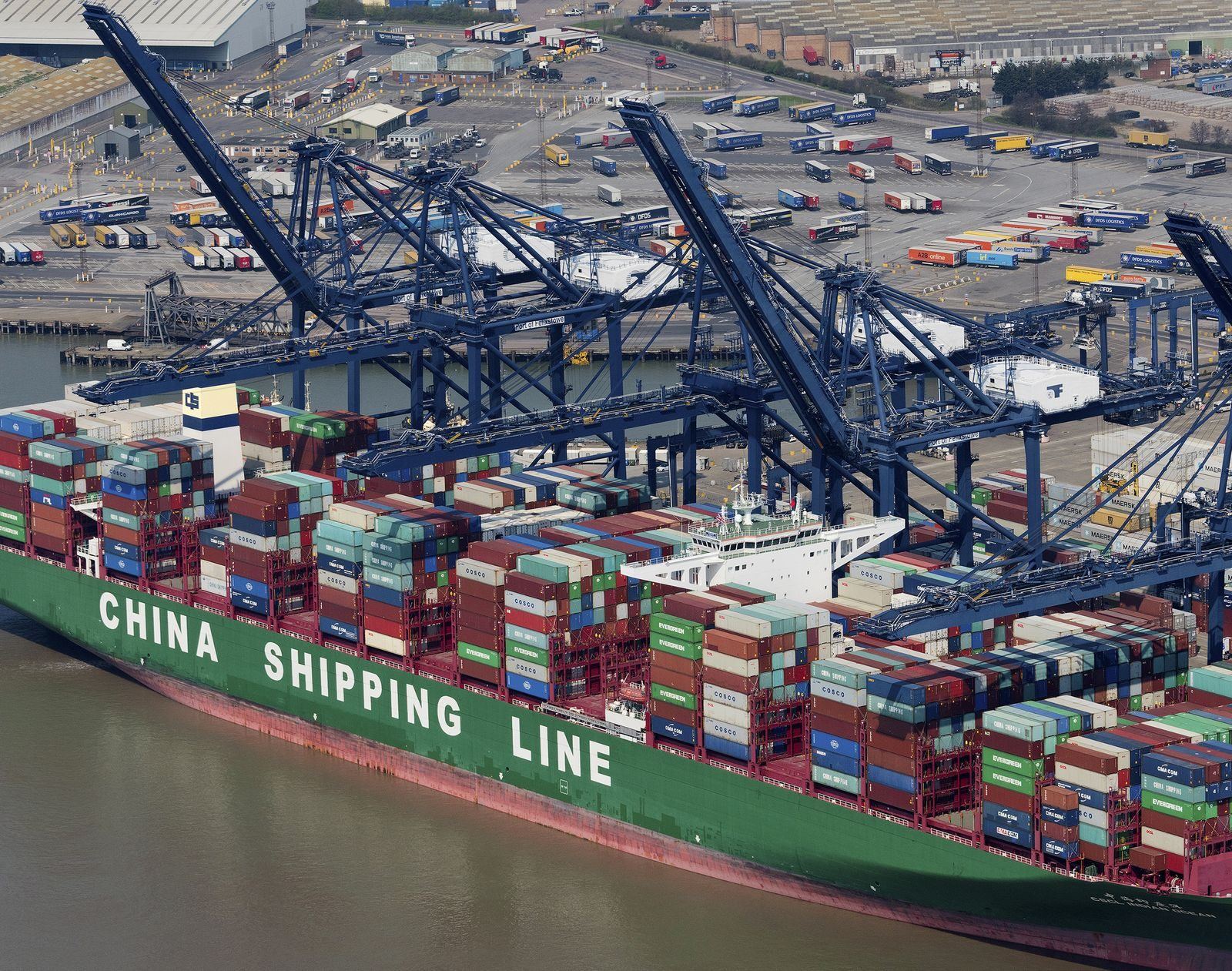
Start with the money, because that is where the aftershocks last longest. Early USGS modeling, as reported by Life News Agency, put potential economic losses between 1 and 10 percent of Panama's gross domestic product, a range so wide it reads as a confession of uncertainty. Finance Minister Felipe Chapman said he had contacted the World Bank, the International Monetary Fund, and other lenders for resources, and the Andean development bank CAF announced a $250,000 donation within hours, which President Mulino publicly welcomed. Panama's economy is services, logistics, and the canal, and the canal is the number that matters most: the waterway kept operating normally through the quake while specialized teams inspected the locks, with roughly 90 vessels waiting at both entrances, according to shipping data. The infrastructure around it fared worse. Power provider Naturgy reported outages across six provinces, Tocumen International Airport suspended flights as a precaution before reopening, two Panama City metro lines halted, schools closed nationwide, and water treatment plants reported interruptions. The United States, whose trade and whose tens of thousands of resident citizens both run through Panama, is watching closely, and the relationship is tracked in our United States factbook.
The politics moved as fast as the seismographs. President José Raúl Mulino wrote on X that he had ordered the mobilization of personnel, resources, and aid, that the whole government was mobilizing to respond, and that he would personally take part in coordinating the effort in the hardest-hit areas. By afternoon he was touring an evacuated hospital in Penonomé, where patients were being treated outdoors. Secretary of State Marco Rubio said Washington was closely monitoring the situation and, at Panama's request, rapidly mobilizing resources and personnel to assist, publishing a 24/7 consular hotline for affected Americans. The region answered in kind: the leaders of Colombia, Ecuador, and Guatemala sent solidarity and aid offers, Peru, Colombia, and Uruguay added their voices, and Mexico's president reported no Mexican nationals among the victims. Even the copper mine earned a line in the story: First Quantum Minerals said its Cobre Panamá operation, about 140 kilometers north of the epicenter, remained stable and safe. Costa Rica felt the shaking as well, and its profile sits in our Costa Rica factbook.
Panama does not do this often, which is part of why Friday felt so disorienting. Earthquakes are rare here and usually confine themselves to Chiriquí province on the Costa Rican border. The last quake to cause widespread damage was in 1991, a 7.4 centered across the border in Costa Rica that killed 23 people, injured 559, and left thousands homeless in Bocas del Toro. The country sits on the Pacific Ring of Fire, the 40,000-kilometer arc where most of the planet's earthquakes are born, yet its own small plate has been comparatively polite. Friday was a reminder that politeness is not a geological guarantee.
First, the fault's mood. With more than 80 aftershocks already logged and a 6.6 inside the sequence, seismologists expect the ground to keep talking for days, and every strong aftershock threatens buildings already cracked. Second, the inspections. Engineers must now decide which of the damaged churches, hotels, and homes in the central provinces can be saved, where displaced families will sleep, and how to reach Tonosí. Third, the accounting. The gap between 1 and 10 percent of GDP will narrow into budgets, insurance claims, and loan applications on the World Bank's desk. Fourth, the canal. It never stopped, but the inspection reports will be read in shipping boardrooms from Singapore to Rotterdam. A 7.7 with no deaths is a mercy. Whether it stays a mercy depends on the next two weeks.
In Washington, the story reads as a hemisphere-security stress test passed at speed. A 7.7 on the Pacific flank of a dollarized ally that hosts the canal is the kind of event the U.S. Southern Command plans for, and Rubio's within-hours mobilization, at Panama's explicit request, is being framed as the model: requested help, not imposed presence. The tens of thousands of Americans living in Panama give the consular hotline real domestic resonance.
The Western press will also read the canal's uninterrupted operation as the lede that matters for markets. Ninety ships waiting at both ends while inspectors checked the locks is continuity, not crisis, and continuity is the commodity Washington sells. Expect coverage to pivot quickly from seismology to the reconstruction ledger: World Bank, IMF, and who writes the checks.
From Beijing and Moscow, the quake is first a chokepoint story, not a humanitarian one. The canal moving 90 ships through an inspection regime hours after a 7.7 is the data point that matters: the artery held. State media will note, dryly, the speed of the American mobilization and ask what disaster diplomacy buys in a country where Washington already writes the security script.
The eastern reading will also linger on the asymmetry the West skips: Panama absorbs the shock, the IMF and World Bank absorb the bill, and the reconstruction contracts will be tendered in dollars. Expect quiet commentary about who profits from rebuilding, and reminders that the region's deadliest quakes this year, in Venezuela and Colombia, drew a fraction of this attention.
Across Latin America, this is a story of regional reflexes, not rescue from afar. Colombia, Ecuador, Guatemala, Peru, Uruguay, and Mexico sent solidarity within hours; the Andean development bank CAF put $250,000 on the table the same day. The message is that the neighborhood shows up first, and the Spanish-language coverage centers Panamanian voices: the civil protection chief, the geoscience director, the residents sleeping outside.
The southern reading also carries the year's grief. Latin America has now taken four magnitude-7-plus hits in 2026, and Panama's zero-death ledger sits beside Venezuela's thousands and Colombia's hundreds. The question being asked from Bogotá to Buenos Aires is not whether the plates will move again, but whether the building codes, the drills, and the warning systems that spared Panama can be afforded everywhere else.
The USGS measured the quake at magnitude 7.7, after first reporting 8.0 and briefly 7.6. The epicenter was about nine miles southwest of Pitaloza Arriba in Herrera province, at a shallow depth of roughly 12.6 kilometers, which amplified the surface shaking. Tremors were felt in Panama City, 239 kilometers away, and across the borders in Colombia and Costa Rica.
Tsunami threat bulletins covered nine Pacific countries, with forecasters warning of waves one to three meters above normal tide on parts of Panama's coast. Chile even placed Easter Island, 3,500 kilometers offshore, under precautionary advisory. But no destructive wave materialized: the Pacific Tsunami Warning Center lifted the threat the same evening, and the U.S. National Tsunami Warning Center confirmed no danger to the American coastline.
Officials reported dozens of injuries and, as of Friday evening, no confirmed deaths, an extraordinary outcome for a shallow 7.7. One compiled tally reached 27 injured. Damage concentrated in the central provinces of Herrera, Los Santos, Veraguas, and Coclé, where buildings, churches, and roads cracked or partially collapsed, while Panama City reported no structural damage despite forty seconds of shaking.
No. The Panama Canal Authority said the waterway kept operating normally through the quake, with specialized teams inspecting locks and facilities for damage. Shipping data showed roughly 90 vessels waiting at both entrances on Friday, a normal queue rather than a crisis backlog. Tocumen International Airport did suspend flights temporarily as a precaution, and two Panama City metro lines halted service.
