Hours after Navi Pillay's Nobel win, Washington sanctioned the court as an institution. The stated reason is sovereignty; the critics hear revenge against the judges who dared to rule.
Published 11 October 2026 · 04:42 GMT
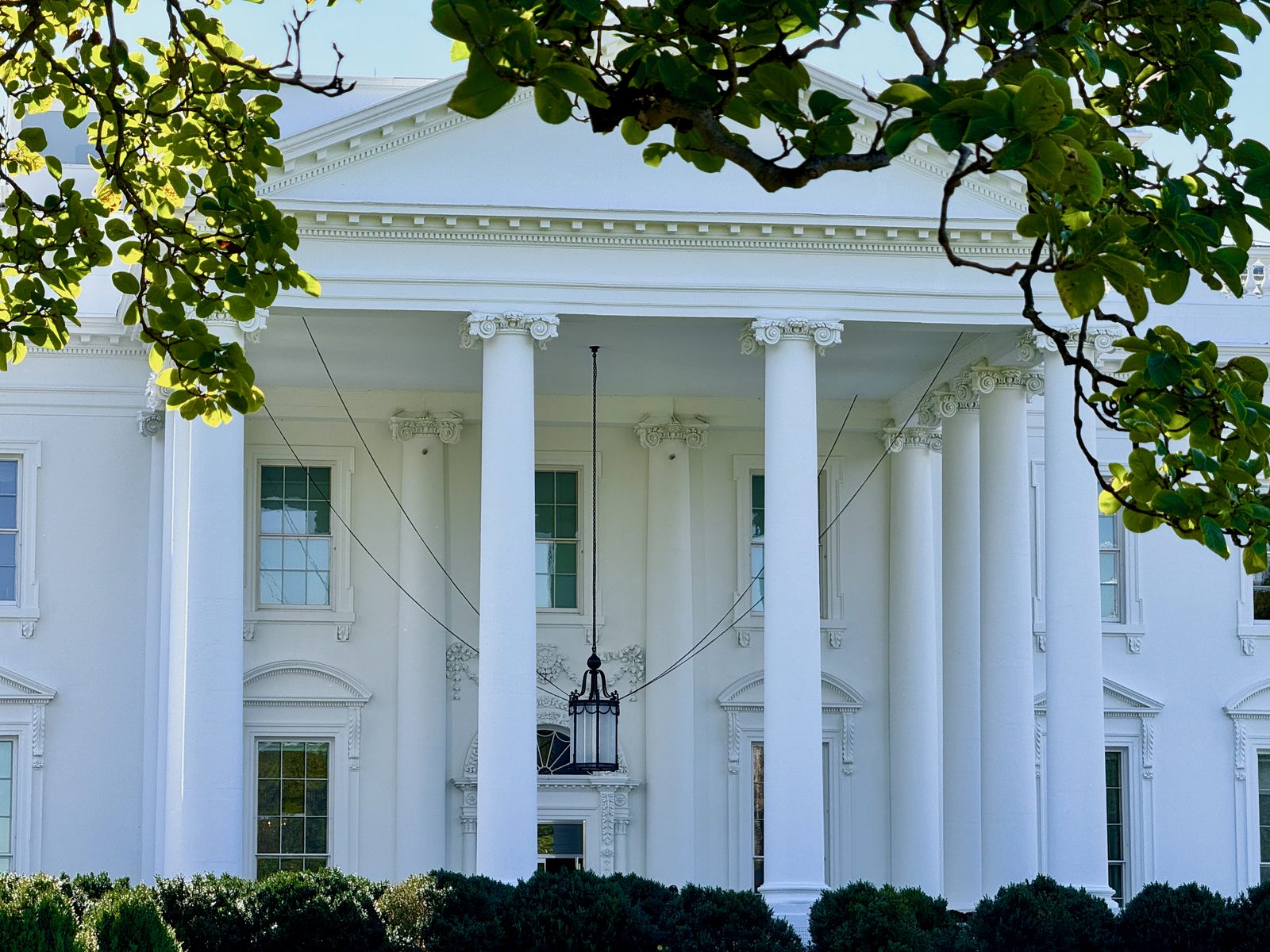
Hours after former ICC judge Navi Pillay was named the 2026 Nobel Peace Prize winner on Friday, the United States imposed sweeping new sanctions on the International Criminal Court. The move, reported by Al Jazeera and the BBC, targets the court as an institution — the most aggressive American assault yet on the tribunal founded in 2002 to prosecute war crimes, crimes against humanity and genocide.
The mechanics are financial. US entities are now barred from transacting with the ICC, and the administration's stated aim, in Secretary of State Marco Rubio's words, is to "defend US sovereignty" against a court it accuses of seeking to prosecute Americans. Washington had already sanctioned 17 ICC judges and officials individually; this extends the penalties to the institution itself, designed to inhibit its financial operations. A six-month grace period before some sanctions take effect lets member states keep funding the court while a negotiated "solution" is sought.
Pillay, 85, responded from Oslo. Addressing the Nobel Peace Center by video link on Saturday, the South African former ICC judge and former UN rights chief called sanctions on ICC judges "unheard of" and "unacceptable" — imposed, she said, "just for the judicial orders they issue" — and warned of real tension and anxiety over the continued existence of international courts.
The court itself called the measures "an assault on the rule of law and the foundations of the international legal order." UN Secretary-General António Guterres called the decision "a serious blow to our collective pursuit of international criminal justice, of which the ICC is a key pillar." Eight governments — the UK, Canada, Denmark, Germany, France, Italy, Japan and the Netherlands — said they "regret and strongly disagree with" the sanctions.
President Donald Trump, meanwhile, called the prize announcement "disgraceful and embarrassing" and an "indelible stain on the country of Norway." He has long said he should have won the prize himself and was nominated by allies last year. Pillay, South Africa's fifth laureate after Nelson Mandela and Desmond Tutu, joked about sharing the prize with Trump — a nod to 2025 winner María Corina Machado, who gifted her prize to him.
The sanctions' shape is clear: no US entity may transact with the ICC, and the target is institutional — not just the 17 judges and officials already sanctioned, but the court's operations as a whole. The six-month grace period is equally on the record: some measures are deferred so member states can keep the court funded while diplomats negotiate.
The administration's stated rationale is also documented. Rubio frames the move as sovereignty defence; the White House calls the ICC a "rogue" institution run by "globalists" that threatens American sovereignty. The grievances are specific: a now-closed ICC investigation into US soldiers in Afghanistan, and arrest warrants for Israeli officials, including Prime Minister Benjamin Netanyahu — the court has issued more than 70 warrants in its history, including for Russia's Vladimir Putin.
One detail matters enormously: the new sanctions do not require the withdrawal of those warrants as a condition for lifting. That undercuts any reading of the move as a bargaining tactic toward a specific case — and strengthens the reading that the target is the court's existence.
The "solution" the grace period is meant to produce has never been defined. Washington has not said what concession — short of the court's submission — would lift the sanctions. Without a defined off-ramp, the six months look less like diplomacy and more like a countdown.
The practical bite is also uncertain. International banks routinely over-comply with US sanctions, freezing transactions far beyond the letter of the law to avoid American penalties. Whether the ICC can still pay staff, protect witnesses and run trials — or whether its operations quietly seize up — will depend less on the sanctions' text than on bankers' fear.
And Europe's answer is unwritten. Eight governments have voiced disagreement; none has yet announced it will defy Washington and route funding through non-dollar channels. Disagreement is cheap. Defiance is expensive.
Because the ICC is the load-bearing wall. The Hague system — the court, the tribunals, the ad hoc mechanisms — rests on a single premise: that no state is above the law it asks others to follow. Sanctioning the institution rather than its judges is a veto over international justice itself, and a template: any powerful state can now financially strangle any tribunal whose rulings it dislikes.
The precedent runs in two directions. If Washington succeeds, the lesson for Beijing, Moscow and every other capital with a grievance against an international body is obvious — sanction the referee. If Washington fails and Europe keeps the court alive, the lesson is that the dollar's reach has limits, and the post-1945 architecture can survive its principal architect's defection.
Pillay's prize sharpens the symbolism. She is South Africa's fifth laureate, after Mandela and Tutu — figures who embodied the idea that law can restrain power. Awarding her the prize on Friday and sanctioning her former court hours later was not a coincidence of timing; it was a collision of worldviews, staged in a single news cycle.
Two readings compete, and the truth is probably both. The doctrinal reading: the United States has opposed the ICC since the Rome Statute — it is not a member, it rejects the court's jurisdiction over Americans, and every administration has guarded that line. The 2020 sanctions on ICC officials were Trump's first-term instrument; this is the second-term escalation, from individuals to the institution.
The revenge reading: the sanctions landed hours after Pillay's Nobel — a former ICC judge honoured for "efforts to promote peace and international law," the very project Washington was sanctioning. Trump called the prize "disgraceful." The timing was a message, and messages are policy.
What makes this round different is the financial logic. Sanctioning judges was symbolic pressure; sanctioning the court as an institution, in a dollar-denominated financial system, is operational warfare. The ICC does not need America's permission to exist — it needs America's banks to function. That is the asymmetry Washington is exploiting, and it is why the six-month grace period is the real battleground: not a pause, but a siege with a timetable.
The first ripple is the chilling effect. Other international institutions — tribunals, monitoring bodies, the UN's own justice machinery — are watching a precedent being set: rule against American interests and your funding can be sanctioned away. Self-censorship is the cheapest compliance, and it has already begun in the form of bankers' over-compliance.
The second is the transatlantic split. Eight governments have said they "regret and strongly disagree" — but disagreement expressed in communiqués is not the same as money routed around the dollar. If Europe funds the court through non-dollar channels, it proves the architecture can survive without Washington. If it doesn't, the ICC becomes a demonstration that American financial power is a veto over international law itself.
The third is the Nobel's politicisation. Trump's long grievance about the prize — he has said he should have won, was nominated by allies last year, and now calls Pillay's award "disgraceful" — turns the world's most prestigious peace honour into another front of his war with the institutions. Pillay's joke about sharing the prize with him was the weekend's sharpest diplomacy: grace as a weapon, deployed against a man who mistakes it for weakness.
Three things to watch. First, the grace-period diplomacy: whether any "solution" materialises, or the six months simply run out. Second, the European funding decision — the moment a government actually routes money to the court through non-dollar channels, or doesn't. Third, the ICC's own operations: staff, witnesses, trials. A court that cannot pay its people is a court that has been dismantled without a single statute being repealed.
For the running file, read Pillay's Nobel win and the first sanctions wave and Trump's attack on the laureate — and note that the court's warrants, including the one for Vladimir Putin, are the backdrop Washington wants gone.
Western coverage splits along an uncomfortable fault line. The BBC and much of the European press treat the sanctions as an attack on the rules-based order — Guterres's “serious blow” and the eight governments' “regret” carry the moral weight. But there is a parallel, quieter Western current: the United States was never an ICC member, never accepted its jurisdiction over Americans, and its allies have spent decades tolerating that exemption. The question being asked in this current is whether the court was ever built to survive American hostility — or was always living on borrowed American time.
The eastern reading is dry and unsentimental: this is what hegemony looks like when it stops pretending. Al Jazeera's Inside Story panel — with Reed Brody, who sat in the 1998 Rome conference that created the court, Nathalie Tocci advising Europe's foreign-policy chiefs, and Republican analyst Suhail Khan — framed the central question as whether Europe will defy Washington and defend the court. From this angle, the sanctions are less about the ICC's warrants than about who gets to decide what international law means — and the answer Washington is giving is: us, or no one.
The Global South lens remembers who built the court's docket. The ICC's defendants have overwhelmingly been African; its most consequential recent warrants — Netanyahu, Putin — touched the powerful for the first time. From this angle, Washington's fury arrives precisely when the court stopped being a tribunal for the weak and started ruling on the strong. Pillay herself embodies the irony: a South African who defended anti-apartheid activists, worked on Rwanda, Myanmar and Gaza, now honoured by Oslo and sanctioned by Washington in the same weekend.
The sanctions ban US entities — banks, companies, individuals — from transacting with the International Criminal Court as an institution. Washington had already sanctioned 17 ICC judges and officials individually; the new move extends the penalties to the court itself, aiming to inhibit its financial operations. A six-month grace period before some sanctions take effect lets member states keep funding the court while a negotiated "solution" is sought.
Secretary of State Marco Rubio says the goal is to "defend US sovereignty," accusing the court of seeking to prosecute Americans; the administration calls the ICC a "rogue" institution run by "globalists." The timing matters: the sanctions were announced hours after former ICC judge Navi Pillay won the Nobel Peace Prize. Washington was already angered by a now-closed ICC investigation into US soldiers in Afghanistan and by arrest warrants for Israeli officials, including Benjamin Netanyahu.
Pillay, 85, a South African former ICC judge and former UN rights chief, addressed the Nobel Peace Center in Oslo by video link on Saturday. She called sanctions on ICC judges "unheard of" and "unacceptable" — imposed, she said, "just for the judicial orders they issue" — and said there is real tension and anxiety over the continued existence of international courts. She is South Africa's fifth Nobel Peace laureate, after Nelson Mandela and Desmond Tutu.
Eight governments — the UK, Canada, Denmark, Germany, France, Italy, Japan and the Netherlands — said they "regret and strongly disagree with" the sanctions, and the six-month grace period gives them room to keep the court funded while diplomacy runs. But the dollar system is Washington's weapon: even states that disagree may find their banks unwilling to touch ICC transactions. Whether Europe can sustain the court alone is the open question of the next six months.
