All 32 aboard an Air Force ATR-42 died in the Igbokoda swamps on Monday; Tinubu declared three days of mourning as investigators face familiar questions about military flight safety.
Published 6 October 2026 · 18:00 GMT
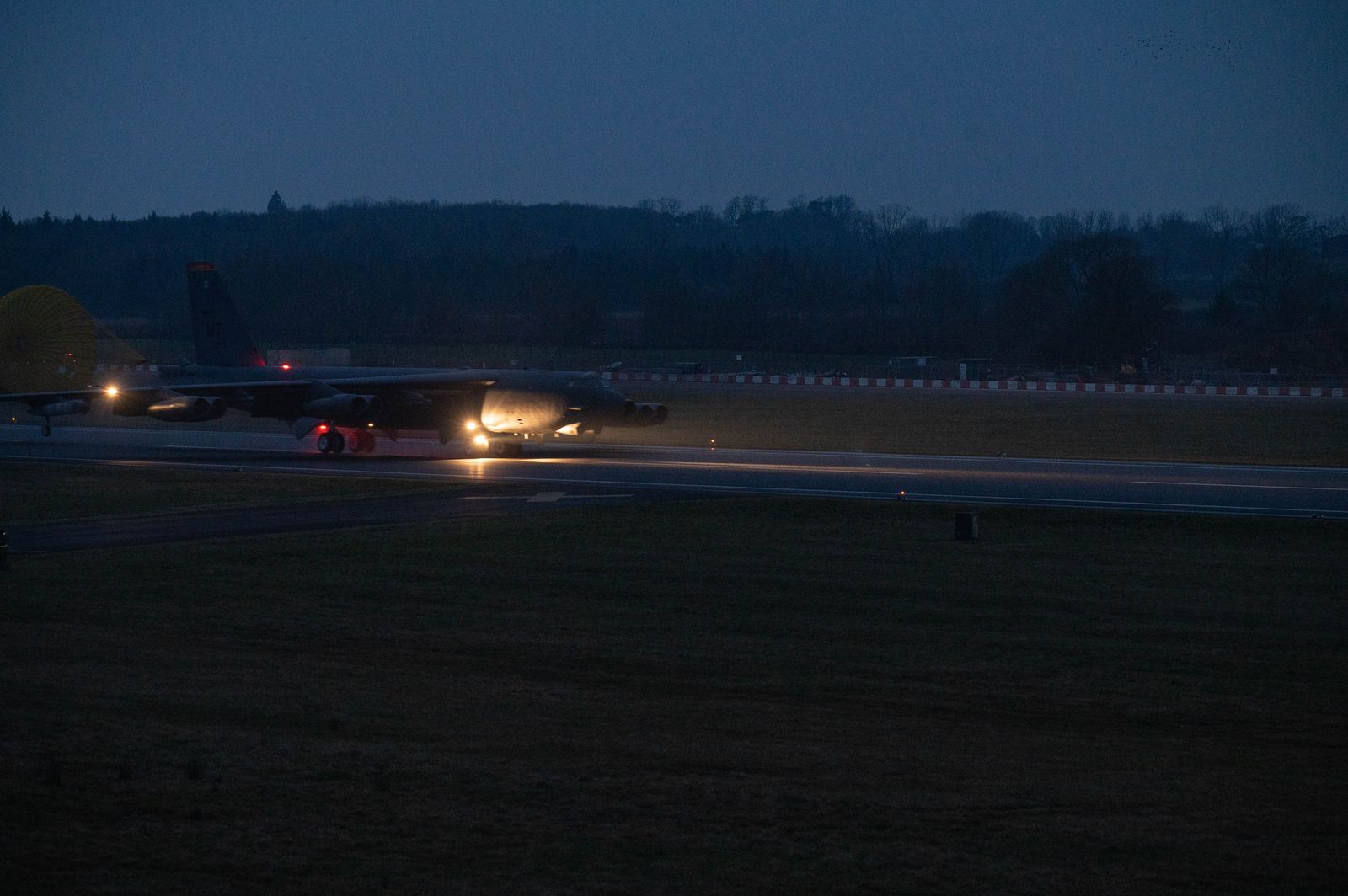
LAGOS — Dayo Akinte heard what she thought was thunder. It was just after nine on Monday morning, and the 39-year-old firewood hawker was about a kilometre from the swamp outside Igbokoda when the sound rolled across the water. Minutes later, a fisherman was running to the nearby naval base. An aircraft carrying 32 people had fallen out of the sky — and Nigeria's deadliest military aviation disaster in years was under way.
The aircraft was an ATR-42 bearing the tail number NGR 931, a twin-engine turboprop the Nigerian Air Force flies as a maritime-patrol and surveillance platform with its 81 Air Maritime Group in Benin City. On Monday morning it was doing something routine: ferrying 25 passengers and seven crew members from Benin City, in Edo State, to Lagos, the commercial capital of Nigeria. At about 9:13 a.m. local time, air traffic controllers lost contact. Repeated calls went unanswered — “all efforts to raise the aircraft on radio proved abortive,” Aviation Minister Festus Keyamo said later — and the wreckage was found in a swampy, riverine stretch near the naval base at Igbokoda, headquarters of the Ilaje local government area in Ondo State.
The ATR-42 is a workhorse: a twin-engine turboprop certified for civil and military use, in service from the Caribbean to the South Pacific. The Nigerian variant, an ATR-42-500MP, carries sensors for maritime patrol, intelligence and reconnaissance — the eyes the military turns on piracy and oil theft in the Gulf of Guinea. And yet this mission was anything but exotic. It was a shuttle flight, the military equivalent of a staff bus. Rescue crews reached the site by boat; the terrain was waterlogged, and by Monday evening Governor Lucky Aiyedatiwa had said what everyone already feared: “no single life was saved.”
The Air Force has not released the names — the Presidency says families will be contacted first. But fragments of the passenger list have surfaced, and they tell a particular story. Some of the 25 passengers were family members of military personnel, Vanguard reported, including children returning to school and relatives who had been visiting serving officers in Edo and Delta states. This was not only a military flight; it was a family flight, the kind where duty rosters and school terms travel together.
Among the dead was the pilot, Squadron Leader Aham Man Ugweje. He had married just two weeks earlier, on September 19 in Abuja — to a fellow officer, Flight Lieutenant D.E. Adekunle. Her father, Wing Commander O.E. Adekunle, had himself died in a Nigerian Air Force crash: the 2006 Dornier 228 disaster. Twenty years apart, two generations of the same family, claimed by the same uniform's risk. It is the kind of symmetry no official communiqué will carry, and it has carried the grief of the week.
Thirty-two people boarded a routine flight on a Monday morning; by evening, a nation was lowering its flags.
The timeline, for now, is thin. Keyamo's statement says the ATR-42 disappeared from contact at 9:13 a.m. and never answered again. The monarch of Igbokoda, Oba Afolabi Odidiomo, told reporters it was raining when the aircraft came down in the waterlogged swamp; the plane did not catch fire, but a substantial part of it slipped beneath the water. A firewood hawker who lives about a kilometre away told AFP she heard what sounded like thunder. One local report suggested the aircraft may have circled before going down — but nobody has confirmed that, and the cause remains officially unknown.
Here is the institutional wrinkle: Keyamo was quick to note that the control and regulation of military aircraft fall “completely outside the authority” of his ministry and the civil aviation authority. The investigation belongs to the Air Force itself — the same institution whose pilots, mechanics and budgets are now the subject of the inquiry. That is standard practice in most countries. It is also, as every previous Nigerian crash has shown, where the public's patience wears thinnest.
President Bola Tinubu declared three days of national mourning and ordered flags flown at half-mast across the country. In a condolence message to the Chief of Air Staff, Air Marshal Sunday Kelvin Aneke, he called it “a painful moment for our Armed Forces and for the entire nation,” and said the fallen officers' sacrifice “will never be forgotten.” He also ordered the Air Force to “immediately commence a thorough investigation” to prevent a recurrence. The statement, signed by his spokesman Bayo Onanuga, promised the Air Force would publish the names once families had been notified.
The grief was bipartisan and immediate: opposition figures Peter Obi and Atiku Abubakar joined the chorus of mourning, and the Ondo State government threw its emergency machinery at the swamp. Monday was a heavy day across West Africa in more than one way — in Senegal, the government was holding emergency meetings on deadly flooding after torrential rains. Two countries, two disasters, one long week of water.
Because it is not the first. The year 2021 still casts the longest shadow: on February 21, a Beechcraft King Air 350i crashed near Abuja airport after reporting engine failure, killing all seven aboard; on March 31, an Alpha Jet vanished over Borno on a mission against Boko Haram, its two pilots lost; and on May 21, another King Air went down near Kaduna, killing all 11 — including the Chief of Army Staff, Lieutenant General Ibrahim Attahiru. Seventeen officers in three months. BusinessDay asked the question in a headline that has not aged: “One force, too many crashes.”
Go further back and the pattern holds: a Dornier 228 crash in 2006 killed 13 of the 18 aboard; two fighter jets collided over Katampe Hill in 2018 during independence-day rehearsals. Monday's toll — 32 dead — makes Igbokoda the worst Nigerian military aviation disaster in recent years, as Reuters put it. Each time, an investigation was ordered. Each time, the findings arrived quietly, if they arrived at all.
Start with the geometry of the strain. Nigeria's Air Force is simultaneously fighting an insurgency in the northeast, watching the Gulf of Guinea for piracy and crude theft, and ferrying personnel between bases across a country of more than 230 million people. That is an enormous workload for a fleet that has repeatedly shrunk by attrition: the King Airs lost in 2021 cost about $4.5 million each, the Alpha Jet about $12 million, according to BusinessDay's accounting — money that buys neither the aircraft back nor the experience of the crews. Demography adds its own weight: this is a young officer corps, and on Monday's flight the roster blurred into family life — spouses, children, school terms.
And then there is the structure nobody wants to talk about. Military aviation in Nigeria answers to the military, not the civil regulator — which means the same chain of command that sets the operational tempo also grades its own safety homework. That arrangement is not unique to Nigeria. But the skeptical reader will notice the gap between the announced policy and the lived reality: investigations were “commenced immediately” in 2021 too, and here we are, five years later, counting 32 more coffins. The numbers tell their own story — and so does the silence around them.
The Western wires reached for the institutional frame. Reuters called Igbokoda one of Nigeria's worst military aviation accidents in recent years and said it would “intensify scrutiny of flight safety and operational readiness.” AFP, in a dispatch carried by Ghana's Business News, emphasized the scale — all 32 dead — and the presidential mourning that followed. The facts are the same; the center of gravity is the audit: the fleet, the record, the risk.
African newsrooms told it closer to the ground. West Africa Democracy Radio put the crash on its regional wire alongside floods and power crises — the ordinary furniture of a West African news day. Nigerian outlets gave the monarch of Igbokoda his voice, the firewood hawker hers, the fisherman his. Days earlier, African leaders had been talking continental integration at the El-Alamein summit; on Monday, the continent's biggest country was counting bodies in a swamp. Nobody editorialized. Nobody needed to.
Three things, in order. First, the investigation President Tinubu ordered: will it be thorough, will its findings be published, and will the Nigeria Safety Investigation Bureau's offer of technical help be taken up? The pattern of past probes — announced loudly, concluded quietly — is the benchmark against which this one will be judged. Second, the names: the Air Force's promise to publish them after family notification is a small thing, and an important one — 32 people deserve to be known, not numbered.
Third, the harder questions that no communiqué has touched yet: the weather over Ondo on Monday morning, the maintenance history of NGR 931, and the practice of carrying families and schoolchildren on military shuttles. None of this assigns blame; the aircraft is at the bottom of a swamp, and the truth will take weeks. But a nation that has buried 32 of its people is entitled to more than a mourning period. It is entitled to an answer.
Reuters framed Igbokoda as a test of the Nigerian Air Force's operational readiness — one of the country's worst military aviation accidents in recent years, 'likely to intensify scrutiny of flight safety' — treating the crash as an institutional event, the kind that belongs in defense and risk assessments. AFP reached for the continental register: one of the worst air disasters in recent years in Africa's most populous country, with the president's mourning as the official punctuation.
That framing is neither wrong nor incomplete — it is simply a choice of altitude. The Western wire instinct — numbers first, institutions second, the human detail third — produces a crash that is legible to insurers, diplomats and defense analysts. What it leaves out is the swamp: the fisherman who ran to the naval base, the monarch thanking God the plane fell on water instead of the town, the two-week-old marriage. Those details exist in the Nigerian press. The wires simply did not need them.
By the evening of October 6, no major Eastern-bloc wire — Xinhua, TASS, Anadolu, CGTN — had been found carrying a verifiable report of the Igbokoda crash. That silence is itself a reading: for the Eastern media ecosystem, a Nigerian military transport crash, however deadly, does not clear the threshold of strategic relevance that a Sahel coup or a summit communiqué does.
If it were covered, the probable reading would run through sovereignty: a national air force, a national investigation, a president ordering flags at half-mast — the grammar of a state handling its own tragedy without foreign tutelage. Nothing in that is contradicted by the facts; it is simply a lens that was not switched on this time. The gap is noted, not filled.
African outlets told the crash as a community event. West Africa Democracy Radio filed it on a wire that also carried Senegal's floods and the Gambia's power crisis — the texture of a region where disaster is never abstract. Pluboard, TheSightNews and Nigeria's own press gave space to the monarch of Igbokoda, who said his first thanks was that the plane had not fallen inside the town, and to the governor, who said no single life was saved.
And BusinessDay reached for the archive, not the adrenaline: its 2021 headline — 'One force, too many crashes' — resurfaced as the frame for the whole story. The Southern reading is historical where the Western one is actuarial. The question is not only what happened on Monday, but how many Mondays it has already happened on.
On Monday, October 5, 2026, a Nigerian Air Force ATR-42 (tail number NGR 931) crashed in swampy terrain near the naval base at Igbokoda, Ondo State, while flying a routine mission from Benin City to Lagos. Air traffic controllers lost contact at about 9:13 a.m. local time. All 32 people aboard — 25 passengers and seven crew — were killed. President Tinubu declared three days of national mourning.
All 32 people aboard died: 25 passengers and seven crew members, according to Aviation Minister Festus Keyamo and the Nigerian Air Force. The passenger list reportedly included family members of military personnel, among them children returning to school. The Air Force said names would be released only after the families had been formally notified, so the full manifest was still unpublished on Tuesday.
No single official cause has been established for the October 2026 crash, but the accident revives a painful pattern: three fatal Air Force crashes in 2021 alone killed 20 officers, including the Army chief, plus earlier disasters in 2006 and 2018. Analysts point to an overstretched fleet, costly attrition, and a system in which the military investigates its own aviation accidents outside civilian regulatory oversight.
President Bola Tinubu declared three days of national mourning and ordered all Nigerian flags flown at half-mast. In a statement issued by his spokesman Bayo Onanuga, he condoled the Chief of Air Staff, Air Marshal Sunday Kelvin Aneke, and ordered the Nigerian Air Force to 'immediately commence a thorough investigation' into the cause of the crash to prevent future occurrences. He also commended the search-and-rescue response.
