Domestic supply has crossed 2 bcf/d, the OB3 pipeline is complete, and Abuja is betting gas will do what oil never did — light the country, feed its factories, and power a continent’s worth of new demand.
Published 3 October 2026 · 06:00 GMT
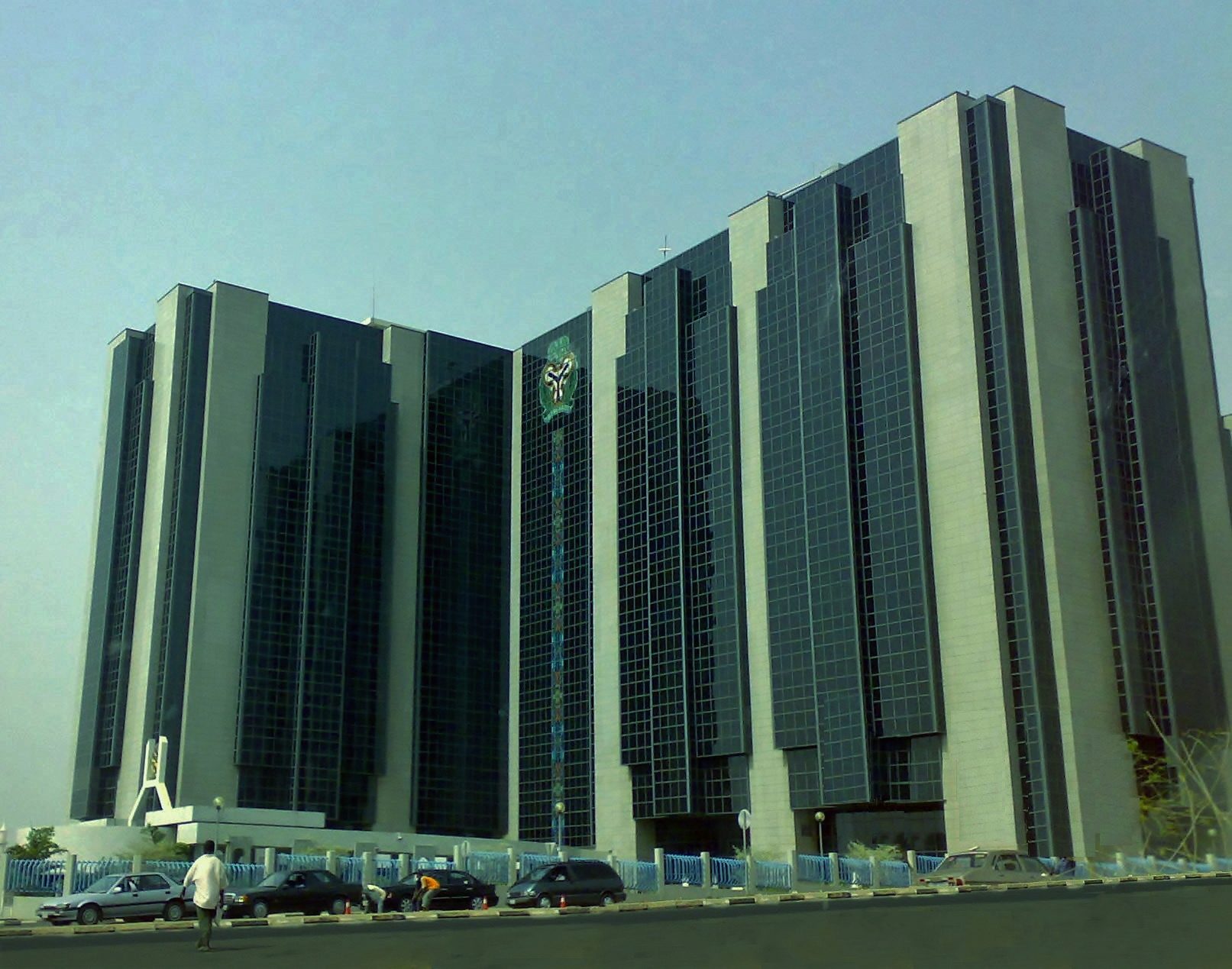
ABUJA — Nigeria’s domestic gas supply has crossed two billion cubic feet per day for the first time, Gas Minister Ekperikpe Ekpo announced on Friday, as the government pushes molecules toward the country’s power plants and factories instead of its flare stacks. The milestone caps a quiet three-year climb in which national gas production rose to 7.5 billion cubic feet per day from roughly 6.8 in 2023, and proven reserves inched up to 215.19 trillion cubic feet from 208.83. Behind the numbers sits a bet as old as Nigerian oil and as new as tomorrow’s grid: that gas — not crude — is the fuel that finally electrifies Africa’s largest economy and feeds its factories, its fertiliser plants, and its export ambitions. But the celebration comes with asterisks only Nigeria could write: a half-finished pipeline empire, a refinery in Kenya fighting its second lawsuit, and an American charm offensive circling the continent’s gas fields.
Night falls over the Niger Delta and the flares bloom. They have burned for seventy years — orange tongues licking a black sky, the most wasteful bonfire on earth. Nigeria sat on enough gas to light a continent and chose, for decades, to burn it off at the wellhead while its own cities sat in darkness. Friday’s announcement is the country’s attempt to turn that bonfire into a hearth. Ekperikpe Ekpo, the Minister of State for Petroleum Resources in charge of gas, told reporters on October 2 that domestic supply has now crossed two billion cubic feet per day. The gas is flowing to power plants and industrial clusters, he said — the two hungriest mouths in an economy that has never generated enough electricity for its own ambitions. It is, by any honest measure, the most consequential energy number Nigeria has produced in years. Not a discovery. Not a memorandum of understanding. Molecules, actually moving, actually metered. The cynics will note, correctly, that two billion cubic feet a day is still a modest figure next to what Nigeria holds beneath its soil and its swamps. They will note that the announcement lands ten days before African Energy Week, that season when ministers travel to Cape Town to be photographed beside pipeline models. All true. Cynicism is cheap in Nigeria; it is practically the national currency. But beneath the noise something physical is happening, and it is made of steel. The Obiafu-Obrikom-Oben pipeline — OB3 to everyone who has spent years waiting for it — has reached full completion, and first gas is being prepared. When it opens, two billion cubic feet per day of capacity will unlock more than 500 million standard cubic feet per day of additional domestic gas, aimed straight at the grid and the factories. The Ajaokuta-Kaduna-Kano line, the storied AKK, sits at roughly 95 percent complete — close enough to smell the gas. Nigeria has spent a decade promising pipelines the way other countries promise elections. This time, the pipes are actually in the ground.
Nigeria adds millions of people every year — the equivalent of a new mid-sized country, annually, inside a single country. Every one of those millions needs light, heat, work, and a phone charged by something more reliable than a neighbour’s generator. The national grid, famously, delivers less dependable power than the sum of the diesel generators chugging behind Lagos compounds. Gas is the bridge between that grim present and any plausible future, and Friday’s milestone is the first plank laid across it. This is the arithmetic of the demographic lens, and it is unforgiving. A population compounding at Nigeria’s pace cannot be powered by wishful thinking, and it cannot be powered by crude oil — the commodity Nigeria exports at world prices and then re-imports as petrol and diesel in one of the great absurdities of modern economics. Gas is what Nigeria actually possesses in abundance: 215.19 trillion cubic feet of proven reserves and counting, the largest endowment on the continent. It is what the country’s power turbines, fertiliser plants, and petrochemical ambitions actually run on. It matters, too, because of timing. Europe spent four years scrambling for non-Russian gas after the continent’s great pipeline divorce. Asia’s appetite for LNG keeps climbing. Nigeria’s trains at Bonny Island have run below capacity for years, starved of feedstock by theft, underinvestment, and insecurity in the Delta. If domestic supply is genuinely rising — if OB3 unlocks its promised slug of new molecules — the same gas can serve two masters: the power plants at home and the export terminals abroad. That is the oldest trick in the energy book, and Nigeria is finally positioned to attempt it. And it matters because of who is watching. Washington has noticed. Brussels has noticed. Beijing noticed a decade ago. The contest for Africa’s energy future is no longer a quiet diplomatic hobby conducted in embassy basements. It is the main event, and Nigeria has just walked onto the stage.
Nigeria sat on enough gas to light a continent and chose, for decades, to burn it off at the wellhead while its own cities sat in darkness.
Nigeria has been ‘about to’ become a gas superpower since roughly the invention of the phrase. The gas was always there — associated gas bubbling up alongside the oil, flared because it was cheaper to burn than to capture, a torch visible from satellites. For decades the economics were perverse: oil paid the bills, gas was a nuisance, and the flare stacks were the price of doing business. The Petroleum Industry Act, the Decade of Gas declaration, the endless ministerial roadshows in Houston and London — all of it was an attempt to flip that equation, to make the nuisance the business. The numbers now suggest the flip is, slowly, happening. Gas production has risen to 7.5 billion cubic feet per day from about 6.8 in 2023. Not a revolution — a direction, which in Nigeria counts as news. Proven reserves have grown to 215.19 trillion cubic feet from 208.83, the quiet work of appraisal wells, revised bookings, and fields finally being taken seriously. These are accountant’s victories: unglamorous, incremental, real. The money followed, or at least some of it did. Through the Midstream and Downstream Gas Infrastructure Fund, the government deployed 671 billion naira — about $434 million — and says the outlay has attracted roughly 1.6 trillion naira in private investment across 31 projects and 205 infrastructure assets. Read that ratio the way an investor would: public money as the match, private money as the fire, better than two-to-one. Whether the fire keeps burning is the oldest Nigerian question of all: will the rules survive the next cabinet reshuffle, the next minister, the next mood? The deeper history is a warning and, for once, a contrast. Nigeria has buried more gas master plans than most countries have ever written. The difference this time is physical and therefore harder to fake: pipelines you can walk, compressor stations you can touch, first gas you can meter. Paper promises do not need welding crews.
The spine of the entire wager is steel in the ground, and the steel is finally arriving. The Obiafu-Obrikom-Oben pipeline — two billion cubic feet per day of capacity, full completion reached, first gas being prepared — exists to do the unglamorous, decisive thing: move gas from the eastern producing heartlands to the demand centres that have waited decades for it, unlocking more than 500 million standard cubic feet per day of additional domestic supply. That single increment, if it materialises on schedule, is the difference between the grid as aspiration and the grid as fact. Its northern sibling, the Ajaokuta-Kaduna-Kano pipeline, stands at about 95 percent complete — and the last five percent, as every Nigerian contractor will tell you over a long lunch, is where projects go to die or to be reborn. AKK is the more romantic of the two lines: a great trunk running from the gas fields to the industrial north, to Kano’s factories and Kaduna’s workshops, a physical argument that Nigeria is one economy rather than two unequal halves. If OB3 feeds the grid, AKK feeds the idea of the country. The government’s targets are written in the confident ink of officialdom: gas production of 10 billion cubic feet per day by 2027 and 12 billion by 2030. The catalogue of end uses reads like a national to-do list — power generation, industry, fertiliser, petrochemicals, LNG, transport, and exports. Fertilisers from Nigerian gas feeding African farms; petrochemicals from Nigerian gas packaging the continent’s goods; LNG cargoes sailing for foreign exchange while the lights stay on at home. It is a beautiful list. Lists are easy; pipelines are hard. But for once, the pipelines are the part of the plan that is furthest along, and that is worth noting in a country where the reverse has always been true.
Geopolitics first: gas is Nigeria’s ticket back to relevance on an energy map being redrawn in real time. Europe’s divorce from Russian pipeline gas triggered a scramble for alternatives; American LNG filled much of the gap, but buyers crave optionality, and Nigeria’s Atlantic-basin position — days of sailing from European and South American terminals — is geography as destiny. Washington is not spectating Africa’s gas story: the US EXIM Bank has approved nearly $5 billion for TotalEnergies’ Mozambique LNG, and ExxonMobil and its Area 4 partners awarded roughly $1.1 billion in pre-investment contracts for Rovuma LNG in August. Nigeria, holding the continent’s largest reserves, cannot afford to be the country that watched the boom from the flare stack. Macroeconomics: strip away the ceremony and this is a foreign-exchange story. Nigeria burns scarce dollars importing what it could manufacture at home — fuel, fertiliser, petrochemicals — while inflation bites and the exchange rate adjusts to reality. Every cubic foot of gas that displaces an imported litre is a small act of monetary self-defence. The Dangote Group made precisely this argument at the Abuja International Trade Fair on October 2, urging the country to boost domestic production and cut imports, citing inflationary pressures, exchange-rate adjustments, and evolving tax policies. When the continent’s most successful industrialist and the finance ministry’s instincts align, pay attention. Demographic shifts: the lens that dwarfs all others. Nigeria grows by millions of people every year, its median age parked in the teens. Those young millions will not accept the darkness their parents normalised — the generators, the blackouts, the quiet resignation. They will vote, or they will migrate, or they will make their anger felt in the streets. Energy access in Nigeria is no longer an infrastructure question; it is a legitimacy question. Gas that powers factories that employ the young is political survival disguised as industrial policy, and every minister in Abuja knows it. Historical patterns: Nigeria maintains a museum of abandoned energy master plans, and each new announcement is exhibited alongside the old ones. The honest pattern, the one the archives confirm, is that Nigerian energy projects succeed when three things align — physical infrastructure, credible pricing, and a minister who remains in post long enough to see the welds cool. Two of those conditions are now visible. The third is, as ever, the gamble on which everything rests. Structural and technological trends: the world is electrifying, and gas — whatever the conference slogans say — is the bridge fuel even its critics quietly burn. Grid-scale batteries, gas-to-power turbines, virtual pipelines, and small-scale LNG are collapsing the distance between a gas field and a factory that has never seen the national grid. Nigeria does not need to photocopy anyone else’s energy transition. It needs to run its own, and its own runs on gas.
Meanwhile, in Kenya, the continent’s most famous industrialist is discovering that pouring concrete is easier than moving paper. Dangote’s planned 700,000-barrel-per-day refinery in Lamu — a wager that East Africa’s fuel future should be refined on African soil — has struck its second legal hurdle. The Consumers Federation of Kenya, COFEK, has petitioned the PPP Petition Committee alleging that key project details were never made public, and demanding that the government’s planned stake in the project be disclosed. Sunlight first, the petitioners argue; foundations later. The petition follows an earlier suit by more than 130 residents asserting ancestral land claims, with a hearing scheduled for October 14. Two lawsuits, two distinct anxieties — one about transparency at the top of the deal, one about belonging at the bottom of it — and between them the oldest story in African development: big capital meets local claim, and the lawyers prosper first. Dangote, breaking ground on Wednesday, was in no mood for elegies. “Anybody who wants to cause trouble, we are ready,” he said — the shrug of a man who has built a cement empire across a continent of objections, and who has heard them all before. There is a logic beneath the defiance. At the Abuja International Trade Fair on October 2, his group urged Nigeria to boost domestic production and slash the import habit, pointing to inflationary pressures, exchange-rate adjustments, and evolving tax policies. The Lamu refinery is that argument poured into Kenyan concrete: a Pan-African industrial vision, extending now into energy. Whether Kenya’s courts share the vision is the question that October 14 begins to answer, and the whole region’s industrialists will be reading the ruling.
Watch the politics first, because in Nigeria the politics is the geology — everything flows through it. President Bola Tinubu used the country’s 66th Independence Day address to declare an “Age of Prosperity,” announcing that “the emergency treatment is over. The foundation has been repaired.” The economy grew more than 4 percent this year, he said; non-oil exports exceeded $6 billion in 2025, a historic high. Then came the line that will follow him: past leaders, he said, chose morphine while the disease spread — painkillers administered instead of cures. It is a vivid metaphor, and like all vivid metaphors it is also a promissory note. Gas at two billion cubic feet a day domestic is either the cure beginning to work or another dose of morphine. The pipelines, as always, will tell. Watch Washington, too. The United States is widening its African energy engagement at a pace that suggests strategy rather than sentiment. Josh Volz, the Deputy Assistant Secretary at the US Department of Energy, carries the American agenda to African Energy Week 2026 in Cape Town on October 12–16. The US Trade and Development Agency, meanwhile, has brought energy decision-makers from the Democratic Republic of Congo, Ethiopia, Kenya, and Uganda to the United States for grid-technology partnerships. The message is not subtle: America wants a seat at Africa’s energy table, and it is arriving with financing rather than lectures. Watch the steel: first gas on OB3, the final five percent of AKK, and whether the 10-billion-cubic-feet-per-day target for 2027 survives contact with Nigerian reality. Watch the courts: Lamu’s October 14 hearing, and whether COFEK’s transparency demands slow the refinery’s momentum. And on any given night, watch the flares over the Delta. As long as they are still burning, the job is not done — and everybody in Abuja knows it.
Seen from Washington and Brussels, Friday’s number is a derisking event. Two billion cubic feet a day of domestic supply, a completed OB3, an AKK at 95 percent — this is the language international capital understands: molecules under contract, steel in the ground, a government that has finally learned to count what matters. For energy majors hunting Atlantic-basin optionality after Europe’s rupture with Russian gas, Nigeria is back on the map — not as a promise, but as a pipeline.
The enthusiasm comes with the usual Western caveats, delivered in the usual polished tone. Sanctity of contract. Credible, cost-reflective pricing. Security in the Delta. The Midstream and Downstream Gas Infrastructure Fund’s leverage — 671 billion naira of public money pulling in roughly 1.6 trillion in private capital — is exactly the blended-finance story development banks love to tell. But Western investors have long memories in Nigeria, and they will be watching whether the rules outlive the minister who announced them.
There is also strategy here, not just commerce. The US EXIM Bank’s near-$5 billion commitment to Mozambique LNG, the Rovuma pre-investment awards, Josh Volz’s trip to Cape Town, the USTDA’s grid-tech delegations from four African capitals — Washington is assembling an energy architecture for Africa, and it would plainly prefer Nigeria inside the tent. The subtext is one word, seven letters, and it is not charity.
From Moscow and Beijing, Nigeria’s announcement reads as sovereignty, not statistics. A great African producer is finally directing its own subsoil wealth toward its own power stations and its own factories — the elementary act of economic independence that the multipolar order was built to defend. The West calls gas a bridge fuel while lecturing Africa about carbon; the East notes, dryly, that the lecturers heated their own industrial revolutions with coal.
The method also earns eastern approval: the state as catalyst, not bystander. A public infrastructure fund deploying 671 billion naira to unlock 1.6 trillion in private investment across 31 projects is industrial policy in the classical sense — the kind of state-led coordination that built China’s pipelines and Russia’s gas diplomacy. Pipelines like OB3 and AKK are nation-building poured in steel, and no amount of Western ESG paperwork changes what they are.
The caution from the East is about strings. American financing — the EXIM billions, the USTDA delegations — always arrives with conditions, benchmarks, and governance seminars. True multipolarity means diversified partnerships: Russian technology, Chinese construction capacity, Gulf capital, Western markets — Nigeria dealing with all, owned by none. The 2 bcf/d milestone is a step; the destination is a Nigeria that no single capital can switch off.
Finally, a number that is about us. Two billion cubic feet a day for Nigerian power plants and Nigerian factories — not for a flare stack, not for a foreign terminal first. For sixty years the Delta’s gas lit up the sky while the villages below it sat in darkness; the postcolonial absurdity of exporting light and importing darkness may, at last, be ending. This is the figure that matters: domestic before export, home before abroad.
But Africa has learned to read announcements the way our grandmothers read politicians — with love and without illusions. Who owns the 205 infrastructure assets? Who sets the price of the gas, and who collects the rent when the 1.6 trillion naira starts earning? The Dangote saga in Lamu is the mirror held up to the celebration: African capital with Pan-African dreams, meeting African courts, African land claims, and African citizens demanding to see the paperwork. Ambition is welcome; accountability is mandatory.
And there is the youth question, which is the only question. Millions of young Nigerians are watching whether this gas becomes jobs and light or another museum exhibit of master plans. Tinubu promises an Age of Prosperity; the young will measure it in megawatts and pay slips. The gas is there. The pipes are nearly there. What has always been missing is the follow-through — and follow-through, finally, is a choice.
Beijing just wrote the biggest liquidity check of the year — and changed nothing else.
The People's Bank of China will offer banks up to one trillion yuan a day — about $149 billion — in overnight funds from September 28 through October 8, covering the Golden Week holiday. It is the largest such cap since the tool's introduction in June 2026, up from 600 billion yuan in mid-September.
The calendar explains the timing. Golden Week sends hundreds of millions of Chinese traveling and spending; banks need cash the way airports need runways. The central bank is making sure the plumbing holds.
The scale, though, is the story. One trillion yuan a day is not holiday housekeeping. It is a backstop — a signal that whatever the holiday throws at the financial system, the PBoC has already covered.
And then, the other hand: nothing. Chinese banks left the one-year and five-year loan prime rates unchanged at 3.00% and 3.50% — the 16th consecutive month without a move.
Sixteen months of stillness in the price of credit, alongside the largest liquidity flood of the year. Beijing is watering the garden and refusing to lower the fence — liquidity yes, cheaper credit no.
Governor Pan Gongsheng gave the doctrine a name: slower loan growth is becoming "the new normal." Property and local-government borrowing are shrinking faster than emerging industries can borrow. The credit engine is being rebuilt mid-flight.
Liquidity is Beijing's answer to everything except the one question markets keep asking: where is the growth?
The PBoC is not idle elsewhere. It stepped up support with a net 200-billion-yuan injection through medium-term lending facility operations, reiterated its "moderately loose" stance, and kept its grip on the yuan.
The yuan, for its part, cooperated — rebounding after briefly dipping below 6.70 per dollar as US Treasury yields rose and the PBoC's grip eased.
The diplomacy helped. A US–China summit extended the trade truce to January — without new tariff cuts, but without new tariffs either. A truce, not a peace; markets will take it.
Step back and the contrast is the story. In Washington, yields cross 5% and traders bet on another hike. In Beijing, the central bank floods the system with cash and leaves rates untouched for a 16th month. Two central banks, two planets.
The logic is not mysterious. China's problem is not hot demand — it is cold credit. Pumping liquidity keeps the system liquid; cutting rates into weak demand would be pushing on the proverbial string.
The risk is the one Beijing knows best: banks awash in cash, with nowhere productive to lend it. Liquidity without lending becomes asset froth — the 2015 lesson, still fresh in institutional memory.
For the region, the signal matters more than the mechanics. A stable yuan and a liquid Chinese banking system through Golden Week is the foundation under Asia's supply chains. When Beijing sneezes, the region's exporters reach for tissues.
Watch what happens after October 8. If the trillion-yuan window closes quietly, it was holiday plumbing. If support lingers, it was something else — a central bank telling you, without saying it, that the economy needs the help.
Western coverage — Reuters and the financial wires — emphasizes the restraint: Beijing holding rates while flooding liquidity, a central bank running out of its favorite tools.
In this telling, 16 months of unchanged loan prime rates is the real headline — evidence of a policymaker boxed in by a hawkish world, a weak property sector, and the fear that rate cuts would only weaken the yuan. Liquidity is what you do when you've decided rates can't move.
Pan's "new normal" gets a skeptical hearing: an elegant phrase for a credit engine that no longer transmits. The question in Western commentary is whether "moderately loose" is a stance or a shrug.
Eastern coverage — Xinhua and Chinese outlets — emphasizes the calibration: targeted, seasonal, and exactly as doctrine prescribes.
In this telling, the trillion-yuan facility is textbook PBoC: precise, time-bound, and aimed at a known seasonal need. The unchanged rates are not paralysis but prudence — "moderately loose" means loose where it counts, steady where it matters, with the yuan's stability as the binding constraint.
The summit's truce extension gets equal billing: diplomacy buying the central bank room to maneuver, and the maneuver working — the yuan's rebound presented as policy competence, not luck.
Global South coverage — Malaysia's business press among it — emphasizes the neighborhood: what Beijing's plumbing means for everyone downstream.
The read from Kuala Lumpur: a liquid China through Golden Week is good news for ASEAN exporters, supply chains, and the region's own central banks. Yuan stability is a public good in Asia, and the PBoC just underwrote another week of it.
The caution in this coverage is borrowed from experience: when the region's biggest economy needs record liquidity to get through a holiday, the "new normal" of slower credit is everyone's normal too.
To read Beijing's move properly, you need the toolkit. Start with the overnight reverse repo — the instrument at the center of the trillion-yuan headline. In a reverse repo operation, the central bank lends cash to commercial banks overnight, taking bonds as collateral; the banks get the liquidity they need, the central bank gets the bonds back the next morning plus a sliver of interest. It is plumbing, not policy: the money created exists for a day, maybe rolled over, and its purpose is to keep the interbank market — the market where banks lend to each other — from seizing. The cap is the message. A trillion yuan a day says: whatever the holiday throws at the system, the PBoC has already covered.
The tool itself is young — introduced only in June 2026 — which makes the record cap more interesting. A new instrument's ceiling is normally discovered cautiously; jumping from 600 billion yuan in mid-September to a full trillion two weeks later is not calibration but declaration. It tells the banks, and through them the market, that the central bank will not be outbid by seasonal stress. The facility runs September 28 to October 8, covering Golden Week exactly. Time-bound, enormous, and explicitly temporary: the PBoC is writing a check it intends to tear up on the 9th. The question the article ends on — what happens after October 8 — is the only one that matters, because a backstop that lingers stops being a backstop and starts being a subsidy.
Then the medium-term lending facility — the MLF — through which the PBoC added a net 200 billion yuan. If reverse repos are the overnight overdraft, the MLF is the term loan: banks borrow for months, not hours, pledging collateral, at a rate the central bank sets. The MLF rate is the PBoC's quiet policy lever — it guides the loan prime rates without the drama of changing them. And the loan prime rates, the LPRs, are the number the article keeps returning to: 3.00 percent for one year, 3.50 percent for five, unchanged for the sixteenth consecutive month. The LPR is the benchmark for most new lending in China; holding it still while flooding the system with cash is the whole doctrine in one gesture. Liquidity yes. Cheaper credit no.
The sixteen months of stillness deserve their own reading, because stillness is also a decision — sixteen times over. In a world where Washington is hiking and yields cross 5 percent, cutting Chinese rates would narrow the already thin cushion against capital outflow and yuan depreciation; every basis point of easing is a basis point of incentive for money to leave. The PBoC's box, as the Western lens describes it, is real: a property sector that no longer transmits stimulus, local governments deleveraging rather than borrowing, and a currency whose stability is the binding constraint on everything else. Holding the LPR is not paralysis. It is the recognition that the price of credit is no longer the economy's binding constraint — and that moving it would cost more in currency stress than it buys in growth.
The calendar explains the timing, as the article says — but the calendar deserves its scale stated plainly. Golden Week is the largest annual human migration on earth compressed into seven days: hundreds of millions of Chinese traveling, spending, withdrawing cash, settling bills. The banking system's cash demand does not rise. It detonates. ATMs must be stocked, merchants' settlement accounts funded, the interbank market supplied with enough reserves to clear a week's worth of the world's second-largest economy changing hands. In normal years, the PBoC manages this with routine open-market operations. This year it wrote the biggest check in the tool's short history.
The scale, though, is the story — the article's line, and worth pressing. One trillion yuan a day is not holiday housekeeping; it is a backstop sized for something the PBoC sees and the market does not yet. Seasonal demand explains the facility's existence. It does not fully explain its size. Either the central bank is being theatrically cautious — signaling strength by oversupplying safety — or its internal read on holiday-season financial stress is darker than the public data. Both readings are consistent with "moderately loose." Only one of them is reassuring. The banks will take the cash either way; the signal is in the surplus.
There is also the consumption angle, which is where the liquidity meets the real economy. Golden Week is China's great annual test of consumer confidence: the week when households vote with their wallets on whether the economy feels safe. A banking system visibly backstopped — cash available, payments clearing, no friction — is the precondition for the spending the state wants to see. The PBoC cannot make households spend; it can only ensure that nothing in the plumbing stops them. In an economy where the consumer has been the missing piece and property wealth no longer does the spending's work, the holiday's cash registers matter more than the interbank rate. The trillion yuan is, among other things, a bet on the tills.
And the regional read — the Global South lens from Kuala Lumpur — captures what the holiday means beyond China's borders. A liquid China through Golden Week is the foundation under Asia's supply chains: exporters paid, importers funded, the region's own central banks spared the volatility of a yuan under holiday stress. Yuan stability, as the article notes, is a public good in Asia, and the PBoC just underwrote another week of it. When the region's biggest economy needs record liquidity to get through a holiday, the "new normal" of slower credit becomes everyone's normal — but a stable holiday is still a stable holiday, and Asia's exporters will take it.
Central bankers choose their phrases the way diplomats choose communiqués — every word weighed, every ambiguity intentional. When Governor Pan Gongsheng said slower loan growth is becoming "the new normal," he was not describing a statistic. He was retiring an expectation. For two decades, China's credit engine ran on a simple formula: property developers borrowed, local governments borrowed against land, and the resulting construction carried GDP. That engine is being dismantled mid-flight — property deleveraging, local-government debt discipline — faster than emerging industries can borrow to replace it. "New normal" is the doctrine that says: stop waiting for the old credit cycle to return. It is not returning.
The doctrine has a logic, and it is worth steelmanning before doubting. Credit-fueled growth bought China two decades of expansion and left it with the property crisis, the local-government debt pile, and the demographic headwinds now arriving together. Pumping cheap credit into that structure — the old playbook — would reflate the very imbalances the state is trying to defuse. Slower, cleaner credit growth, directed at manufacturing upgrades and strategic industries rather than concrete, is the quality-over-quantity bet. The PBoC is not refusing to stimulate. It is refusing to stimulate the old economy. The distinction is the entire policy.
The risk, as the article notes, is the one Beijing knows best: banks awash in cash with nowhere productive to lend it. Liquidity without lending becomes asset froth — the 2015 lesson, still fresh in institutional memory, when stimulus leaked into equity speculation rather than productive investment. The trillion-yuan facility, the 200-billion MLF injection, the "moderately loose" stance — all of it presupposes transmission channels that the "new normal" itself describes as weakened. Watering the garden, to use the article's image, works only if the soil still absorbs water. If property and local governments no longer drink, and emerging industries cannot drink fast enough, the water pools. Pooled liquidity has a history in China. It is called a bubble.
Step back and the contrast the article closes on — two central banks, two planets — is the frame that will define the autumn. Washington hikes into data it may not have, fighting inflation with the South's interest bills. Beijing floods with cash it cannot lend, defending a currency it cannot afford to let slip, waiting for a credit engine it is rebuilding mid-flight. Neither has a clean instrument. Both are improvising inside doctrines — data-dependence, the new normal — that describe the world they wish they governed. Watch October 8: if the trillion-yuan window closes quietly, it was holiday plumbing, and the doctrine holds. If support lingers, the PBoC will have told you, without saying it, that the new normal needs more help than the old vocabulary admits.
Monetary policy does not happen in a diplomatic vacuum, and the PBoC's autumn maneuver owes more to the summit than the communiqués admit. The US–China meeting extended the trade truce to January — no new tariff cuts, but no new tariffs either — and that pause is worth more to Beijing's central bank than any single instrument in its toolkit. Tariff escalation would have meant a weaker yuan, imported inflation, and capital flight arriving together; the truce removes the worst tail from the PBoC's planning. "A truce, not a peace; markets will take it," as the article says. So will central bankers.
The yuan's rebound — recovering after briefly dipping below 6.70 per dollar — is the truce's signature in the currency market. With US Treasury yields rising and the PBoC's grip easing, the currency found its footing not through intervention but through the removal of a threat. That distinction matters: a yuan steadied by diplomacy is cheaper to defend than a yuan steadied by reserves. Every week the truce holds is a week the PBoC does not have to choose between growth and the exchange rate — the choice that has boxed in Chinese policy for the better part of a decade.
But truces expire, and January is closer than it looks. The extension without tariff cuts is a freeze, not a thaw: the existing duties remain, the structural disputes untouched, the next escalation one headline away. The PBoC is therefore managing a window, not a settlement — using the diplomatic calm to get through Golden Week, to steady the currency, to buy the "new normal" time to prove itself. If January brings escalation, the trillion-yuan plumbing will look like the prelude to a harder season. Diplomacy bought the central bank room to maneuver, as the Eastern lens notes. Room is not resolution. It is rented, monthly, and the rent comes due in January.
