Ethiopian troops have seized Alula Aba Nega Airport, reversing the TPLF's September takeover — while downstream Egypt watches a newly completed Nile dam and a neighbour sliding back toward war.
Published 4 October 2026 · 06:00 GMT
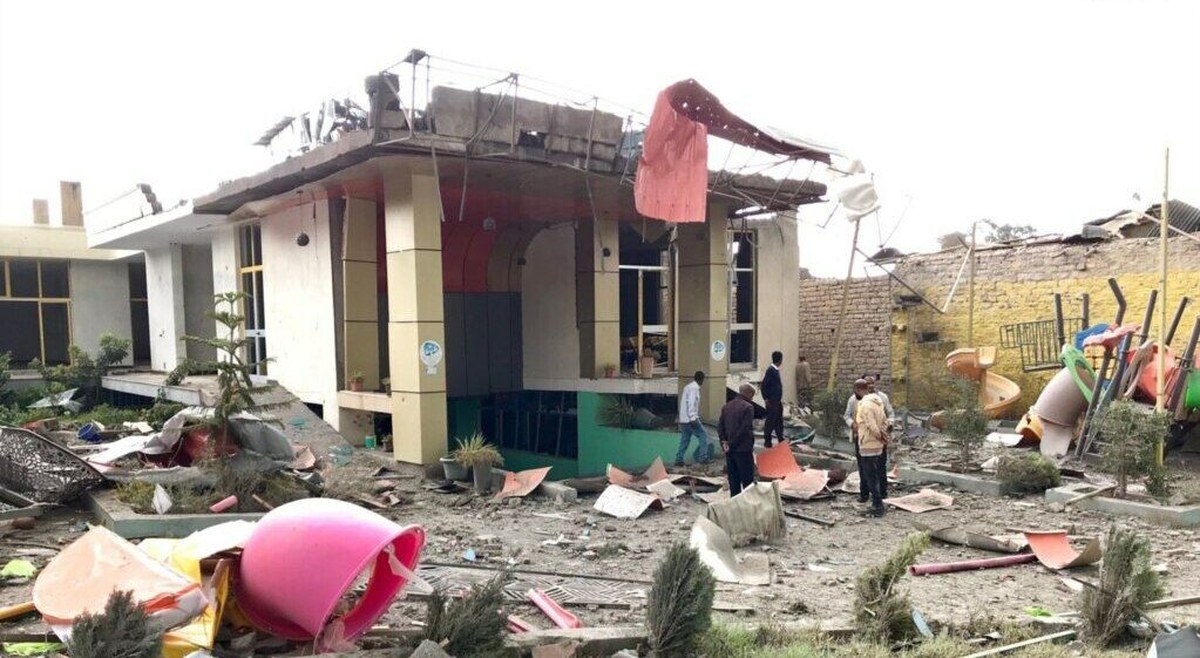
The silence over Mekelle's airport broke on Saturday. For ten days, no Ethiopian Airlines jet had touched the runway at Alula Aba Nega Airport — ten kilometres from the city centre — after Tigrayan fighters seized it on September 23, alongside the airstrips at Axum and Shire. By evening, witnesses told Reuters and the Associated Press, columns of federal troops had moved on the airfield; an Ethiopian general put it flatly, on condition of anonymity: "The military is in full control of the airport." Gunfire crackled on the edge of the city. Tigrayan Defence Force fighters were seen abandoning their posts and heading home, while looters drifted through the uncertainty of government compounds.
Who controls Mekelle itself remains unclear. A source close to the Tigray People's Liberation Front told Reuters the city was encircled by government troops and allied militias; an AP contributor in the city said residents feared looting. But the meaning of the recapture needs no confirmation: the most serious escalation in Ethiopia since the 2020–2022 civil war — a conflict the African Union estimates killed some 600,000 people — has produced its first decisive reversal. The TPLF-led offensive that began eleven days ago has lost its prize.
For this correspondent, reporting from the downstream bank of the Nile, a second clock is running. While federal troops were retaking a runway in the highlands, the Grand Ethiopian Renaissance Dam — the concrete colossus that has consumed a decade of diplomacy between Addis Ababa and Cairo — sat newly complete, its turbines spinning, and Egypt declared the completion "unlawful." Water and war are the two rivers of this story, and both are rising.
Whoever holds Alula Aba Nega holds Mekelle's only road that does not pass through a checkpoint — and the story of what happens next will land on that runway.
Start with the human image, because the casualty lists will not have one yet. In Mekelle on Saturday night, with the internet dead and the phone networks dark, families had no way of knowing who held the streets outside their doors. The AP contributor who described the fear of looting was describing something specific to this war's memory: the last time a capital changed hands in the north, the vacuum filled with soldiers, then with hunger. "Many reports indicate that the government and allied forces have begun to control Tigray's capital," said Jalale Getachew Birru, an Ethiopia analyst for the conflict monitor ACLED — a sentence that carries, in its careful hedging, everything we do not know.
An airport is not a city, but in a communications blackout it is the closest thing to a verdict. Whoever holds Alula Aba Nega controls the only road into Mekelle that does not pass through a checkpoint — the route for journalists, for medicine, for the airlifted aid that kept this city alive during the last war's siege. Its seizure on September 23 forced Ethiopian Airlines to suspend flights; its recapture, eleven days later, gives the federal government the option of a corridor — or of a siege run from above. Control of the airport is both the open door and the closed fist.
The map of the fighting has already outgrown Tigray. In the Afar region, humanitarian sources told AFP that Tigrayan fighters had seized Erebti after heavy artillery exchanges and were moving toward Afdera. In Amhara, Tigrayan units and Fano fighters have clashed with federal troops; Addis Ababa claimed to have retaken Sekota after Tigrayan-aligned fighters entered it on September 25. The AP has reported that a breakaway Tigrayan faction, the Tigray Peace Force, is now operating alongside federal forces — a fracture inside the Tigrayan house that the federal government is exploiting, fighter by fighter. The TPLF, meanwhile, leads an alliance of seven armed organisations that have pledged to remove Prime Minister Abiy Ahmed's government — a coalition that includes groups which fought each other during the last war.
The human price is compounding before any journalist can count it. Médecins Sans Frontières reported that hospitals in Korem and Alamata received more than 420 war-wounded between September 22 and 25, and Suhul Hospital in Shire took in over 300. UN human rights chief Volker Türk said reported airstrikes hit five schools in Tigray on September 22, and a mortar strike two days later killed civilians in Kobo, Amhara. A drone strike last Sunday destroyed a truck carrying food assistance for displaced people in northwestern Tigray. The UN aid office, OCHA, warns of large-scale displacement — "tens of thousands" forced from their homes in Afar alone, with similar magnitudes feared in Tigray and Amhara — and says humanitarian operations inside Tigray are "almost suspended." A July assessment found some 307,000 internally displaced people still living in 78 sites across Tigray from the previous war. They are the standing population of an unhealed wound, and the new wounded are joining them now.
Now the water. Egypt, the downstream power that depends on the Nile for roughly 97 percent of its water, watched the Tigray escalation from the wrong end of a dam. Last week Ethiopia announced the completion of the Grand Ethiopian Renaissance Dam — a $4 billion project Prime Minister Abiy Ahmed says will deliver more than 6,000 megawatts, doubling Ethiopia's power capacity: "We believe in shared progress, shared energy, and shared water." Cairo was unconvinced: Egypt's water ministry called the completion "unlawful" and a breach of international law, accusing Addis Ababa of pursuing "water hegemony." At the UN General Assembly on September 26, Egypt's foreign minister declared Nile access a "non-negotiable existential priority," said talks had "reached a dead end," and explicitly affirmed Egypt's right to self-defense. Ethiopia has announced three more Blue Nile dams — $10.5 billion, another 5,700 megawatts — which Cairo calls unacceptable. Ethiopia's economy, a $149.74 billion machine in 2024 by World Bank figures that has since contracted sharply on currency depreciation, runs on the legitimacy of this dam. A government losing its grip on the north cannot afford to be seen losing the Nile.
Because this is no longer Ethiopia's war alone — if it ever was. This week Addis Ababa severed diplomatic ties with Eritrea, accusing Asmara — alongside Khartoum and Cairo — of arming the rebel alliance; all three deny it, and Egypt and Ethiopia traded expulsions of each other's diplomats within 48 hours. The accusation is the architecture of the wider conflict: Eritrea guards its Tigrayan border and fears an Ethiopian lunge for the port of Assab; Egypt cultivates Asmara and Mogadishu to encircle Addis Ababa; Sudan, bleeding from its own civil war since 2023, sits accused by both sides of everything. Washington, which only recently lifted its sanctions on Eritrea — a nod, analysts say, to Asmara's strategic coastline opposite Saudi Arabia — now watches the region with the attention of a power that fears the Bab el-Mandeb corridor closing under drone fire.
And because the instruments have changed since 2022. Drones struck a television station in Mekelle — Tigrai TV, forced off the air — and an aid truck in the northwest; air and drone strikes opened the September campaign. The structural technology of this war is aerial, unmanned, and deniable, which is why a severed fiber cable and a darkened airport now precede every offensive. Whoever controls the sky over Tigray controls the narrative of what happens beneath it, and right now the sky is blacked out for everyone but the bombers.
The Pretoria agreement was a ceasefire, not a peace. Signed on November 2, 2022, under African Union mediation, it halted the killing, restored a measure of disarmament, and reopened humanitarian access — but it left the hardest questions untouched: who holds Western Tigray, when the displaced return, what becomes of Tigray's armed forces, who is accountable for the atrocities. As the scholar Fentaw Weldemariam wrote this week, Pretoria "wasn't a comprehensive political settlement" — and a ceasefire that never becomes a settlement is a pause, not a peace.
The pause unravelled in public. The TPLF seized effective control of the interim regional administration in March 2025; the federal government revoked the party's legal registration; Tigray was excluded from the June 2026 elections; in May 2026 the TPLF restored its pre-war regional government; and in September its spokesman, Michael Asgedom, declared the agreement "no longer valid." AU envoy Olusegun Obasanjo shuttled between Addis Ababa and TPLF leader Debretsion through the summer and produced nothing. The AU process, in the judgment of the Critical Threats Project, had been "largely defunct for 18 months."
Washington's own ambassador to Ethiopia, Ervin Massinga, accused the TPLF in late September of a "poor decision to launch a large-scale offensive," calling it an "unwinnable fight" and threatening further sanctions against the front and its new allies. The State Department spokesman, Tommy Pigott, put the American position in a sentence that doubles as the region's epitaph-in-waiting: "The Horn of Africa cannot sustain another military conflict and humanitarian crisis." The European Union and the UN Secretary-General lined up behind AU-led de-escalation. Diplomacy, in other words, is fully deployed — and fully ignored.
Watch the airport. If Ethiopian Airlines resumes flights to Mekelle, Axum and Shire, the federal government is consolidating — using the runway to move troops, administrators, and eventually aid. If the TPLF counterattacks the airfield, the war is entering its attritional phase, and the siege playbook of 2021–2022 returns: communications blackout, humanitarian blockade, hunger as a weapon. The recapture is a tactical fact; its meaning will be decided by what lands on that runway next.
And watch the dam. A government at war in the north has every incentive to wave the flag of the Nile in the east — the one project on which nearly every Ethiopian agrees. Cairo knows this, which is why its foreign minister reached for the language of self-defense before a single shot was fired over water. The collision point is not hypothetical: three new dams, a completed colossus, a downstream giant that has called the water "existential," and a war that could give either side the pretext it claims to dread. What happens in Mekelle will decide what happens on the Blue Nile — and the 250 million people downstream are holding their breath.
The Western reading treats Mekelle as a stress test of the post-Pretoria order: a ceasefire that was never a settlement has collapsed, and the fault lies principally with the TPLF's offensive. Washington's ambassador called it an "unwinnable fight" and threatened sanctions; the State Department, the EU and the UN lined up behind AU-led de-escalation. From this chair, the prescription is familiar — ceasefire, dialogue, accountability — and so is the quiet fear that the tools have run out.
It also reads the airport's recapture as a tactical window. A federal government that holds the runway can be pressured toward a humanitarian corridor; one that loses it cannot be pressured at all. The Western bet is that leverage — sanctions on spoilers, drones, and the threat of more — can still buy the pause that Pretoria II would need. The scepticism in the room is that the same bet failed the first time.
And it reads Egypt's self-defense language as a red line to be managed, not tested. The GERD dispute is, in this telling, a separate file from the Tigray war — a water negotiation to be insulated from the shooting, lest a regional war fuse two crises into one. The nightmare scenario is a miscalculation over the Blue Nile that drags the Red Sea corridor, and with it global shipping, into the Horn's war.
The Eastern reading begins with sovereignty and ends with non-interference. Ethiopia's war is Ethiopia's internal affair; the Pretoria framework belongs to the African Union; outside actors — however well-intentioned — escalate what they touch. The expulsions of diplomats and the severing of ties with Eritrea are regrettable but legible: states defending their borders and their internal order against armed challengers.
It notes, without endorsing, the accusation that Egypt, Sudan and Eritrea arm the rebels — and notes equally the denials. In this telling, the Horn's wars are perpetually over-attributed to foreign hands by governments that need an external villain. The evidence either exists or it does not; until it is produced, the war remains an Ethiopian dispute over power, territory and the unfinished business of 2022.
And it treats the dam as development, full stop. A country of 132 million people financing its own electricity with its own money owes no apology for turning on the lights; downstream anxiety is real but cannot become a veto over upstream sovereignty. The Eastern prescription is the same as in every African war: African solutions, African mediation, and patience — however thin patience is wearing.
The Global South reading starts with the body count that the rest of the world has already forgotten once. Six hundred thousand dead in 2020–2022, and the cameras left; the hospitals of Korem and Alamata are filling again while the internet is cut so nobody can watch. From this chair, the first demand is not a ceasefire document but corridors, medicine, and the restoration of communications — the right of the besieged to be seen.
It reads the diplomacy with weary familiarity: an AU process declared "largely defunct for 18 months," an envoy shuttling to no effect, a UN General Assembly that sat through six days of the new war and produced nothing. The lesson drawn is not that mediation is useless but that mediation without enforcement is commentary — and that the people paying for the commentary are in Tigray, Afar and Amhara.
And it reads the water question as the South's own. Upstream development against downstream survival is not an Ethiopian-Egyptian peculiarity; it is the Mekong, the Indus, the Euphrates. The Southern instinct is that no dam, however sovereign, can be operated without the consent of the thirsty — and no downstream power, however anxious, can veto the lights of 132 million people. The river must be shared because it cannot be divided.
Federal forces hold Alula Aba Nega Airport, confirmed by witnesses and an Ethiopian general on October 3. But neither the government nor the TPLF has issued a statement on the city itself, and a TPLF source says government troops and allied militias have it encircled. With internet and phone networks down, the picture is fog — treat every claim as provisional.
It is the only way in or out of Mekelle that does not pass through a checkpoint — the route for journalists, medicine and airlifted aid, which kept the city alive during the last war's siege. Its seizure on September 23 halted commercial flights; its recapture gives Addis Ababa the choice of a humanitarian corridor or a siege run from above.
Egypt is the downstream power: it draws about 97 percent of its water from the Nile and calls Ethiopia's completed dam unlawful. Its foreign minister has declared Nile access an existential priority and affirmed a right to self-defense. Ethiopia accuses Cairo of backing the TPLF rebels — a charge Egypt denies — and the two countries have traded diplomat expulsions.
Diplomats warn it could: Ethiopia has cut ties with Eritrea, Sudan is in its own civil war, Egypt is aligned with Asmara and Mogadishu, and the Bab el-Mandeb shipping corridor sits in the blast radius. But no public evidence supports the claims of foreign backing for the rebels yet, and fighting remains inside Ethiopia's borders for now.
