Between 30 and 41 displaced people are dead near Abu Shandi, Blue Nile. The exact toll is unverified; the pattern — drones fired at civilians — is not.
Published 11 October 2026 · 06:00 GMT
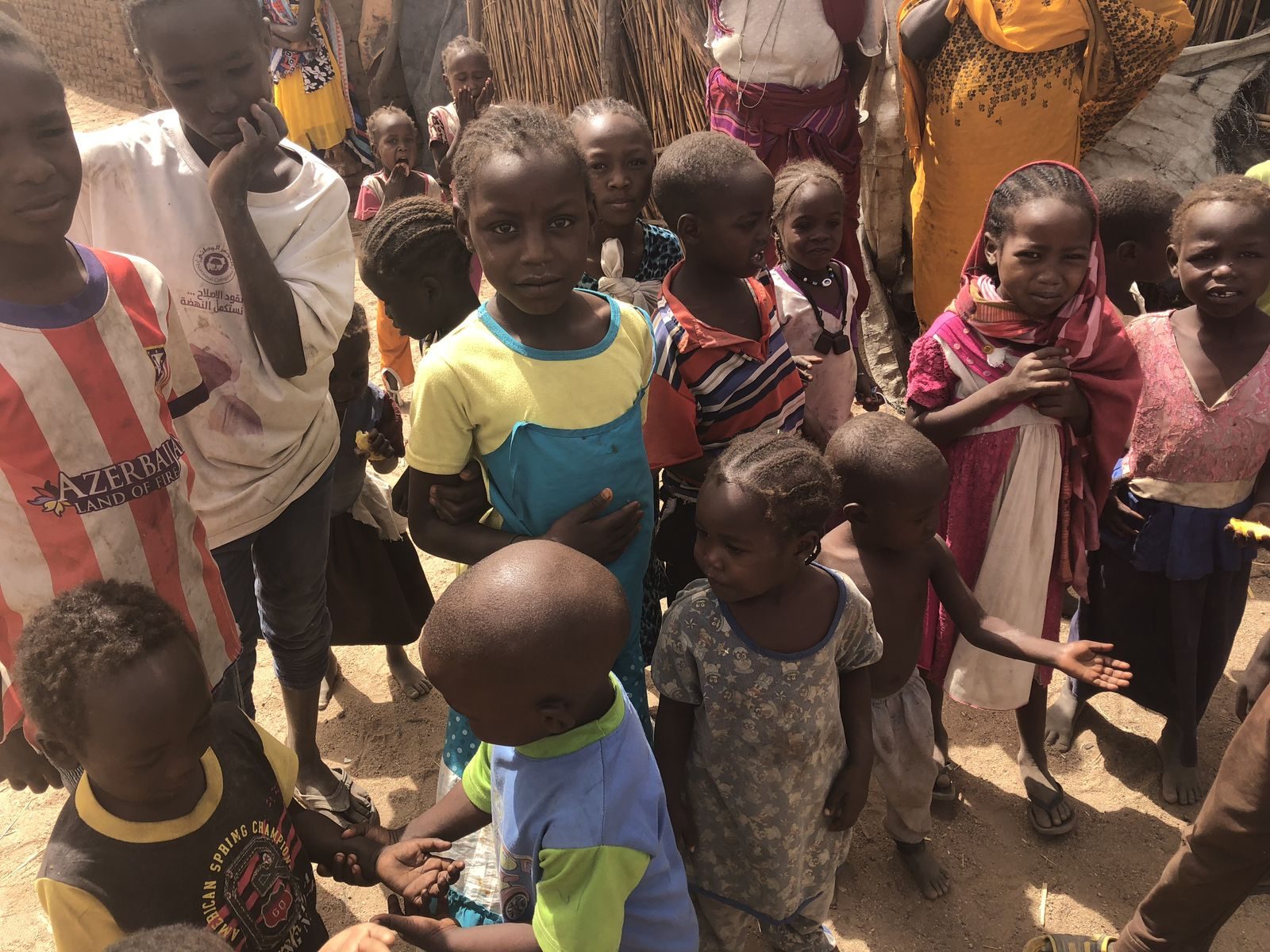
They were awake before the sun, as they always are. The women of Abu Shandi walk to the water point in the dark blue of early morning — jerrycans balanced, children in tow — because the gold pit can wait but the queue cannot. On Friday morning, the sky answered them differently. A drone fired four projectiles beside their displacement site, and the day's first task became the burying of the dead.
Early on Friday morning, a single drone fired four projectiles next to a displacement site in the Abu Shandi area of Wad al-Mahi locality, in Sudan's southeastern Blue Nile state, about 50 kilometres east of the state capital, Damazin. That much is agreed. Almost everything else — who sent the drone, where it came from, how many it killed — is contested, unverified, or both. The witnesses described it to Xinhua in the plainest terms: one drone, four explosions, and then the screaming.
Condemning these senseless killings is essential, but there must also be accountability for this flagrant disregard for international humanitarian law. — Denise Brown, UN Resident and Humanitarian Coordinator in Sudan
The dead are counted differently by everyone who has counted them. Mahgoub al-Sheikh, the governor of Wad al-Mahi, told Al Jazeera that at least 30 people were killed — 26 women and four children. Denise Brown, the United Nations Resident and Humanitarian Coordinator in Sudan, said on Saturday that preliminary information indicated at least 31 civilians killed, mostly women and children, with dozens injured, some seriously, and the toll may rise. Emergency Lawyers, a Sudanese rights group that tracks the war, put the figure at 41, including eight children. None of the figures could be independently verified. This article reports the range, not a single number, because a single number would be a fiction.
The victims had already survived one catastrophe. They had been displaced by recent hostilities in the Geissan and Kurmuk localities and were living in open shelter around Abu Shandi with little food, water or medical care when the strike landed. They were gathered near a water facility at the moment the projectiles hit — the one place a displaced community must gather every morning. A person who helped bury the dead told the AFP news agency that survivors interred 26 women and four children.
The ground around the site tells its own story. The area holds an informal gold-mining pit where displaced women earn a daily wage refining gold with chemicals and their bare hands. A witness said the dead included young girls who work with their families at the pits. This is the economy the war has built in Blue Nile's displacement zones: children crushing ore so their households can eat, and a drone deciding the price of that labour.
Governor al-Sheikh blamed the Rapid Support Forces, the paramilitary movement that has fought the Sudanese Armed Forces since the war erupted in April 2023, and added an explosive detail: the drone, he said, was launched from 'inside Ethiopia'. Khartoum has repeatedly accused Addis Ababa of sheltering RSF fighters and bases on its territory. Ethiopia denies it. The RSF itself had not commented by late Friday, and a spokesperson did not respond to requests for comment.
Strip away the charge and the counter-charge and what remains is this: nobody has produced debris, flight logs, radar traces or any other hard evidence identifying the drone's origin. The accusation is public; the proof is absent. The governor's claim does two things at once — it names an enemy and it names a foreign accomplice — and both halves serve the politics of a government that has been losing ground in the southeast. That does not make the claim false. It makes it unverified, and in this war unverified claims travel at the speed of grief.
The geography gives the accusation its plausibility. Abu Shandi sits close to the Ethiopian border, and Blue Nile has been the front line of an RSF offensive pushing toward Damazin all year. If the RSF could strike from across a friendly border, the Sudanese army's defensive calculus in the east changes overnight. If it could not, then the governor is using a massacre to reopen one of the region's most volatile bilateral disputes. Either way, the dead cannot settle the question.
Because the war is moving. The RSF has spent 2026 pushing an offensive toward Damazin, the capital of Blue Nile, trying to pry the southeast loose from the army. The United Nations says the Wad al-Mahi area, which remains under Sudanese Armed Forces control, has come under attack in the past week, and the UN humanitarian office says parts of the state have been under continuous attack for weeks — displacing thousands, exposing many more to what OCHA called 'grave harm'. The displacement site was not an accident of war. It sat in the path of it.
The scale of that movement is enormous and almost entirely unphotographed. Nearly 100,000 people have been displaced across Blue Nile state in 2026 alone, according to UN figures — a fraction of the more than 12 million driven from their homes nationwide since April 2023, in what aid agencies call the world's largest displacement crisis. It arrives with almost none of the world's attention.
Then there is the weapon. The United Nations counted more than 1,100 deaths from drone strikes across Sudan in just the first five months of 2026 — and both sides fly them. Drones turned Sudan's war from a contest of armies into a contest of skies, and civilians pay the price in both: displacement sites, markets, shelters. A week before Abu Shandi, a similar strike hit a displacement shelter in El Obeid in North Kordofan, killing and injuring civilians including children, according to Brown's statement. The pattern is the one constant in the casualty fog.
It internationalises a war that diplomats have spent three years failing to contain. A drone launched from inside Ethiopia — if the claim were proved — would make Addis Ababa a belligerent in Sudan's war, not a bystander. It would turn a border the two countries have disputed for decades into an active front, and it would drag Ethiopia's already strained politics into a neighbour's civil war. That is precisely why the claim matters and precisely why it must be proved before it is believed.
Khartoum's accusations against Addis Ababa are not new, but they have never been resolved either. Sudan says Ethiopia shelters RSF fighters and staging bases; Ethiopia says no. Between the two statements sits a border region where information barely travels and verification almost never follows. The honest position — the only one available to anyone who has not examined wreckage — is that the drone's origin is unknown, the RSF's responsibility is alleged, and Ethiopia's involvement is denied. Anything more certain would be posture, not reporting.
The timing tightens the knot. On Thursday, October 8, the day before the strike, the UN Security Council extended the Darfur arms embargo to December 11 — and Russia and China blocked a United States proposal to extend the embargo to all of Sudan. Read those two facts together: a war increasingly fought by drone, in which the weapons keep arriving, while the Council agrees only to keep the old embargo on one region. The embargo vote is not a footnote to Abu Shandi. It is the reason the sky above Abu Shandi is full.
'Condemning these senseless killings is essential, but there must also be accountability for this flagrant disregard for international humanitarian law,' Denise Brown said in her Saturday statement. She was explicit: a strike next to a displacement site, killing mostly women and children, is the textbook case for the laws that are supposed to separate war from murder. International humanitarian law is binding, she reminded the world — 'those who disregard IHL need to be held accountable.' The statement is written in the strongest possible language. The mechanism behind it does not exist.
That is the sentence Brown herself could not avoid writing: 'As each day goes by in this war, the world continues to accept the suffering of the people of Sudan.' Aid workers estimate more than 200,000 people have been killed since the fighting began in April 2023. Condemnation arrives on schedule. Accountability has never once arrived. The gap between the two is where this war is fought.
First, the toll: Brown's figure is preliminary, and the gap between 30 and 41 will be filled by burials and hospital counts in the coming days — if anyone can reach the area safely. Second, the RSF: its silence is not yet a denial, and whether it answers will shape how the Ethiopia claim is read. Third, the border: Khartoum and Addis Ababa have a hundred reasons to keep this dispute rhetorical and a handful of reasons to let it escalate, and the coming week will show which set is heavier. Fourth, Blue Nile itself: the RSF's push toward Damazin has not stopped, and the displacement it drives keeps piling families into sites exactly like Abu Shandi. The next strike will find the same conditions. That is the part nobody has to predict.
The Western reading of Abu Shandi is a story of impunity. The condemnation arrived within hours — Denise Brown's 'horrified', OCHA's 'appalled' — and the legal framing is airtight: a strike beside a displacement site, overwhelmingly women and children among the dead, is precisely what international humanitarian law exists to forbid. What does not exist is any mechanism to enforce that law. In this lens, the strike belongs to a lengthening ledger — El Obeid a week earlier, 1,100 drone-strike deaths in five months — that proves condemnation without consequences has become the war's operating system.
The Western lens also treats the October 8 Security Council vote as the scandal of the week: the day before the strike, the Council extended the Darfur embargo to December 11 while Russia and China blocked its widening to all of Sudan. For Western capitals, that vote is the pipeline behind the carnage — a war increasingly fought by drones cannot be ended while the drones keep arriving. The demand that follows is the familiar one: accountability, sanctions with teeth, and an investigation the warring parties will never permit.
The Eastern reading starts from sovereignty, not sentiment. Moscow and Beijing blocked the widening of the arms embargo because they read it as Western coercion applied to Sudan while other conflicts are handled differently — a selective sanctions architecture that punishes one side's enemies while leaving the underlying war untouched. In this lens, the October 8 vote is not a missed opportunity but a correct refusal: an embargo on all of Sudan would have disarmed Khartoum while the RSF's own supply lines stayed intact.
This lens is also the most sceptical of the governor's Ethiopia claim. Without wreckage, radar traces or flight logs, the charge that the drone flew from inside Ethiopia reads as Khartoum using a massacre to pressure a neighbour — a way to internationalise a war the army is losing in the southeast. The East's verdict is blunt: allegation is not evidence, and those who demand proof before bombs are the ones behaving responsibly here.
The Global South reading begins with the dead, not the diplomacy: women and girls refining gold with their bare hands because war destroyed every other livelihood, killed at a water point at dawn. For African and Asian media, the scandal is not only who fired the drone but the world's settled indifference — a war that has killed an estimated 200,000 people and displaced millions, met with a fraction of the attention given to conflicts elsewhere. The victims are named as what they are: the poorest of the displaced, working children, invisible until a drone made them a headline.
This lens also notes what the West does not: the dead are casualties of two economies at once — artisanal gold pits that pay daily wages and foreign arms pipelines that keep the drones flying. Its demand is for African-led accountability and humanitarian access, not another round of Council resolutions that change nothing on the ground. When Denise Brown writes that the world 'continues to accept the suffering of the people of Sudan,' the Global South hears an indictment of exactly that acceptance.
Between 30 and 41, depending on the source — and the gap matters. The local governor counted 30 dead (26 women, four children); the UN's humanitarian coordinator said at least 31 civilians, mostly women and children, with the toll preliminary; the rights group Emergency Lawyers reported 41, including eight children. None of these figures could be independently verified, which is why serious reporting cites the range, not a single number.
The local governor, Mahgoub al-Sheikh, blamed Sudan's paramilitary Rapid Support Forces (RSF) and claimed the drone was launched from 'inside Ethiopia' — a charge Khartoum has levelled repeatedly and Addis Ababa denies. The RSF had not commented by late Friday, and no wreckage, flight logs or other hard evidence identifying the drone's origin has been produced. Blame, at this point, is an allegation, not a finding.
Next to a displacement site in the Abu Shandi area of Wad al-Mahi locality, Blue Nile state, in southeastern Sudan — roughly 50 kilometres east of the state capital, Damazin, and close to the Ethiopian border. The area, which the UN says is under Sudanese Armed Forces control, also hosts an informal gold-mining site where displaced women refine gold by hand for daily wages. The victims had fled recent fighting in the Geissan and Kurmuk localities.
Denise Brown, the UN Resident and Humanitarian Coordinator in Sudan, said she was 'horrified' and demanded accountability for what she called a flagrant disregard for international humanitarian law. Her statement noted that a similar strike had hit a displacement shelter a week earlier, and warned that parts of Blue Nile have been under continuous attack for weeks. 'As each day goes by in this war,' she wrote, 'the world continues to accept the suffering of the people of Sudan.'
On October 8, the Council extended the Darfur arms embargo to December 11, but Russia and China blocked a US proposal to widen it to all of Sudan — a war now increasingly fought by drone. That keeps the weapons pipeline open outside Darfur while the skies above places like Blue Nile keep filling. The embargo vote is not background to the strike; it is part of why strikes like it keep happening.
