Ethiopian troops took Adwa, 40 km from the Eritrean frontier, a day after entering Adigrat. As the UAE backs Addis Ababa and Riyadh stays silent, the Red Sea stakes grow.
Published 13 October 2026 · 06:00 GMT
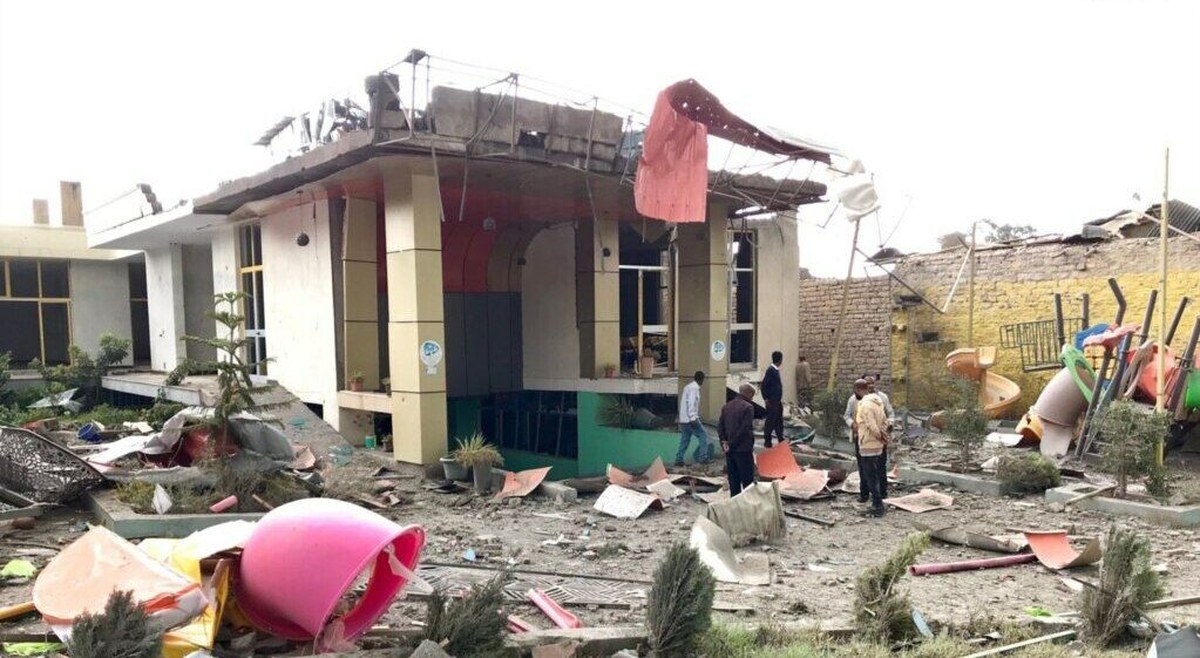
In Adwa, the shops are shuttered, the roads are deserted, and Adwa Hospital was looted overnight as federal troops walked in unopposed. Ethiopian forces entered the key Tigray town on Sunday, a day after the TPLF withdrew — within 40 kilometres of the Eritrean border, and the war one step from going regional.
Adwa's unopposed entry marks the latest step in a federal advance that is compressing the war toward the Eritrean frontier. Residents told reporters that federal forces and an allied militia entered the town on Sunday, a day after Tigray People's Liberation Front (TPLF) fighters pulled out. One resident said “All the shops in the town are closed. Last night, many government institutions, including Adwa Hospital, were looted.” The account could not be independently verified, but it matches the pattern of earlier towns in this offensive: the TPLF withdraws, the shops close, and civilians wait out the vacuum between two armies.
The border is no longer a backdrop to this war. It is the front line.
Adwa is one of Tigray's most populated towns and sits about 40 kilometres from the Eritrean border, on the A2 highway corridor through Adigrat toward Mekelle. It is a gateway town: whoever holds it controls the approach to the border. Federal forces entered Adigrat, some 30 kilometres from the border, on Saturday; Adwa followed a day later. Each step north shortens the distance between Ethiopian troops and Eritrean territory, and raises the stakes for a country that has asked the United Nations Security Council for deterrent measures against Ethiopia. The border is no longer a backdrop to this war. It is the front line.
Adwa has a military logic beyond geography. An October 8 assessment by the US-based Critical Threats project reported that TPLF leadership had relocated toward the Adwa area, with conflict monitor ACLED placing senior figures in Ahferom district, between Adigrat and Adwa. On October 4, Ethiopian drone strikes hit a hotel in Adwa, wounding between five and nine people including security personnel, according to ACLED. Some ACLED sources said TPLF chairman Debretsion Gebremichael was there, but that claim was not verified. Federal forces appear to be hunting the TPLF command as much as its territory.
The past ten days show how fast the conflict has internationalized. Federal troops and the federally backed Tigray Peace Force captured Mekelle, the regional capital, on October 3 after the TPLF withdrew to spare the city, relocating its administration “temporarily” elsewhere (our earlier coverage of Mekelle's fall). On the nights of October 7 and 8, Ethiopian drone strikes hit Eritrean forces near Adigrat, according to ACLED, after which Eritrean forces withdrew from positions near the city.
The diplomatic rupture followed. In a letter dated October 8, Ethiopian Foreign Minister Gedion Timothewos told Security Council members that Eritrean troops had pushed up to 60 kilometres inside Tigray, calling it an “all-out invasion” and a “blatant act of aggression” engaging Ethiopia's right to self-defence. Eritrea answered on Saturday: Foreign Minister Osman Saleh wrote that Ethiopia's accusations amounted to a “declaration of war” and asked for deterrent measures under Chapter VII. Eritrean Information Minister Yemane Gebremeskel dismissed the claims as “duplicity in their most extreme forms.” The incursion itself could not be independently verified.
The two countries have also cut each other off. Eritrea severed diplomatic ties, while Addis Ababa closed its embassy in Asmara and expelled ten Eritrean diplomats. On Sunday, the federal government began planting its flag in the recaptured cities: Ethiopian Airlines resumed Addis Ababa–Mekelle flights for the first time since September 23, when a seven-group alliance including the TPLF seized the airport. Former Tigray leader Getachew Reda, now an adviser to Prime Minister Abiy Ahmed, and intelligence chief Redwan Hussein were greeted by supporters at the airport. “I would like to assure you on this occasion that we will bring visible change, a change beyond mere hope,” Reda told them.
The United Arab Emirates has made its position public. On September 25, Minister of State Sheikh Shakhboot bin Nahyan Al Nahyan condemned TPLF attacks on federal forces, the seizure of airports in Tigray, and the escalation in Afar and Amhara. He expressed solidarity with Ethiopia's government and people, reaffirmed support for the country's sovereignty and territorial integrity, and called for an end to hostilities, civilian protection, and adherence to the Pretoria Agreement. The statement backs the federal government while calling for de-escalation, but did not establish whether Abu Dhabi is providing military assistance.
Commercial interests help explain the UAE's engagement. DP World operates the port of Berbera in Somaliland, and a shipping route launched in 2025 connects Berbera with Jebel Ali in the UAE, an added cargo corridor for inland destinations such as Ethiopia. Landlocked since Eritrea's independence in 1993, Ethiopia relies heavily on Djibouti for trade access. These links explain Abu Dhabi's interest in stability, but they do not prove the UAE can influence the TPLF, restrain Eritrea, or change Ethiopia's military calculations. (UAE factbook)
Saudi Arabia's position is the quietest. The kingdom has not publicly stated its position on the renewed fighting, per an October 1 Critical Threats analysis, though it undertook diplomatic efforts earlier this year to ease Ethiopia–TPLF tensions. Riyadh offered to mediate between Ethiopia and Eritrea in November 2025, Chatham House reported. A June 2026 analysis by Germany's SWP said earlier Saudi mediation failed partly because talks never addressed Ethiopia's interest in the Eritrean port of Assab. An August 2026 Soufan Center assessment described Saudi Arabia and Egypt as backing Eritrea against Ethiopia's Red Sea ambitions — an alignment assessment, not evidence of military support. (Saudi Arabia factbook)
Cairo's role is shaped by its dispute with Ethiopia over the Grand Ethiopian Renaissance Dam (GERD) and its deepening ties with Eritrea. In September, Ethiopia's army chief, Field Marshal Birhanu Jula, accused Egypt and Sudan of backing armed groups including the TPLF, but offered no evidence. Egypt's Foreign Ministry spokesperson Nader Zaki reaffirmed Cairo's commitment to state sovereignty and non-interference without directly addressing the allegation; Sudan also denied involvement. President Abdel Fattah el-Sisi met Eritrean President Isaias Afwerki in Cairo on June 8, 2026, on cooperation and Red Sea security. Nothing here establishes Egyptian involvement in the fighting, but it explains why Cairo watches the border war closely.
Fighting resumed on September 23, when a seven-group armed alliance including the TPLF seized the Mekelle airport. Tigrayan forces first gained ground in Afar, but a federal counter-offensive reversed those gains. The Ethiopian National Defense Force (ENDF) and the Tigray Peace Force, a federally backed anti-TPLF Tigrayan armed group, took Mekelle on October 3 with little resistance, then pushed north along the A2 through Agula and Wukro toward Adigrat and Adwa. The fighting now threatens to unravel the Pretoria Agreement of November 2022, which ended the 2020–2022 war.
The deeper history explains why the Eritrean border changes everything. Eritrea became independent from Ethiopia in 1993, leaving Ethiopia landlocked. The two fought a border war from 1998 to 2000, then reconciled in a 2018 peace deal. Eritrean forces fought alongside Ethiopia's army in the 2020–2022 Tigray war. Relations have since collapsed: Ethiopia accuses Eritrea of crossing the border and backing armed groups, while Eritrea calls the claims a fabricated pretext for a war of aggression aimed at seizing Eritrean territory, above all the Red Sea port of Assab, which Ethiopia has repeatedly named a national priority. (Ethiopia factbook, Eritrea factbook)
The war is landing on a population already in crisis. The New Humanitarian reported on October 8 that about 3.9 million people in Tigray need emergency food aid, while an estimated 3.2 million in need receive nothing. Tigray's Disaster Risk Management Commission says up to 3.7 million may need aid, including more than 900,000 already displaced. Mobile and internet services were cut on September 24, flights suspended, roads blocked in Afar, and aid deliveries attacked. One lifeline remains: the 460-kilometre Mekelle–Semera corridor, reported functional as of October 4. If it closes, the famine-like conditions of the 2020–2022 siege could return.
The UN has moved to the alarm phase. On Friday night, Secretary-General António Guterres said he was gravely concerned by the renewed fighting in Tigray, Afar, and Amhara, warned of wider destabilization, and urged a ceasefire and return to dialogue under Pretoria. He reminded regional states of their Charter duty to refrain from the threat or use of force, and appealed to countries with influence to use it for de-escalation. Verified displacement figures are unavailable; local organizations estimate about 150,000 displaced in Afar alone.
Five things decide what comes next. First, whether the federal advance stops at the border: confirmed Eritrean troops in Tigray, or Ethiopian troops in Eritrea, would turn a civil war into an inter-state war. Second, what the Security Council does with two letters naming each other the aggressor. Third, whether any mediator opens a channel: the AU urges restraint, IGAD insists Pretoria is the sole framework, and the UAE and Saudi Arabia offer potential channels, but no initiative is publicly under way. Fourth, where the TPLF regroups — it says it will keep fighting. Fifth, whether the Mekelle–Semera corridor stays open, because that road is the difference between a crisis and a famine. Gulf statements and commercial ties are not substitutes for progress on the ground.
From a Western vantage point, this is a sovereignty and international-law story first. Ethiopia's letter to the Security Council invokes self-defence against a foreign incursion; Eritrea's invokes Chapter VII against a declared war of aggression. Both cannot be true as claimed, and the UN Secretary-General's call for a ceasefire under Pretoria reflects the West's default: treaties and Council processes are the only legitimate way out, and unverified battlefield claims should not trigger escalation.
The second Western read is humanitarian. With 3.9 million people needing emergency food aid, communications cut since September 24, and no verified displacement figures, the emphasis falls on access: aid agencies need safe corridors, and the parties owe civilians protection regardless of who fired first. The Gulf angle reads as leverage and accountability — whether Abu Dhabi and Riyadh use their relationships to restrain the parties or simply position themselves for the aftermath.
From an Eastern vantage point, the emphasis is on sovereignty, non-interference, and regional ownership of the crisis. The contested claim at the centre — whether Eritrean troops are inside Tigray — is exactly the kind of assertion that, unverified, can be weaponized to justify war, and Eritrea's framing of it as a fabricated pretext resonates with a history in which border incidents become pretexts for intervention.
The Gulf dimension reads as multipolar diplomacy in action: the UAE's alignment with Addis Ababa and Saudi Arabia's mediation record are channels that belong to the region, not to distant capitals. Red Sea stability is a shared interest of the littoral states, and the preferred path is dialogue under African frameworks — the AU's restraint call, IGAD's insistence that Pretoria is the sole legitimate framework — rather than outside pressure.
From a Global South vantage point, this is an African crisis for African institutions — and the AU and IGAD statements are the starting point, not footnotes. The history matters: borders drawn by others, a 1998–2000 border war, and a 2022 peace deal that held four years before collapsing. The question is why the Pretoria Agreement's guarantees proved so fragile, and whether any new deal can survive without addressing the sea-access dispute underneath the shooting.
The second Southern read is about who pays. The 3.9 million needing emergency food aid, the 900,000 displaced, the looted hospital in Adwa — these are the consequences of a war over corridors and coastlines, while Tigray and Afar absorb the cost. Gulf commercial interests in Berbera and Jebel Ali are noted plainly: ports profit from stability, and the region's people have a right to ask what that stability is worth to those who own the routes.
Adwa is one of Tigray's most populated towns, about 40 kilometres from the Eritrean border on the A2 highway corridor toward Adigrat and Mekelle. It matters because it is the last major town before the frontier: its entry by federal forces on October 11, a day after Adigrat fell, puts Ethiopian troops within striking distance of Eritrea. Any fighting across that line would turn a civil war into an inter-state one.
This is contested and could not be independently verified. Ethiopia told the UN Security Council that Eritrean troops pushed up to 60 kilometres inside Tigray and called it an all-out invasion. Eritrea denies it, calling the claim a fabricated pretext for Ethiopian aggression, and its foreign minister asked the Council for deterrent measures against Ethiopia. Conflict monitor ACLED reported Ethiopian drone strikes against Eritrean forces near Adigrat in early October.
The UAE has been public: on September 25, Minister of State Sheikh Shakhboot bin Nahyan Al Nahyan condemned TPLF attacks, backed Ethiopia's sovereignty and territorial integrity, and called for de-escalation, civilian protection, and adherence to the Pretoria Agreement. Saudi Arabia has said nothing publicly about the renewed fighting, though it tried earlier in 2026 to ease Ethiopia-TPLF tensions and offered in November 2025 to mediate between Ethiopia and Eritrea.
The Pretoria Agreement of November 2022 ended the 2020–2022 war between Ethiopia's federal government and Tigrayan forces. It provided for a cessation of hostilities and a political process in Tigray. The renewed fighting since September 23 threatens to unravel it, though the UN Secretary-General, the African Union, and IGAD all insist it remains the only legitimate framework for a settlement. Whether the parties still accept that is now an open question.
Severe and worsening. The New Humanitarian reported on October 8 that about 3.9 million people in Tigray need emergency food assistance, with an estimated 3.2 million in need receiving nothing. Regional authorities count up to 3.7 million needing aid, including more than 900,000 displaced. Communications have been cut since September 24, aid deliveries have been attacked, and verified displacement figures are not yet available.
