Tehran's embassy in New Delhi cites 'unforeseen circumstances' for Mohammad-Baqer Qalibaf's absence from the 12th BRICS Parliamentary Forum on 26-27 October, while insisting an Iranian delegation will attend and Iran's commitment to the bloc stands.
Published 24 October 2026 · 13:03 GMT
Tehran's embassy in New Delhi cites 'unforeseen circumstances' for Mohammad-Baqer Qalibaf's absence from the 12th BRICS Parliamentary Forum on 26-27 October, while insisting an Iranian delegation will attend and Iran's commitment to the bloc stands. On Saturday, 24 October 2026, Iran's embassy in New Delhi announced that parliament speaker Mohammad-Baqer Qalibaf will not attend the 12th BRICS Parliamentary Forum. The forum takes place on 26-27 October in the Central Hall of Samvidhan Sadan, New Delhi, and will be inaugurated on 26 October.
Iran's embassy in New Delhi announced on 24 October 2026 that parliament speaker Mohammad-Baqer Qalibaf will not attend the 12th BRICS Parliamentary Forum on 26-27 October, and that an Iranian parliamentary delegation will participate instead.
Whether the absence signals a wider Iranian cooling toward the bloc or a narrow personal scheduling matter — the embassy frames it as continued commitment at the highest levels, while Indian press commentary reads the timing against the confrontation between Iran, Israel and the United States.
The reason behind the 'unforeseen circumstances', who will lead the Iranian delegation, whether Ghalibaf will address the forum remotely, and whether any planned bilateral meetings will be rescheduled or downgraded.
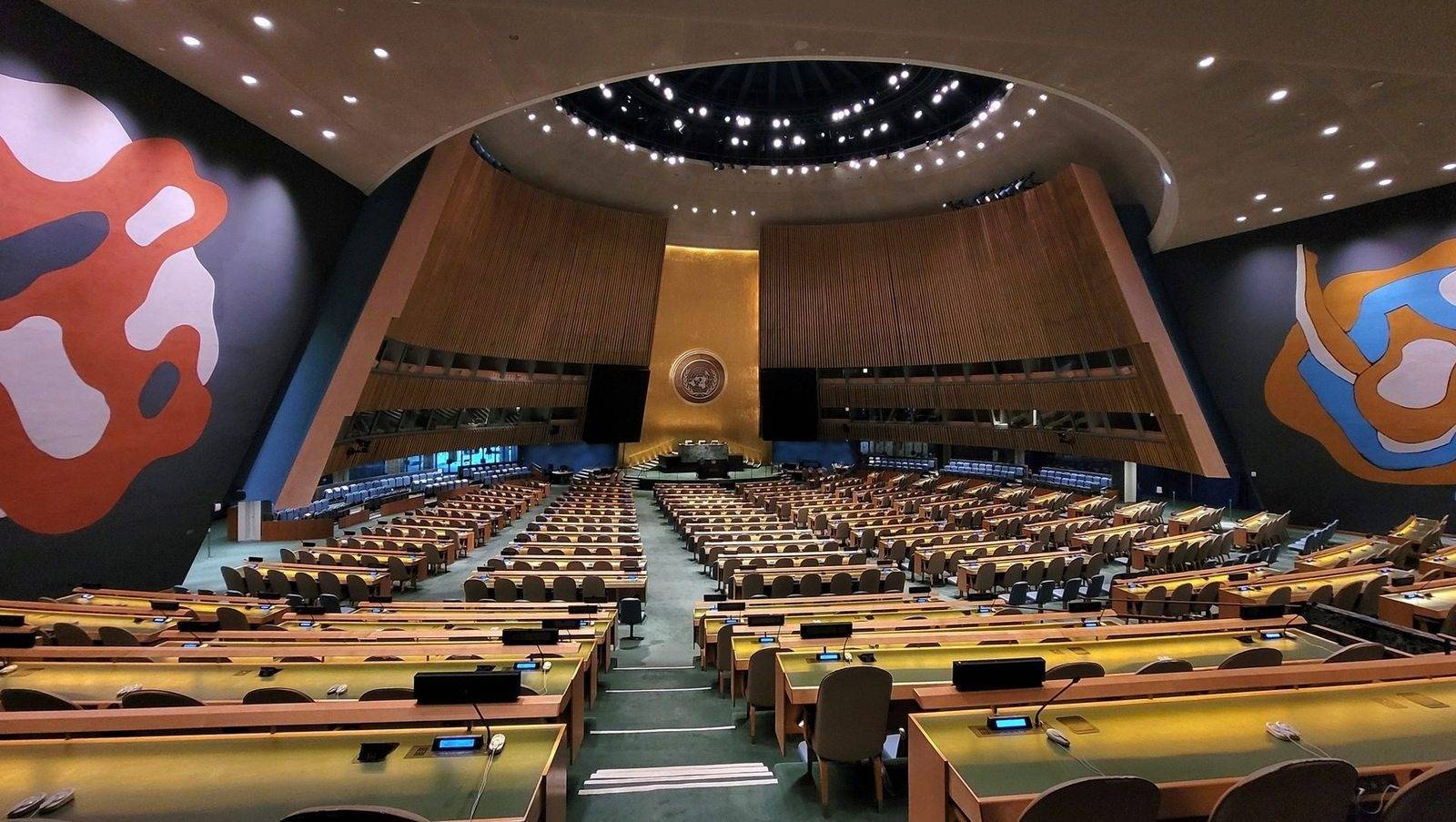
Iran's parliament speaker will not travel to New Delhi for the 12th BRICS Parliamentary Forum, Tehran's embassy in India announced on Saturday, 24 October 2026, two days before the meeting opens. Mohammad-Baqer Qalibaf, speaker of the Islamic Consultative Assembly, is unable to attend 'due to certain unforeseen circumstances,' the embassy said. An Iranian parliamentary delegation will take part in the forum instead, the embassy stressed, and Tehran 'reaffirms its commitment to active and effective participation at the highest levels' in BRICS summits and meetings.
The announcement reverses the plan confirmed only two days earlier. Lok Sabha Speaker Om Birla told reporters on Thursday that Ghalibaf was expected in New Delhi, and The Economic Times reported on 23 October that he would visit for the two-day forum. The embassy thanked the Indian government for its hospitality and hoped the forum would strengthen cooperation among BRICS members. No further reason was given, and no replacement head of delegation was named in the statement.
The forum itself is settled fact, announced by the Lok Sabha Secretariat on Thursday. The Parliament of India hosts the 12th BRICS Parliamentary Forum on 26 and 27 October in the Central Hall of Samvidhan Sadan, under India's BRICS chairship. Prime Minister Narendra Modi will attend and meet the leaders of the visiting delegations, Birla said. The overarching theme is parliaments for people-centric development, explored through four high-level sessions: resilience, innovation in human-centred artificial intelligence and digital technologies, cooperation toward a more representative system of global governance, and sustainability.
The programme around the plenaries is also fixed. A special meeting of international-affairs committee chairs will discuss parliamentary diplomacy, capacity building and best practices. A meeting of delegation secretaries on 25 October will finalise the joint statement. The Vice-President of India will host a banquet for the guests before the conference concludes on 27 October. Birla also confirmed that the speakers of Saudi Arabia and Ethiopia will not participate. The embassy's statement adds one more certainty: the Iranian delegation will continue dialogue and consultations with other BRICS delegations, to expand bilateral and multilateral cooperation, particularly in parliamentary relations.
The central unknown is the reason: 'certain unforeseen circumstances' is a formula that explains nothing — health, scheduling, security or politics, the embassy offered no detail. Until Tehran says more, any explanation is speculation. A second unknown is personnel: the statement says a parliamentary delegation will participate, but does not name who leads it. Advance reporting had listed Ghalibaf at the head of a four-member Iranian party, so the question is whether one of those four steps up, or a different senior figure travels instead.
Two further questions follow: whether Ghalibaf will address the forum remotely or send a written message — nothing in the statement suggests either, but nothing rules them out — and what happens to the bilateral meetings a visiting speaker would normally hold with Modi, Birla and fellow speakers on the margins. Their fate is unconfirmed. Finally, it is unknown whether any other delegation will change its plans before Monday; the Saudi and Ethiopian absences were already known, and organisers will be watching for further changes over the weekend.
Parliamentary forums rarely make headlines, and that is precisely why a speaker-level absence registers. The BRICS Parliamentary Forum is where the expanded bloc's legislatures turn leaders' summit language into parliamentary consensus: joint statements, committee contacts, friendship groups. A speaker's presence signals that a capital takes that track seriously; a speaker's absence, even with a delegation attending, lowers the level at which a country speaks. For India, holding the BRICS chair this year, the forum is a set-piece of its parliamentary diplomacy. A thinner Iranian presence does not wreck the set-piece, but it trims it.
The second reason is the man himself. The Economic Times describes Ghalibaf as Tehran's key negotiator in the conflict with Israel and the United States, including on the Strait of Hormuz. A speaker who also carries negotiating weight is not interchangeable; his absence removes the Iranian voice most able to speak across both the parliamentary agenda and the security crisis. The third reason is timing. The forum follows the BRICS leaders' summit held in New Delhi in September, at which, The Week reported, Iranian President Masoud Pezeshkian met Abu Dhabi's Crown Prince on the sidelines. That summit showed Iran present at the top table. The parliamentary forum, a month later, will now show Iran present at a lower level — and in diplomacy, levels are language.
The most important discipline in reading this announcement is refusing to over-read it. What Tehran did is downgrade its representation, not withdraw it. A boycott would have meant no delegation, no commitment language, no thanks to the host. The embassy's statement contains the opposite of each: a delegation attending, commitment reaffirmed 'at the highest levels,' gratitude expressed, success wished. That is the language of a capital managing an absence, not announcing a rupture: the chair is empty, and the delegation is in the room.
Through the 5D lens, the episode touches every dimension at once. Geopolitically, it tests BRICS cohesion while several members face sanctions, wars and contested elections. Economically, the forum's agenda — artificial intelligence, digital transformation, governance reform, sustainable development — is the bloc's attempt to convert political weight into institutional rules, work that proceeds by committee, not by speech. Historically, parliamentary diplomacy is the slow track of statecraft: friendship groups and joint statements accumulate over years, which is why one absence rarely changes a trajectory but repeated absences do. The honest summary is narrow: one capital, one forum, one level lower. Anything grander must wait for evidence.
There is also a lesson in the phrase itself. 'Unforeseen circumstances' is the standard diplomatic formula for saying nothing while saying something politely. It buys time, avoids offence to the host, and keeps every option open. The record to watch is what Tehran does next: a quickly named senior deputy suggests logistics; prolonged silence suggests politics; a detailed explanation, if one comes, will settle the question the statement left open.
First, the joint statement: delegation secretaries finalise the text on Sunday, and Iran's input will now arrive without its speaker's authority behind it — still real, but easier to dilute on contested language. The second effect falls on bilateral business: the speaker-to-speaker meetings that normally happen on forum margins, including with the host, will either be delegated downward or dropped, and any understandings those meetings were meant to produce will wait. The third effect is reputational and cumulative: if other capitals read Tehran's downgrade as a signal that BRICS gatherings are optional at the top level, the next forum's attendance becomes harder to secure. Readers tracking the bloc's expansion into a power grouping will recognise the pattern: institutions grow by attendance, and they shrink by absence.
Ghalibaf's negotiating role ties his calendar to the confrontation over the Strait of Hormuz and the wider Iran-Israel-United States standoff, tracked by Magna Bureau through the Hormuz file and the question of American strike timing. If the 'unforeseen circumstances' prove connected to that crisis, the absence will look, in retrospect, like an early indicator; if personal or logistical, like noise. Both readings are open, and the closing evidence has not yet appeared.
Watch four things in order. First, on Sunday, whether the delegation secretaries' meeting finalises a joint statement with visible Iranian input, and whether Tehran names its delegation leader before the cameras arrive. Second, on Monday, who takes Iran's seats at the inauguration, and whether Modi's meetings with delegation leaders include an Iranian of equivalent seniority. Third, whether Ghalibaf sends a message to the forum or addresses it remotely — either would soften the signal of his absence. Fourth, whether any further delegation changes its level of representation before the closing session on Tuesday. The forum ends with a statement and a banquet; the story to carry forward is whether Tehran's next BRICS appearance restores the speaker to the table, or the downgrade becomes the new normal.
The Western lens: a data point in the cohesion question Seen from Western capitals, the question BRICS always poses is whether its members can act together when it counts, or whether the grouping is a photo opportunity with a joint statement attached. A speaker-level absence from a parliamentary forum does not answer that question, but it enters the ledger on the sceptical side: the bloc's own members, when pressed by war and sanctions, do not always show up at full strength. The counterweight, from the same Western vantage point, is that Iran did not walk away — it sent a delegation and reaffirmed its membership in terms.
The Eastern lens: the host's show goes on Indian reporting has treated the announcement as a scheduling note inside a larger set-piece, not as a crisis. The emphasis in New Delhi's coverage is continuity: the forum opens on Monday, Modi attends, the four sessions proceed, the joint statement is finalised on Sunday, and the Iranian delegation takes its seats. That framing reflects the host's interest — India, as chair, needs a full and orderly forum — and a fair reading of the statement, which promises participation rather than withdrawal.
The Global South lens: Tehran's own message comes first From Tehran's side, the message the embassy chose to lead with was not the absence but the commitment: active and effective participation, dialogue and consultations, deeper bilateral and multilateral cooperation, particularly between parliaments. For Global South readers, that is the substance that matters: the forum's cooperation session — a more representative system of global governance — is the agenda Southern capitals have pressed for decades. A speaker's absence weakens Iran's voice in that debate, but the delegation's presence keeps it in the room where the joint statement is written.
Iran's embassy in New Delhi said on 24 October 2026 that Qalibaf, speaker of the Islamic Consultative Assembly, is unable to attend 'due to certain unforeseen circumstances.' The embassy gave no further detail, so the specific reason — whether health, scheduling, security or politics — is not publicly known, and any single explanation at this stage would be speculation.
An Iranian parliamentary delegation will participate in the 26-27 October forum in New Delhi, according to the embassy's statement. The statement did not name the delegation's leader. Advance reporting had listed Qalibaf at the head of a four-member Iranian parliamentary party, so whether one of those members now leads the delegation is the open personnel question.
It is the gathering of the presiding officers and parliamentary leaders of BRICS member and partner countries, hosted this year by the Parliament of India under India's BRICS chairship. The 12th edition, on 26-27 October in the Central Hall of Samvidhan Sadan, centres on parliaments for people-centric development, with sessions on resilience, innovation, cooperation and sustainability.
Not on the evidence of the statement. The embassy explicitly reaffirmed Iran's commitment to active and effective participation at the highest levels in BRICS summits and meetings, confirmed that a delegation will attend, thanked India for its hospitality, and wished the forum success. That is a downgrade of representation, not a withdrawal — though the absence still lowers the level at which Iran speaks.
