A gunman fired from his car at a petrol station, a medical centre and a playground in Trappes and La Verrière on Friday morning, killing a 26-year-old man and seriously wounding a 12-year-old girl, in an attack the French president called a turning point for the Republic.
Published 24 October 2026 · 12:06 GMT
A gunman fired from his car at a petrol station, a medical centre and a playground in Trappes and La Verrière on Friday morning, killing a 26-year-old man and seriously wounding a 12-year-old girl, in an attack the French president called a turning point for the Republic. On Friday, 23 October 2026, at about 10:30 a.m. local time, a gunman fired from his car at three sites in Trappes and La Verrière, west of Paris, over roughly 15 minutes.
On the morning of Friday, 23 October 2026, a gunman fired from a car at sites in Trappes and La Verrière, killing one man and wounding five people, including a 12-year-old girl, and the suspect was arrested the same morning.
Whether the attack should already be described as Islamophobic in motive — the mayor of Trappes calls it probably Islamophobic, while prosecutors are still investigating whether the victims were targeted for their real or supposed race, ethnicity, nationality or religion.
The full contents of the suspect's statements to police, whether he acted with any accomplice or group, and the medical outcome for the three people with life-threatening injuries.
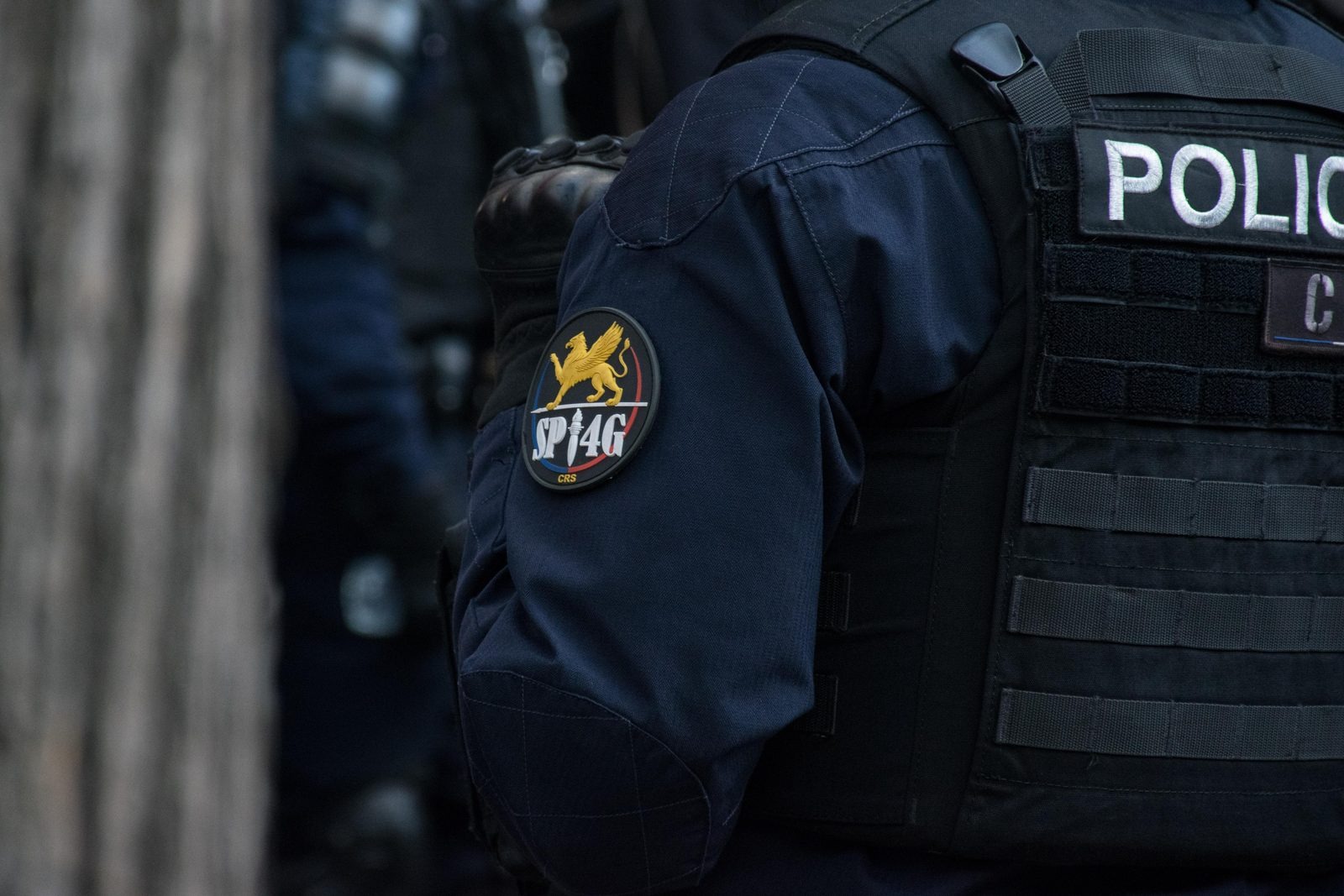
At about 10:30 a.m. local time on Friday, 23 October 2026, a gunman driving through Trappes and neighbouring La Verrière, in the Yvelines department west of Paris, opened fire from his car. The shooting lasted roughly 15 minutes and struck a petrol station, a medical centre and a children's playground. Le Monde's later reconstruction placed the first shots at 34 Avenue Hector-Berlioz in Trappes, then at a health centre, then at Square Louis-Pergaud, where the man who died was killed.
When the gunfire stopped, one man was dead and five people were wounded. The man killed was Pengo Bassio Wangi, 26, described by the mayor of Trappes as of African origin. Among the wounded was a 12-year-old girl of North African descent, wearing a headscarf, who was shot eight times, according to her mother, and taken to a children's hospital for surgery. Prosecutors said three of the five wounded people had life-threatening injuries; the mayor of La Verrière, Nicolas Dainville, later said the girl was seriously wounded but in stable condition.
Police arrested the suspect in Coignières less than 20 minutes after the first shots. He was identified by prosecutors only as Kevin T., a 39-year-old born in 1987. Officers recovered a Sten-type submachine gun and tear-gas grenades from his car, and prosecutors said his flat had been booby-trapped with three gas canisters and electric wires connected to a timer.
The confirmed core of the case is consistent across French official statements and the reporting of Al Jazeera, CNA, CNN, Le Monde and the Associated Press. The attack took place on the morning of Friday, 23 October, in two working-class towns about 20 to 30 kilometres west of Paris, in an area with a large immigrant and Muslim population. The toll — one dead, five wounded — was confirmed by Interior Minister Laurent Nuñez, who called the shooting clearly a terrorist crime.
France's National Anti-Terrorism Prosecutor's Office, known as PNAT, has taken charge of the case. It opened an investigation for murder in connection with a terrorist enterprise and is examining whether the acts targeted the real or supposed race, ethnicity, nationality or religion of the victims — the legal test for the terrorist classification, still being investigated rather than already proven in court.
Two statements about the suspect's alleged words are on the record, both attributed rather than independently confirmed. The local member of parliament, Laurent Mazaury, said the suspect told police he wanted to kill foreigners. President Emmanuel Macron, after visiting Trappes on Friday evening, said the suspect's statements suggested the attack was premeditated. Prosecutors said the suspect had four previous convictions that had been automatically expunged under French law. The victims' side of the story has come through families and local officials: the girl's mother told RTL that her daughter, born in France, in Trappes, had the right to live in France and make her life there.
What investigators have not yet established is as important as what they have. The motive, in the strict legal sense, remains under investigation: prosecutors are examining whether the suspect conspired with a terrorist group, but no group link has been announced and no accomplice has been charged. The family member taken into custody has not been identified, and no charge against that person has been reported.
How the suspect obtained the Sten-type weapon, when the booby-trap in his flat was assembled, and what, if anything, he wrote or posted before the attack also remain unreported. Le Monde's 24 October follow-up stressed that questions remain over the suspected gunman's motives even as political leaders spoke with one voice, and the medical outcome for the three people with life-threatening injuries, beyond the girl's stable condition, has not been updated in the reporting checked for this article. Readers should also know that the spelling of the victim's name varies between outlets — Al Jazeera gives Pengo Bassio Wangi, the Associated Press report quotes the president's message as Pengo Bossio Wangi — and this article uses the Al Jazeera spelling.
President Macron chose his words with unusual weight. Visiting Trappes town hall on Friday evening, he called the shooting a racist terrorist attack and said it marked a turning point in the life of the Republic and the nation, adding that the victims were targeted because of their colour or their presumed religion, and for no other reason. Prime Minister Sébastien Lecornu called the case very serious and said all resources of the security forces and the judiciary were fully mobilised.
The language matters because it closes, at least from the presidency, a long argument about what counts as terrorism in France. Attacks by Islamist extremists have long been prosecuted as terrorism; a racist mass shooting aimed at people of foreign origin, prosecuted the same way, extends that framework to racist violence in the most explicit presidential terms yet. Marine Le Pen, leader of the far-right National Rally, condemned the attack as barbaric — a condemnation from the very political family whose rhetoric Muslim groups blame for the climate around the attack.
The timing deepens the stakes. France is in the middle of a cost-of-living and student protest wave that turned violent on 17 October, with overnight curfews imposed in cities through the week, as covered in our earlier reporting on the Paris curfews and the suspension of stun grenades at student protests. Authorities planned to deploy 70,000 police officers on Saturday — the same weekend as the first NFL regular-season game in Paris, staged under the same security strain.
Three things make Trappes larger than its toll. The first is the target selection as described by the authorities: people chosen, in the president's words, for their colour or presumed religion. If prosecutors prove that selection, the case becomes the clearest French example of racist mass violence prosecuted as terrorism.
The second is the messenger. Ali Rabeh is the mayor of the town that was shot at, a man of Moroccan roots who told reporters the victims could have been his own family. His charge — that blaming all the ills of society on Arab Muslims causes deaths — turns the attack into an indictment of political rhetoric itself, an argument that will run through the next election campaign, in which Le Pen is a candidate and has proposed fining women who wear the headscarf in public spaces.
The third is the calendar. Last week the European Parliament passed a resolution, by 381 votes to 167 with 15 abstentions, calling for an EU strategy to counter what it called Islamist entryism. Amnesty International reported in June that Islamophobic violence in the United Kingdom had reached emergency levels, and California's attorney general reported a 54 percent rise in anti-Muslim hate crimes in 2025, from 24 to 38. Trappes sits inside that documented rise, not outside it.
The immediate consequence is policing. A heavy deployment was already planned for Saturday's protests; after a racist shooting, that deployment carries a second mandate, protecting mosques, schools and neighbourhoods whose residents now have a concrete reason to fear being targeted for how they look. Too light a presence invites a second attack; too heavy a presence in the same neighbourhoods feeds the grievance behind the protest wave.
The political consequence runs longer. Every party condemned the attack, but the consensus is thin: it holds on the crime and breaks on the cause. The trial will test the terrorist classification; the election campaign will test whether condemnation of one attack changes the rhetoric that preceded it. For Muslim communities, the effect is intimate: parents deciding whether a headscarf makes a school run unsafe, worshippers weighing the walk to Friday prayers — a calculation the monitors' data suggests was already being made before Friday.
Watch first for the charging decision from anti-terrorism prosecutors: the precise charges, whether any group link is alleged, and whether the family member taken into custody is charged or released. Watch second for medical updates on the wounded, above all the 12-year-old girl. Watch third for Saturday's protests and the police deployment around them, and for any retaliatory incident or mosque protection measures. And watch for the political sequence: whether the government's response stays at condemnation and policing, or moves to legislation on hate speech, weapons, or the policing of protests.
The Western lens: a crime, a classification, and a political test Western coverage, led by CNN and Le Monde with Associated Press reporting, has centred on the official classification and the political response: what PNAT charges, what the president says, and whether the far right's condemnation holds. Le Monde's second-day reporting is the most cautious, stressing that motives remain unclear even as leaders agree on condemnation, and giving the fullest street-level reconstruction of the gunman's route. The Western lens treats the attack as a test of the Republic's categories — terrorism, racism, public order — and of whether a consensus against racist violence survives the protest debate.
The Eastern lens: order, and the weapon in the car CNA of Singapore, carrying AFP reporting, and CGTN of China have reported the attack as a public-order event with hard, checkable details: the bursts of gunfire from the vehicle around 10:30 a.m., the submachine gun and tear-gas grenades, the booby-trapped flat, and the anti-terrorism investigation. Their emphasis falls less on the French political argument and more on the sequence — the weapon, the arrest in Coignières, the investigation for murder in connection with a terrorist enterprise — and on the surrounding unrest, with more protests expected and police out in force.
The Global South lens: the victims, and the wider pattern Al Jazeera, reporting from Qatar with a second-day analysis, and Mathrubhumi of India have centred the victims and the wider pattern of anti-Muslim hostility. Al Jazeera gives the fullest space to Mayor Rabeh, to the girl's mother, to the French Muslim Council's charge that promoters of anti-Muslim hate speech have blood on their hands, and to the data: the European Union's Fundamental Rights Agency finding that one in two Muslims in Europe experiences racial discrimination, and the British monitor Tell MAMA's 1,909 anti-Muslim cases last year, up 5 percent.
On Friday morning, 23 October 2026, a gunman fired from his car at a petrol station, a medical centre and a children's playground in Trappes and neighbouring La Verrière, west of Paris, over about 15 minutes. One man, Pengo Bassio Wangi, 26, was killed and five people were wounded, three with life-threatening injuries, before police arrested the suspect in Coignières.
President Emmanuel Macron called it a racist terrorist attack and said the victims were targeted because of their colour or presumed religion. Interior Minister Laurent Nuñez called it clearly a terrorist crime. France's anti-terrorism prosecutors opened an investigation for murder in connection with a terrorist enterprise, examining whether victims were targeted for their real or supposed race, ethnicity, nationality or religion.
The suspect is a 39-year-old identified only as Kevin T., born in 1987, arrested less than 20 minutes after the shooting began. Prosecutors said he had four previous convictions that were automatically expunged under French law. Police recovered a Sten-type submachine gun and tear-gas grenades from his car, and said his flat had been booby-trapped with gas canisters and wires connected to a timer.
The 12-year-old girl, of North African descent and wearing a headscarf, was shot eight times, according to her mother, and transferred to a children's hospital for surgery. The mayor of La Verrière, Nicolas Dainville, later described her as seriously wounded but in stable condition. Her mother told RTL that her daughter was born in France, in Trappes, and had the right to live there.
Monitors say yes. The European Union's Fundamental Rights Agency reports that one in two Muslims in Europe experiences racial discrimination, especially for jobs and housing. The British monitor Tell MAMA recorded 1,909 anti-Muslim cases last year, up 5 percent, while Amnesty International said Islamophobic violence in the United Kingdom had reached emergency levels. Under-reporting means the true figures are likely higher.
