On September 15, Pakistan's PNS Hunain and India's INS Kolkata collided in the North Arabian Sea during Pakistan's SEASPARK-26 exercise. Both navies blame each other, both summoned diplomats — and the 1991 advance-notice agreement is suddenly the most-read document in South Asian security.
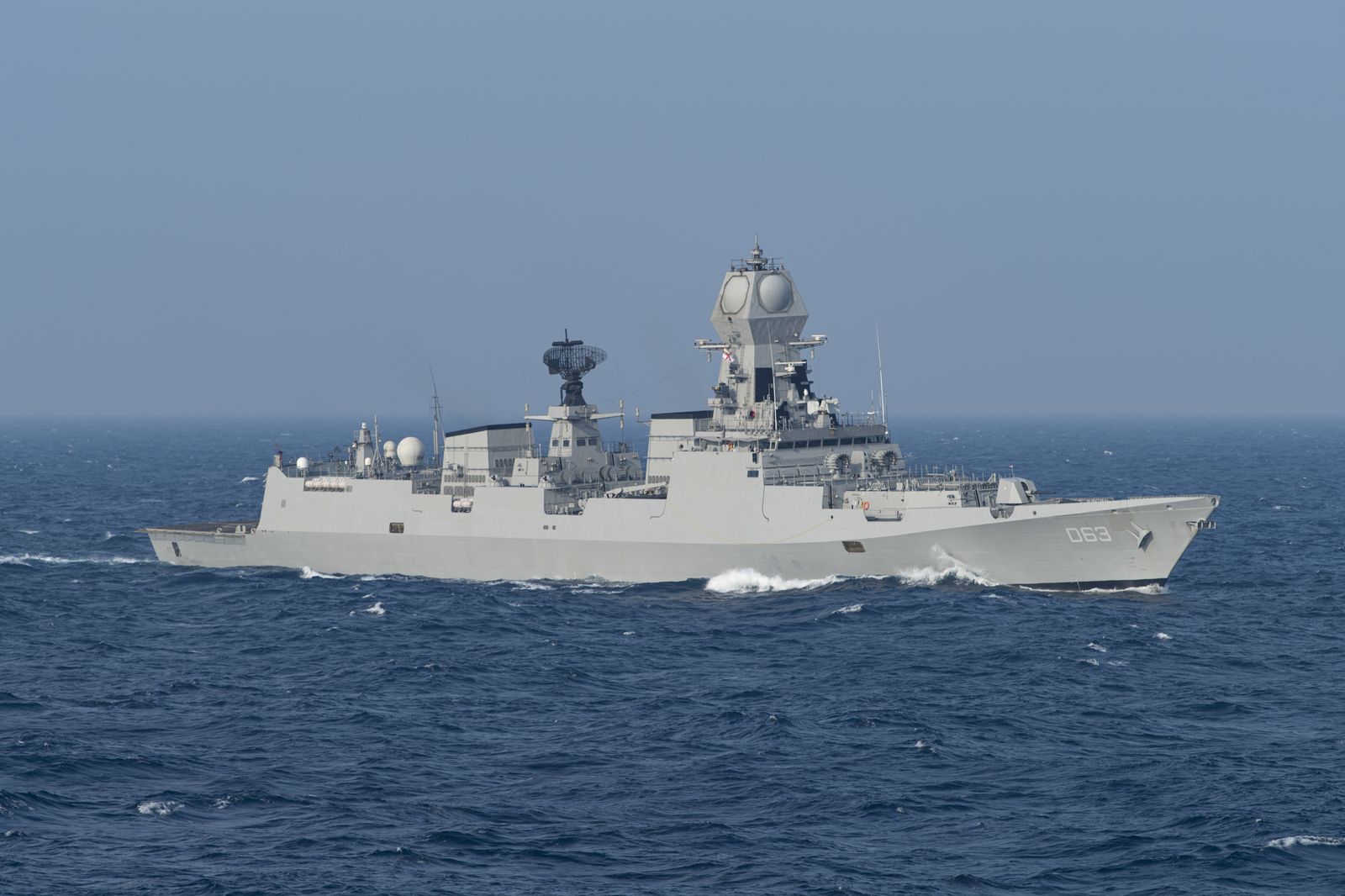
Two warships, two nuclear-armed neighbors, one collision. On September 15, Pakistan's PNS Hunain and India's INS Kolkata came together in the North Arabian Sea — steel on steel, 2,600 tons against 7,400 — during Pakistan's SEASPARK-26 naval exercise. Nobody was reported killed. But in the world's most dangerous bilateral relationship, a collision at sea is never just a collision: both capitals summoned diplomats, both blamed the other, and a 1991 agreement on naval etiquette is suddenly the most consequential document in South Asia.
The competing accounts are irreconcilable, which is the point. Pakistan: the Hunain was operating inside Pakistan's exclusive economic zone during a scheduled national exercise, and the Indian destroyer closed dangerously. India: the collision happened in international waters, the Pakistani corvette manoeuvred unsafely in violation of the 1991 agreement's Article 10, and here are the photos of the gash in our hull. Somewhere between the two stories is what actually happened; neither navy has any incentive to find it.
The vessels themselves tell a story. INS Kolkata is a 7,400-ton guided-missile destroyer — a capital ship, the pride of the Indian fleet. PNS Hunain is a 2,600-ton Yarmook-class corvette, less than half the displacement. The physics of the encounter favored India; the narrative of the encounter favors whoever tells it better. Pakistan gets to play the smaller navy harassed by the bigger; India gets to play the responsible power wronged by a reckless neighbor.
“In the world's most dangerous bilateral relationship, a collision at sea is never just a collision.”
The 1991 agreement is the ghost at the feast. Signed after the Cold War to prevent exactly this kind of incident, its advance-notice and safe-conduct provisions were supposed to keep the two navies' exercises from turning into confrontations. Both sides now cite it against the other — which means it is functioning, after a fashion: as a shared vocabulary for disagreement rather than a prevention mechanism.
The diplomatic choreography — summoned chargés d'affaires, formal protests — is the standard South Asian escalation ladder, and its very standardness is reassuring. This is how New Delhi and Islamabad handle incidents they intend to contain: loudly, formally, and without moving the military dial. Theladder exists so that collisions stay collisions.
The context nobody states aloud: SEASPARK-26 is Pakistan's major biennial naval exercise, staged in waters where India's navy increasingly operates as the region's dominant force. The North Arabian Sea is also the energy corridor — the tanker route from the Gulf — which makes every naval incident there a global economic event as well as a bilateral one. The world's oil markets watched the diplomatic notes with more attention than the navies did.
What happens next is procedural: naval inquiries on both sides, diplomatic notes exchanged, the 1991 agreement's consultative mechanisms invoked or ignored. The collision will be absorbed into the long ledger of India-Pakistan incidents — unless it isn't, and the next exercise brings the two navies closer still.
Western coverage treats the incident as a near-miss in need of guardrails. The emphasis is on the 1991 agreement's inadequacy: a Cold War-era document governing 21st-century naval competition between nuclear powers is due for an upgrade, and the collision is the argument. The summoned diplomats are read as a healthy sign — the machinery of crisis management working as designed.
The energy-corridor angle gets play: the North Arabian Sea carries Gulf oil, and Western energy security has a stake in the two navies' etiquette.
Eastern coverage is careful and balanced, giving both accounts full weight — the Pakistani EEZ claim and the Indian international-waters claim — without adjudicating. The editorial interest is in the exercise context: SEASPARK-26 as Pakistan's assertion of its maritime space, and the collision as the friction that assertion generates with a larger Indian navy.
The 1991 agreement is presented as a functioning, if strained, instrument: both sides reached for the same document, which is more than most rival navies manage.
The Global South lens recognizes the genre: the post-colonial navies of two partitioned states, performing sovereignty at sea. The EEZ-versus-international-waters dispute is the maritime version of the land-border disputes the South knows intimately — lines on water, drawn by history, defended by warships.
The summoned chargés get a knowing reading: this is how the subcontinent does crisis — formal, loud, contained. The South's quiet observation is that the real audience for the protests isn't the other capital but the domestic one.
