Three weeks after signing a law that threatened 100 percent tariffs on buyers of Russian oil, Donald Trump agreed with Vladimir Putin to import Russian diesel, lifting sanctions through April 2027 in a bid to cut fuel prices before the November midterms.
Published 10 October 2026 · 06:00 GMT
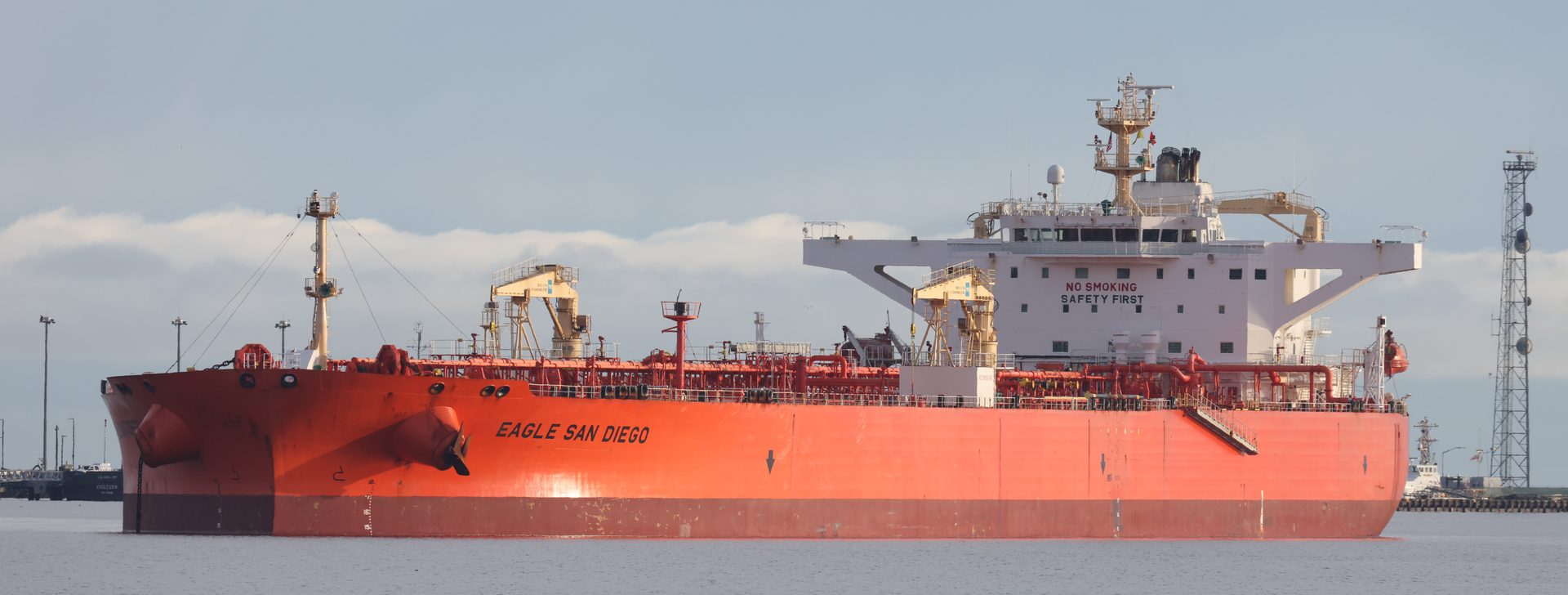
The stickers got there first. On Thursday, at a Mobil station in Coral Springs, Florida, a grinning presidential face pointed at the diesel readout: I Did That. On Friday, in the White House East Room, the man on the sticker celebrated Columbus Day while energy policy was rewritten floors above him. By afternoon, after what Trump called a highly successful discussion with Putin, the United States had stopped trying to starve Russian energy revenues. It had started buying them. More than 300,000 tons of Russian diesel, immediately. Then more. The Treasury lifted the sanctions through April 2027. The sticker, it turns out, was only half wrong.
The terms arrived the way most Trump-era diplomacy does: a Truth Social post, heavy on capital letters, light on enforcement mechanics. Russia, Trump wrote, would immediately supply over 300,000 tons of diesel fuel to the American and global marketplace, add another 500,000 tons during November, and 1,000,000 tons immediately thereafter. Then, refineries permitting, Moscow would deliver 3,000,000 more tons within a short period of time. The four tranches total 4.8 million tons, about 36 million barrels, and the analysts were quick with the arithmetic.
The machinery moved fast. Within minutes, the Treasury issued a temporary general license authorizing all transactions related to the sale, delivery, offloading, or importation of Russian diesel, including into the United States, through April 7, 2027. The Kremlin confirmed the call, saying Russia had reaffirmed its readiness to supply oil and petroleum products to US and global markets, with Putin confident of a positive impact on the global economy. Deputy Prime Minister Alexander Novak told TASS that Russia was immediately lifting its diesel export restrictions ahead of schedule, that US supplies could begin this month, and that the domestic market would remain fully supplied.
Washington punished India for buying Russian oil, then bought Russian diesel itself. The sticker said: I Did That.
Do the conversion the announcement hoped you would skip. At roughly seven and a half barrels to the ton, the headline 300,000 tons is about two and a quarter million barrels: a few hours of American consumption. The first two tranches, 800,000 tons, equal about six million barrels, roughly a day and a half of US demand, per the EIA. The full 4.8 million tons is some 36 million barrels, about 400,000 a day over three months. The world is short about 1.6 million barrels of diesel a day, the IEA estimated last month. If every promised ton arrived at once, which it will not, it would cover that gap for three weeks. The United States itself exports about 1.5 million barrels a day.
The market priced the theater, not the tonnage. Ultra-low sulfur diesel futures fell more than four percent on Friday. The analysts were unsparing. Dan Pickering of Pickering Energy Partners estimated a five to six percent supply increase by year end, called it helpful but not a needle mover, and noted Trump talked in tons because the tons number looks bigger: more politics than a game changer. Rebecca Babin of CIBC Private Wealth said the barrels could help but may never materialize, and would be too little, too late. Denton Cinquegrana of Dow Jones Energy: a drop in the bucket. Our wire desk covered the first hours of the announcement here.
Because the calendar says November 3, and the pumps say six dollars and change. Three weeks ago, Trump signed the Lindsey O. Graham Sanctioning Russia and Iran Act, passed 86 to 11 in the Senate and 262 to 159 in the House, authorizing tariffs of up to 100 percent on the five largest buyers of Russian oil and gas, and up to 500 percent on goods imported directly from Russia. A year earlier, an August 2025 executive order had slapped a 25 percent surcharge on one country, and exactly one, for buying Russian oil: India. The sanctions architecture took years to build. The license took minutes. The United States is not repealing the Graham Act; it is renting a hole in it until April 2027, which is the difference between a statute and a strategy.
The strategy is the midterm. Diesel hit a record 6.528 dollars a gallon on September 22, per AAA, and stood at 6.28 dollars on Thursday, up roughly 70 percent since the US-Israel-Iran war began. Diesel is the fuel of the working economy: trucks, combines, home heating. Trump named the constituency himself on Truth Social: lower prices for Americans, especially our great farmers, ranchers, and truckers, is my greatest priority. The administration has even floated banning US diesel exports, a remarkable admission: American refiners shipped 1.764 million barrels a day of distillates abroad last week while domestic inventories sat 13.5 percent below last year's level. The sticker was campaign art; the deal is campaign policy.
Kyiv noticed first, and loudest. Volodymyr Zelensky called the decision unworthy of partners and weak, then sharpened it for Axios: it looks like a happy birthday present for Putin; it looks absolutely terrible. On X he added that gifts to Putin will not bring peace, and that Russia would repay the diesel with terror and perfidy. The timing stung: the announcement landed while a Ukrainian delegation was in Washington discussing a proposal to end the war. Zelensky said his team was being used as a smokescreen. Whatever the diesel does to American pump prices, it has already done something to the sanctions coalition: it showed the door is open, and the hinge is American domestic politics.
New Delhi noticed second, and will remember longer. India is the second-largest buyer of Russian crude after China, with Russian barrels making up roughly half its imports this summer. For that habit, India alone absorbed the 25 percent surcharge in 2025, and the Graham Act now threatens it with tariffs up to 100 percent. The India file is the case study in American punishment for buying Russian energy. The diesel deal turns the case study into a contradiction: the punisher is now the buyer, licensed by its own Treasury. The message to every capital weighing the next sanctions vote is not subtle: American resolve on Russian energy lasts exactly until American voters pay six dollars a gallon. Russia collects the revenue and the symbolism.
Geopolitics first. The deal exists in a war. Fuel prices are high because the United States is fighting a war against Iran, because Russia banned diesel exports in early July after Ukrainian drone strikes battered its refineries, because Houthi attacks hit refineries in Saudi Arabia, and because China granted no refined-fuel export quotas in the first week of October. Trump tied the announcement to what he described as American control of the Strait of Hormuz, through which a fifth of the world's oil flows. The G7 agreed on October 2 to release a combined 100 million barrels of crude and diesel from strategic stocks. Only Washington is doing it with Moscow.
Macroeconomics second, and the plumbing matters. The United States exports diesel, which makes the arrangement stranger than the headline admits. American refiners prioritize sales abroad, which is why the administration has proposed banning diesel exports outright. Distillate inventories sit at 105.1 million barrels, 16.4 million below last year. Imports run 118,000 barrels a day against exports of 1.764 million. Russian diesel does not automatically reach an American nozzle; it enters a global pool, displaces other cargoes, and moves the price at the margin. That is why futures fell four percent while the analysts yawned: the market priced the signal, then remembered the plumbing.
Demographics third, because diesel is a class fuel. Gasoline is the commuter's problem; diesel is the producer's, paid by the people who grow the food, haul the freight, and heat northern homes. When diesel runs 70 percent above last year, the pain lands hardest in farm country and exurbia, in the counties that decide House seats. The midterm is 25 days away. No pollster is needed: a president facing that map would rather thank Putin on camera than explain refinery margins in October. The politics of the pump are the oldest politics in America; the only new thing is the flag on the tanker.
History fourth. Washington spent four years building the wall this deal drills through: the 2022 invasion triggered the energy embargo; the shadow fleet sanctions followed; the August 2025 executive order singled out India; the Graham Act codified the tariff weapon in September. After Ukrainian strikes cut its refining capacity, the Kremlin banned diesel exports in July and extended the ban in September; the International Energy Agency puts the Russian diesel output loss at about 30 percent. That is the context for the deal's most honest sentence, the one about the condition of Russian refineries. The wall hurt Russia's exports. It also hurt everyone else's prices. Walls do that.
Structure fifth, and here the caveat swallows the promise. Russia will deliver the final three million tons based on the condition of its diesel refineries, the same ones Ukrainian drones have been degrading since the summer. Novak's assurance to TASS that the domestic market will be fully supplied sits uneasily beside the fuel shortage that forced the export ban. A deal whose largest tranche depends on the repair schedule of bombed refineries is less a contract than an option, and the option premium is being paid in American sanctions credibility. The tell is in the structure: the firm numbers are small, the big numbers are conditional, and the license, unlike the barrels, is guaranteed.
Watch the water first. Novak said supplies to the United States could start this month; if no tankers appear, the four percent futures drop was a gift to short sellers and nothing more. Watch November 3, which decides whether this was energy policy or campaign literature. Watch the April 7, 2027, license deadline, because temporary licenses have a habit of becoming permanent architecture. Watch whether the Graham Act's tariff stick ever lands on India or China, or whether the diesel deal quietly becomes the precedent that shelves it. And watch Kyiv, which has learned that the sanctions regime it depends on is negotiable at the pump. The numbers will be updated as the tankers, or the excuses, arrive.
The Western press read the announcement as a policy collapse with a campaign schedule. USA Today called it an extraordinary reversal of US policy; the Associated Press called it stunning; the Wall Street Journal framed it as the most meaningful US-Russia coordination of Trump's second term. The throughline in every newsroom was the same: three weeks after signing a sanctions law, the president suspended it, and the calendar explains why.
Analysts in Western markets were openly dismissive of the economics. Pickering Energy Partners put the supply gain at five to six percent by year end and called it more politics than a game changer; CIBC's Rebecca Babin warned the barrels may never fully materialize; Dow Jones Energy's Denton Cinquegrana called it a drop in the bucket. The consensus: the futures market bought the headline, but nobody is buying the tonnage.
Moscow presented the call as a diplomatic and commercial win with no concessions attached. The Kremlin readout said the Russian side had reaffirmed its readiness to supply oil and petroleum products to US and global markets, and quoted Putin as confident the arrangement would have a positive impact on the global economy as a whole. Deputy Prime Minister Novak told TASS that Russia was lifting diesel export restrictions ahead of schedule and could start supplies to the United States this month.
The subtext in Russian coverage is the reversal of the pressure campaign itself. Sanctions built over four years were suspended by a Treasury license within minutes of a phone call, while the Russian domestic market was declared fully supplied. For Moscow, the deal turns an energy weapon aimed at Russia into an energy lever wielded by Russia, and it does so at no cost to the war effort in Ukraine.
Indian coverage treated the deal as a double standard with receipts. The Hindu BusinessLine reported the Treasury license through April 7, 2027, against the backdrop of the Graham Act's threat of 100 percent tariffs on India for buying Russian oil. India, the second-largest buyer of Russian crude, absorbed a 25 percent surcharge in 2025 for exactly the behavior Washington has now licensed for itself.
For fuel-importing countries across the Global South, the immediate question is price relief. Bangladesh's TBS News noted diesel near record highs and analysts doubting the deal would keep prices down. If the Russian barrels soften global prices even marginally, importers from Dhaka to Dakar gain breathing room; if the deal is theater, they are left holding the same expensive barrel as before.
Analysts are skeptical. The first two tranches total about six million barrels, roughly a day and a half of US demand, and the full 4.8 million tons equals about 36 million barrels. Pickering Energy Partners calls it helpful but not a needle mover, expecting only a five to six percent supply increase by year end. Futures fell about four percent on the news, but physical delivery takes weeks.
Three weeks earlier he signed the Graham Act authorizing tariffs of up to 100 percent on the biggest buyers of Russian oil and gas. But diesel hit a record 6.528 dollars a gallon on September 22, up more than 70 percent since the Iran war began, with midterms on November 3. The Treasury's temporary license through April 7, 2027, lets the White House chase lower prices without repealing the law.
India is the second-largest buyer of Russian crude after China, and it was the only country hit with a 25 percent surcharge in 2025 for buying Russian oil. The Graham Act threatens it with tariffs up to 100 percent. Now India watches Washington itself buy Russian diesel under a Treasury license, which New Delhi will read as proof that the pressure campaign bends when American voters feel the pain.
Whether Russian tankers actually sail this month, as Deputy Prime Minister Novak promised TASS. The November 3 midterms will decide if this was policy or theater. Watch the April 7, 2027, license deadline for renewal signals, India's tariff fate under the Graham Act, and Ukraine's response, since Zelensky called the deal a weak decision and a gift to Putin.
