President Zardari invoked Articles 232 and 234 to suspend the PTI government in Khyber Pakhtunkhwa, citing a militant surge. The opposition calls it a coup. Forty million people now live under federal rule.
Published 12 October 2026 · 18:00 GMT
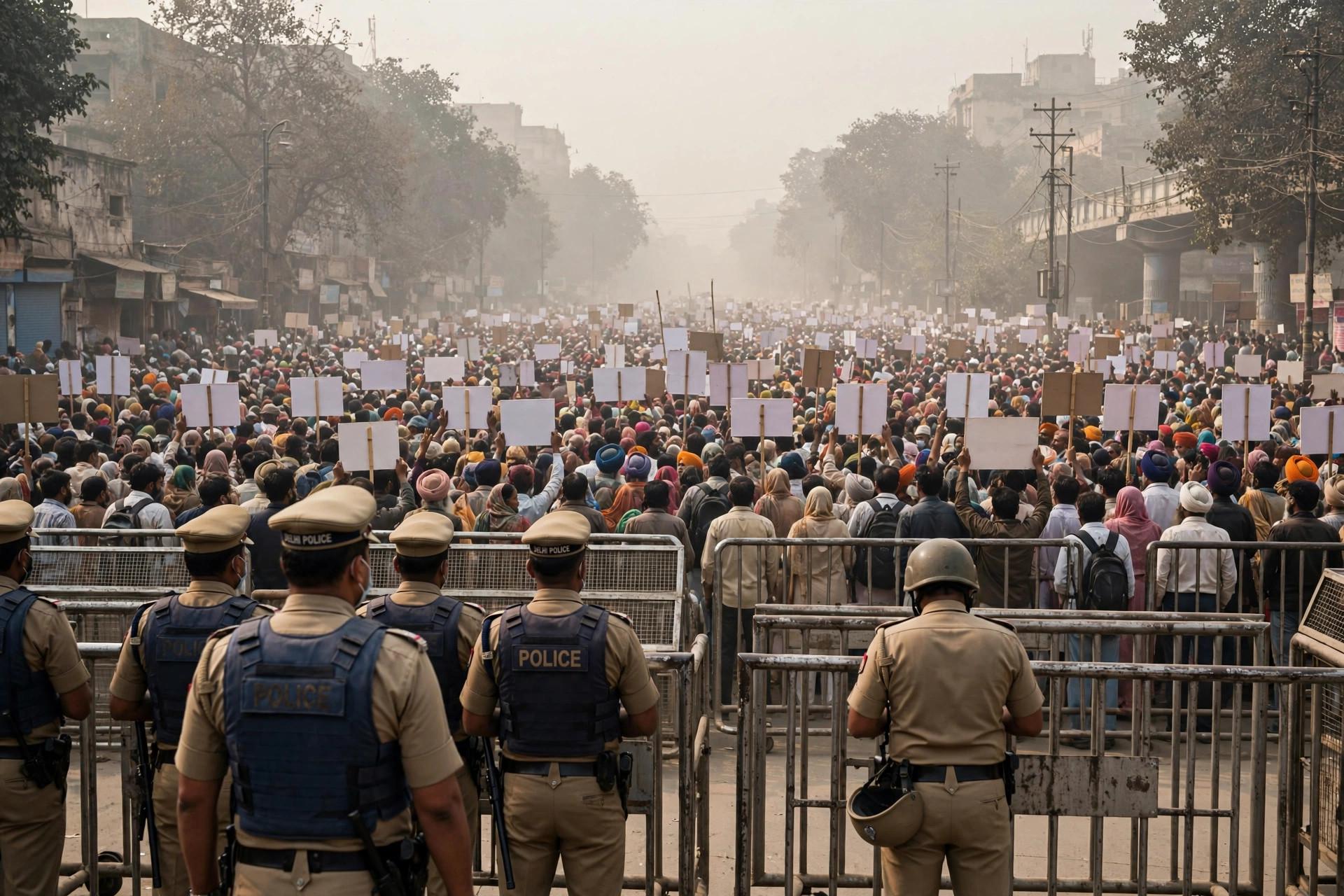
On Sunday, October 11, Pakistan's federal government suspended the elected administration of Khyber Pakhtunkhwa, the northwestern province ruled by Imran Khan's Pakistan Tehreek-e-Insaf, imposing emergency rule and governor's rule in a single move. President Asif Ali Zardari signed both proclamations on the advice of Prime Minister Shehbaz Sharif's cabinet, invoking Articles 232 and 234 of the Constitution. Islamabad cites a militant surge of "unprecedented violent intensity" and accuses the provincial government of "deliberate disengagement" from counterterrorism. The PTI calls it a "coup disguised as emergency" aimed at crushing its march on the capital to demand Khan's release. Executive power now rests with Governor Faisal Karim Kundi, an 11-member advisory council, and troops deployed in aid of civil power.
Pakistan's federal government has suspended the elected administration of Khyber Pakhtunkhwa, the northwestern province governed by Imran Khan's Pakistan Tehreek-e-Insaf (PTI), imposing a state of emergency and governor's rule in a single stroke. President Asif Ali Zardari signed both proclamations on Sunday, October 11, on the advice of Prime Minister Shehbaz Sharif's cabinet, invoking Articles 232 and 234 of the Constitution. The move strips the PTI of its last major provincial stronghold and places executive authority in the hands of Governor Faisal Karim Kundi, a member of the Pakistan Peoples Party (PPP), backed by an 11-member advisory council and troops deployed in aid of civil power.
It is more akin to thinking they are dysfunctional until the emergency is lifted, at which point they must be restored. — Hassan Abdullah Niazi, lawyer, to Al Jazeera
Under the twin proclamations, the province's elected government ceases to function as such. Parliament — where Sharif's Pakistan Muslim League (Nawaz), the PPP and their allies hold a majority — assumes the powers of the provincial assembly, in which the PTI holds the majority. The chief minister, ministers, advisers, special assistants and the advocate general "shall forthwith cease to hold office", the proclamation says. Governor Kundi assumes the functions of the provincial government, assisted by the 11-member advisory council, whose members have been given portfolios covering home affairs, law, finance, industry, health and education. Dr Muhammad Fakhr Alam Irfan was installed as chief secretary, and senior officer Muhammad Yahya Akhunzada was transferred into the provincial administration. In Peshawar, shipping containers were placed to block roads amid a heavy police deployment, and targeted mobile and internet disruptions were reported across parts of the province.
Article 232 allows the president to declare an emergency when security is threatened by an "internal disturbance beyond the power of a Provincial Government to control"; Article 234, commonly called governor's rule, applies when a governor reports that a province cannot be governed in accordance with the Constitution. Islamabad says both tests were met at once. The proclamation cites "terrorist" attacks of an "unprecedented level of violent intensity" and declares the provincial government has "failed to demonstrate the ownership, will and intent to adequately deal with the menace of terrorism". "But this situation was so grave and exceptional that the requirements in both provisions, the conditions that demand them, were such that both provisions were exercised," Law Minister Azam Nazeer Tarar said, announcing the governor would take charge for at least six months. The numbers Islamabad leans on are stark: according to the Pakistan Institute for Conflict and Security Studies (PICSS), an Islamabad-based independent think-tank, militants carried out at least 1,066 attacks across Pakistan in 2025, up from 908 in 2024 — and recorded 1,232 attacks nationwide in the first nine months of 2026, already exceeding all of 2025, the majority in Khyber Pakhtunkhwa and Balochistan.
The timing points to politics as much as to security. The emergency followed a week of high tension after PTI supporters began marching from the province toward Islamabad to demand the release of Imran Khan, who has been imprisoned since 2023. Tens of thousands of security personnel were deployed in the capital, and shipping containers sealed the roads into the city. Deutsche Welle reported that Sharif proposed the intervention to confront the security threat; Reuters reported that movement restrictions were placed on Chief Minister Sohail Afridi, who had been leading the mobilisation, and PTI figures later said he was taken into custody. The cabinet also pointed to the collapse of negotiations with government delegations on October 3. PTI spokesman Zulfikar Bukhari told The Guardian the takeover was a "coup disguised as emergency" aimed at stopping the planned protests, warning it risked more bloodshed. The party denies it failed against the militants, accusing Islamabad of withholding the funding and equipment it needed to fight.
Beyond the governor's office, a separate federal order created a secretariat for 12 "designated districts" — most of them in the former tribal areas along the Afghan border — headed by an additional chief secretary whose orders carry the same legal effect as the provincial government's. "No province has been divided anywhere," Interior Minister Mohsin Naqvi told a news conference. "It is only that these are the war-hit districts where more funding and more focus will be needed at this time." The same order suspends the constitutional provision requiring the judiciary to be separated from the executive in those districts — the detail that alarmed lawyers more than anything else in the text. The army, already deployed in the province, is expected to assist the governor's team in maintaining law and order, formalising a role it has played in practice for years.
Governor's rule is not open-ended. A proclamation under Article 234 lapses after two months unless approved by Parliament, and cannot run beyond six months in any case. An emergency under Article 232 — since the 18th Amendment — requires a resolution of the provincial assembly, or approval by both houses of Parliament within ten days when the president acts without one. That clock now forces a parliamentary vote within days, with the Supreme Court looming behind everything: PTI chairman Barrister Gohar Khan has announced the party will challenge the decision in court, in the assemblies and on the streets. "If there is terrorism and an emergency is needed in 12 districts, then why is governor's rule across the whole province?" he asked at a news conference in Islamabad. Information Minister Attaullah Tarar, for his part, accused the ousted provincial government of being "hand in glove with the terrorists" — without providing evidence. Naqvi said the government held dozens of pieces of evidence; none has been made public.
Because it is the one fortress the PTI still held. The party has governed the province continuously since 2013 and won a decisive victory in the 2024 provincial elections. Although candidates backed by Khan won the largest number of seats in the 2024 national election, the PTI did not form the federal government. Khan has remained in prison since 2023 on corruption and other charges that he and his party describe as politically motivated. The province borders Afghanistan and has borne the brunt of the militant resurgence — which is precisely why both sides claim the security argument cuts their way: Islamabad says the PTI abdicated the fight; the PTI says Islamabad starved it of resources and is now using the bloodshed as a pretext. It is also the launchpad of the current protest wave demanding Khan's release and raising concerns over his medical care and political rights in detention.
The condemnation has crossed party lines. Former president Arif Alvi called the move the "demolition of democracy", writing on X that the province had been taken over by an "unrepresentative, fraudulent set-up in Islamabad" and that only the people of KP had the right to remove their government. JUI-F leader Maulana Fazlur Rehman called it an "ambush on democracy". And Khan's son Kasim accused Army Chief Asim Munir of invoking "terrorism to justify another military operation in Pashtun lands", writing: "Pakistan belongs to its people, not its military." The protest wave that triggered the intervention — marchers demanding Khan's freedom — has not obviously been stopped by it.
Three clocks are now ticking. The first is parliamentary: the emergency proclamation needs approval within ten days, and governor's rule within two months, or both lapse. The second is judicial: a PTI petition could force the courts to rule on whether the "grave and exceptional" threshold was really met — lawyer Hassan Abdullah Niazi told Al Jazeera the arrangement does not permanently remove the elected assembly or chief minister: "It is more akin to thinking they are dysfunctional until the emergency is lifted, at which point they must be restored." The third is the street: the containers and troop deployments were designed to stop one march; whether they hold through six months of suspended representation is the question Islamabad cannot answer by decree.
Beyond the province, the move lands in a region already on edge. India will be watching a Pakistani province under direct federal-military administration on its western flank; the recent naval clash between the two countries — reported in detail at Magna Bureau's coverage of the India-Pakistan naval clash — showed how fast domestic strain can bleed outward. For the federal government, the gamble is that order imposed from Islamabad succeeds where the PTI's governance allegedly failed. For the PTI, the gamble is the opposite: that removing the last elected government its supporters trust will radicalise the very streets the emergency was meant to calm. Either way, Khyber Pakhtunkhwa — forty million people, a war on its border, and no elected government — is now Pakistan's central political fact.
W
e
s
t
e
r
n
c
a
p
i
t
a
l
s
r
e
a
d
t
h
e
t
a
k
e
o
v
e
r
t
h
r
o
u
g
h
a
d
e
m
o
c
r
a
t
i
c
-
b
a
c
k
s
l
i
d
i
n
g
l
e
n
s
,
a
n
d
t
h
e
o
p
t
i
c
s
a
r
e
p
o
o
r
:
a
n
e
l
e
c
t
e
d
p
r
o
v
i
n
c
i
a
l
g
o
v
e
r
n
m
e
n
t
s
u
s
p
e
n
d
e
d
b
y
d
e
c
r
e
e
,
a
j
a
i
l
e
d
o
p
p
o
s
i
t
i
o
n
l
e
a
d
e
r
'
s
l
a
s
t
b
a
s
t
i
o
n
s
e
i
z
e
d
,
e
v
i
d
e
n
c
e
a
g
a
i
n
s
t
i
t
s
t
i
l
l
u
n
p
u
b
l
i
s
h
e
d
.
W
a
s
h
i
n
g
t
o
n
a
n
d
B
r
u
s
s
e
l
s
h
a
v
e
l
o
n
g
t
r
e
a
t
e
d
P
a
k
i
s
t
a
n
a
s
a
c
o
u
n
t
e
r
t
e
r
r
o
r
i
s
m
p
a
r
t
n
e
r
f
i
r
s
t
a
n
d
a
d
e
m
o
c
r
a
c
y
s
e
c
o
n
d
,
b
u
t
e
a
c
h
s
u
s
p
e
n
s
i
o
n
o
f
a
n
e
l
e
c
t
e
d
g
o
v
e
r
n
m
e
n
t
r
a
i
s
e
s
t
h
e
c
o
s
t
o
f
t
h
a
t
b
a
r
g
a
i
n
—
e
s
p
e
c
i
a
l
l
y
w
h
e
n
t
h
e
i
n
f
o
r
m
a
t
i
o
n
m
i
n
i
s
t
e
r
a
c
c
u
s
e
s
t
h
e
o
u
s
t
e
d
a
d
m
i
n
i
s
t
r
a
t
i
o
n
o
f
c
o
l
l
u
d
i
n
g
w
i
t
h
t
e
r
r
o
r
i
s
t
s
w
i
t
h
o
u
t
s
h
o
w
i
n
g
p
r
o
o
f
.
T
h
e
t
e
s
t
W
e
s
t
e
r
n
o
b
s
e
r
v
e
r
s
w
i
l
l
a
p
p
l
y
i
s
p
r
o
c
e
d
u
r
a
l
:
d
o
e
s
P
a
r
l
i
a
m
e
n
t
v
o
t
e
f
r
e
e
l
y
w
i
t
h
i
n
t
h
e
c
o
n
s
t
i
t
u
t
i
o
n
a
l
d
e
a
d
l
i
n
e
s
,
d
o
t
h
e
c
o
u
r
t
s
g
e
t
a
r
e
a
l
h
e
a
r
i
n
g
,
a
n
d
d
o
e
s
t
h
e
e
m
e
r
g
e
n
c
y
a
c
t
u
a
l
l
y
e
n
d
?
A
n
y
t
h
i
n
g
e
l
s
e
c
o
n
f
i
r
m
s
t
h
e
s
u
s
p
i
c
i
o
n
t
h
a
t
c
o
u
n
t
e
r
t
e
r
r
o
r
i
s
m
w
a
s
t
h
e
p
r
e
t
e
x
t
a
n
d
t
h
e
P
T
I
'
s
s
t
r
o
n
g
h
o
l
d
t
h
e
t
a
r
g
e
t
.
F
r
o
m
B
e
i
j
i
n
g
a
n
d
M
o
s
c
o
w
'
s
v
a
n
t
a
g
e
,
t
h
e
s
t
o
r
y
i
s
s
i
m
p
l
e
r
a
n
d
l
e
s
s
s
c
a
n
d
a
l
o
u
s
:
a
s
o
v
e
r
e
i
g
n
s
t
a
t
e
u
s
i
n
g
c
o
n
s
t
i
t
u
t
i
o
n
a
l
t
o
o
l
s
t
o
h
o
l
d
t
e
r
r
i
t
o
r
y
a
g
a
i
n
s
t
a
n
a
r
m
e
d
i
n
s
u
r
g
e
n
c
y
o
n
a
c
o
n
t
e
s
t
e
d
b
o
r
d
e
r
.
C
h
i
n
a
'
s
s
t
a
k
e
i
s
c
o
n
c
r
e
t
e
—
t
h
e
s
e
c
u
r
i
t
y
o
f
i
t
s
i
n
v
e
s
t
m
e
n
t
s
a
n
d
p
e
r
s
o
n
n
e
l
i
n
P
a
k
i
s
t
a
n
d
e
p
e
n
d
s
o
n
a
s
t
a
t
e
t
h
a
t
c
a
n
g
o
v
e
r
n
i
t
s
f
r
o
n
t
i
e
r
p
r
o
v
i
n
c
e
s
,
a
n
d
a
p
a
r
a
l
y
s
e
d
p
r
o
v
i
n
c
i
a
l
a
d
m
i
n
i
s
t
r
a
t
i
o
n
i
s
a
l
i
a
b
i
l
i
t
y
,
n
o
t
a
d
e
m
o
c
r
a
t
i
c
j
e
w
e
l
.
R
u
s
s
i
a
,
w
i
t
h
i
t
s
o
w
n
d
o
c
t
r
i
n
e
o
f
f
e
d
e
r
a
l
a
u
t
h
o
r
i
t
y
o
v
e
r
r
e
s
t
i
v
e
r
e
g
i
o
n
s
,
i
s
u
n
l
i
k
e
l
y
t
o
m
o
r
a
l
i
s
e
.
I
n
t
h
i
s
r
e
a
d
i
n
g
,
t
h
e
W
e
s
t
e
r
n
f
i
x
a
t
i
o
n
o
n
p
r
o
c
e
d
u
r
e
m
i
s
s
e
s
t
h
e
p
o
i
n
t
:
s
t
a
t
e
s
t
h
a
t
c
a
n
n
o
t
m
o
n
o
p
o
l
i
s
e
f
o
r
c
e
i
n
t
h
e
i
r
b
o
r
d
e
r
l
a
n
d
s
l
o
s
e
t
h
e
m
.
T
h
e
q
u
e
s
t
i
o
n
t
h
a
t
m
a
t
t
e
r
s
i
n
t
h
e
E
a
s
t
i
s
n
o
t
w
h
e
t
h
e
r
t
h
e
e
m
e
r
g
e
n
c
y
w
a
s
e
l
e
g
a
n
t
,
b
u
t
w
h
e
t
h
e
r
t
h
e
g
o
v
e
r
n
o
r
'
s
a
d
m
i
n
i
s
t
r
a
t
i
o
n
r
e
-
e
s
t
a
b
l
i
s
h
e
s
t
h
e
s
t
a
t
e
'
s
w
r
i
t
i
n
t
h
e
t
w
e
l
v
e
d
e
s
i
g
n
a
t
e
d
d
i
s
t
r
i
c
t
s
—
a
n
d
w
h
e
t
h
e
r
t
h
e
m
i
l
i
t
a
n
t
s
,
n
o
t
t
h
e
P
T
I
,
e
n
d
u
p
w
e
a
k
e
r
.
A
c
r
o
s
s
t
h
e
G
l
o
b
a
l
S
o
u
t
h
,
t
h
e
t
a
k
e
o
v
e
r
l
a
n
d
s
a
s
a
f
a
m
i
l
i
a
r
w
o
u
n
d
:
t
h
e
c
e
n
t
r
e
i
n
v
o
k
i
n
g
s
e
c
u
r
i
t
y
t
o
d
i
s
c
i
p
l
i
n
e
a
p
e
r
i
p
h
e
r
y
t
h
a
t
v
o
t
e
d
t
h
e
w
r
o
n
g
w
a
y
.
F
r
o
m
t
h
e
S
a
h
e
l
t
o
S
o
u
t
h
e
a
s
t
A
s
i
a
,
p
o
s
t
-
c
o
l
o
n
i
a
l
f
e
d
e
r
a
t
i
o
n
s
c
a
r
r
y
t
h
e
s
a
m
e
s
c
a
r
—
e
m
e
r
g
e
n
c
y
p
o
w
e
r
s
w
r
i
t
t
e
n
f
o
r
e
x
i
s
t
e
n
t
i
a
l
t
h
r
e
a
t
s
,
d
e
p
l
o
y
e
d
a
g
a
i
n
s
t
e
l
e
c
t
e
d
o
p
p
o
n
e
n
t
s
.
T
h
e
P
a
s
h
t
u
n
d
i
m
e
n
s
i
o
n
s
h
a
r
p
e
n
s
i
t
:
a
c
o
m
m
u
n
i
t
y
t
h
a
t
h
a
s
p
a
i
d
t
h
e
h
i
g
h
e
s
t
p
r
i
c
e
i
n
P
a
k
i
s
t
a
n
'
s
w
a
r
s
n
o
w
w
a
t
c
h
e
s
i
t
s
e
l
e
c
t
e
d
g
o
v
e
r
n
m
e
n
t
d
i
s
s
o
l
v
e
d
b
y
d
e
c
r
e
e
w
h
i
l
e
t
h
e
c
o
n
s
t
i
t
u
t
i
o
n
a
l
s
e
p
a
r
a
t
i
o
n
o
f
c
o
u
r
t
s
a
n
d
e
x
e
c
u
t
i
v
e
i
s
s
u
s
p
e
n
d
e
d
i
n
i
t
s
d
i
s
t
r
i
c
t
s
.
S
o
u
t
h
e
r
n
o
b
s
e
r
v
e
r
s
w
i
l
l
n
o
t
e
t
h
e
a
s
y
m
m
e
t
r
y
—
B
a
l
o
c
h
i
s
t
a
n
b
u
r
n
s
t
o
o
,
y
e
t
n
o
g
o
v
e
r
n
o
r
'
s
r
u
l
e
t
h
e
r
e
—
a
n
d
a
s
k
t
h
e
q
u
e
s
t
i
o
n
I
s
l
a
m
a
b
a
d
h
a
s
n
o
t
a
n
s
w
e
r
e
d
:
w
h
y
i
s
t
h
e
e
m
e
r
g
e
n
c
y
p
r
o
v
i
n
c
e
-
w
i
d
e
w
h
e
n
t
h
e
t
e
r
r
o
r
i
s
d
i
s
t
r
i
c
t
-
c
o
n
c
e
n
t
r
a
t
e
d
?
T
h
e
a
n
s
w
e
r
w
i
l
l
d
e
c
i
d
e
w
h
e
t
h
e
r
t
h
i
s
i
s
r
e
m
e
m
b
e
r
e
d
a
s
c
o
u
n
t
e
r
t
e
r
r
o
r
i
s
m
o
r
a
s
t
h
e
c
e
n
t
r
e
t
e
a
c
h
i
n
g
t
h
e
f
r
o
n
t
i
e
r
w
h
o
r
u
l
e
s
.
Article 234 allows the president, on the governor's report that a province cannot be governed in accordance with the Constitution, to suspend the elected provincial government and transfer its executive functions to the governor. Parliament assumes the provincial assembly's legislative powers. The proclamation lapses after two months unless Parliament approves it, and cannot run longer than six months.
An Article 232 emergency is a security measure: the president may declare it when national security is threatened by war, external aggression, or an internal disturbance "beyond the power of a Provincial Government to control". Governor's rule is a governance measure for when the provincial administration itself has broken down constitutionally. Islamabad invoked both, arguing the militant crisis met both tests at once.
At most six months for governor's rule, and only if Parliament approves the proclamation within two months. The emergency needs parliamentary approval within ten days. Law Minister Azam Nazeer Tarar said the governor would take charge for at least six months, but the constitutional clocks — and a likely court challenge — will decide the real duration.
Because Khyber Pakhtunkhwa is the party's last major stronghold, governed by the PTI since 2013, and the intervention followed a PTI march on Islamabad demanding Imran Khan's release. The party says Islamabad withheld counterterrorism funding and is using the militant threat as a pretext to dismantle an elected government. The claim that the PTI is "hand in glove with the terrorists" came with no public evidence.
Possibly. PTI chairman Gohar Ali Khan has announced a court challenge, and the Supreme Court can test whether the "grave and exceptional" threshold for both articles was genuinely met. Lawyer Hassan Abdullah Niazi told Al Jazeera the assembly and chief minister are not permanently removed — they are, in his reading, suspended until the emergency is lifted, at which point they must be restored.
