At Valdai, Putin lauded Modi's peace ideas — then claimed record September gains, demanded Ukrainian neutrality, and said 'no' to halting Black Sea strikes.
Published 3 October 2026 · 18:00 GMT
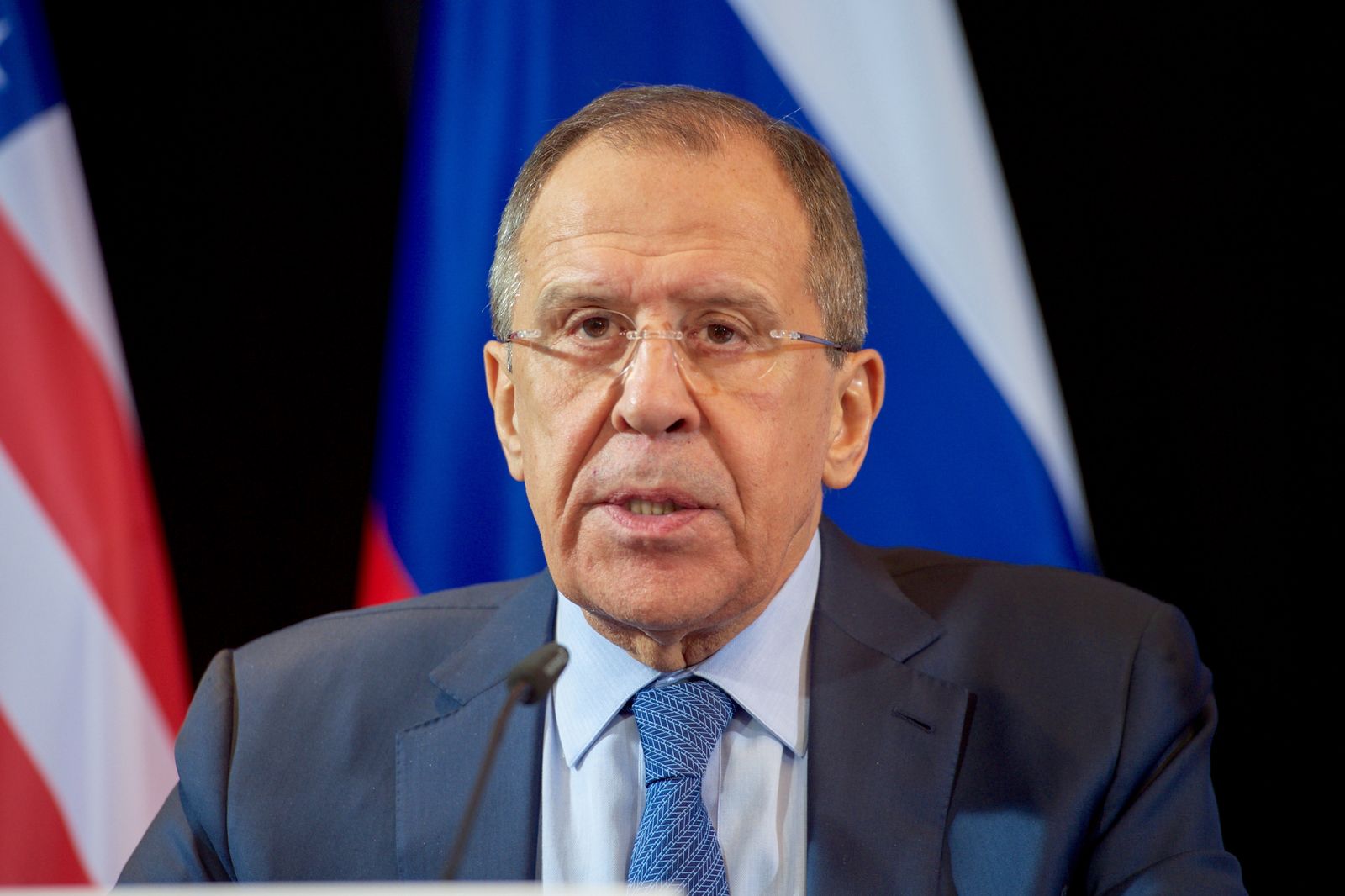
On a stage in Moscow built for exactly this kind of theater, Vladimir Putin reached for warmth. India, he said on Thursday, holds a "neutral position" on Ukraine — and yet its prime minister "constantly raises questions about ending the conflict" at every meeting, armed with "very good ideas" for peace. It was the kind of compliment leaders give when they want the world to believe a door is open — even as, in the same appearance, he slammed that door shut on halting strikes in the Black Sea.
The hall at Valdai was full of the people who make a living reading Vladimir Putin's moods, and on Thursday afternoon he gave them a masterclass in the warm half of his repertoire. India, he told the forum, takes a "neutral position" on Ukraine. And yet — the "and yet" did all the work — Narendra Modi "constantly raises questions about ending the conflict" at every bilateral meeting, despite what Putin called their "very good, friendly" relations. "He has an avid interest and very good ideas aimed at finding mutually acceptable solutions," the Russian president said. "We are grateful to the Prime Minister for his ideas — I won't go into details now — for his commitment to ending this conflict, including peacefully and as quickly as possible." It was praise of a very particular kind: lavish, public, and — as Putin himself made clear — detail-free. The Valdai Discussion Club has hosted this ritual for years, a stage where the Kremlin speaks past the diplomats in the room to the capitals beyond it, and on Thursday Modi's name was the instrument of the evening. Consider the setting. A war in its fourth year. An energy grid under weekly assault. And a Russian president choosing, of all the week's material, to open with gratitude toward New Delhi. That choice was the message. The praise was the policy — or at least, for the length of a news cycle, it was meant to look like one. Behind closed doors, of course, the forum's other headlines were being written at the very same microphone. But for one bright passage on Thursday, the story was friendship, ideas, and peace — the vocabulary of diplomacy deployed with the precision of artillery.
No other leader on earth occupies the seat Narendra Modi has carved out for himself in this war. India has abstained on United Nations resolutions condemning Russia's invasion while engaging both Moscow and Kyiv, and Modi made a landmark visit to the Ukrainian capital — the kind of trip that reads as a statement in itself. That is the "neutral position" Putin named on Thursday, and it is worth pausing over what neutrality means when it comes with a microphone at Valdai. In 2022, Modi told Putin to his face that "this is not an era of war" — a line that traveled the world precisely because it came from a friend of the Kremlin rather than a critic. In August, at the SCO summit in Bishkek, he called for moving "from an endless war towards an end to the war." In September, standing beside Putin in New Delhi after the 18th BRICS summit, he went further still: "We have to move from a situation of 'endless war' to 'end of war'... It is humanity's wish that the end of this war happens soonest." The words have grown bolder with each telling, and the venues grander — from a bilateral aside to a joint statement on Indian soil. This is not the neutrality of silence. It is the neutrality of a power that believes it can talk to everyone, and wants the world to watch it try. For now, that posture has cost New Delhi little and bought it much: relevance in every conversation about ending the war, without the obligations that come with choosing a side.
Putin praised Modi's "very good ideas" for ending the war — then answered "no" when asked whether Russia would pause its strikes. That single word said more than the praise.
Meanwhile, the praise itself deserves a cold reading. What does a compliment from Vladimir Putin cost him? Nothing. What does it buy? Quite a lot, and that is the point. It buys the image of a peacemaker at the very moment his forces stand accused of the heaviest combined attack on Ukraine's energy infrastructure in months. It buys a wedge — or at least the appearance of one — between New Delhi and the Western capitals that would prefer India's neutrality to tilt their way. And it buys time, the most precious commodity in a war of attrition, wrapped in the language of gratitude. Note what accompanied the praise. In the same appearance, Putin said Moscow wants the war ended through negotiations "as soon as possible" — but only on conditions acceptable to Russia: Ukrainian neutrality, security guarantees for Russia itself, and, by implication, the territorial facts his army is creating on the ground. He claimed Russian forces took 1,301 square kilometers of Ukrainian territory in September alone. Asked whether Moscow would halt its strikes in the Black Sea, he answered with a single word: "no." That "no" is the policy; the praise is the packaging. On paper, Russia seeks peace; in practice, it seeks peace on terms Ukraine has spent four years refusing — and it says so plainly, at the same forum, to the same audience, in the same afternoon. The flattery and the refusal are not a contradiction. They are the two halves of a single maneuver. To call it cynical would be to miss the craft: the maneuver needs both halves, the velvet and the iron, to work at all.
Beneath the surface of the Valdai choreography, the week's real news was written in blackouts. On Wednesday, Russia launched its heaviest combined attack on Ukrainian energy infrastructure in months: seven people killed, including a child, and emergency power cuts rolling around Kyiv. On Thursday, Russian drones struck a school and the Southern Bridge in the Ukrainian capital; Odesa was targeted too. This is the rhythm of the war as winter approaches — the grid as a weapon, wielded ahead of the cold, in a campaign Ukraine has endured in various forms since the first winter of the invasion. The timing matters. Energy infrastructure is not collateral in this war; it is the objective, and both sides now say so openly. Putin, for his part, accused Western countries of direct involvement in Ukrainian deep strikes inside Russia — a charge that reframes Ukraine's long-range campaign as a Western operation by proxy, and one that carries its own warning. The numbers tell their own story, and it is a story of escalation rather than of a conflict winding down: the heaviest attack in months on one side of the ledger, and on the other, a Ukrainian campaign reaching deeper into Russia than ever before. While the diplomats applauded the praise at Valdai, the engineers in Kyiv were counting transformers. It was, in the most literal sense, the week's other summit — not of leaders, but of repair crews working through the night, so that the praise at Valdai would not be the only thing the country remembered from Thursday.
That Ukrainian campaign has a name now, or something close to one. President Volodymyr Zelenskiy said this week that Ukraine would respond to what he called Moscow's "new doctrine" of strikes by hitting Russian oil refineries — "what gives money to them for this war" — while drawing a line he clearly wanted the world to hear: "we will not respond... on any civilian objects." It was a statement aimed at two audiences at once: at Moscow, a promise of pain; at Washington, a promise of restraint. The restraint matters because the pain is real. Putin himself acknowledged that Ukrainian strikes on Russian refineries have cost the Russian economy around one percent of GDP — an extraordinary admission from a leader not given to advertising vulnerability, and a measure of how effective the campaign has become. Last month, Donald Trump urged Ukraine not to hit Russian oil installations, arguing the strikes were sending global diesel prices surging — a reminder that the refinery war is not a bilateral affair but a shock administered to the world's fuel markets. The Trump administration, meanwhile, has been seeking to revive talks to end the four-year conflict, which puts Washington in the unusual position of pressing Kyiv for restraint on the battlefield while pressing Moscow for flexibility at the table — and getting, this week at least, a "no" from one side and conditions from the other. The diplomacy and the targeting are no longer separate stories. They are the same story, told in two languages.
And yet the week will be remembered, in the first draft at least, for the praise. That is how theater works: the compliment is quotable, the "no" is procedural, and the blackouts are statistics. But strip away the stagecraft and the structure underneath is brutally simple. Putin's "very good ideas" remain undescribed — "I won't go into details now," he said — which means the ideas function best as the rumor of a plan rather than a plan itself. Modi's actual proposals, whatever their content, have not moved the one variable that matters: the Kremlin's conditions, which have not softened by a syllable. Ukrainian neutrality. Russian security guarantees. Territory kept. These are not the contours of a compromise; they are the terms of a settlement dictated by force, and Kyiv has rejected them for four years. For India, the calculus is different and entirely legible. The praise arrived in New Delhi on Gandhi Jayanti — the festival of the apostle of non-violence — and was received as a national honor; Home Minister Amit Shah called it a moment of pride for every Indian. That reception is the point for Modi too: the statesman of the Global South, courted by the Kremlin, shaping the conversation about a European war. Whether the ideas end the war is, for now, secondary to the fact that the world is discussing them — and discussing him. The gap between the theater and the battlefield is not a flaw in the performance. It is the performance.
Geopolitics. Step back and the Valdai exchange looks like a small, precise mechanism inside a much larger machine. The war in Ukraine has become the organizing fact of a new geopolitical geometry, and India sits at its hinge: courted by Washington, embraced by Moscow, and determined to be owned by neither. The BRICS summit in New Delhi and the SCO summit in Bishkek were not backdrops; they were the point — the institutions of a would-be multipolar order staging their own diplomacy while the Western-led order watches from outside. Putin's praise is also a message to those Western capitals: Russia is not isolated, it has friends, and its friends have ideas. Whether those ideas have substance matters less, geopolitically, than that they exist and are praised on camera. Macroeconomics. The numbers tell their own story, and the most eloquent number of the week was one percent — the share of Russian GDP that Putin admitted Ukrainian refinery strikes have erased. In an economy the size of Russia's, one percent is not a rounding error; it is the difference between growth and stagnation, between a war the treasury can fund indefinitely and one that begins to bite into the state's capacity. Add Trump's warning about surging diesel prices, and the refinery war reveals itself as the conflict's economic front line: Ukraine taxing Russia's war chest at the pump, Russia taxing Ukraine's winter at the power station, and the world's fuel markets absorbing the difference. Peace talks, when they come, will be priced in barrels as much as in borders — and both sides know it, which is why the refineries burn while the diplomats talk.
Demographics. Wars are fought by the young and paid for by everyone else, and the fourth year of this one is grinding down two populations at once. Ukraine's cities face another winter of blackouts — the seven dead this week, including a child, are the human punctuation of a strategy aimed at civilian endurance. Russia, meanwhile, absorbs a war economy's distortions with a workforce stretched between the front and the factory, and a treasury quietly losing a percent of GDP to burning refineries. And then there is the third population in this story: India's, whose pride Amit Shah invoked on Gandhi Jayanti — the vast domestic audience for whom Modi's peacemaker posture is also, unmistakably, politics. Historical patterns. There is a lineage here worth naming. India's "neutral position" is the grandchild of non-alignment, the Cold War doctrine that made New Delhi the capital of the uncommitted — and Modi's "this is not an era of war" belongs to the same tradition as the moral megaphone India has wielded since independence. Valdai, too, has a history: the Kremlin has used the forum for two decades to float trial balloons, and Thursday's praise has the unmistakable shape of one — warm words, no details, maximum deniability. Structural trends. The deepest current is structural: energy infrastructure has become the war's true battlefield, from Kyiv's grid to Russia's refineries, and the "neutral mediator" has become a structural role in a fragmented order — filled, this week, by the leader with the most to gain from playing it. The praise will fade; the structure will not. And the next time a Russian president needs a friend on camera, the phone will ring in New Delhi.
Read from the West, the Valdai praise looks like choreography — and the West has learned to read Kremlin choreography with cold eyes. Flattery is free; concessions are not: that is the basic grammar with which Washington, London, Paris, and Berlin now decode every Putin outing. What they noted was the "no" to a Black Sea pause, the demand for Ukrainian neutrality, the security guarantees claimed for Russia, and the 1,301 square kilometers of September gains brandished as a territorial fait accompli. In this reading, India is not a mediator but an enabler, whose UN abstentions and handshakes with Putin lend the Kremlin a respectability it can find nowhere else. The contrast the West keeps is Zelenskiy's — the pledge to hit "no civilian objects" set against Russian strikes that killed a child this week. And meanwhile the Trump administration, seeking to revive talks, is learning the hard arithmetic of the genre: asking Kyiv for restraint on refineries while Moscow answers "no" to everything is negotiating with one hand.
For now, then, the West files the Modi episode under gestures: handsome, photogenic, and without effect on Russia's conditions, which have not moved an inch. The lesson Western capitals draw is a defensive one — watch New Delhi without alienating it, since India remains an indispensable partner against China, and scolding it too loudly would hand Putin exactly the wedge he is trying to drive. That is why official reactions will stay measured: polite applause for Modi's "ideas," grave notation of Putin's "no," and, behind the scenes, a continued counting of square kilometers and megawatts. Western diplomacy, in short, has learned to applaud the praise while reading the next morning's military dispatch. It is a posture that satisfies no one completely — not Kyiv, which wants more than applause; not New Delhi, which wants its balancing act respected; and certainly not Moscow, which counts on the applause drowning out the dispatch. But it is the posture the West can afford, and for now, afford it will.
Read from the East, the same scene reads in reverse — and that reversal is precisely what makes Valdai interesting. Where the West sees theater, Moscow and Beijing see multipolarity at work: a Global South leader received by both belligerents, listened to by both, whom the West can no longer pretend to ignore. In this reading, India's "neutral position" is not evasion but principle — the avowed heir of non-alignment — and Putin's praise is not maneuver but genuine gratitude for ideas "aimed at finding mutually acceptable solutions." The BRICS summit in New Delhi and the SCO summit in Bishkek are not backdrops; they are the new rooms where diplomacy happens while Western formats spin their wheels. And the "no" to a Black Sea pause? A legitimate position of strength, on this view: you do not suspend strikes while the adversary hits your refineries with, as Moscow charges, direct Western help.
And yet even in the East, the clear-eyed note the limit of the exercise: "very good ideas" whose content nobody knows, a war in its fourth year, and Russian conditions — neutrality, guarantees, territory — that Kyiv will not sign. The Eastern reading thus bets on the long game: Modi is installing India as the indispensable interlocutor of any eventual settlement, Putin is showing he has friends and options, and the Global South is taking note that one can talk to everyone without asking Washington's permission. Whether peace follows or not, the geometry has already changed — and for the East, that is Thursday's real news. The bet is a patient one, and patience is the East's comparative advantage in this war: where the West demands immediate results, Moscow and Beijing are content to let the geometry do the work, summit by summit, headline by headline. Time, in this telling, is on the side of the multipolar order.
Read from the South, the episode reads first as pride — and pride, in politics, is as real a datum as barrels. That a Russian president should publicly salute the ideas of a Global South leader, on Gandhi Jayanti itself, the festival of the apostle of non-violence, and that India's home minister should call it a moment of pride for every Indian: this is an image hundreds of millions of people, from Dakar to Jakarta, understand intuitively. In this reading, Modi is neither enabler nor naïf; he is proof that one can refuse to choose a camp while shaping the agenda of a Northern war. The South, which pays for this war in energy prices and food insecurity without a seat at the table, finally sees one of its own at the microphone — or at least near it. For capitals that have spent decades being lectured by the North about the rules of the game, there is a quiet satisfaction in watching one of their own set the terms of the conversation — however briefly.
But the South can also count, and that is where enthusiasm turns sober. The "very good ideas" remain secret, Russia's conditions remain maximalist, and while compliments are exchanged at Valdai, it is Ukraine's power grids — and the world's energy bills — that absorb the blows. The Southern reading is thus a double one, without contradiction: applaud India's diplomatic ascent, and doubt that the praise changes anything about Putin's "no." That is why, from New Delhi to Pretoria, the words of Thursday will matter less than what follows them: if Modi's ideas remain a flattering rumor, the South will have learned a lesson it already knew — in other people's wars, compliments are free, and it is always the same party that pays the bill. The applause, in other words, is real; the peace is hypothetical. And the South, which has heard grand promises about its wars before, will believe in Modi's ideas when it sees them move something other than headlines.
Beijing just wrote the biggest liquidity check of the year — and changed nothing else.
The People's Bank of China will offer banks up to one trillion yuan a day — about $149 billion — in overnight funds from September 28 through October 8, covering the Golden Week holiday. It is the largest such cap since the tool's introduction in June 2026, up from 600 billion yuan in mid-September.
The calendar explains the timing. Golden Week sends hundreds of millions of Chinese traveling and spending; banks need cash the way airports need runways. The central bank is making sure the plumbing holds.
The scale, though, is the story. One trillion yuan a day is not holiday housekeeping. It is a backstop — a signal that whatever the holiday throws at the financial system, the PBoC has already covered.
And then, the other hand: nothing. Chinese banks left the one-year and five-year loan prime rates unchanged at 3.00% and 3.50% — the 16th consecutive month without a move.
Sixteen months of stillness in the price of credit, alongside the largest liquidity flood of the year. Beijing is watering the garden and refusing to lower the fence — liquidity yes, cheaper credit no.
Governor Pan Gongsheng gave the doctrine a name: slower loan growth is becoming "the new normal." Property and local-government borrowing are shrinking faster than emerging industries can borrow. The credit engine is being rebuilt mid-flight.
Liquidity is Beijing's answer to everything except the one question markets keep asking: where is the growth?
The PBoC is not idle elsewhere. It stepped up support with a net 200-billion-yuan injection through medium-term lending facility operations, reiterated its "moderately loose" stance, and kept its grip on the yuan.
The yuan, for its part, cooperated — rebounding after briefly dipping below 6.70 per dollar as US Treasury yields rose and the PBoC's grip eased.
The diplomacy helped. A US–China summit extended the trade truce to January — without new tariff cuts, but without new tariffs either. A truce, not a peace; markets will take it.
Step back and the contrast is the story. In Washington, yields cross 5% and traders bet on another hike. In Beijing, the central bank floods the system with cash and leaves rates untouched for a 16th month. Two central banks, two planets.
The logic is not mysterious. China's problem is not hot demand — it is cold credit. Pumping liquidity keeps the system liquid; cutting rates into weak demand would be pushing on the proverbial string.
The risk is the one Beijing knows best: banks awash in cash, with nowhere productive to lend it. Liquidity without lending becomes asset froth — the 2015 lesson, still fresh in institutional memory.
For the region, the signal matters more than the mechanics. A stable yuan and a liquid Chinese banking system through Golden Week is the foundation under Asia's supply chains. When Beijing sneezes, the region's exporters reach for tissues.
Watch what happens after October 8. If the trillion-yuan window closes quietly, it was holiday plumbing. If support lingers, it was something else — a central bank telling you, without saying it, that the economy needs the help.
Western coverage — Reuters and the financial wires — emphasizes the restraint: Beijing holding rates while flooding liquidity, a central bank running out of its favorite tools.
In this telling, 16 months of unchanged loan prime rates is the real headline — evidence of a policymaker boxed in by a hawkish world, a weak property sector, and the fear that rate cuts would only weaken the yuan. Liquidity is what you do when you've decided rates can't move.
Pan's "new normal" gets a skeptical hearing: an elegant phrase for a credit engine that no longer transmits. The question in Western commentary is whether "moderately loose" is a stance or a shrug.
Eastern coverage — Xinhua and Chinese outlets — emphasizes the calibration: targeted, seasonal, and exactly as doctrine prescribes.
In this telling, the trillion-yuan facility is textbook PBoC: precise, time-bound, and aimed at a known seasonal need. The unchanged rates are not paralysis but prudence — "moderately loose" means loose where it counts, steady where it matters, with the yuan's stability as the binding constraint.
The summit's truce extension gets equal billing: diplomacy buying the central bank room to maneuver, and the maneuver working — the yuan's rebound presented as policy competence, not luck.
Global South coverage — Malaysia's business press among it — emphasizes the neighborhood: what Beijing's plumbing means for everyone downstream.
The read from Kuala Lumpur: a liquid China through Golden Week is good news for ASEAN exporters, supply chains, and the region's own central banks. Yuan stability is a public good in Asia, and the PBoC just underwrote another week of it.
The caution in this coverage is borrowed from experience: when the region's biggest economy needs record liquidity to get through a holiday, the "new normal" of slower credit is everyone's normal too.
To read Beijing's move properly, you need the toolkit. Start with the overnight reverse repo — the instrument at the center of the trillion-yuan headline. In a reverse repo operation, the central bank lends cash to commercial banks overnight, taking bonds as collateral; the banks get the liquidity they need, the central bank gets the bonds back the next morning plus a sliver of interest. It is plumbing, not policy: the money created exists for a day, maybe rolled over, and its purpose is to keep the interbank market — the market where banks lend to each other — from seizing. The cap is the message. A trillion yuan a day says: whatever the holiday throws at the system, the PBoC has already covered.
The tool itself is young — introduced only in June 2026 — which makes the record cap more interesting. A new instrument's ceiling is normally discovered cautiously; jumping from 600 billion yuan in mid-September to a full trillion two weeks later is not calibration but declaration. It tells the banks, and through them the market, that the central bank will not be outbid by seasonal stress. The facility runs September 28 to October 8, covering Golden Week exactly. Time-bound, enormous, and explicitly temporary: the PBoC is writing a check it intends to tear up on the 9th. The question the article ends on — what happens after October 8 — is the only one that matters, because a backstop that lingers stops being a backstop and starts being a subsidy.
Then the medium-term lending facility — the MLF — through which the PBoC added a net 200 billion yuan. If reverse repos are the overnight overdraft, the MLF is the term loan: banks borrow for months, not hours, pledging collateral, at a rate the central bank sets. The MLF rate is the PBoC's quiet policy lever — it guides the loan prime rates without the drama of changing them. And the loan prime rates, the LPRs, are the number the article keeps returning to: 3.00 percent for one year, 3.50 percent for five, unchanged for the sixteenth consecutive month. The LPR is the benchmark for most new lending in China; holding it still while flooding the system with cash is the whole doctrine in one gesture. Liquidity yes. Cheaper credit no.
The sixteen months of stillness deserve their own reading, because stillness is also a decision — sixteen times over. In a world where Washington is hiking and yields cross 5 percent, cutting Chinese rates would narrow the already thin cushion against capital outflow and yuan depreciation; every basis point of easing is a basis point of incentive for money to leave. The PBoC's box, as the Western lens describes it, is real: a property sector that no longer transmits stimulus, local governments deleveraging rather than borrowing, and a currency whose stability is the binding constraint on everything else. Holding the LPR is not paralysis. It is the recognition that the price of credit is no longer the economy's binding constraint — and that moving it would cost more in currency stress than it buys in growth.
The calendar explains the timing, as the article says — but the calendar deserves its scale stated plainly. Golden Week is the largest annual human migration on earth compressed into seven days: hundreds of millions of Chinese traveling, spending, withdrawing cash, settling bills. The banking system's cash demand does not rise. It detonates. ATMs must be stocked, merchants' settlement accounts funded, the interbank market supplied with enough reserves to clear a week's worth of the world's second-largest economy changing hands. In normal years, the PBoC manages this with routine open-market operations. This year it wrote the biggest check in the tool's short history.
The scale, though, is the story — the article's line, and worth pressing. One trillion yuan a day is not holiday housekeeping; it is a backstop sized for something the PBoC sees and the market does not yet. Seasonal demand explains the facility's existence. It does not fully explain its size. Either the central bank is being theatrically cautious — signaling strength by oversupplying safety — or its internal read on holiday-season financial stress is darker than the public data. Both readings are consistent with "moderately loose." Only one of them is reassuring. The banks will take the cash either way; the signal is in the surplus.
There is also the consumption angle, which is where the liquidity meets the real economy. Golden Week is China's great annual test of consumer confidence: the week when households vote with their wallets on whether the economy feels safe. A banking system visibly backstopped — cash available, payments clearing, no friction — is the precondition for the spending the state wants to see. The PBoC cannot make households spend; it can only ensure that nothing in the plumbing stops them. In an economy where the consumer has been the missing piece and property wealth no longer does the spending's work, the holiday's cash registers matter more than the interbank rate. The trillion yuan is, among other things, a bet on the tills.
And the regional read — the Global South lens from Kuala Lumpur — captures what the holiday means beyond China's borders. A liquid China through Golden Week is the foundation under Asia's supply chains: exporters paid, importers funded, the region's own central banks spared the volatility of a yuan under holiday stress. Yuan stability, as the article notes, is a public good in Asia, and the PBoC just underwrote another week of it. When the region's biggest economy needs record liquidity to get through a holiday, the "new normal" of slower credit becomes everyone's normal — but a stable holiday is still a stable holiday, and Asia's exporters will take it.
Central bankers choose their phrases the way diplomats choose communiqués — every word weighed, every ambiguity intentional. When Governor Pan Gongsheng said slower loan growth is becoming "the new normal," he was not describing a statistic. He was retiring an expectation. For two decades, China's credit engine ran on a simple formula: property developers borrowed, local governments borrowed against land, and the resulting construction carried GDP. That engine is being dismantled mid-flight — property deleveraging, local-government debt discipline — faster than emerging industries can borrow to replace it. "New normal" is the doctrine that says: stop waiting for the old credit cycle to return. It is not returning.
The doctrine has a logic, and it is worth steelmanning before doubting. Credit-fueled growth bought China two decades of expansion and left it with the property crisis, the local-government debt pile, and the demographic headwinds now arriving together. Pumping cheap credit into that structure — the old playbook — would reflate the very imbalances the state is trying to defuse. Slower, cleaner credit growth, directed at manufacturing upgrades and strategic industries rather than concrete, is the quality-over-quantity bet. The PBoC is not refusing to stimulate. It is refusing to stimulate the old economy. The distinction is the entire policy.
The risk, as the article notes, is the one Beijing knows best: banks awash in cash with nowhere productive to lend it. Liquidity without lending becomes asset froth — the 2015 lesson, still fresh in institutional memory, when stimulus leaked into equity speculation rather than productive investment. The trillion-yuan facility, the 200-billion MLF injection, the "moderately loose" stance — all of it presupposes transmission channels that the "new normal" itself describes as weakened. Watering the garden, to use the article's image, works only if the soil still absorbs water. If property and local governments no longer drink, and emerging industries cannot drink fast enough, the water pools. Pooled liquidity has a history in China. It is called a bubble.
Step back and the contrast the article closes on — two central banks, two planets — is the frame that will define the autumn. Washington hikes into data it may not have, fighting inflation with the South's interest bills. Beijing floods with cash it cannot lend, defending a currency it cannot afford to let slip, waiting for a credit engine it is rebuilding mid-flight. Neither has a clean instrument. Both are improvising inside doctrines — data-dependence, the new normal — that describe the world they wish they governed. Watch October 8: if the trillion-yuan window closes quietly, it was holiday plumbing, and the doctrine holds. If support lingers, the PBoC will have told you, without saying it, that the new normal needs more help than the old vocabulary admits.
Monetary policy does not happen in a diplomatic vacuum, and the PBoC's autumn maneuver owes more to the summit than the communiqués admit. The US–China meeting extended the trade truce to January — no new tariff cuts, but no new tariffs either — and that pause is worth more to Beijing's central bank than any single instrument in its toolkit. Tariff escalation would have meant a weaker yuan, imported inflation, and capital flight arriving together; the truce removes the worst tail from the PBoC's planning. "A truce, not a peace; markets will take it," as the article says. So will central bankers.
The yuan's rebound — recovering after briefly dipping below 6.70 per dollar — is the truce's signature in the currency market. With US Treasury yields rising and the PBoC's grip easing, the currency found its footing not through intervention but through the removal of a threat. That distinction matters: a yuan steadied by diplomacy is cheaper to defend than a yuan steadied by reserves. Every week the truce holds is a week the PBoC does not have to choose between growth and the exchange rate — the choice that has boxed in Chinese policy for the better part of a decade.
But truces expire, and January is closer than it looks. The extension without tariff cuts is a freeze, not a thaw: the existing duties remain, the structural disputes untouched, the next escalation one headline away. The PBoC is therefore managing a window, not a settlement — using the diplomatic calm to get through Golden Week, to steady the currency, to buy the "new normal" time to prove itself. If January brings escalation, the trillion-yuan plumbing will look like the prelude to a harder season. Diplomacy bought the central bank room to maneuver, as the Eastern lens notes. Room is not resolution. It is rented, monthly, and the rent comes due in January.
