Five US agencies sign one pact to take rogue drones out of the sky
The Transportation, War, Homeland Security, Energy and Justice departments agreed on Monday to test and deploy counter-drone systems on a single timetable, with the FAA saying it has already cleared more than 1,000 deployments with the Pentagon and Homeland Security.
Published 9 November 2026 · 21:01 GMT
The summary
Five US departments, Transportation, War, Homeland Security, Energy and Justice, signed a memorandum on 9 November 2026 to evaluate and deploy counter-drone systems on a common process. The effort was led by the White House Task Force to Restore American Airspace Sovereignty.
The three lenses
- WestThe West reads a government racing its own paperwork From the West, the story is told as speed against safety.
- EastThe East counts the hardware, not the signatures From the East, the coverage is thinner and more material.
- Global SouthThe South watches who the drones belong to From the Global South, the story is the ownership of the threat.
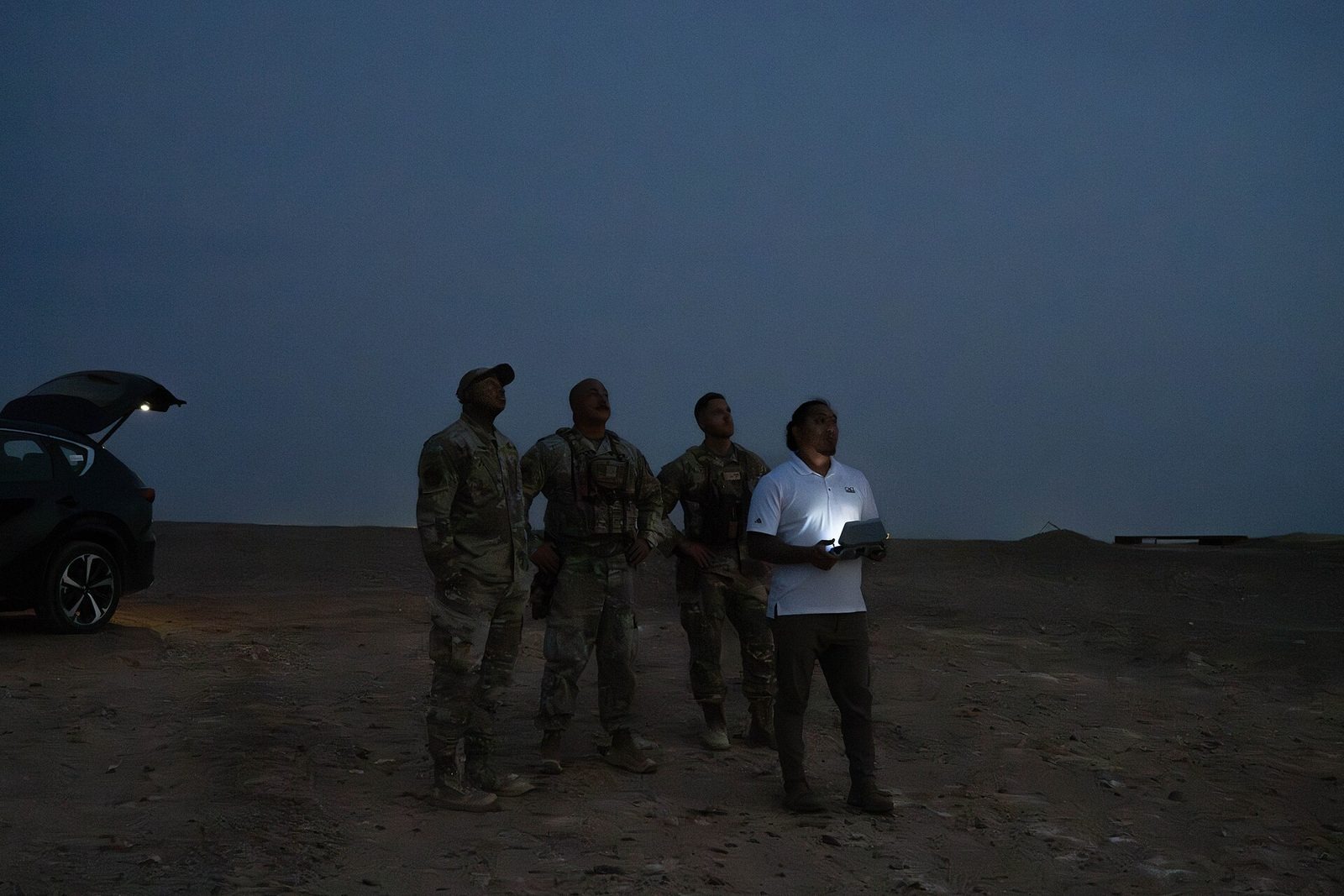
Key facts
- Five US departments, Transportation, War, Homeland Security, Energy and Justice, signed a memorandum on 9 November 2026 to evaluate and deploy counter-drone systems on a common process. Federal Aviation Administration
- The effort was led by the White House Task Force to Restore American Airspace Sovereignty. Federal Aviation Administration
- The FAA has approved more than 1,000 coordination requests with the Pentagon and the Department of Homeland Security on counter-drone deployments. Reuters
- The Pentagon counts more than 1,000 drone incursions a month along the US-Mexico border. Reuters
- NATO has committed more than $40 billion over five years to counter-drone capabilities. Al Jazeera
- Reviews of previously evaluated counter-drone systems could take as little as 24 hours, and a $250 million grant programme for 2027 will help jurisdictions protect public events. DroneLife
- The FAA administrator, the homeland security secretary and the war secretary presented the agreement as a joint effort to speed counter-drone deployments, with the FBI linking drone incursions to public events. IANS via Udaya News
- The FAA named the Choctaw Nation in Oklahoma and a site in Indiana as its first new drone test sites in nearly a decade, and Skyways flew autonomous flights beyond territorial waters. Autonomy Global
The day five departments signed the same page
Five departments of the United States government signed a single agreement on Monday to take rogue drones out of American skies faster, putting the Pentagon, the border force, the energy department and the justice department behind one shared process.
The memorandum of understanding, announced by the Federal Aviation Administration on Monday 9 November, was led by the White House Task Force to Restore American Airspace Sovereignty. It covers the departments of Transportation, War, Homeland Security, Energy and Justice, and it sets up a common process for judging counter-drone technology and putting it into service while protecting civil aviation.
“We’re taking a proactive, whole-of-government approach to protecting American airspace from emerging 21st-century threats,” said Transportation Secretary Sean Duffy. “By bringing all our federal partners together, we can strengthen our ability to combat rogue drone threats and keep the flying public safe.”
What the pact actually sets in motion
The agreement does three concrete things. It creates one shared process for evaluating counter-drone systems before deployment. It commits the agencies to work with the FAA and the Federal Communications Commission when developing systems that detect, track, stop or take control of dangerous or unauthorised drones. And it commits them to share technical requirements, test results and operational data.
Senior FAA official Liam McKenna told Reuters the agency has approved more than 1,000 coordination requests with the Pentagon and Homeland Security on counter-drone deployments, and reviews of previously evaluated systems could take as little as 24 hours.
The fiscal 2027 Counter-UAS Grant Program provides $250 million to help eligible jurisdictions protect public events and critical infrastructure. FAA Administrator Bryan Bedford said it builds on existing cooperation and sets a consistent process for introducing counter-drone technology without compromising aviation safety.
War Secretary Pete Hegseth said it would help protect the southern border and military installations. Homeland Security Secretary Markwayne Mullin said it would help counter cartel drone threats and protect border personnel. The Justice Department and the FBI linked the agreement to their work against drone incursions at public events.
Last month the FAA barred unauthorised drones along the whole US-Mexico border. On 10 April the FAA and the Pentagon completed a safety assessment of a high-energy laser system. The Pentagon has said there are more than 1,000 drone incursions along the US-Mexico border each month.
What can a counter-drone system actually do; and what can it not?
The announcement carries no timetable. No date is given for the first deployment under the new process, and no specific system is named as approved. The agreement provides no new funding, expands no legal authority and removes no aviation safety requirement; it organises the authorities the agencies already hold.
The hardest open question is legal, not technical. American law tightly limits who may interfere with an aircraft in flight, and a drone over a city is still an aircraft in the eyes of the law. The memorandum does not say who may lawfully bring one down, or what happens when the drone belongs to a hobbyist, a news crew or a delivery company rather than a cartel.
Nor is it clear how far the pact reaches beyond the federal government. State and local police, airport operators and stadium security face the same threat, and none is a signatory. The cost is unknown too: neither the price of the systems nor the bill for testing and operating them has been published. And the 24-hour review applies only to systems already evaluated once; nobody has said how long a first evaluation takes.
Why the sky became the newest contested border
A drone costs a few hundred dollars and can close an airport, watch a patrol or carry a payload across a border. That is why the sky has become the newest contested border, and why five departments that rarely move together signed the same page on the same day.
The southern border is the sharpest edge. The Pentagon counts more than 1,000 drone incursions a month there, where cartels scout patrols and move contraband. The FAA’s October ban on unauthorised drones along the whole border was the first answer; the pact is the second, built for sustained operations rather than a single restriction.
Airports and crowds are the second edge. Gatwick airport shut for more than a day in 2018 after drone sightings, stranding tens of thousands of passengers, and the Justice Department and the FBI now link the new agreement to drone incursions at public events. A stadium or a summit is a soft target, and the defences must work without endangering the civil aircraft overhead.
The third edge is allied demand. NATO has committed more than $40 billion to counter-drone capabilities over the next five years, after a winter of drone incursions across Europe made the threat routine. Washington’s pact is the American half of the same recognition: the cheap drone has become the poor man’s air force.
The arithmetic of speed against safety
Read through the five dimensions, the pact solves the coordination problem first, because a signature can solve it. Geopolitically, the drone threat is two threats at once: cartel aircraft at the southern border and state-backed incursions over allied skies, hard to attribute. Economically, the demand signal is enormous, NATO’s $40 billion-plus commitment over five years, and an interceptor can cost many times the drone it destroys.
Technologically, the tools exist but each carries a trade-off. Detection must separate a hostile drone from a delivery drone and a bird. Jamming must not blind navigation equipment. Lasers, like the high-energy system assessed in April, must not endanger aircraft or people below. Kinetic interceptors must not drop debris on a city. That is why the FAA sits at the centre of the pact: every counter-drone system is also a new hazard to the airspace it defends.
Historically, the gap the pact closes is the one exposed by the unexplained sightings over New Jersey and over American bases in Britain in the winter of 2024, when nobody could say with confidence whose aircraft they were. Demographically, the pressure comes from crowds: stadiums, summits, public events concentrate the people one drone can threaten. The pact does not solve the physics or the law. It solves the paperwork; which, for a government moving five departments at once, is the precondition for solving anything else. Bulgaria has already asked NATO for anti-drone ships and aircraft, a sign of how fast allied demand is moving.
What happens when every agency can act against a drone?
First, the legal question moves from the margins to the centre. Once interdiction becomes routine, courts, lawmakers and the public will ask who may bring down an aircraft over an American city, what evidence is required, and who pays when the wrong aircraft is hit. A process built for speed will be judged by its first mistake.
Second, the rules will ripple outward to everyone who flies. Hobbyists, news crews, farmers and delivery companies share the low sky with the threat, and wider restrictions will fall on them first, because they are the easiest to regulate. State and local police will want the same tools, and the question of who controls them will follow.
Third, the other side adapts. Cheaper drones, swarming tactics, autonomous flight beyond radio control and aircraft built to evade detection are all answers a defender invites by deploying. The $250 million grant programme and NATO’s $40 billion will fund a market that sells to allies, airports and private operators; spreading both the capability and the argument about who should hold it. The pact is the starting gun for that market as much as for the deployments.
When will the first systems actually fly?
Watch the test sites first. The Choctaw Nation in Oklahoma and Indiana are the first new FAA test sites in nearly a decade, and the first deployments are likeliest to be announced there, or at a border sector, where the legal ground is clearest.
Watch the regulators next. Coordination between the FAA and the Federal Communications Commission on detection and jamming will decide how fast systems can be fielded near airports and cities, and the fiscal 2027 grant programme will show which jurisdictions get the money first. Congress will be asked to fund more, and the argument will turn on the price of the systems and the limits on their use.
The first real test, though, will not be a press release. It will be an incident, a drone over a border sector, an airport or a public event, answered under the new process, on the record, with the safety case attached. That is when the pact stops being an agreement and becomes a record.
The three lenses
West Lens:
The West reads a government racing its own paperwork From the West, the story is told as speed against safety. Reuters and the FAA frame it through the numbers that prove motion, more than 1,000 coordination requests approved, a 24-hour review for systems already evaluated, and through the quotes that prove intent. The Western telling trusts the process: if five departments share one evaluation, the systems will arrive faster.
East Lens:
The East counts the hardware, not the signatures From the East, the coverage is thinner and more material. India’s IANS wire reports the pact through the hardware and the people who will use it; the laser system assessed in April, the test sites in Oklahoma and Indiana, Bedford’s promise of a consistent process and Mullin’s warning about cartel drones. The Eastern reading asks what systems will actually be bought, at what price and from whom, and treats NATO’s $40 billion as the number that matters.
South Lens:
The South watches who the drones belong to From the Global South, the story is the ownership of the threat. Al Jazeera frames the pact through the border, the cartels and NATO’s $40 billion; the Southern question is who flies the drones and who pays when one falls. The South knows the drone as a weapon of the weak as well as of the strong: Ethiopian drones have struck Eritrean troops in Tigray , and non-state actors across three continents now fly what only air forces flew.
The consensus
- What we agree on
- What we agree on: on Monday 9 November 2026 five US departments signed a memorandum to evaluate and deploy counter-drone systems on a common process, led by the White House Task Force to Restore American Airspace Sovereignty; the FAA has approved more than 1,000 coordination requests with the Pentagon and Homeland Security; and the Pentagon counts more than 1,000 drone incursions a month along the US-Mexico border.
- What we don't agree on
- What we disagree on: whether a coordination pact is a real acceleration or paperwork that re-labels work already under way; whether counter-drone systems can be deployed near airports and cities without endangering civil aviation; who should hold the authority to bring a drone down; and whether $250 million in grants and NATO’s $40 billion will buy capability or only demand.
- What we know
- What we know: the five departments and the task force behind the memorandum; the FAA’s role with the FCC on detect, track, stop and take-control systems; the October ban on unauthorised drones along the southern border; the April safety assessment of the high-energy laser system; and the new test sites in Oklahoma and Indiana.
- What we don't know yet
- What we do not know: the timetable for the first deployments; which systems will be approved; what the process will cost; how the legal limits on interdiction will be settled; how state and local agencies will fit in; and whether the 24-hour review for previously evaluated systems holds in practice.
- What we expect
- What we expect: the first deployments under the new process within months, announced at the test sites; a funding debate in Congress; FCC coordination on detection and jamming rules; and the first real test to arrive as an incident at a border, an airport or a public event; not as a press release.
Questions, answered
What did the five agencies actually agree to?
They signed a memorandum of understanding creating one shared process for evaluating counter-drone systems before any federal agency deploys them. The agencies will work with the FAA and the Federal Communications Commission, and share technical requirements, test results and operational data. The effort was led by the White House Task Force to Restore American Airspace Sovereignty.
Why is Washington moving on drones now?
The Pentagon counts more than 1,000 drone incursions a month along the US-Mexico border, where cartels use small aircraft to scout patrols and move contraband. The FAA barred unauthorised drones along the whole border last month, NATO has committed more than $40 billion to counter-drone capabilities, and European incursions have made the threat routine. The pact turns a series of emergency measures into a standing process.
Can the government shoot down a drone over an American city?
Not on the strength of this agreement alone. The memorandum creates no new shoot-down powers and expands no legal authority, and American law tightly limits who may interfere with an aircraft in flight. The FAA’s role is to assess whether a counter-drone system is safe to use near civil aviation. Who may lawfully bring a drone down, and under what rules, remains the open legal question.
What happens next?
Watch the new FAA test sites in Oklahoma and Indiana, where the first deployments under the common process are likeliest to be announced. The fiscal 2027 grant programme will send $250 million to jurisdictions protecting public events and critical infrastructure, and the FAA and the FCC will coordinate on detection and jamming rules. The first real test will be an incident, not a press release.
Sources
- Federal Aviation Administration (9 Nov 2026); the announcement itself: the five departments, the memorandum, the White House task force, the FAA and FCC roles
- Reuters (9 Nov 2026); McKenna on more than 1,000 coordination requests, the border ban, the laser assessment, more than 1,000 incursions a month
- Al Jazeera (9 Nov 2026); the task-force framing and NATO’s commitment of more than $40 billion over five years
- DroneLife (9 Nov 2026); the 24-hour review for previously evaluated systems, the $250 million grant programme, no new funding or authorities
- IANS via Udaya News (9 Nov 2026); Bedford, Mullin and Hegseth on the agreement, and the FBI link to drone incursions at public events
- Autonomy Global (9 Nov 2026); McKenna at the AUVSI symposium: the new test sites in Oklahoma and Indiana, and autonomous flights beyond territorial waters