Sofia formally requested NATO combat aircraft and anti-drone defences after October's drone campaign against civilian shipping; a day later, Romanian F-16s shot down two drones over the Black Sea. Two sailors are dead, more than 25 missing — and no one has been conclusively blamed.
Published 18 October 2026 · 03:13 GMT
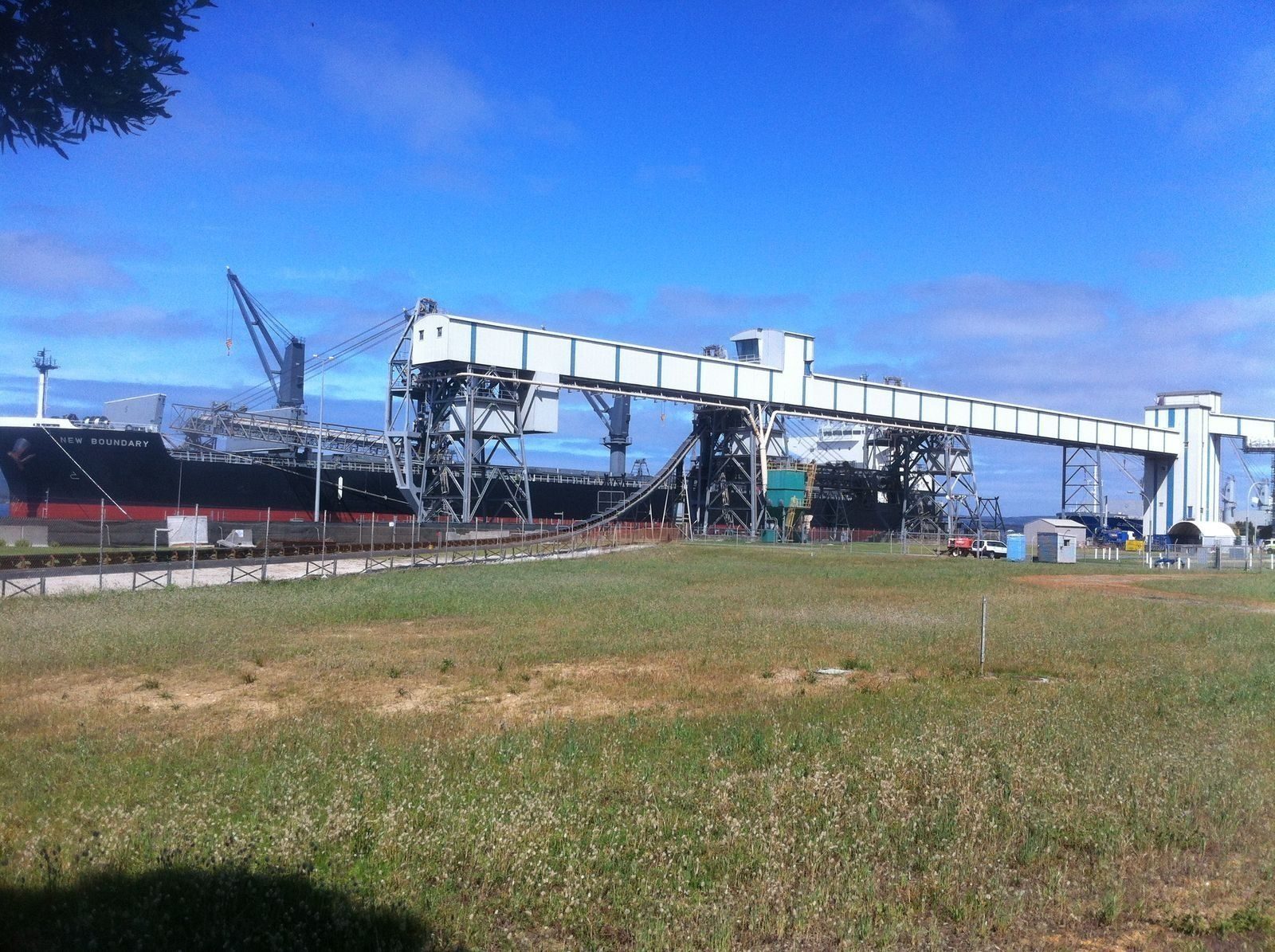
Bulgaria has formally asked NATO to deploy combat aircraft and anti-drone systems to defend its Black Sea coast, and Romanian F-16s have shot down two drones over the Black Sea — the first direct military responses by NATO members to a month-long drone campaign against civilian shipping that has left two sailors dead and more than 25 missing.
Defence Minister Dimitar Stoyanov said on Friday that Sofia had sent formal letters to the NATO secretary-general and the supreme allied commander requesting combat aircraft, anti-drone systems and additional forces on Bulgarian territory. The alliance's 32 ambassadors will take up the request in the coming days, and Stoyanov plans to meet his Romanian and Turkish counterparts. Sofia also proposed a moratorium on attacks against civilian ships and expects to join a NATO anti-drone initiative by the end of October.
On Saturday, two Romanian F-16s shot down two drones that had entered national airspace over the Black Sea, about 20 kilometres southeast of Sulina — the first destroyed within two minutes, the second five minutes later, Defence Minister Radu Miruta announced. Foreign Minister Oana Toiu wrote on X that "the Black Sea will be safe again" and that NATO would discuss the situation at a North Atlantic Council meeting on Tuesday, after President Nicusor Dan told NATO chief Mark Rutte that Romania needed "equipment to deal with a new kind of challenge."
The Associated Press has documented drone attacks on at least seven cargo vessels in the Black Sea this month, all inside the exclusive economic zones of NATO members Romania and Bulgaria. Two sailors are confirmed dead; at least 25 are missing.
5 October: the Turkish-owned Royad Mammadov, carrying corn from Izmail, was struck inside Romania's exclusive economic zone, caught fire and sank. Two crew died, one went missing, eleven were evacuated. Volodymyr Zelenskyy called it "a horrific strike by two Russian drones on a civilian vessel" in neutral waters.
6 October: drones hit two vessels off Bulgaria — the Togo-flagged Alfa Watan sank and the Palau-flagged wheat carrier Able caught fire. A Bulgarian ferry rescued 18 crew; two critically injured sailors were helicoptered to Varna. PM Rumen Radev called it "a blatant violation of international law." The Bureau covered this first sinking inside Bulgaria's economic zone — see our report on the Togo-flagged ship sunk off Bulgaria.
13 October: the Malta-flagged, Ukraine-operated Chelsea 3 was hit by three drones off Byala; all 15 crew were evacuated. The Guinea-Bissau-flagged HS Dignity (Algeria–Romania) sank with 11 of 16 crew missing; four sailors — three Syrians, one Egyptian — were rescued.
14–15 October: the Comoros-flagged tanker Yara J was struck off Romania — see our account of the tanker fire off Romania's coast — and the San Marino-flagged Wine Trader was hit southeast of Sulina and caught fire; five crew rescued, seven missing.
President Dan confirmed "two drones" hit the vessels and warned of "a reaction from the Romanian state." Radev told parliament there was "no logic in Ukraine attacking its own ships and crews, given that the outcome of all these attacks favours Russia," adding: "The problem is that we cannot prove it."
Attribution remains unproven. Bulgaria says Russia is likely behind the strikes but admits it has no proof. Reuters, citing a NATO military source, reported the tankers hit off Romania were struck by Russian drones. Russia's ambassador in Sofia said she had no information from the Russian defence ministry. Zelenskyy said Ukraine conducted no operations near the strike sites.
It is unclear whether Saturday's intercepted drones are connected to the shipping campaign — Russian drones have repeatedly violated Romanian airspace near Ukraine's Danube ports throughout the war. The fate of the missing sailors is unresolved, and the legal question is open: analyst Radu Tudor notes it is uncertain whether attacks inside a member's exclusive economic zone, as opposed to territorial waters, fall under NATO's Article 5 guarantee. That ambiguity is precisely what makes the campaign so hard to answer.
The Black Sea is a critical food artery. Since Russia began bombarding Ukraine's Black Sea and Danube ports, Kyiv has relied on alternative routes to move grain to Africa and West Asia. Romania's foreign ministry told the UN General Assembly the corridor handles 20 to 30 percent of globally traded wheat and grain and half of the world's sunflower seed oil exports — see our dossier on the grain war moving north.
The strikes test NATO's southeastern flank: sinking civilian vessels inside two members' economic zones — and hitting tankers inside Romanian territorial waters — pushes the war closer to NATO shores than at any point since 2022, without crossing the bright line of an attack on a member's territory. Turkey's maritime chamber counts at least 266 attacks on civilian and commercial vessels in the Black Sea since 2022, most this year.
The energy angle matters too: the Royad Mammadov was hit about nine nautical miles from the Pescarus offshore platform, near Romania's Neptun Deep gas project. In August, Romania scrambled F-16s to destroy an explosive-laden maritime drone near the project — an incident President Dan attributed to Russia.
The campaign's logic is legible even where its authorship is not. Civilian shipping inside NATO members' exclusive economic zones is the ideal grey-zone target: economically consequential, legally ambiguous, politically hard to answer. Each strike degrades Ukraine's export economy — the vessels hit carried corn, wheat and chemicals along the alternative routes Kyiv built after Russia bombed its ports — while taxing the alliance without crossing the Article 5 threshold. It reads as coercion designed to test whether NATO's southeastern members are defended in practice or only in principle — see our report on NATO's top commander warning Russia.
Bulgaria's response follows a classic ladder: public attribution-without-proof, summoning the Russian ambassador, a formal NATO request, a moratorium proposal, a capability buy. Romania's is shorter: a presidential warning, then F-16s firing in anger. The planned Bucharest–Sofia–Ankara ministerial coordination suggests the three Black Sea NATO members are converging on a common approach — itself the strategic prize an attacker would prefer to deny them. And the attribution fog is the campaign's shield: until debris is recovered with documented chain of custody and radar logs shared, the strikes sit where deterrence is hardest — too serious to ignore, too deniable to punish.
Second-order effects are already moving. War-risk insurers will reprice Black Sea transits, and shippers will weigh the Danube–Sulina alternative — but the Wine Trader and Yara J were struck near the Sulina canal itself, the chokepoint the alternative route depends on. Romania's Neptun Deep gas project now sits inside a contested maritime picture, raising the cost of securing offshore energy on NATO's southeastern flank.
On the defence market, Bulgaria's pivot is the signal: a government that in September called a NATO counter-drone initiative duplicative now pays the €220,000 annual contribution and shops for €80 million of systems. Romania and Turkey already participate in the initiative, built for sub-150-metre threats — exactly the drones' profile. Expect similar procurement across the alliance's eastern members. Diplomatically, the moratorium idea will test whether any Black Sea security arrangement is possible while the war continues; Moscow says its forces struck two cargo ships carrying military equipment this month, and since 2023 has treated vessels bound for Ukrainian ports as potential military carriers.
The calendar is crowded. NATO's North Atlantic Council takes up the Black Sea on Tuesday; the alliance's 32 ambassadors will consider Stoyanov's request for combat aircraft and anti-drone deployments. Bulgaria, Romania and Turkey are expected to hold ministerial talks on a common approach, and Bulgaria plans to join the NATO counter-drone initiative by 30 October.
At sea, search teams keep hunting the missing — seven from the Wine Trader, eleven from the HS Dignity — weather permitting. Bucharest and Sofia say they are working to trace the drones' origin; whether debris analysis yields an attribution anyone will state publicly is the question that decides whether this campaign ends with deterrence or the next burning hull.
The Western wire framing is documentation-first and attribution-cautious. The AP lays out the vessel-by-vessel record and stops at the evidentiary line: suspicion "increasingly" falls on Russia, but "the problem is that we cannot prove it." Reuters adds the institutional layer — Sofia's formal request, the summoned ambassador, the moratorium proposal. NATO chief Mark Rutte's language is posture, not retaliation: the alliance has "strengthened our posture along the eastern flank including with increasing counter-drone capabilities." European defence press reads a capability wake-up call.
Notably, the East Asian information environment carried no standalone independent reporting on the October Black Sea shipping campaign in our verification window. Targeted searches across CNA, NHK and Kyodo-indexed English reporting, the Japan Times and Xinhua's English service surfaced no independent East Asian coverage — the region's press has not made this story its own. That silence is itself informative: for East Asia's grain importers and shipping insurers, the corridor matters as a supply line rather than a security theatre, and the story is being processed through Western wire copy.
Global South coverage leads with people and bread. India's press followed the human detail: India Today reported three Indian mariners aboard the Royad Mammadov , one injured — the campaign as experienced by the developing world's seafarers. Bangladesh's TBS News and the Philippines' BusinessMirror carried the AP's full accounting to audiences for whom Black Sea grain is a price on the shelf, not an abstraction.
On 16 October, Defence Minister Dimitar Stoyanov said Bulgaria had formally asked NATO to deploy combat aircraft and anti-drone systems and station additional forces on Bulgarian territory. Sofia sent letters to the NATO secretary-general and the supreme allied commander, proposed a moratorium on attacks against civilian ships, and plans to join NATO's counter-drone initiative by the end of October.
At least seven cargo vessels have been struck by drones in October 2026, all inside the exclusive economic zones of NATO members Romania and Bulgaria, according to the Associated Press. Two sailors are confirmed dead and at least 25 are missing. The vessels include the Royad Mammadov, Alfa Watan, Able, Chelsea 3, HS Dignity, Yara J and Wine Trader.
No government has produced conclusive public proof. Bulgaria says Russia is likely responsible but admits it has no evidence. A NATO military source told Reuters the tankers hit off Romania were struck by Russian drones, and Ukraine's president blamed Russian drones for the Royad Mammadov sinking. Ukraine denies any operations near the sites; Russia's ambassador in Sofia said she had no information.
The corridor carries 20 to 30 percent of globally traded wheat and grain and half of the world's sunflower seed oil exports, according to Romania's foreign ministry. Since Russia bombed Ukraine's Black Sea and Danube ports, Kyiv depends on alternative routes to reach buyers in Africa and West Asia. Disrupting the corridor raises food prices and tests NATO's willingness to defend its southeastern flank.
