 MAGNA BUREAU
The Wire
UK and EU set to agree youth mobility scheme for 100,000 young people a year
The deal, 100,000 places a year in each direction, for 18- to 31-year-olds, for up to three years, is expected at Friday’s Brussels summit, a decade after the Brexit vote. Nothing is signed yet.
Key points
- The cap: Up to 100,000 young people from the EU would be allowed to travel, work and study in the UK each year, and the same number of young Britons would be allowed into Europe, under the scheme set to be agreed on Friday. 1
- The ages and the stay: The scheme would be open to people aged 18 to 31 on the first day of their stay, and would let them live, work, study, volunteer or travel in each other’s territory for up to three years. 3
- The negotiation: Britain had proposed letting in only 50,000 young people a year, later rising to 80,000; the EU wanted an uncapped scheme. Negotiators settled on 100,000, EU diplomats said. 2
- Not signed yet: Downing Street has not commented on the details and said on Thursday that the talks were going “down to the wire” ahead of Friday’s summit in Brussels. 1
- The unfinished business: Student tuition fees are not settled: the EU wants its students to pay the same fees at UK universities as domestic students, and the two sides aim to resolve the issue within six months. 2
ONE EVENT. THREE READINGS.
In the Western reporting, the story is a negotiation finally landing.
The BBC, Reuters, The Times and The i Paper all converge on the same numbers, 100,000, 18 to 31, three years, and on the same framing: a prime minister who has spent his first months in office breaking the taboos of the Brexit debate, now cashing in the political capital.
What this reading highlights: The Western lens counts the concessions and asks whether the price was right; and notes the fees question was kicked six months down the road because neither side could afford to lose it in public.
No East newsroom had published independent reporting on the summit by the time this article was written: searches of CNA, The Hindu, NHK and Kyodo, and the Bureau’s own digest of their editions, found nothing on the youth scheme itself.
The Eastern coverage that exists is the AFP wire carried by Malaysian and Thai outlets, which frames the summit as a European story with Asian echoes.
What this reading highlights: The Eastern lens asks what a continent that cannot settle its own borders can offer a world that is building new ones.
Sources: Free Malaysia Today (1)
Al Jazeera, reporting from Lincolnshire a decade after the vote, led with the people the reset is supposed to help and the damage it is supposed to repair.
Its cheesemaker voted for Brexit and lost customers to it.
What this reading highlights: The Global South lens reads the summit as a story about a former imperial power renegotiating its place in its own neighbourhood; and notes, without comment, that the young people of the Global South, who have no youth mobility scheme with Britain at all, are watching a door open for Europeans that was never built for them.
Sources: Al Jazeera (1)
Sources by lens: 4 West, 1 East, 1 Global South. See every source
THE POINT OF CONVERGENCE
On the facts. Negotiators for the UK and the EU have provisionally agreed a youth mobility scheme capped at 100,000 places a year in each direction, for people aged 18 to 31, for stays of up to three years. The leaders meet in Brussels on Friday 20 November to sign off a package that also covers food trade and carbon pricing. Nothing is final until they do.
WHAT REMAINS CONTESTED
On what the deal means. Prime Minister Andy Burnham presents it as growth, cheaper food and a Channel plan on migration. Conservative leader Kemi Badenoch accuses him of reopening the divisions of the Brexit referendum and sending 100,000 young Europeans to compete for scarce jobs. Brussels wants EU students to pay domestic tuition fees in Britain; London wants six more months to decide.
The story
Friday in Brussels: a 100,000-person handshake still waiting for its signatures
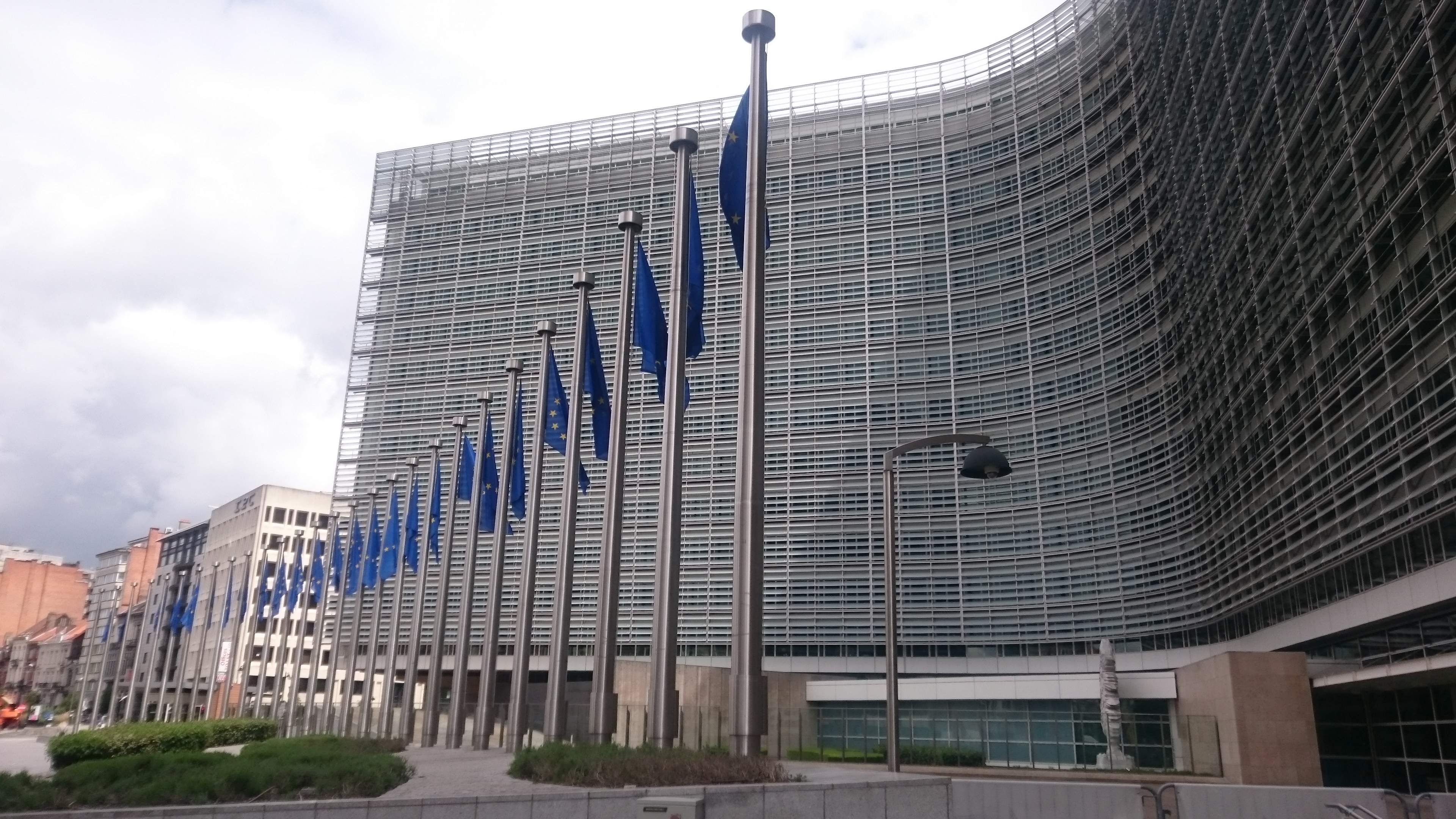
Britain and the European Union are set to agree a youth mobility scheme that would let up to 100,000 young people a year cross the Channel in each direction to live, work, study or travel for up to three years. The BBC understands the scheme will be approved at the UK-EU summit in Brussels on Friday, where Prime Minister Andy Burnham meets European Commission President Ursula von der Leyen and European Council President António Costa. But nothing is signed. Downing Street said on Thursday that the talks were going “down to the wire”, and EU member states backed the package late on Thursday night, according to diplomats, but a final sign-off is still needed from the British side. The scheme sits inside a wider package: a deal cutting red tape on food exports, another linking the two sides’ emissions-trading systems, and hopes of a “Channel action plan” on migration. Burnham says he is prepared to walk away if the deal is not in Britain’s interests, while calling what is on offer “a really good deal for Britain”.
What does the 100,000 cap actually cover?
The numbers, as reported by the BBC, Reuters and The Times, are now consistent. The cap is 100,000 a year in each direction: 100,000 young Europeans into Britain, and 100,000 young Britons into Europe. The scheme is open to people aged 18 to 31 on the first day of their intended stay, raised from 30 in the course of the negotiation, and a stay can last up to three years, for work, study, volunteering or travel. Britain had proposed letting in only 50,000 a year, then raised its offer to 80,000; the EU had pushed for an uncapped scheme, and the two sides settled on 100,000, EU diplomats told Reuters. There are catches: young Britons would be limited to working in one named EU country, and the EU is dividing the places among its 27 member states largely by population, so some young Britons could be turned down even if the overall quota is not full. It is not freedom of movement restored: time-limited, capped, with participants barred from claiming benefits, the condition Labour set when it changed its mind about a scheme it had rejected in opposition. Britain already runs similar schemes with 13 non-EU countries, including Australia, Canada and India.
Downing Street said on Thursday that the talks were going “down to the wire”, and EU member states backed the package late on Thursday night, according to diplomats.
Why the final numbers stayed open until the last night
The reporting is unusually frank about how unsettled this still is. The Times reported that the overall cap was “going down to the wire” and would ultimately have to be settled by Burnham and von der Leyen themselves. The draft joint statement sets the ambition, apply the agreement no later than 2028, with places available by January 2030, but the scheme may not fully launch until 2030. The biggest unknown is tuition fees. The EU wants its students to pay the same fees at UK universities as domestic students, instead of international fees that can be four or five times higher. The two sides have not agreed, and the draft statement commits them only to completing negotiations on fees within six months. The food deal has its own open question: the agreement on sanitary and phytosanitary rules will not be implemented until 1 March 2028, and Britain will have to follow certain EU rules on products, for example on gene-edited crops or labelling. Nor is it clear how the per-country quotas for Britons will work in practice.
The biggest change to Britain’s EU relationship since Brexit
A decade after the referendum, this is the first time Britain has agreed to let large numbers of young Europeans live and work in the country on a reciprocal basis; and the first time young Britons get the same right in return. The politics of that sentence explain why the negotiation took so long. Immigration was a factor behind the Brexit vote, and every number in this deal was fought over as a proxy for the wider argument about what Brexit was for. Burnham’s government argues the package is worth it on the economics alone: the food deal could add £5 billion to the economy, and the whole reset is put at about 0.4 percent of GDP. The youth scheme matters in a different register. For a generation that grew up after the vote, it restores something concrete that was lost: the chance to spend three formative years on the other side of the Channel, working, studying, or simply living there. And for the EU, it is a test of whether Britain is serious about a closer relationship. Britain’s post-Brexit settlement has been defined by distance; this summit begins to measure what closeness costs.
How Burnham turned a red line into a bargaining chip
The story of this scheme is the story of a position reversed in plain sight. In 2024 the EU proposed allowing 18- to 30-year-olds to work or study in the EU and UK for up to four years. Labour, then in opposition, rejected it, arguing it amounted to reinstating freedom of movement. In government, the party changed its mind; but on its own terms: a time limit, a cap, and a ban on claiming benefits. That conversion set the negotiation that followed, in which every concession was priced: Britain moved from 50,000 to 80,000 to 100,000; the EU moved from uncapped to 100,000; the age limit moved from 30 to 31. Burnham, who took office in July after Keir Starmer’s resignation, has gone further than his predecessor in public, floating the idea of rejoining the bloc one day and telling Brexit-backing MPs the old deal was “not good enough”. He has also kept a walk-away threat in reserve, telling broadcasters on Thursday evening that there would “always” be circumstances in which he would leave the table. The threat is aimed in two directions: at Brussels, to extract the last concessions on fees and on British access to the EU’s Made in Europe industrial scheme; and at home, where Badenoch accuses him of reopening the referendum’s divisions. The risk for Burnham is that the deal’s symbolism outruns its substance: the scheme does not start until 2028 at the earliest, and the fees question is deferred for six months. He is selling a future, and his opponents are pricing the present.
What three years abroad does to a generation
The second-order effects of this scheme will be measured in lives, not in communiqués. Three years is long enough to learn a language, to build a career, to fall in love, to decide where home is. For the young Europeans who come to Britain, it is a route into a labour market that, for all its troubles, still pays in a global currency and still teaches in the world’s most widely used language. For the young Britons who go the other way, it is the return of a rite of passage their older siblings lost: the year, or three, spent working in Berlin or Barcelona, which used to be unremarkable and became impossible overnight. But the deeper effect is political: a generation that has lived on both sides of the Channel will vote differently about Europe, and Burnham knows it. Brussels knows it too, which is why the tuition-fee fight matters so much; students who study in Britain at domestic rates come home with British friends, networks, and a story to tell. The single market was never an à-la-carte menu, and the youth scheme is the first item Britain has ordered back from it.
The summit, the legislation, and the six-month clock
Friday decides whether this is a deal or another draft. Burnham meets von der Leyen and Costa in Brussels for the second UK-EU summit, the first was in London last year, and the package of three agreements is meant to be signed by lunchtime. If it is, the Prime Minister’s spokesman has said the government will introduce legislation to Parliament next week to implement the changes, including the food-deal alignment with EU rules. Then the slower clocks start: six months to settle tuition fees, the food agreement aimed at 1 March 2028, the youth scheme aimed at 2028 with places by January 2030. And after the summit, Burnham has promised to open the discussion about the long-term relationship, in which he has refused to rule out rejoining. The opposition will be waiting: Badenoch has already framed the scheme as 100,000 competitors for jobs that do not exist. The test of the reset is not the signatures; it is whether, by 2028, the first young people board a train. Europe’s institutions move slowly by design; this deal asks them to move on a timetable set in London.
What we agree on, and what remains open
Established
- On the facts. Negotiators for the UK and the EU have provisionally agreed a youth mobility scheme capped at 100,000 places a year in each direction, for people aged 18 to 31, for stays of up to three years. The leaders meet in Brussels on Friday 20 November to sign off a package that also covers food trade and carbon pricing. Nothing is final until they do.
Contested
- On what the deal means. Prime Minister Andy Burnham presents it as growth, cheaper food and a Channel plan on migration. Conservative leader Kemi Badenoch accuses him of reopening the divisions of the Brexit referendum and sending 100,000 young Europeans to compete for scarce jobs. Brussels wants EU students to pay domestic tuition fees in Britain.
- London wants six more months to decide.
Still open
- Whether Friday produces signatures or another delay.
- Whether the per-country caps on young Britons working in individual EU states will bite.
- Whether the tuition-fee negotiation concludes within six months.
- Whether Parliament passes the implementing legislation next week.
- Or when the first young people will actually travel under the scheme.
Questions, answered
It is a reciprocal scheme letting up to 100,000 young people a year travel, work, study, volunteer or travel in each other’s territory for up to three years. It covers people aged 18 to 31, applies in both directions, and is expected to be agreed at the UK-EU summit in Brussels on Friday 20 November 2026.
Not soon. The draft joint statement says the parties aim to apply the agreement no later than 2028 and to make places available no later than January 2030. The deal itself is not signed yet, it still needs the leaders’ approval on Friday, so the first travellers are years away.
Young people aged 18 to 31 on the first day of their stay, from the UK and from EU member states. Young Britons would be limited to working in one named EU country, and the EU is dividing places among its 27 members by population, so some applicants could be turned down even if the overall 100,000 quota is not full.
Because it touches the rawest nerve of the Brexit debate. Critics, led by Conservative leader Kemi Badenoch, say 100,000 young Europeans a year will compete for scarce jobs. Supporters say it restores opportunities lost in 2020. The unresolved fight over university tuition fees for EU students is the sharpest remaining dispute.
Two more deals: one cutting red tape on food and drink trade, which the government says could add £5 billion a year to the economy, and one linking the UK and EU emissions-trading systems. The leaders are also expected to discuss a Channel action plan on migration and Britain rejoining the Erasmus+ student exchange scheme in 2027.