Moscow says work is "under way" on transferring Ankara's Russian air-defence systems to a third country — a move that could unlock Turkey's return to the F-35 programme and end the alliance's ugliest procurement quarrel.
Nine years of poison in the NATO bloodstream may finally have an antidote. On Wednesday the Kremlin said — twice, in two days' choreography — that Turkey's Russian missiles could leave Turkey.
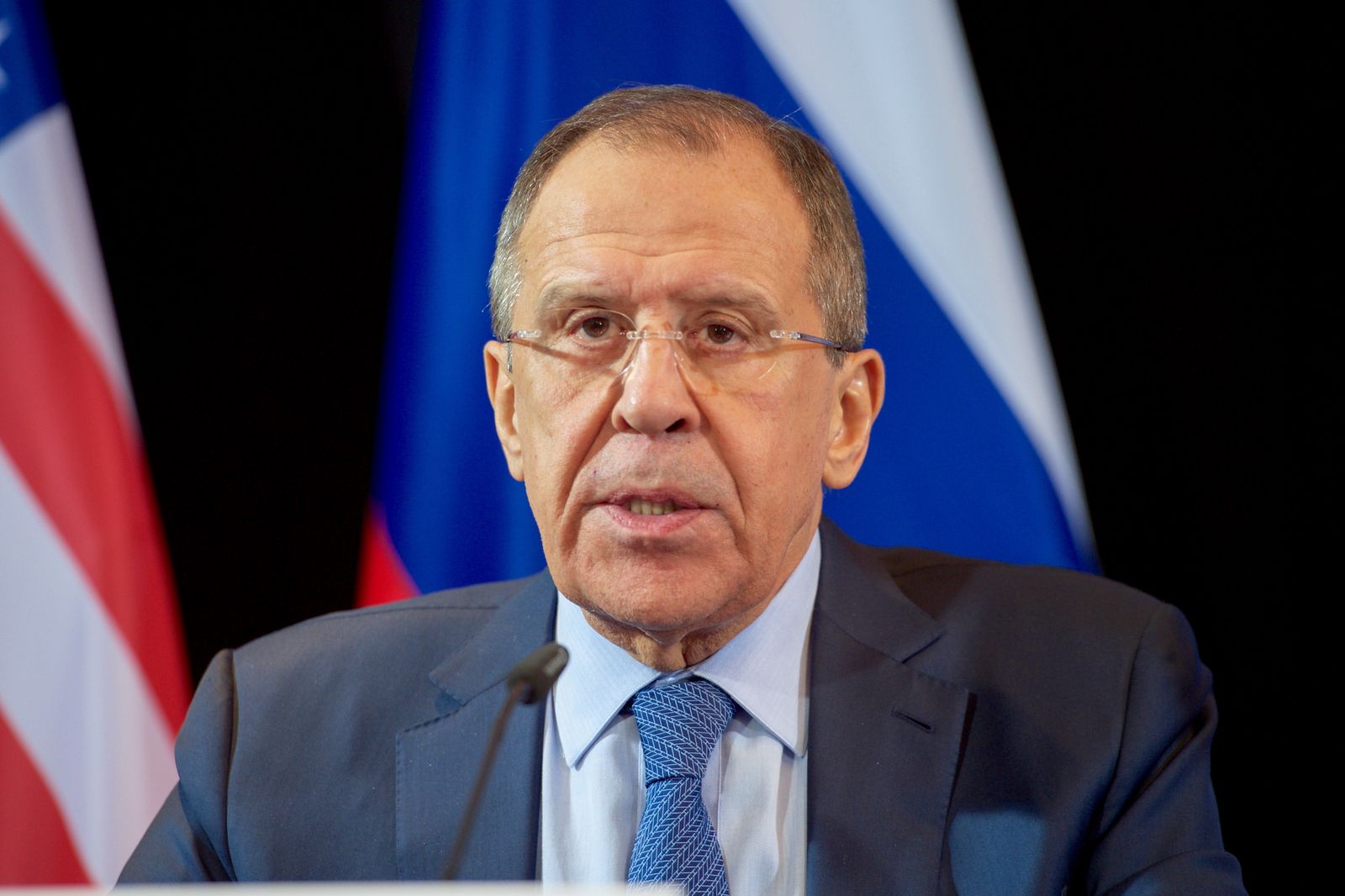
The sequence was deliberate. On Saturday, in New York after the UN General Assembly's high-level week, Sergei Lavrov floated the trial balloon: Moscow, he said, could agree to move the S-400 air-defence systems to "a country that is responsible and maintains friendly relations with Russia," adding that Russia would "be ready to transfer the S-400s to such a country when there is a request."
On Wednesday, answering Agence France-Presse, Dmitry Peskov confirmed the balloon had a basket: "The issue is on the agenda, relevant work is being carried out and relevant contacts are taking place." Two spokesmen, four days apart, saying the same thing is not chatter. It is a coordinated signal.
The S-400 was never really about air defence. It was a $2.5bn argument about who gets to decide Turkey's alliances — and arguments that expensive eventually get settled.
The stakes are the single most corrosive procurement dispute in modern NATO history. Turkey signed for the S-400s in 2017, took delivery in July 2019, and was expelled from the F-35 Joint Strike Fighter programme that same year — losing not just the jets but its role as a manufacturing partner. Washington then sanctioned Turkey's defence procurement agency under CAATSA.
Ankara never fired the systems in combat; they were tested, parked, and turned into a $2.5bn monument to the Erdogan era's hedging strategy. The missiles became the symbol of everything Washington distrusted about Turkish strategic autonomy — and everything Ankara resented about being treated as a junior ally.
Moscow's conditions are precise and revealing. Lavrov stressed the original contract's end-user certificate: Turkey cannot legally move the systems without Russian consent. The recipient must be "responsible," friendly to Russia, and — the tell — must guarantee the batteries will not end up in Ukraine, citing past cases where weapons obtained via third countries travelled onward.
That last condition narrows the field sharply. Reports in July suggested Ankara was sounding out a Gulf buyer — a rich, Russia-friendly state that would keep the hardware far from Kyiv. Whether such a triangle can be squared — Moscow's consent, a Gulf chequebook, Washington's blessing — is the diplomatic geometry of the coming months.
Meanwhile the timing is not accidental. Turkey's defence industry is having its best year on record: $6.3bn in exports through August, up 16.2% year-on-year, with a trailing twelve-month total of $10.9bn. Ankara negotiates this from strength — a supplier, not a supplicant — and a solved S-400 file would let it sell drones and armoured vehicles to NATO markets currently closed by the CAATSA cloud.
Washington's reading is cautious relief. The S-400 saga poisoned every NATO conversation about Turkey for seven years; a Russian-blessed exit ramp lets the alliance reclaim its southeastern flank without anyone admitting defeat. Trump already telegraphed the landing zone in July: readmission to the F-35 is "something we'd consider."
But the Western caveat is sharp. Lavrov's conditions — no onward transfer, a "responsible" buyer — give Moscow a veto over the entire unwinding and a lever into whoever buys. NATO would be swapping one Russian entanglement for a Russian-approved transaction. The Pentagon will want the F-35's secrets fenced off with legal concrete, not handshakes.
Moscow's reading is leverage, monetised. The S-400s were always a strategic asset even sitting in Turkish hangars — and now Russia gets to play kingmaker over their disposal, name the buyer, pocket the goodwill, and pocket, quite possibly, a fee. Lavrov's "responsible country" language is a velvet rope: Russia decides who is responsible.
Beijing watches with professional interest. The episode is a case study in how arms sales become geopolitical options contracts — sell the system, keep the veto, collect twice. China's own export customers are taking notes on the end-user certificate as an instrument of long-term influence.
The Global South reads this as the rich world's arms bazaar doing what it always does: the same weapons are strategic threats or strategic assets depending on whose hangar they sit in. A Gulf state buying Turkey's S-400s with Moscow's blessing and Washington's wink would be the purest distillation of how the arms trade really works — politics first, principles later.
There is a sharper Southern lesson too. Turkey's hedging — buying Russian while staying in NATO, getting punished, then negotiating its way out from a position of industrial strength — is the playbook every middle power studies. The verdict from Jakarta to Riyadh: sovereignty is expensive, but it has a resale value.
