The ice is opening, the shipping lanes are shifting, and the minerals under the far north are back at the center of great-power politics. The Arctic was once a frozen margin. It is now a map everyone wants to draw.
Published 14 October 2026 · 06:00 GMT
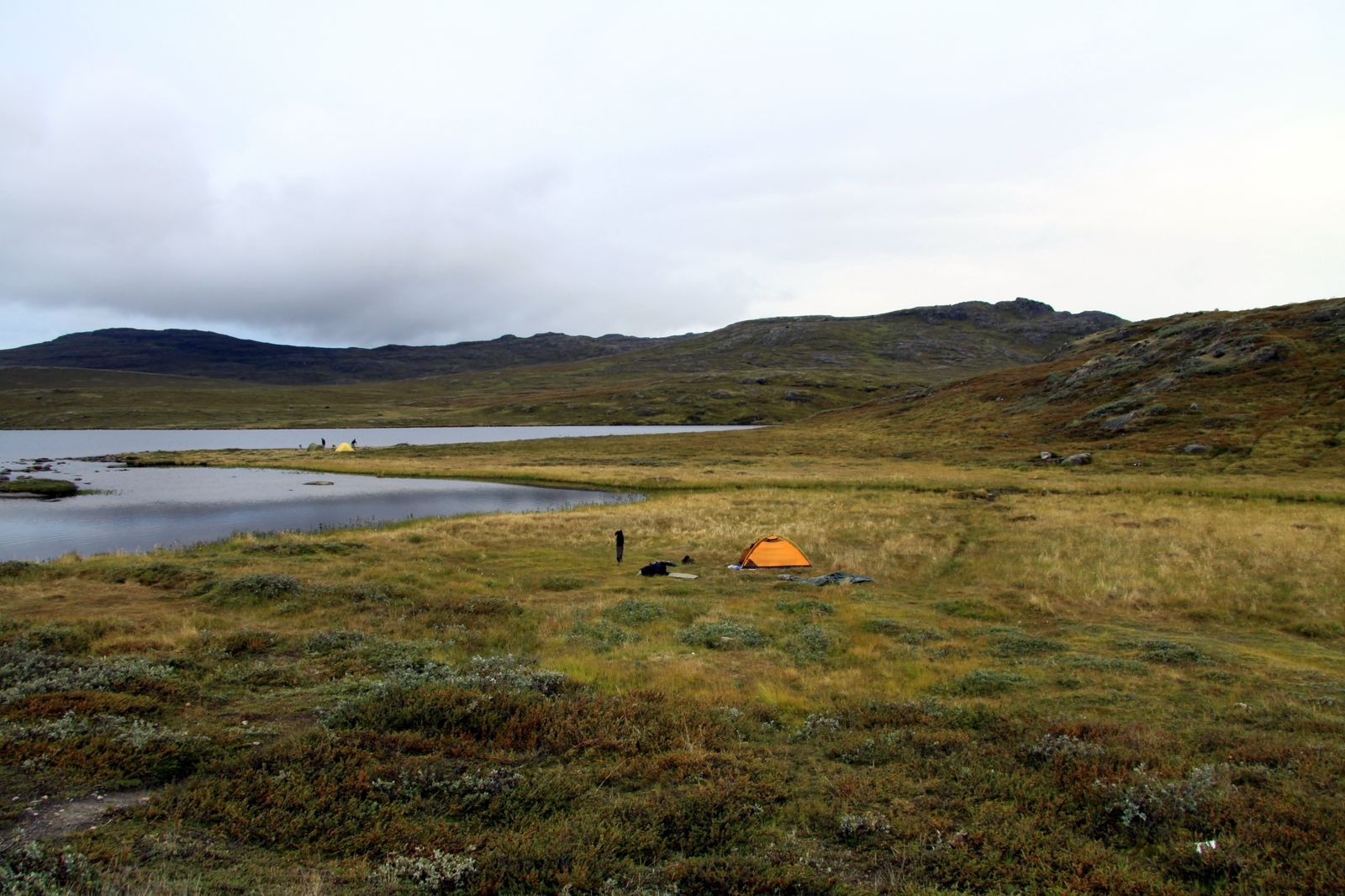
For most of modern history, the Arctic was a place maps went quiet. Ice covered the top of the world for most of the year, and the politics of the far north moved at the speed of an icebreaker: slowly, expensively, and mostly out of sight. That era is over. The ice is retreating, the shipping lanes are shifting, and the minerals, fish, and military geography of the far north are back at the center of great-power politics.
Nothing about this is simple. The Arctic is at once an ocean, a coastline shared by eight states, a homeland for Indigenous peoples who have lived there for thousands of years, and a storehouse of resources the world suddenly wants. It is also a place where the rules are unusually clear on paper and unusually contested in practice. The United Nations Convention on the Law of the Sea sets out who controls what in the water. The Arctic Council provides a table where rivals still sit. And yet every summer, as the ice pulls back, the gap between the rules and the rivalry grows a little wider.
This is an explainer, not a forecast. No one can say with confidence how fast the ice will go, how much shipping will follow, or which mineral projects will ever turn a profit. What can be said is that the Arctic has moved from the margin of world politics to its center, and that the decisions made about it in the coming years, on shipping, on mining, on military posture, and on the rights of the people who live there, will shape the century the way decisions about oil shaped the last one.
Start with the ice, because the ice is the story. Satellite records kept since 1979 show that summer Arctic sea ice has declined over the decades, with large swings from year to year. Less ice means longer open-water seasons, and longer open-water seasons mean ships, drilling rigs, fishing fleets, and navies can go places that were once closed for most of the year. It also means the Arctic Ocean is absorbing more heat, which feeds further change in a cycle scientists have described for years: open water absorbs sunlight that ice once reflected, and the region warms faster than the global average.
The practical consequences are already visible. Along Russia's northern coast, the Northern Sea Route has gone from a Soviet-era experiment to a working, if seasonal, shipping lane, used mainly for Russian energy cargoes and a small but growing number of transits between Europe and Asia. Through Canada's Arctic islands, the Northwest Passage has seen more traffic too, including cruise ships and supply vessels, though it remains a difficult and lightly charted route. Neither passage is about to replace the Suez Canal. Both matter because they shorten voyages, and because every voyage through them raises the same questions: whose waters are these, who sets the rules, and who rescues a ship in trouble thousands of kilometers from help.
The legal map is clearer than the political one. Under the law of the sea, each coastal state controls a territorial sea and an exclusive economic zone off its Arctic shores, and can claim an extended continental shelf where the geology supports it. Canada, Denmark, Norway, Russia, and the United States have all made or prepared such claims. The Ilulissat Declaration of 2008, signed by the five Arctic coastal states, committed them to settle overlapping claims through the law of the sea rather than through force. That commitment has largely held. The Arctic has not become a scramble of flags planted on the seabed, whatever the headlines sometimes suggest.
The sharper disputes are about straits and passages. Canada treats the Northwest Passage as internal waters, meaning Ottawa sets the terms for transit. The United States and several European states treat it as an international strait, open to transit passage. Russia requires permission and icebreaker escort for much of the Northern Sea Route and treats parts of it as internal waters. These are not abstract arguments. They decide who can sail where, who charges what, and whose navy or coast guard answers when something goes wrong. Add to that the Svalbard archipelago, governed by a 1920 treaty that gives Norway sovereignty while preserving access rights for the treaty's many signatories, and the Arctic becomes what it is: a region of overlapping rights that only patient diplomacy keeps from turning into friction.
Western coverage reads the Arctic as a security story first. Russia's Northern Fleet is based on the Kola Peninsula, and Moscow has rebuilt Arctic bases, airfields, and radar stations over the past two decades. NATO states, led by the United States, Canada, Norway, and Denmark, have answered with more exercises, more surveillance, and renewed attention to Greenland, where the United States operates the Pituffik Space Base under a long-standing defense agreement with Denmark. In this telling, the Arctic is the northern flank of the Atlantic alliance, and the melting ice is a vulnerability: more open water means more to watch, with the same small set of ships and aircraft.
The Western lens also carries a commercial hope. If the Northern Sea Route and the Northwest Passage become reliable seasonal lanes, European and North American shippers could cut days off Asia voyages. Western mining firms, too, look at Greenland and northern Canada and see deposits of rare earths and other minerals that could reduce dependence on China, which dominates much of the world's processing capacity. The caveat, in Western business coverage, is always the same: Arctic projects are expensive, remote, and slow, and many deposits that look promising on a map have never survived contact with Arctic costs.
Eastern coverage, from Moscow and Beijing, reads the same map in reverse. Russia treats the Northern Sea Route as a national artery and a source of revenue, and has invested in icebreakers, including nuclear-powered ones, to keep it open longer each year. For Moscow, the Arctic is also a resource base: much of Russia's oil and gas production already comes from its far north, and the Arctic shelf is central to its long-term energy plans. In this telling, Western talk of an Arctic security threat is a pretext for building up forces on Russia's border.
China calls itself a near-Arctic state and became an observer at the Arctic Council in 2013. Its interests are commercial and scientific on the surface: shorter shipping routes, research stations, and a stake in Arctic resources. Beijing has also published an Arctic policy that frames the region as part of a wider vision of global connectivity. Critics in Western capitals read that as a bid for influence in a region where China has no territory. Supporters of engagement argue that a country that will use Arctic shipping has a legitimate interest in Arctic rules. Both readings agree on one thing: China intends to be at the table.
Global South coverage asks a different question: who pays for a melting Arctic, and who profits? The states most exposed to sea-level rise and climate disruption are overwhelmingly outside the Arctic, yet the decisions that accelerate or slow Arctic change are made in Arctic capitals and corporate boardrooms. From this vantage, the Arctic is a climate story before it is a shipping story. Permafrost thaw, methane release, and the loss of reflective ice affect rainfall, harvests, and coastlines far from the pole, and the countries that did least to cause the warming stand to lose the most from it.
The Southern lens is also skeptical of the resource rush. The history of mining booms in poor and remote regions is not encouraging: the wealth leaves, the damage stays, and the people who lived there before the boom rarely set the terms. Arctic Indigenous organizations have a formal seat at the Arctic Council as Permanent Participants, a status no other international body grants so directly, and they have used it to insist on consent, environmental review, and a share of benefits. In this telling, the test of any Arctic project is not whether the minerals exist, but whether the people of the north agree to dig them up, and on what terms.
