The European Parliament's foreign affairs chief tells France 24 the EU cannot yet take sovereign decisions in key defence areas ‘because we are too dependent on US capabilities’ — a diagnosis of the gap between European money and European power.
Published 2 October 2026 · 23:52 GMT
BRUSSELS — Europe is not at war with Russia. But it is no longer at peace with it, either. That is the sentence David McAllister chose for France 24's Talking Europe on 2 October 2026, and it is worth reading twice: the chairman of the European Parliament's Foreign Affairs Committee was not describing a battlefield. He was describing a condition — the grey space between war and peace in which the European Union now lives, and for which, he argues, it remains dangerously under-equipped.
McAllister's message was blunt: Europe must close its defence gaps urgently. And the diagnosis behind the urgency was bleaker still. Asked whether the European Union is capable of making sovereign decisions in defence, the veteran German conservative answered, in essence, that in certain areas it is not — "because we are too dependent on US capabilities." Money, in other words, is no longer the binding constraint. Sovereignty is.
The speaker matters as much as the sentence. McAllister, a German Christian Democrat, has chaired the European Parliament's Foreign Affairs Committee (AFET) for more than a decade — long enough to have watched the Union's defence debate pass through several distinct eras: the post-Cold War demobilisation, the shock of 2014, the Strategic Compass of 2022, and the full-scale return of war to the continent. When a figure of that institutional weight says Europe cannot yet decide for itself in certain domains, it is not rhetoric. It is an admission.
"No longer at peace" is doing a great deal of work in that interview. The phrase belongs to a vocabulary that has crept into European official language over the past few years: the language of hybrid warfare. Sabotage of undersea infrastructure, disinformation campaigns, cyber intrusions, the weaponisation of migration, unexplained drone sightings over critical sites, airspace violations at the alliance's eastern edge — none of it is a declared war, and all of it is designed to stay below the threshold that would trigger one.
McAllister's formulation echoes that consensus without naming every incident. The point of the phrasing is precisely its ambiguity: a Europe that named each provocation as an act of war would be forced to respond as if at war, and it is not ready to do so. "No longer at peace" is the honest label for a confrontation Europe fights daily but has not yet decided how to win.
The Union has not been idle. The Strategic Compass, adopted in 2022, was supposed to be the turning point: a rapid deployment capacity, stronger cyber defence, joint capability development, a genuine defence industrial base. Four years on, the Compass reads less like a plan fulfilled than a diagnosis confirmed. The capabilities it promised are arriving late, in fragments, or not at all — and the threat it described has only sharpened.
That is the first of McAllister's two gaps: the sovereignty gap between money pledged and capabilities missing. European defence spending has risen sharply since 2022 — governments across the continent have announced increases, special funds and multi-year programmes. But spending is not capability. A budget line does not become an air-defence battery on a schedule that suits the treasurer; the production lines, the trained crews, the ammunition stocks and the command structures take years to build, and Europe started late.
The debate over how much is enough has itself become a political theatre. The old 2%-of-GDP benchmark, once treated as a ceiling by reluctant governments, is now discussed as a floor — and in 2025 the conversation moved toward far more ambitious pledges, with figures around 5% circulating in NATO debates. McAllister's argument cuts through the numbers game: what matters is not the percentage but the output. Europe can argue about targets indefinitely while remaining unable to do the things only capabilities allow.
The second gap is the one he named directly: dependence on the United States. Strip away the communiqués and the European pillar of the alliance still leans on American enablers for the functions that make modern warfare possible — air-to-air refuelling, intelligence, surveillance and reconnaissance, strategic airlift, missile defence, the satellite architecture overhead. These are the unglamorous sinews of power, and they are largely American.
That dependence is what makes his sovereignty remark so pointed. A Europe that cannot refuel its own aircraft, see its own battlefield or move its own heavy equipment cannot make sovereign decisions in certain areas of defence — not because its soldiers lack courage, but because its operations would halt without Washington's consent, or at least Washington's assets. Sovereignty, in McAllister's framing, is not a legal status. It is a logistical fact.
Seen from Washington, the interview lands as both vindication and warning. Successive American administrations — and the current one with particular bluntness — have told Europe that the era of the unquestioned American security guarantee is over, or at least conditional. McAllister is effectively agreeing with the American critique while redirecting it: yes, Europe is too dependent; and that dependence is now Europe's problem to solve, urgently, before a crisis tests it.
The transatlantic bargain is being renegotiated in real time, and both sides know it. Washington wants burden-sharing; Brussels wants reliability. The danger McAllister is circling is the scenario in which Europe gets neither: an America that steps back faster than Europe steps up, leaving a gap that adversaries are already probing — in the air, at sea, in cyberspace, and in the information space.
From the EU's eastern members, the interview will read less as analysis than as overdue candour. For Poland, the Baltic states and others living within range of Russian power, the "no longer at peace" condition is not a conceptual frame — it is the daily operating environment. Airspace violations, sabotage scares and disinformation surges are front-page news there, not think-tank abstractions.
These countries have been the alliance's most urgent voices on rearmament, and often its most frustrated ones: they see Western European procurement timelines measured in decades and industrial programmes tangled in national politics, while the threat they live with operates on a timeline of months. McAllister's call to close the gaps urgently is, from Tallinn or Warsaw, the bare minimum of honesty.
Moscow, for its part, will read the same interview as confirmation of its own narrative. Russian officials have long described European rearmament as aggressive encirclement, and they will present McAllister's urgency as proof that the EU is militarising against Russia. That framing is self-serving — it inverts cause and effect, treating the response to aggression as the aggression itself.
But the Russian reading contains a signal Europe should not ignore: Moscow watches European capability debates closely, and it calibrates its risk-taking to perceived weakness. Every public European admission of unreadiness is processed in Moscow as an invitation to probe further. McAllister's candour is intended for a European audience; its secondary audience sits in the Kremlin, measuring the gap between European words and European weapons.
The Union's answer, institutionally, has been a burst of industrial initiatives: the European Defence Industry Programme (EDIP), the SAFE loan instrument for joint procurement, and a sustained political push to buy European, together, rather than nationally and off-the-shelf from abroad. The logic is sound — fragmented national markets cannot sustain the production scale modern defence requires.
The execution, however, remains the hard part. Europe's defence industry is capable but fragmented: national champions, protected markets, duplicated programmes, and procurement rules that still favour the domestic supplier. Joint procurement means some countries' industries win and others' lose, and that arithmetic has stalled more European defence projects than any external adversary.
Nowhere is that clearer than in the flagship Franco-German programmes — the FCAS/SCAF future combat aircraft and the MGCS main battle tank — which have spent years mired in work-share disputes, industrial rivalries and political second-guessing. When the two countries that are supposed to be the engine of European defence cannot agree on who builds what, McAllister's sovereignty gap acquires a very concrete address.
There is a final inventory question that the war in Ukraine made impossible to ignore: stockpiles. Modern high-intensity warfare consumes ammunition at a rate that peacetime planning never imagined, and several European assessments have suggested national reserves would be measured in days or weeks rather than months in a sustained conflict. Factories cannot be improvised once the shooting starts. McAllister's urgency, at its most literal, is about shelves: the shells, missiles and spare parts that must already exist before the crisis, because afterwards is too late.
The industrial politics are not a footnote; they are the mechanism by which dependence reproduces itself. Every year a joint European programme slips is a year in which the capability gap is filled by an American purchase — which deepens the very dependence McAllister decries, and weakens the industrial base that would end it. Urgency, in this light, is not a mood. It is a procurement schedule.
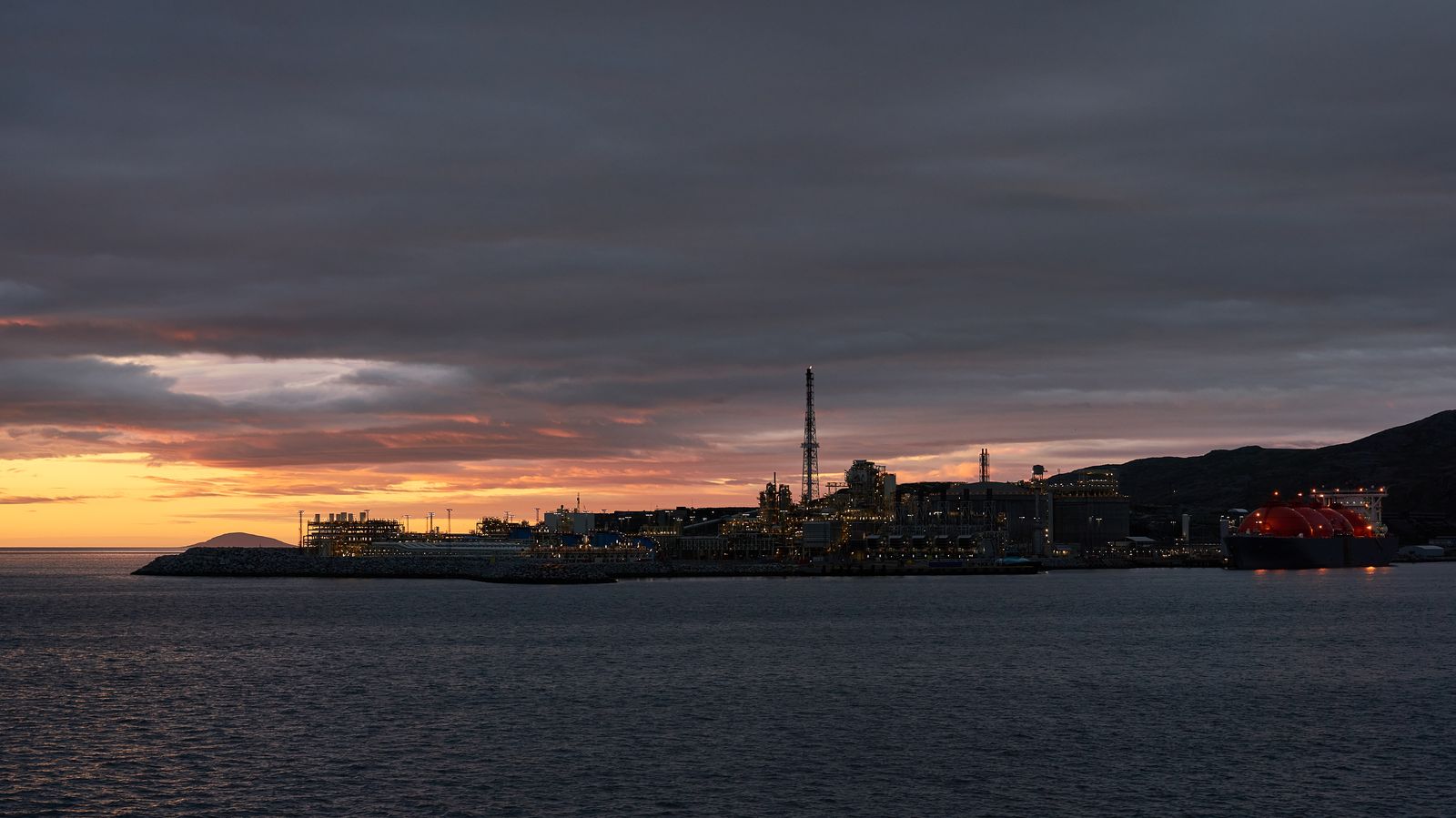
There is a second dimension of sovereignty in the photograph that accompanies this story: a liquefied natural gas tanker at a European terminal. Energy autonomy has become inseparable from defence autonomy. Europe's crash programme to replace Russian pipeline gas with LNG — new terminals, new supply contracts, new infrastructure built at wartime speed — proved that the Union can move fast when it decides the threat is existential.
The lesson cuts both ways. The LNG build-out showed European urgency is possible; it also showed how deep the dependence ran before the crisis forced action. McAllister's argument is that defence is where energy was in early 2022: the vulnerability is known, the solutions exist, and the only missing ingredient is the political decision to move at the speed the threat requires.
From the Global South, the European rearmament debate looks different again. Many capitals in Africa, Asia and Latin America watch Europe's military build-up with a mixture of understanding and scepticism: understanding, because sovereignty is a language they speak fluently; scepticism, because the money now flowing to European arsenals is money not flowing to development, climate finance or the multilateral causes Europe claims to champion.
There is also a harder-edged reading in parts of the world: that European talk of "strategic autonomy" is the sound of a former imperial core rearming itself while lecturing others on restraint. Europe cannot control that perception, but it should reckon with it — because the legitimacy of its defence effort, in a multipolar world, depends on whether others see a continent securing itself or a bloc rebuilding the capacity to project power.
The most concrete of the gaps McAllister is gesturing at is air and missile defence — the capability whose absence has been most brutally advertised by the war in Ukraine. European skies are defended by a patchwork of national systems, American assets and good intentions. Closing that gap means interceptors, radars, command networks and the industrial capacity to produce them at scale: the unglamorous shopping list of survival.
"Urgently" is doing the second half of the work in McAllister's message. European defence planning has traditionally moved on political time — electoral cycles, coalition negotiations, budgetary rituals. The threat, McAllister implies, is moving on a different clock. Urgency means compressing the distance between decision and delivery: faster procurement, joint orders, production ramp-ups, and an acceptance that perfect industrial fairness may have to yield to speed.
None of this is free, and the democratic question hovers over the entire interview. Rearmament on this scale means sustained public spending, industrial policy with winners and losers, and a political narrative that asks voters to pay for weapons in a peacetime that is not peace. McAllister's bluntness may be aimed as much at European publics as at their governments: the bill for sovereignty is arriving, and it will be itemised in budgets, not communiqués.
There is a final, quieter implication in the sovereignty remark. "Too dependent on US capabilities" is also a statement about leverage: dependence is a vulnerability not only in war but in diplomacy. A Europe that needs Washington's enablers cannot fully dissent from Washington's choices — on trade, on technology, on the terms of any future settlement in Ukraine. Strategic autonomy begins as a military requirement and ends as a political one.
What happens next will be measured in decisions, not declarations. Watch the joint procurement orders: whether SAFE money flows to genuinely common purchases or dissolves into national carve-outs. Watch the Franco-German programmes: whether FCAS and MGCS move from dispute to delivery. Watch the spending pledges: whether the new targets survive contact with finance ministries. And watch the skies over the alliance's eastern edge — the daily audit of whether "no longer at peace" is being answered, or merely described.
Parliament's own role in this story deserves a note. The Foreign Affairs Committee does not command armies or sign procurement contracts, but it sets the terms of the debate — and McAllister has used that platform for years to push the sovereignty argument further than many governments were comfortable going. His interview is best read as pressure applied from inside the Union's own institutions: a reminder that the Parliament which votes the budgets is losing patience with the gap between rhetoric and readiness.
The industrial response has a research arm as well. The European Defence Fund, the Union's joint defence research instrument, was designed to end the duplication that has plagued European programmes for decades — one radar developed three times in three countries, at three times the cost. Its record so far is mixed, but its logic is McAllister's logic: sovereignty built in laboratories and factories, years before it is needed on a battlefield.
Beneath the conventional debate runs a harder question that McAllister did not raise but that his sovereignty argument inevitably touches: the nuclear one. Europe's ultimate security guarantee still rests on the American extended deterrent, with France's independent force and Britain's arsenal as the European complements. Any honest conversation about decisions "too dependent on US capabilities" eventually arrives at that threshold — and European leaders have so far preferred to approach it obliquely, if at all.
The cyber and seabed domains illustrate the "no longer at peace" condition in its purest form. Undersea cables and pipelines — the physical internet and the energy arteries of the continent — have become favoured targets of grey-zone pressure precisely because attacking them is deniable and defending them is hard. Protecting that infrastructure requires surveillance, rapid repair capacity and attribution tools: unglamorous capabilities that belong on the same urgency list as the missiles.
Space is the newest sovereignty frontier. Europe's IRIS² secure satellite constellation, now moving from blueprint toward deployment, is exactly the kind of enabler McAllister's argument demands: communications and observation that do not depend on an American operator's goodwill. It will take years to complete — which is precisely why the decision to build it, taken now, is the test of whether "urgently" means anything.
The months ahead will supply the audit. European Council meetings, NATO ministerials and national budget cycles will each force the same choice between the comfortable pace of politics and the uncomfortable pace of the threat. McAllister's interview sets the standard against which those choices will be judged: not how much was pledged, but what was delivered — and whether Europe can finally do alone the things it has always assumed America would do for it.
McAllister's interview will not, by itself, close a single gap. Its value is diagnostic: the chairman of AFET has put into plain language what European defence debates usually obscure — that the Union's problem is no longer primarily money, and not yet primarily will, but the missing middle of sovereign capability. Europe is not at war with Russia. It is no longer at peace with it. Everything now depends on what Europe builds in the space between those two facts.
