Sudan accuses Ethiopia of hosting RSF drone launches as both neighbours shut each other's consulates
Khartoum says 187 one-way drones flew from Ethiopian soil between February and October, killing and wounding hundreds; Addis Ababa denies the charge and accuses Sudan of backing Tigray rebels, and both capitals have now expelled each other's diplomats.
Published 5 November 2026 · 12:08 GMT
The summary
Sudan lodged formal complaints with the UN Security Council and the African Union's Peace and Security Council on Sunday 1 November, accusing Ethiopia of allowing the RSF to launch drone attacks from its territory. Khartoum's dossier counts 70 attacks involving 187 one-way drones between 15 February and 27 October 2026, with 28 attacks and 97 drones in October alone.
The three lenses
- WestHow the West read it: a test case for the Security Council's patience Western coverage has centred on the Reuters account of the expulsions and the complaints, framing the row as a diplomatic crisis with escalation risk rather than a verified military fact, and the emphasis falls on what the Council will do with a complaint naming a sitting government as a launchpad for drone warfare, since the Council has spent the year appalled by the war's toll without finding a lever that works.
- EastHow the East read it: silence, so far, from the capitals with the most at stake No East outlet was found carrying independent reporting on the complaint or the expulsions during this cycle's verification, so the row has travelled in the East mainly as wire copy rather than original reporting, and the lens here is the absence itself: Beijing and New Delhi both hold deep commercial stakes across the Horn, and neither capital has been reported commenting on the row in the coverage reviewed this cycle.
- Global SouthHow the South read it: a border war that the continent must answer first Southern coverage has been the fullest, because the story broke in the region's own press, Al Jazeera from Doha, the Addis Standard from Addis Ababa, and the South African and Turkish press carrying the expulsions, and the southern reading treats the African Union's Peace and Security Council as the first court that matters, not the last, since the complaint was filed in Addis Ababa's own backyard and the AU's answer will say more about the continent's ability to police its own borders than any New York debate.
Key facts
- Sudan lodged formal complaints with the UN Security Council and the African Union's Peace and Security Council on Sunday 1 November, accusing Ethiopia of allowing the RSF to launch drone attacks from its territory. Al Jazeera / Addis Standard
- Khartoum's dossier counts 70 attacks involving 187 one-way drones between 15 February and 27 October 2026, with 28 attacks and 97 drones in October alone. Addis Standard
- The same dossier says the attacks killed or wounded 484 civilians and killed 176 soldiers, with about 200 more wounded. Al Jazeera
- The report names Asosa Airport, the Kurmuk-Gizen border area and Bahir Dar airbase as launch sites. Addis Standard / Al Jazeera
- On Wednesday 4 November Ethiopia ordered six Sudanese diplomats at its Assosa consulate to leave within 48 hours; Sudan answered by closing Ethiopia's consulate in Gedaref and expelling its staff. Reuters
- Ethiopia denies backing the RSF and accuses Sudan of supporting Tigray rebels who launched an offensive in September. Reuters
What did Khartoum actually file at the UN?
On Sunday 1 November, Sudan's Foreign Ministry said it had lodged formal complaints against Ethiopia with the UN Security Council and the African Union's Peace and Security Council, accusing Addis Ababa of letting the paramilitary Rapid Support Forces use Ethiopian territory to launch drone attacks on Sudanese cities and power stations. The complaint came with a dossier from the army-led Transitional Sovereignty Council, and within three days both capitals had shut each other's border consulates and expelled diplomats.
The charge is the sharpest yet in a feud building all year, and it lands while both countries are already fighting wars of their own, so the question over the Horn is no longer whether the two conflicts are connected, but how far the connection runs.
What do the numbers in Sudan's dossier say?
The dossier, as reported by Al Jazeera and the Addis Standard, counts 70 attacks involving 187 one-way drones launched from Ethiopian territory between 15 February and 27 October 2026, 28 attacks and 97 drones in October alone, with 484 civilians killed or wounded, 176 soldiers killed and about 200 wounded. It names three launch sites, Asosa Airport, the Kurmuk-Gizen border area and Bahir Dar airbase, and Sudan says it attached supporting tables of the attacks, the drone types used and the damage caused.
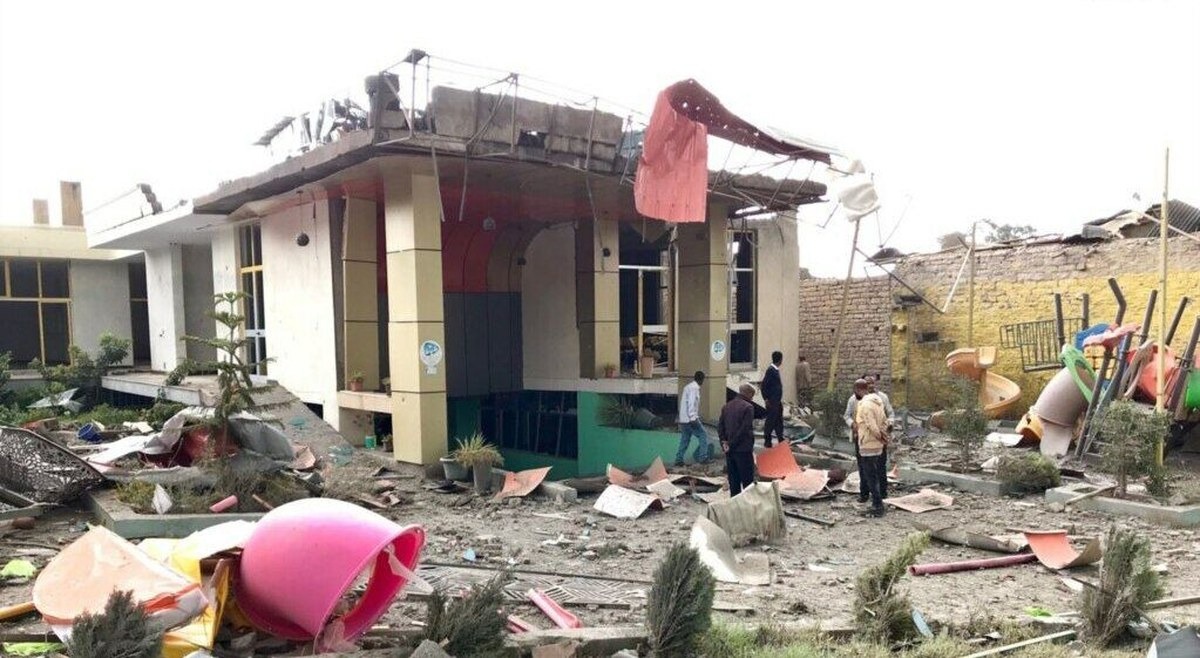
The timing fits a visible campaign against Sudan's power grid: on Sunday strikes hit substations at al-Dabba and Abu Hamad in Northern State and cut power, and on Monday further strikes hit New Halfa and Aroma in Kassala state and Merowe, near the Merowe dam, taking reported strikes on the power network to 18 in a week. The campaign has reshaped the war inside Sudan, from the exodus out of El Fasher to strikes that drove families from their homes in Blue Nile, and the UN spokesman said on Saturday he was appalled, days after a market strike in RSF-held Darfur killed more than 100 people.
The diplomatic fallout moved fast: on Wednesday 4 November Ethiopia ordered six Sudanese diplomats at the Assosa consulate to leave within 48 hours, and Sudan answered the same day by closing Ethiopia's consulate in Gedaref and expelling its staff, in an exchange confirmed by officials to Reuters and AFP. Amjad Farid, adviser to Sudan's Transitional Sovereign Council, said Khartoum remained committed to defending its territory while working to avoid open war with Ethiopia.
What remains unproven in the drone dossier?
The core of the dispute is evidence: Sudan's figures come from its own Foreign Ministry and military intelligence, and no independent body has yet verified that the drones were launched from Ethiopian soil rather than from RSF-held territory inside Sudan, so the dossier's tables and named sites remain allegations, not established findings. Ethiopia denies backing the RSF; its ambassador rejected Sudan's accusations at the Security Council on 16 October, and the prime minister's office did not immediately answer Reuters' request for comment this week.
The mirror charge is equally unproven: Ethiopia accuses Sudan, along with Egypt and Eritrea, of supporting Tigrayan rebels who launched an offensive in September, and all three deny it. A Reuters visual investigation in February used satellite imagery, an Ethiopian security document and testimony from several sources to identify a camp in Benishangul-Gumuz used to train thousands of RSF fighters, yet that finding did not by itself verify the later drone-launch claims, and the renewed Tigray offensive has made the border harder to read every week.
Nor is it clear what either side wants next: Khartoum has not said what action it expects from the Security Council beyond condemnation, and Addis Ababa has given no reason for the Assosa expulsions, so the record holds two expulsions, two complaints and two denials, and very little about where either capital stops.
Why does a consulate row threaten two wars at once?
Three years into Sudan's civil war, this row turns a spillover into a state-to-state confrontation: a formal complaint to the Security Council puts Ethiopia's name on a UN file as an alleged party to the war, while the consulate closures strip away the last channel between two capitals sharing a long, porous border.
The human stakes are already visible: the war that began in April 2023 has killed tens of thousands and displaced more than 14 million, creating one of the world's worst humanitarian crises, and the drone campaign against power stations now reaches cities far from the front lines, cutting power to hospitals, water pumps and homes in Kassala and Northern State.
The regional stakes run wider still: the RSF's war is also a war of displacement, with families fleeing El Fasher and the Chad border, and Ethiopia's Tigray front is active again, so a miscalculation on either side could fuse two wars into one, with Eritrea, Egypt and the Gulf states watching from the edges of the map; and with Ethiopia's rupture with Eritrea already redrawing the region's alliances.
How did two civil wars become one border crisis?
The feud did not start with the drones: Sudan and Ethiopia have traded accusations of harbouring each other's rebels for years, and the Tigray war gave both capitals reason to keep the other's enemies close, so the dossier reads less like a sudden discovery than like a long proxy logic finally filed at the United Nations.
What changed in 2026 is the weapon: one-way drones turned a border once patrolled by soldiers into a launch corridor that can be denied, and a power station hundreds of kilometres from the frontier can now be hit by a machine cheaper than the missile that would stop it; which is why the grid strikes matter beyond their military value: cheap, deniable, and aimed at civilians' daily life rather than at armies.
The expulsions reveal the second change: consulates are the plumbing of a bilateral relationship, and shutting them deliberately removes the people who would normally talk a crisis down, so both sides reaching for that tool within hours says more about the temperature in both capitals than any statement.
What happens if the two wars merge?
The first consequence to watch is the border: the Assosa–Gedaref corridor is where traders, refugees and fighters have crossed for generations, and a closed consulate plus a 48-hour expulsion order pushes smugglers and armed groups into the gap diplomats leave behind, while the complaint gives Khartoum a paper trail for seeking sanctions.
The second is the Tigray front: if Addis Ababa believes Khartoum is arming its rebels, it has every incentive to treat the RSF as a useful counterweight, and if Khartoum believes Addis Ababa is launching drones at its cities, it has every incentive to deepen its support for the Tigray rebels, so each side's suspicion becomes the other's justification, and the loop tightens by itself.
The third is the region's diplomacy: the African Union now holds a complaint that forces it to choose between investigating a member state and shelving the file, while the Gulf states and Egypt watch a row touching their own alignments, and a Council debate that produces nothing would teach both capitals that the institutions cannot restrain them.
What would pull the two capitals back from the edge?
The 48-hour deadline on the Assosa diplomats is the first marker: once the expulsions are carried out, the crisis either cools or finds a new trigger, and the next days will show whether either capital names a mediator or closes the border crossings that still carry trade and refugees.
The Security Council's handling of the complaint is the second marker: a debate, a statement or a request for the Secretary-General to report would put the dossier's claims under scrutiny neither side can control, while silence would leave the African Union as the only forum still holding the file.
The third marker is the power grid: every further strike deepens the humanitarian case against whoever ordered it, and the UN's count of civilian deaths from drone strikes is now part of the public record, so the war's next chapter will be written as much by engineers restoring substations as by diplomats trading expulsions.
The three lenses
West Lens:
How the West read it: a test case for the Security Council's patience Western coverage has centred on the Reuters account of the expulsions and the complaints, framing the row as a diplomatic crisis with escalation risk rather than a verified military fact, and the emphasis falls on what the Council will do with a complaint naming a sitting government as a launchpad for drone warfare, since the Council has spent the year appalled by the war's toll without finding a lever that works. The West's reading is cautious: the accusation is reported, the denial alongside it, and the story's weight rests on the expulsions, which are facts no one disputes.
East Lens:
How the East read it: silence, so far, from the capitals with the most at stake No East outlet was found carrying independent reporting on the complaint or the expulsions during this cycle's verification, so the row has travelled in the East mainly as wire copy rather than original reporting, and the lens here is the absence itself: Beijing and New Delhi both hold deep commercial stakes across the Horn, and neither capital has been reported commenting on the row in the coverage reviewed this cycle. That silence is not a position, but a signal of how the story is weighed, a regional crisis to be managed quietly, not a cause to take up loudly, and the first independent East reporting on the dossier will matter precisely because it has not yet arrived.
South Lens:
How the South read it: a border war that the continent must answer first Southern coverage has been the fullest, because the story broke in the region's own press, Al Jazeera from Doha, the Addis Standard from Addis Ababa, and the South African and Turkish press carrying the expulsions, and the southern reading treats the African Union's Peace and Security Council as the first court that matters, not the last, since the complaint was filed in Addis Ababa's own backyard and the AU's answer will say more about the continent's ability to police its own borders than any New York debate. The South also reads the casualty figures differently: 484 civilians killed or wounded is not a diplomatic number in Khartoum's dossier, it is a count of families, and the power stations matter because they keep a war-torn country alive.
The consensus
- What we agree on
- What we agree on: Sudan lodged formal complaints against Ethiopia with the UN Security Council and the African Union's Peace and Security Council on 1 November, accusing Addis Ababa of allowing the RSF to launch drone attacks from Ethiopian territory; Ethiopia denies backing the RSF; and on 4 November both capitals shut each other's border consulates and expelled diplomats.
- What we don't agree on
- What we disagree on: whether the RSF's drones were actually launched from Ethiopian soil, as Khartoum's dossier claims, or from RSF-held territory inside Sudan; whether Ethiopia's denial settles the matter or merely opens a longer evidentiary fight; and whether the expulsions are a warning shot or the first step toward a wider confrontation.
- What we know
- What we know: the dossier's figures, 70 attacks, 187 one-way drones between 15 February and 27 October, 484 civilians killed or wounded, 176 soldiers killed, and the three sites it names; the dates of the complaint and the expulsions; and the fact that drone strikes on Sudan's power grid reached 18 in a single week.
- What we don't know yet
- What we do not know: whether any independent body has verified the launch sites; what evidence Sudan attached to its complaints beyond the tables it describes; why Ethiopia gave no reason for the Assosa expulsions; and what either capital expects the Security Council or the African Union to do next.
- What we expect
- What we expect: the 48-hour expulsion deadline to be carried out without immediate reversal; the Security Council and the African Union to be pressed for a response to the complaint; further strikes on Sudan's power infrastructure to be reported in the coming days; and the Tigray front to shape how both capitals calculate their next move.
Questions, answered
What exactly does Sudan accuse Ethiopia of doing?
Sudan accuses Ethiopia of allowing the Rapid Support Forces to use Ethiopian territory to launch one-way attack drones against Sudanese cities and power stations. Its dossier counts 70 attacks involving 187 drones between 15 February and 27 October 2026, names Asosa Airport, the Kurmuk-Gizen border area and Bahir Dar airbase as launch sites, and says the strikes killed or wounded 484 civilians.
Has Ethiopia responded to the accusation?
Ethiopia denies backing the RSF, and its ambassador rejected Sudan's accusations at the Security Council on 16 October. Addis Ababa has also accused Sudan, Egypt and Eritrea of supporting Tigrayan rebels who launched an offensive in September, a charge all three countries deny. On 4 November it ordered six Sudanese diplomats to leave the Assosa consulate within 48 hours.
Why did both countries shut each other's consulates?
The closures followed Sudan's formal complaints to the UN Security Council and the African Union on 1 November. Ethiopia moved first, expelling six Sudanese diplomats from Assosa, and Sudan answered the same day by closing Ethiopia's consulate in Gedaref. Officials on both sides confirmed the tit-for-tat moves to Reuters and AFP.
How bad is the drone campaign against Sudan's power grid?
Strikes hit substations at al-Dabba and Abu Hamad on 1 November and at New Halfa, Aroma and Merowe on 2 November, taking reported attacks on the electricity network to 18 in a week. Sudan says the campaign has killed or wounded 484 civilians since February, and the UN Secretary-General's spokesman said he was appalled by the toll.
Sources
- Al Jazeera / Addis Standard
- Addis Standard
- Al Jazeera
- Addis Standard / Al Jazeera
- Reuters