An Israeli drone strike on the Islamic University in Gaza City killed three university employees and wounded eight people on Sunday, 25 October 2026, while further strikes across the territory took more lives the same day; the latest breach in a truce that has held for more than a year without ever fully stopping the killing.
Published 25 October 2026 · 21:13 GMT
An Israeli drone strike on the Islamic University in Gaza City killed three university employees and wounded eight people on Sunday, 25 October 2026, while further strikes across the territory took more lives the same day; the latest breach in a truce that has held for more than a year without ever fully stopping the killing. An Israeli strike on the Islamic University in Gaza City on Sunday, 25 October 2026, killed three university employees and wounded eight people, according to Al Shifa Hospital and university sources.
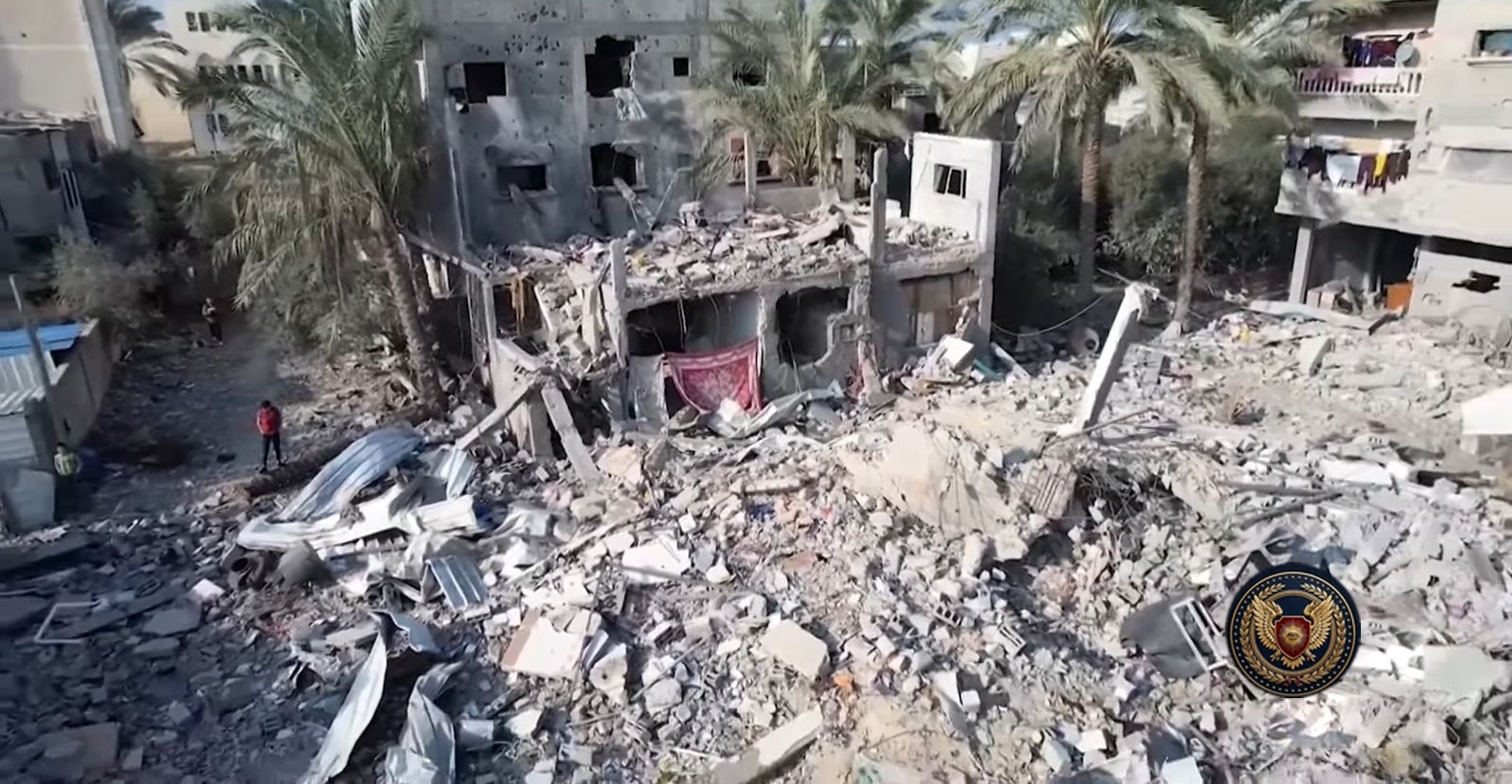
On Sunday, 25 October 2026, an Israeli drone strike hit the Islamic University in Gaza City and killed three people, according to staff at the university and at Al Shifa Hospital. Al Shifa said it received three bodies and treated eight wounded people. Two university sources told reporters that the dead were employees and that the injured were students. The university said its campus and surroundings had been targeted twice on Sunday, condemning the attacks and mourning those killed. Palestinian media identified the dead as Sami Baroud, Ashraf Dahlan and Shadi Abu Ataya. Al Jazeera's correspondent in Gaza City, Hani Mahmoud, reported that the three were security guards, and that his team had greeted them shortly before the strike killed them. The difference between “administrative staff” and “security guards” is a difference of job description, not of the central fact: three men who worked at the university died where they worked, on a day when students were in class.
The firmest facts come from three places: the hospital, the university and the army. Al Shifa Hospital is the source for the three bodies and the eight wounded, a count repeated across the wire reporting and by TRT World. The university is the source for the claim that the campus and its surroundings were hit twice on Sunday, and for the condemnation that followed. Gaza's Education Ministry is the source for two further claims: that students were present for classes at the time, and that the higher-education sector faces what it called “total annihilation”, with 95 percent of buildings belonging to academic institutions damaged during the war. The ministry added that over the previous six days, 10 students and educators had been killed by Israeli fire. The United Nations cultural agency, UNESCO, has separately reported through Al Jazeera that nearly 95 percent of Gaza's higher-education campuses have been destroyed or damaged since October 2023, which gives the ministry's proportion an independent echo, though not an independent count.
The Israeli military's account arrived in two stages, and the stages matter. Asked for comment at first, the army said it was looking into the reports, or that the strike was under review. In a later statement carried by The Hindu, the army said it had been “targeting a terrorist from Hamas' military wing”, and that “following the identification of uninvolved individuals in the area, the munition was diverted in order to mitigate harm to them”. The statement added that “the incident is under review”, without specifying whether those killed at the university were hit by accident. The Times of Israel reported the same shape of account: the strike targeted what the military called terror operatives, with further details to follow. What the army has confirmed is a target, a diversion and a review. What it has not confirmed is a causal chain from its munition to the three bodies at Al Shifa, and that gap is where the two narratives of Sunday diverge. Mahmoud also reported that in the earlier strike seven female students were wounded by shrapnel, one seriously enough to be transferred to a field hospital; a count that may overlap with Al Shifa's eight wounded, and which no outlet has yet reconciled into a single wounded total.
Several important questions remain open. First, the intended target: the army says it aimed at a Hamas military-wing operative, but it has not named that person, shown that the person was at the university, or explained how a diverted munition still killed three employees and wounded students. Until the review it promised produces findings, the claim that this was a strike gone wrong and the claim that it was a strike on the university itself cannot be distinguished on the public evidence. Second, the precise roles of the dead: university sources described them as employees or administrative staff, Al Jazeera as security guards, and the transliteration of one name varies between Baroud and Baward. Third, the full Sunday toll: early reports spoke of four further deaths beyond the university, updated reports of five, and Al Jazeera's day total of eight sits alongside Haaretz's report of eight killed across Gaza on Sunday, including an eight-year-old girl, Fatmeh al-Buyuk, reportedly shot overnight in Deir al-Balah. The two “eights” are not necessarily the same eight, because they were compiled at different times from different agency reports. Fourth, the wider casualty picture: Al Jazeera, citing Gaza's Health Ministry, reported at least 1,551 people killed since the ceasefire began in October 2025, and a total war toll since October 2023 of 74,544 dead and at least 175,692 wounded. Those are ministry figures, reported by Al Jazeera, not figures verified by an independent count.
A truce has been in effect in Gaza for more than a year, since October 2025, and it has failed to halt the violence completely. That sentence, repeated in almost every report of Sunday's strikes, is the reason this story matters beyond its own death toll. A ceasefire that permits regular lethal strikes on civilian institutions is not a ceasefire in the sense that ordinary people understand the word; it is a reduction in violence that still leaves students, patients and workers exposed. When the institution struck is a university, the point sharpens further, because a university is one of the few places in Gaza where a future is still being assembled; where students sit in damaged buildings, taught by a depleted staff, for qualifications whose value depends on the world recognising that the institution still exists. That is why Gaza's Education Ministry framed the strike as part of a pattern rather than an isolated incident, and why its language was so stark: “the global silence regarding attacks on students and universities serves as encouragement for the continuation of these crimes”. The question the strike poses to the guarantors of the truce is practical, not rhetorical: if a university can be hit twice in a day and the only response is a military review, what does the truce actually protect?
Step back from Sunday's competing claims and one pattern stands out: the campus was struck twice. A single strike can be presented, however unconvincingly, as an error, a diversion, or a misidentification. Two strikes on the same campus within a few hours are harder to present that way, because the second strike happens after the first has already announced the location as a place where students and staff are present. The army's account addresses the second strike by saying a munition was diverted after uninvolved people were identified. But it does not, on the public record, address the first strike, the one that wounded seven female students, and it does not explain what changed between the two strikes to make the campus a legitimate target twice in one day. The second pattern is in the numbers: 10 students and educators killed in six days, more than 1,500 killed since the ceasefire began, nearly all higher-education campuses damaged or destroyed. Even allowing that these figures come from interested parties, they describe a system under sustained pressure, not a single bad day. And the third pattern is in the diplomacy: condemnation, review, silence; a sequence now familiar enough to be a pattern in its own right.
The second-order effects of Sunday's strike will be felt first in the classrooms that survive it. Students who were in class when the strike hit, and students who watched seven of their classmates wounded by shrapnel hours earlier, will now weigh every return to campus against the knowledge that the campus was struck twice in a single day. Some will stay away; some will be kept away by their families; and the university, which has already lost staff and buildings, will lose attendance as well; the quiet, uncounted casualty of every strike on a school. Teachers, too, will calculate differently: the three men who died were not soldiers but employees, and their deaths tell every other employee that working at the university carries a risk that no salary or vocation can justify on paper. Beyond the campus, the strike will feed two larger processes: the legal and political record, in which every documented strike on a protected civilian institution becomes material for investigations and diplomatic demarches; and the argument over the truce itself, in which Gaza's authorities will cite Sunday as evidence that the truce is a fiction and the military will cite its review as evidence that it has a mechanism for incidents. Readers following Gaza's schools and hospitals can find the Bureau's earlier reporting in our account of earlier strikes across Gaza, in the European marches marking three years of war, and in an earlier drone strike on a Palestinian in Gaza.
Four things are worth watching. First, the Israeli military's review: whether it names the operative it says it targeted, whether it explains the two strikes separately, and whether it accepts any responsibility for the three deaths. Second, the university's own decision: whether classes resume, whether the campus closes for mourning or safety, and whether it appeals to UNESCO, to mediators, or to the guarantors of the truce for protection. Third, the wider Sunday toll: whether the civil defence's figures settle at four or five further deaths beyond the university, and whether the funerals and hospital counts converge on a single day total. And fourth, the truce itself: whether any mediator or guarantor treats a double strike on a university as a breach requiring a response, or whether the incident joins the long list of lethal Sundays that the truce has absorbed without breaking. The Bureau will update this story as the review, the university and the mediators speak.
What does the army's diverted-munition explanation actually settle? Read from Jerusalem, London and Washington, Sunday's story is about a military explanation and its limits. The Israeli press, led by The Times of Israel and Haaretz, reported the deaths promptly and carried the army's account in full: a Hamas operative targeted, a munition diverted, a review under way.
Why does Asia's press frame this as a pattern, not an incident? Read from New Delhi and the wider Asian press, the story arrives as an AFP wire report carried by The Hindu, and that route of arrival shapes its framing. The Hindu's version is spare, factual and cumulative: the university strike, the hospital count, the ministry's condemnation, the army's diverted-munition statement, the civil defence's wider toll, and the year-old truce that has not stopped the killing.
How does the Global South hear a strike on its own kind of institution? Read from Doha, Istanbul and across the Global South, Sunday's strike is heard differently again: not as a military incident to be reviewed, but as an attack on an institution of the kind that anchors every society in the South; a public university, underfunded, overcrowded, and still standing after years of war. Al Jazeera's reporting is the fullest on this register, because its correspondent was on the campus, had just greeted the three guards who died, and could report both the earlier strike that wounded seven female students and the later strike that killed their colleagues.
An Israeli drone strike hit the Islamic University in Gaza City on Sunday, 25 October 2026, killing three university employees and wounding eight people, according to Al Shifa Hospital. The university said its campus and surroundings were targeted twice that day, and Gaza's Education Ministry said students were in class at the time. Palestinian media named the dead as Sami Baroud, Ashraf Dahlan and Shadi Abu Ataya.
The army first said the reports were under review, then stated it had been targeting a Hamas military-wing operative and that a munition was diverted after uninvolved people were identified in the area, in order to mitigate harm. It said the incident remains under review, without specifying whether the three university employees were hit by accident or were the intended target.
Gaza's Education Ministry says 95 percent of buildings belonging to academic institutions have been damaged during the war, and UNESCO has reported through Al Jazeera that nearly 95 percent of Gaza's higher-education campuses have been destroyed or damaged since October 2023. The ministry also said 10 students and educators were killed by Israeli fire in the six days before Sunday's strike.
Al Jazeera put the day's total at eight killed across Gaza, including the three at the university. Gaza's civil defence reported further deaths in Khan Yunis, Deir al-Balah and northern Gaza, but its figures moved between early reports of four further deaths and updated reports of five, so the toll beyond the university should be treated as provisional.
A truce has been in effect in Gaza since October 2025, more than a year, but it has failed to halt the violence completely. Gaza's Health Ministry, cited by Al Jazeera, reports at least 1,551 people killed since the ceasefire began, and the university strike is the latest in a series of lethal incidents that Gaza's authorities present as violations of that truce.
