Nine days before Israel’s October 27 election, Donald Trump ended months of ambiguity with a full-throated endorsement of Benjamin Netanyahu, warning Tehran that unless it changes course ‘rapidly,’ Washington and its allies ‘will soon finish the job.’
Published 19 October 2026 · 20:29 GMT
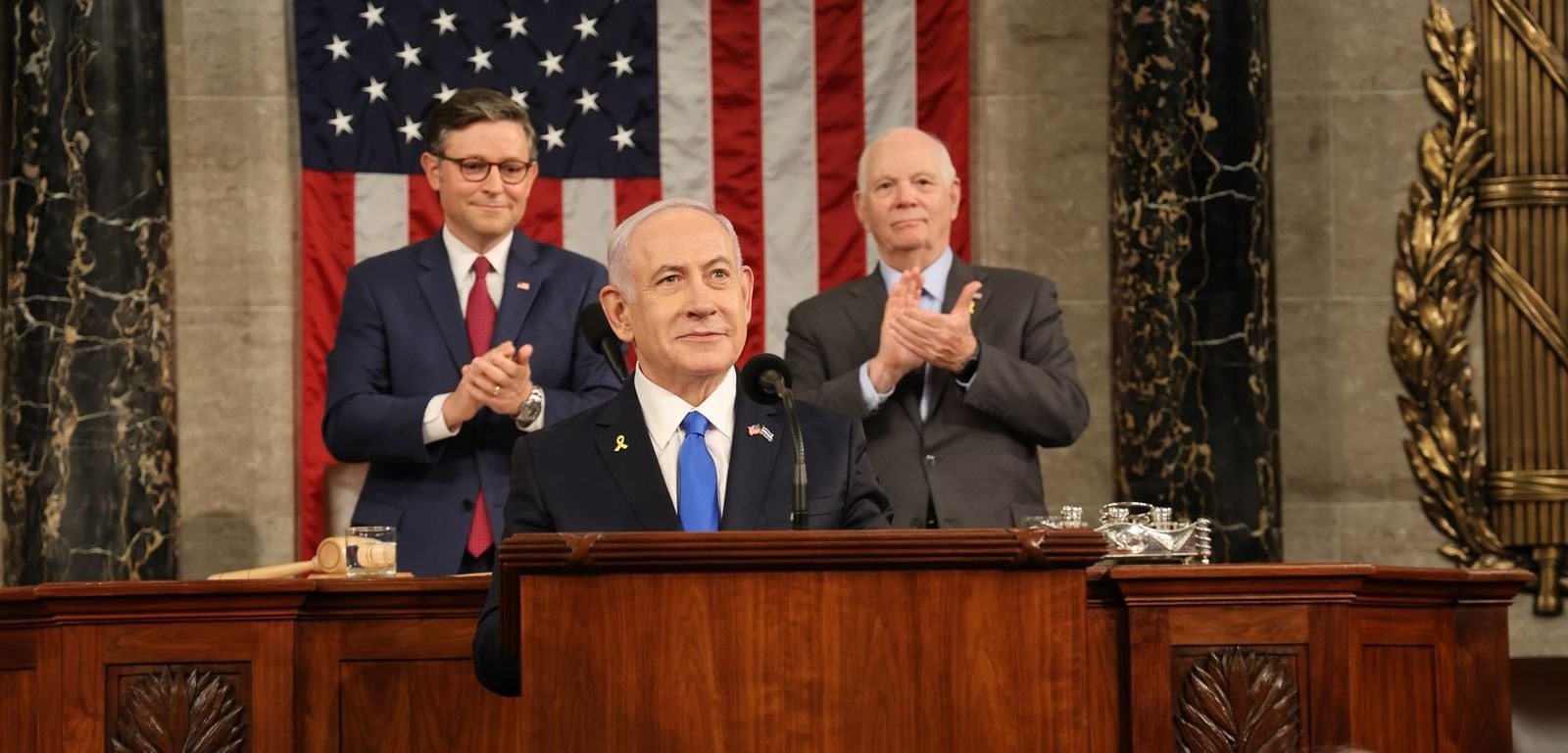
On Sunday, October 18, 2026, Donald Trump did what Benjamin Netanyahu had been waiting months for him to do. In a long post on his Truth Social platform, the American president gave the Israeli prime minister his “Complete and Total Endorsement” for re-election, nine days before Israelis go to the polls on October 27.
The post praised Netanyahu as a “Great Warrior Prime Minister” and “an even greater Partner for Peace” in confronting Iran, which Trump said had been “systematically destroyed both militarily and financially.” Then came the warning, addressed to Tehran: “unless they change their ways, rapidly, we will soon finish the job.”
Trump tied the endorsement directly to the war against Iran: “If Israel has the wrong Leader, which would be anyone other than Bibi, America will have to do this work ourselves, and I am not inclined to do so.” He closed in full capitals: “BIBI NETANYAHU WILL NEVER LET YOU DOWN!”
Netanyahu answered within hours, thanking Trump on X for “the tremendous support and the joint work” and adding: “Together we will complete the mission!”
The delay is part of the story. Earlier this month, TIME magazine asked Trump twice whether Netanyahu deserved another term; both times he pivoted to his own popularity in Israel. On Thursday, the right-wing American outlet Newsmax asked whether he planned to get involved in the Israeli election — “They’d like me to be. Yeah, they’d like me to be,” he said — and whether he trusted Netanyahu: “I don’t trust anybody, honestly.”
To Axios journalist Barak Ravid, in a brief phone interview, Trump insisted the endorsement had always been coming: “I was always going to do that. I just didn’t want to do it too soon.” He said the two leaders have a “good relationship.”
As of Sunday, the Israeli outlet Haaretz’s poll tracker projects 52 of the Knesset’s 120 seats for the opposition alliance led by Gadi Eisenkot’s Yashar party, against 51 for Netanyahu’s Likud-led coalition. No bloc is near an outright majority. Eisenkot, a former Israeli military chief of staff, leads Netanyahu in recent surveys.
The war backdrop is on the record. The United States and Israel launched their joint operation against Iran on February 28, fought an intense two-month campaign, and paused in April. Since then the conflict has sat in an uneasy standstill while the economic war ground on: Iran effectively shut the Strait of Hormuz, through which about 20 percent of the world’s crude once flowed; Washington answered with a naval blockade of Iranian vessels. Tanker traffic climbed back to pre-war levels last month under American naval escort, then a spate of Iranian attacks early in October hit exports through the strait again. Brent crude stood at $107.57 a barrel on Monday morning, after touching $110 on Friday.
Diplomacy has a paper trail too. Last month Iran offered Washington a deal to reopen the waterway within seven days; the talks collapsed when the United States did not meet Tehran’s seven conditions, which included lifting sanctions and ending the naval blockade. On Sunday, Foreign Minister Abbas Araghchi told Iranian media the offer still stands: meet the conditions and the strait could reopen within six days.
Whether the endorsement moves a single vote. The analysts split down the middle: Chatham House’s Sanam Vakil and King’s College London’s Andreas Krieg call its electoral effect limited against Netanyahu’s structural problems; Alan Dershowitz counters that Trump’s genuine popularity with Israeli voters makes it “a big deal.”
Whether a new operation against Iran has actually been agreed. Axios reported last week, citing American and Israeli officials, that Trump and Netanyahu had discussed a major new operation ahead of the elections in both countries, and several American outlets reported Pentagon contingency plans to relaunch strikes. None of it is confirmed on the record — and Trump’s own stated line, no attack before the November midterms, points the other way.
Who pushed hardest for the February war in the first place. Vakil notes that the endorsement does not settle that question.
Whether Tehran will put its Hormuz offer back on the table, and at what price.
Three clocks are running at once, and the endorsement sits at their intersection. The first is Israel’s: nine days to an election in which neither bloc can govern alone, and in which the Iran war — its costs, its conduct, its unfinished business — is the dominant question. The second is America’s: midterm elections in early November that have so far acted as a brake on escalation. The third is the market’s: Brent above $107 and a blockade that has turned the waterway into a slow-burning confrontation.
That is why the wording matters more than the adjectives. By tying Netanyahu’s re-election to Washington’s willingness to keep fighting, Trump turned a campaign endorsement into a strategic signal: the partnership against Iran, in his telling, runs through one man. For Tehran, as Vakil observes, the practical effect is to erase any meaningful distinction between American and Israeli objectives.
The deeper significance is structural. The February operation was the first time the United States and Israel fought Iran openly together; the months since have built an entire architecture around it — the blockade, the escort regime, the collapsed seven-day Hormuz reopening plan, the leaked contingency planning. Whatever happens on October 27, the pressure machinery is now the status quo — and dismantling it would take a political decision neither capital seems ready to make.
Less than it appears, and more than it should. Krieg’s “political gift” verdict is probably the honest one: the endorsement may mobilise reluctant Likud voters — worth a seat or two in a contest this tight — but it cannot manufacture the coalition majority Netanyahu currently lacks. His problems, as Krieg lists them, are structural: fragmented right-wing parties, disillusioned ultra-Orthodox voters, and the still-unresolved legacy of October 7.
But the ballot box is only half the target. Read through Krieg’s other lens — “coercive leverage” — the endorsement is an instrument aimed at Tehran as much as at Israeli voters. It tells Tehran the pressure campaign has a face and a timeline — and tells Netanyahu’s rivals that Washington has a preferred partner. Eisenkot’s answer was calibrated: Trump is a great friend of Israel, he told Channel 12, but the election is an internal matter — the response of a man who expects to take that call.
The timing does the rest of the talking. Nine days before Israel’s vote, with American midterms days later, Trump has placed his bet while keeping his own escalation option explicitly on hold until after November 3.
The second-order effects run through energy and escalation risk. Brent’s flirtation with $110 shows how thin the market’s patience is: the early-October Iranian attacks on vessels proved the strait can tighten again in days.
The sharper risk is the one Krieg names: an uncontrolled escalation in Hormuz that forces Washington’s hand before either leader is politically ready. The blockade-and-escort regime has created a crowded, trigger-happy waterway where a single misjudged interception could do what months of signalling have not — start the next round on nobody’s timetable. Against that background, Netanyahu’s “Together we will complete the mission” and Araghchi’s warning that Iran has “unfinished jobs” of its own read less like rhetoric than like two sides describing the same loaded weapon. The Bureau’s earlier reporting on Netanyahu’s warnings traced this hardening month by month.
October 27 comes first: a vote that will likely produce another fragmented Knesset and weeks of coalition bargaining. Then the American midterms — the war’s political speed limit. Then, in Krieg’s phrase, the dangerous window: after November 3, when the electoral constraints fall away on both sides and both militaries — already positioned around the strait — face the question the endorsement posed but did not answer.
Watch three things: whether the Pentagon contingency reporting hardens into something attributable; whether Araghchi’s six-day Hormuz offer gets a real American answer; and whether Brent’s next spike comes from a headline or from a hull. The tanker rebound of last month showed the strait can normalise quickly — and the first week of October showed how quickly it can not.
The American and British press read the endorsement first as campaign drama with a rocky backstory. CNN framed it as the end of a long, conspicuous holdout, recalling the highway billboards of past campaigns — Netanyahu beside Trump under the slogan “A different league.” The Times stressed the rumoured rift between the two men and the strained months behind them, while recording the post’s hard edge: the vow to “soon finish the job.”
India’s ANI wire, carried by The Hindu BusinessLine, filed the story straight and fast, within hours of the post: the endorsement, the “Great Warrior Prime Minister” praise, the warning that the United States and its allies would “soon finish the job,” and Trump’s invocation of Iran’s decades-old “Death to Israel, Death to America” chants. The frame is the confrontation itself: an American president publicly coupling an ally’s election to the next phase of a war.
Al Jazeera’s reporting put Tehran’s reading — and the economics of the standoff — at the center. Its account wove the endorsement together with the blockade’s toll, the Hormuz tanker-traffic swings, Brent at $107.57, and Araghchi’s conditional reopening offer. The analysts it quoted, Vakil and Krieg, treated the post less as electioneering than as coercive signalling: the endorsement reinforces the military threat underpinning Washington’s pressure strategy, makes it harder for Trump to distance himself from the war.
On Truth Social on October 18, Trump called Netanyahu a “Great Warrior Prime Minister” and “an even greater Partner for Peace,” said Iran had been “systematically destroyed both militarily and financially,” and warned that unless Tehran changes course “rapidly, we will soon finish the job.” He added that anyone other than Netanyahu would be the “wrong Leader” for Israel and closed with his “Complete and Total Endorsement.”
Israelis vote on October 27, 2026 — the first election since the Hamas attack of October 7, 2023. Netanyahu’s main challenger is Gadi Eisenkot, a former military chief of staff leading the centrist Yashar party’s opposition alliance. Haaretz’s tracker projects 52 of 120 Knesset seats for Eisenkot’s alliance against 51 for Netanyahu’s Likud-led coalition, with no bloc near a majority.
Nothing is confirmed on the record. Axios reported last week that Trump and Netanyahu discussed a major new operation ahead of both countries’ elections, and American outlets reported Pentagon contingency plans to relaunch strikes. Trump himself says there will be no attack before the November midterms. Analyst Andreas Krieg judges the near-term likelihood low absent an Iranian provocation, with the real window opening after November 3.
Effectively contested. Iran shut the strait after the February war began; Washington imposed a naval blockade on Iranian vessels. Tanker traffic recovered to pre-war levels last month under US Navy escort, then Iranian attacks early in October hit exports again. Brent crude stood at $107.57 a barrel on October 19. Iran’s conditional offer to reopen the waterway within six days remains on the table, says Foreign Minister Araghchi.
