Tamer al-Hamayda, 42, died in a drone strike on a tent in al-Mawasi; Mashhour Yassin, 51, was shot dead by settlers in Yasuf — two killings in one day inside a 'ceasefire' that has killed 1,439 Palestinians in Gaza in a year.
Published 2 October 2026 · 04:31 GMT
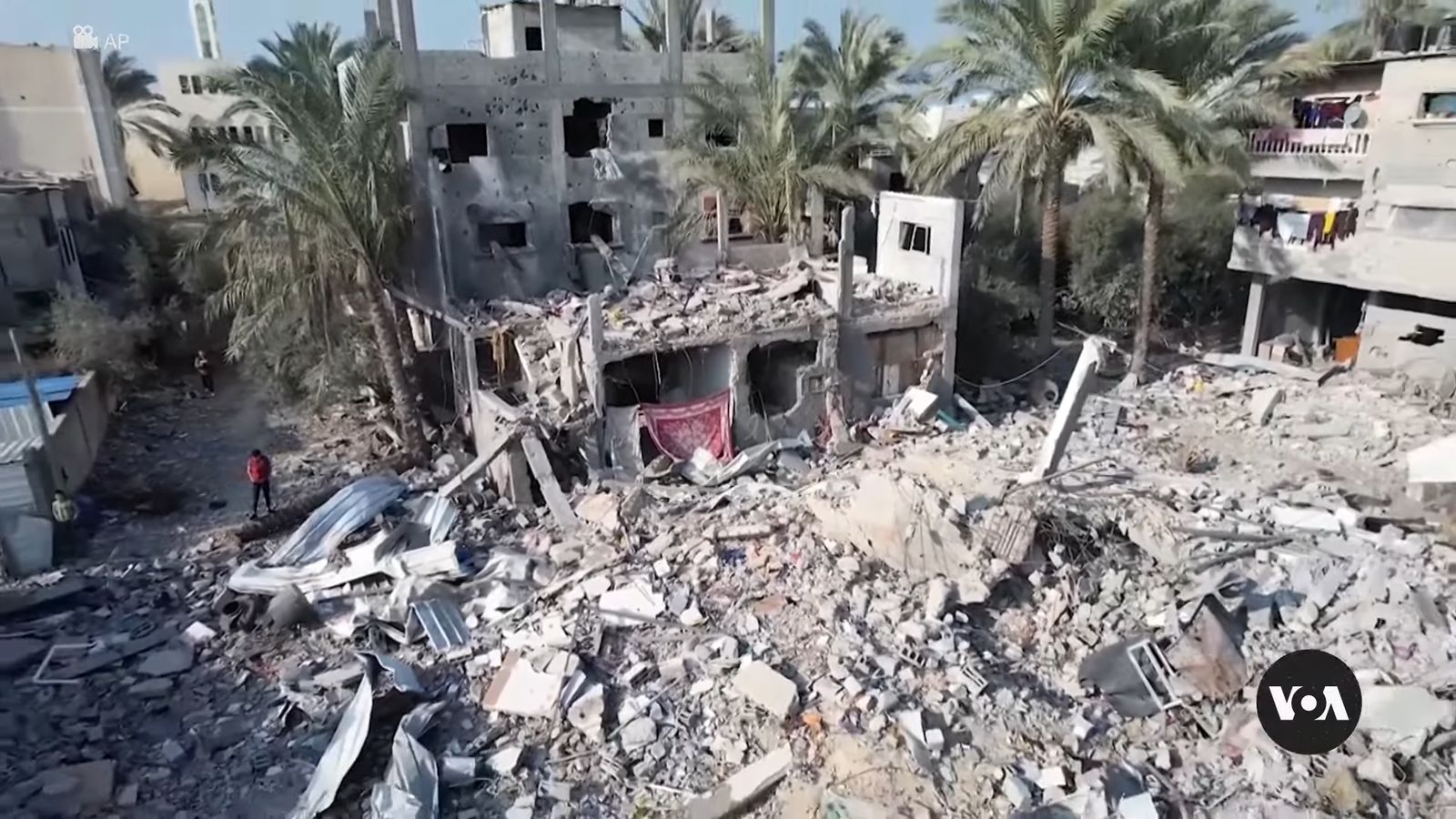
The tent stood in al-Mawasi, on the sand dunes west of Khan Younis where Israel had told Gaza's displaced they would be safe. On Thursday, an Israeli drone found it anyway. Tamer al-Hamayda, 42, was killed where he sheltered. Three wounded people were carried with his body to the Nasser Medical Complex, according to medical staff there. By nightfall, another Palestinian had been shot dead more than seventy kilometres away — not in Gaza at all, but at his own doorstep in a West Bank village, by Israeli settlers.
Two killings, two territories, one day. And both landed inside what is still officially called a ceasefire.
The Gaza Health Ministry said eight Palestinians were killed and 26 wounded across the Strip in the previous 24 hours. Since the ceasefire took effect in October 2025 — a year ago this month — 1,439 Palestinians have been killed in Gaza and 5,052 wounded, the ministry reported. Another 834 bodies have been recovered from the rubble in that time. Israel's war on Gaza, now entering its fourth year, has killed at least 74,040 Palestinians and wounded 175,168 since October 2023, according to the ministry's figures, which the United Nations has long treated as the most reliable available count.
Read those numbers twice. A ceasefire that kills nearly fourteen hundred people in twelve months is not a peace. It is a slower war with better paperwork — and Thursday showed exactly what that looks like from the ground.
The drone strike on the al-Mawasi tent was not the day's only killing in Gaza. Medical personnel at Nasser Medical Complex said another Palestinian died Thursday of wounds sustained in an earlier drone strike on Tuesday, when a gathering of Palestinians was hit in the Jabalia refugee camp in northern Gaza. And Israeli forces carried out what was described as a large-scale demolition operation against buildings east of Gaza City's al-Tuffah neighbourhood — the slow erasure of the Strip's urban fabric continuing lot by lot, street by street, under the cover of a truce.
Then there was Yasuf. The village sits north of Ramallah, tucked between four Israeli settlements. On Thursday, dozens of settlers armed with sticks and firearms swept into it, according to the village's mayor, Jumaa Abdel Fattah, who described the raid to the AFP news agency. Mashhour Yassin, 51, was at his doorstep when the attackers came. He went out to defend his house. Settler gunfire cut him down. His nephew was wounded beside him.
Abdel Fattah said the settlers had come from Havat Anton, an outpost established in July that has attacked the village's residents before. The Palestinian Ministry of Foreign Affairs went further: it said Israeli forces detained a Palestinian ambulance rushing to the scene, seized its key and threw it aside — "a crime that reflects clear coordination between the settlers and occupation forces," in the ministry's words. The killing, the ministry said, "falls within the framework of a serious and continuous escalation in organised settler crimes," accusing Israel of giving "free rein to settler terrorism against our people in the service of settlement, annexation, forced displacement and ethnic cleansing plans."
That is the Palestinian Authority's language, and it is worth pausing on the word the region itself has started using for these raids: pogroms. Palestinians in the occupied West Bank have reported a surge in settler pogrom attacks in recent months, in the phrase now common in West Bank reporting. More than 500,000 Israelis live in settlements across the West Bank considered illegal under international law. According to the United Nations, at least 1,112 Palestinians in the occupied West Bank have been killed by Israeli forces or settlers since October 2023 — including at least 37 killed by settlers.
Consider the geography of impunity for a moment. Havat Anton was established in July — an outpost, illegal even under Israeli law, planted beside a Palestinian village. Within three months, its residents were raiding that village with firearms, according to the mayor's account, and a 51-year-old man was dead at his own door. The outpost-to-raid pipeline is not an aberration in the West Bank; it is the mechanism. Outposts appear, the army protects them, the raids follow, the land empties. The Israeli rights group Yesh Din has documented for years that the overwhelming majority of settler-violence cases never produce an indictment — prosecution rates in the low single digits, year after year. The structure does not punish the violence. The structure is the violence, administered in stages.
And consider the season. October in the West Bank is the olive harvest — the economic and cultural anchor of villages like Yasuf, where families press oil from groves their grandparents planted. Every harvest season brings the same pattern: settlers attacking pickers, burning groves, blocking access to land. A raid in early October is not only an attack on people. It is an attack on the year's income, on the reason to stay on the land at all. Forced displacement rarely announces itself with eviction orders. More often it arrives as a burned grove, a blocked road, a funeral — until staying costs more than leaving.
The geopolitics of Thursday's killings are inseparable from the fiction of the ceasefire itself. A truce that began in October 2025 was supposed to freeze the killing. Instead it froze the diplomacy while the killing continued at a lower, steadier burn: drone strikes on tents and gatherings, demolitions in Gaza City, settler raids in the West Bank. Each incident is small enough to avoid the word "collapse." Added together, 1,439 dead is not a ceasefire holding. It is a war that learned to whisper.
This matters beyond Gaza and the West Bank because the entire regional order is priced on the assumption that the truce holds. Humanitarian corridors, reconstruction planning, the slow diplomacy around the day after — all of it assumes a line between war and not-war that Thursday's events erase. When a drone can strike a tent in a designated safe zone and settlers can shoot a man at his doorstep on the same afternoon, the line does not exist. There is only the rate of killing, and the stories told about it.
The macroeconomic dimension is the one nobody prices honestly. Gaza's reconstruction bill already runs into the tens of billions of dollars — World Bank and UN assessments have put the damage in that range, and every demolition east of al-Tuffah adds to it. The West Bank's economy, meanwhile, is being strangled lot by lot: movement restrictions, settlement expansion onto agricultural land, and now a harvest season conducted under the threat of armed raids. The Palestinian economy is not collapsing in a single dramatic moment. It is being foreclosed, village by village, transformer by transformer, grove by grove.
Demography sharpens the picture. Gaza's population is among the youngest on earth, and the overwhelming majority of its 2.1 million people have been displaced — many of them into places like al-Mawasi, the "humanitarian zone" that keeps appearing in strike reports. When the designated safe areas are not safe, displacement has no terminus. People do not resettle; they circulate between tents, waiting for the next evacuation order or the next drone. A generation is growing up understanding shelter as a temporary condition. That understanding will outlast any ceasefire, real or fictional.
History offers the pattern, and it is an old one. Al-Mawasi has been declared a safe zone and struck before — the record of "safe" areas in this war is a ledger of their violation. In the West Bank, the outpost dynamic follows a script written over decades: an outpost appears on a hilltop, the state declines to remove it, infrastructure follows, and the neighbouring Palestinian village finds itself encircled. Havat Anton, established in July and raiding Yasuf by October, is simply the script running at higher speed. The settlement enterprise has always expanded fastest when attention was elsewhere — and attention, this October, is everywhere else.
The structural trend underneath it all is the normalisation of the drone as an instrument of daily control. The strikes on the al-Mawasi tent and the Jabalia gathering belong to a pattern in which unmanned aircraft conduct what amounts to aerial policing over Gaza — persistent, precise, and unaccountable. No pilot to capture, no aircraft to see coming, no warning that distinguishes a strike from the ordinary buzzing of the sky. When killing can be administered this cheaply and this deniably, the threshold for using it falls. The ceasefire did not end the drone war. It just removed the headlines.
What do the parties say? The Palestinian account is detailed and furious: names, places, the seized ambulance key, the charge of coordination between settlers and soldiers. The Israeli account, in the reporting available on Thursday, is an absence — no immediate official comment on either the Gaza drone strikes or the Yasuf killing appeared in the coverage. That absence is itself information. A state confident in the legality of its operations explains them. Silence, in this context, reads as a calculation that explanation costs more than quiet.
The settlers' movement has its own language for these raids — defence, deterrence, presence — and its political wing sits inside Israel's governing coalition, which is why the outposts keep appearing and the indictments keep not coming. The international community has its language too: condemnation, concern, calls for restraint, repeated so often over so many years that the words have worn smooth. The UN counts the dead. The statements accumulate. The raids continue. Everyone involved has learned exactly how much a statement costs the person issuing it, and exactly how little it costs the person conducting the raid.
There is a temptation to file Thursday under "cycle of violence," the phrase that launders asymmetry into symmetry. Resist it. A drone operated by one of the region's most advanced militaries striking a tent of displaced people is not the same kind of event as a stone thrown in a village. Settlers armed with firearms, backed — in the Palestinian account — by soldiers who detained the ambulance, shooting a 51-year-old at his doorstep, is not an exchange. It is an application of power by those who hold it against those who do not. The consensus of the facts, printed below, does not require both sides to be equally armed for both sides to be equally human. It requires the opposite: that the imbalance be stated plainly.
What is at stake in the coming weeks is whether the word "ceasefire" retains any descriptive power at all. If 1,439 deaths in a year do not break a truce, then the truce is not a constraint on killing — it is a narrative frame that makes the killing uninteresting. The olive harvest will proceed under guard or not at all. The demolitions east of al-Tuffah will continue. The drones will keep flying over al-Mawasi. And the next Tamer al-Hamayda, in the next tent, will die inside a ceasefire that nobody believes in except the diplomats who need it to be true.
Above the battlefield sits an architecture of accountability that has never once touched it. The International Criminal Court issued arrest warrants for Israel's prime minister and former defence minister in November 2024. The International Court of Justice is hearing South Africa's genocide case. Resolutions accumulate in New York; warrants gather dust in The Hague. Not one drone operator has been named. Not one settler who torched a grove or shot a villager has been transferred to any court. International law, in this conflict, functions as commentary — precise, learned, and entirely without a enforcement arm where it matters. The people of al-Mawasi and Yasuf do not live under its protection. They live under its footnotes.
There is a regional symmetry worth naming, because it ran in the same news cycle. While a drone was striking a tent in al-Mawasi, another drone — attributed by Riyadh to Yemen's Houthis — was striking a power station in Medina, one of Islam's holiest cities. Different wars, different skies, the same weapon: the cheap, deniable, unmanned aircraft has become the signature instrument of power across the Middle East. States and militias alike have learned that a drone can do what an air force once did, at a fraction of the cost and with a fraction of the accountability. The sky over the region is now a contested commons, and the people under it — displaced families in tents, worshippers' power grids, villagers at their doorsteps — absorb the contest.
The medical thread running through Thursday deserves its own attention. In Gaza, it was the staff of the Nasser Medical Complex — one of the last major hospitals still functioning in the Strip — who received the bodies and the wounded, as they have received them nearly every day for three years. In Yasuf, it was an ambulance that settlers' allies allegedly stopped, its key seized and thrown aside. Attacks on healthcare — on hospitals, clinics, ambulances, medics — have been documented throughout this war by the World Health Organization and others, in Gaza on a scale without modern precedent. Detaining an ambulance is not a tactical improvisation. It is the same doctrine applied to a village raid: deny rescue, and the killing finishes itself.
And then there is the diplomacy that proceeds as if none of this were happening. Reconstruction conferences convene; "day after" plans circulate in Washington and Brussels; donors pledge against damage assessments that are obsolete before the ink dries, because the demolitions east of al-Tuffah continue while the pledging continues. Every plan for Gaza's future assumes a present that does not exist — a present in which the bombing has stopped. It has not stopped. It has been reclassified. A war conducted by drones and demolitions under the banner of a ceasefire is still a war, and no reconstruction can begin inside one.
Finally, there is the information war that decides which of these deaths count as news. The drone strike on the tent was reported because medical staff spoke to journalists; the Yasuf killing because a mayor called AFP. Countless smaller incidents — a beating at a checkpoint, a grove burned at night, a tent strafed with no camera present — never enter any ledger. What the world knows about this war is the visible fraction of it. The Health Ministry's tolls are meticulous, and still they are an undercount: the 834 bodies recovered from rubble are only the ones that could be reached. Under the collapsed buildings of Gaza City and Rafah lie the uncounted, and no ministry, however diligent, can name people it cannot dig out.
The alternative is not mysterious. A ceasefire that meant something would have investigators, consequences, and a line whose crossing triggered them. It would treat a drone strike on a tent in a safe zone as a breach, not a data point. It would treat settlers who shoot a man at his doorstep as criminals, not as pioneers. None of that exists. What exists is the paperwork of peace and the arithmetic of war — 8 dead in 24 hours, 1,439 in a year, 74,040 since it all began — and two more names added to the ledger on an ordinary Thursday: Tamer al-Hamayda, 42, of the al-Mawasi tents; Mashhour Yassin, 51, of his doorstep in Yasuf.
