‘Our neighbours are gone’: Gaza’s first winter storm kills five and floods 70,000 tents
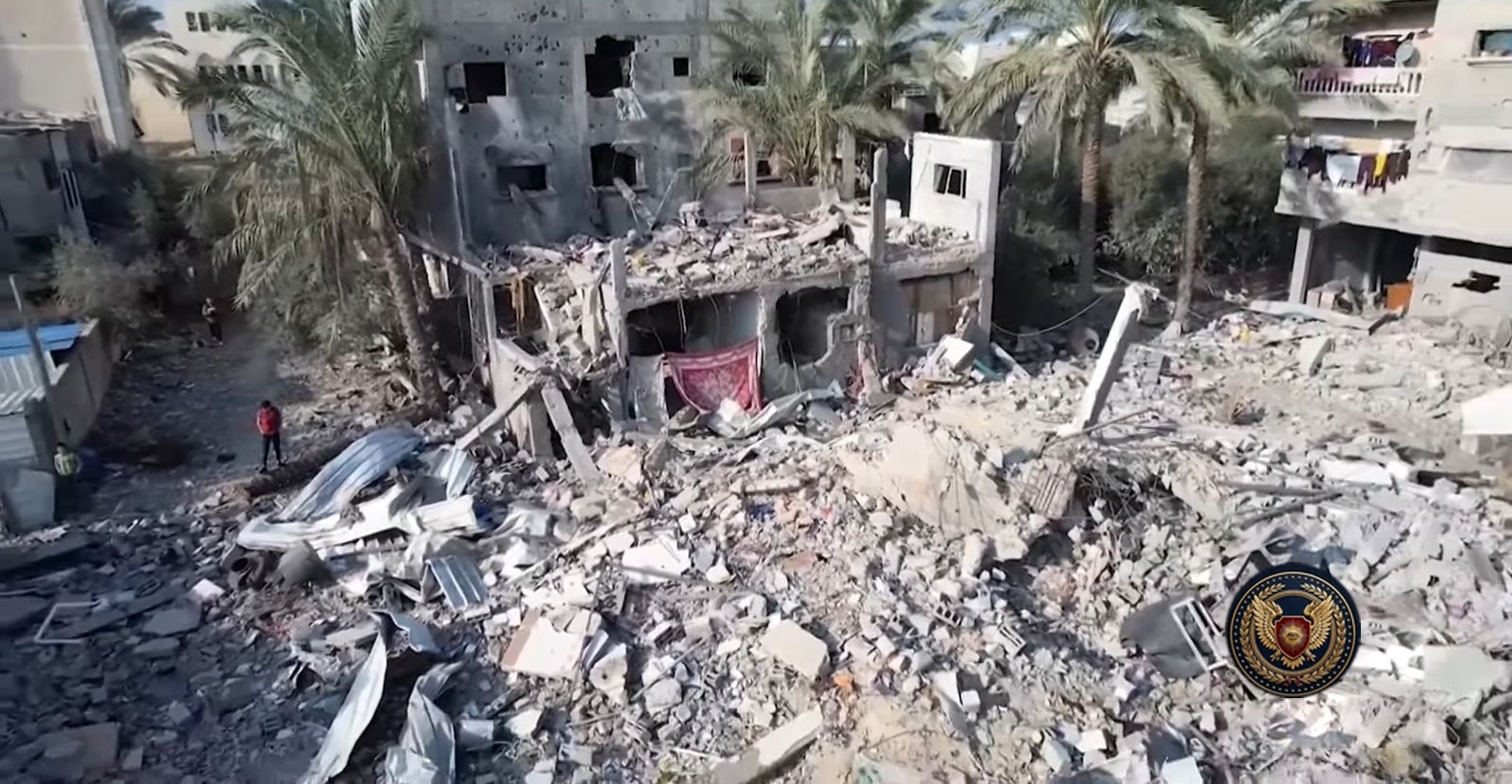
A sandbank collapse in Deir al-Balah buried families alive as Gaza’s first winter storm flooded tens of thousands of tents. Survivors dug with their bare hands while the UN counted more than 106,000 people directly affected; and warned that 150,000 tents are still waiting outside the territory.
Key points
- Gaza’s first winter storm began on the evening of Friday 6 November 2026; on Sunday evening a rain-soaked sandbank collapsed onto tents at the Ard al-Ribat camp in Deir al-Balah, killing at least five people, three children and two women, while an infant drowned in a separate incident. 2
- About 70,000 tents were flooded within twelve hours of the rain starting, with initial damage estimated at about $3 million. Gaza Government Media Office
- The heavy rain directly affected more than 106,000 people, and an estimated 950,000 displaced people live in flood-exposed areas, including 400,000 at extremely high risk, almost half of them children. 3
- By 8 November, humanitarian partners had received appeals from more than 26,000 households; about 6,000 shelters were destroyed and 17,400 damaged, and Civil Defence answered 218 of 2,166 distress calls. 2
- More than 150,000 tents purchased by humanitarian partners and member states are waiting outside Gaza, including about 117,000 from the Egyptian Relief Committee in Al-Arish, while stocks inside Gaza are virtually exhausted. 2
Three readings of the same result
Same facts, different frames. Each reading names its outlets and what it emphasizes.
An aid-entry dispute with a new referee.
Western coverage has centred on the argument over what is getting into Gaza and who is responsible for the gap.
Key detail In this reading, the storm is a test of the ceasefire’s new machinery rather than a natural disaster alone.
Asia reads a humanitarian toll measured in tents and calls for help.
Asian coverage has reported the storm primarily through its human and material scale.
Key detail The Hindu, carrying an AFP dispatch, recorded heavy rain flooding tens of thousands of tents from Saturday 7 November, about 70,000 tents flooded on the…
Survivors’ voices and a charge of inaction.
Coverage from the region has given the floor to the people who dug through the sand.
Key detail Al Jazeera’s reporting from Deir al-Balah carries the survivors’ accounts in their own words: Zahira al-Sahar buried to the neck, the al-Nabhan family lost except…
Sources by lens: 5 West, 1 East, 3 Global South. See every source
The story
The night the sand came down on the tents
Heavy rain had been falling on Gaza since the evening of Friday 6 November 2026, the first winter storm of the season, and by Sunday evening it had turned a sandbank above a displacement camp into a lethal weight.
At least five people were killed, according to Gaza’s Civil Defence and the United Nations, three children and two women, and an infant drowned in a separate incident at another site. The dead named so far include Tahrir al-Nabhan, 36, five months pregnant, and her children Salah, eight, and Maryam, six. Four-year-old Habiba al-Zein was killed in a neighbouring tent; her mother Reem and brother Ibrahim remain in intensive care.
With no excavation equipment, residents dug through the sand with their bare hands, searching by the light of their mobile phones once darkness fell. Zahira al-Sahar, 58, was buried up to her neck beside her 28-year-old daughter; her sons pulled the daughter out first, then came back for her. “Our neighbours are gone,” she shouted as the rescue went on.
The numbers behind a weekend of flooding
The storm struck a population with almost nothing between it and the weather. About 70,000 tents were flooded within twelve hours of the rain starting, according to Gaza’s Government Media Office, which put the initial damage at about $3 million.
The United Nations Office for the Coordination of Humanitarian Affairs (OCHA) reported that by 8 November, humanitarian partners had received appeals from more than 26,000 households whose shelters or belongings were damaged. Its Site Management Cluster counted about 6,000 family shelters destroyed and 17,400 damaged, 66 latrines destroyed and 618 damaged, and more than 3,900 households left with no shelter at all.
The UN estimates that about 1.4 million people, or 65 percent of Gaza’s population, were living in tents or makeshift shelters when the storm hit, and UNICEF puts the number of displaced people in tents, makeshift shelters or damaged buildings at 1.7 million. At least 55 learning spaces serving about 55,000 children were flooded, and eight community kitchens cut production by half on 7 November. The territory’s broken drainage networks left rainwater with nowhere to go, and no wastewater treatment plant in Gaza is currently operational.
“Our neighbours are gone,” she shouted as the rescue went on.
What the toll, the missing and the tents still leave open
The exact death toll is still being reconciled. OCHA and Gaza’s Civil Defence record five people killed in the collapse at Al Berka Reservoir, west of Deir al-Balah, plus an infant who drowned elsewhere; an early Al Jazeera report counted four children and a woman killed and two people still missing, with no later update found on the missing. Until the authorities publish a single consolidated list, the figure stands at at least five dead in the collapse, with one infant drowned separately.
Nor is it yet clear how many of the roughly 70,000 flooded tents can be lived in again, or how many families will spend the winter without any shelter at all. More than 150,000 tents purchased by humanitarian partners and member states are waiting outside Gaza, including about 117,000 from the Egyptian Relief Committee alone in Al-Arish, but the pace at which they will be allowed in is unresolved.
A storm that tests a ceasefire, not just a roof
This is the fourth winter since the war that began in October 2023, and the first major storm of the season arrived to find a population still living in canvas. A fragile ceasefire came into effect on 10 October 2025, but it has not rebuilt a single home, and the storm showed what that means in practice: in a territory where about 85 percent of homes have been destroyed or damaged, ordinary rain becomes a lethal event. A tent that survives a dry month cannot survive a night of heavy rain on unstable ground.
The flooding also exposes the state of Gaza’s infrastructure after three years of war. Drainage networks are severely damaged, roads and access routes remain in poor condition, and municipalities lack the equipment to clear accumulated rainwater. The Sheikh Radwan stormwater basin is being overwhelmed, and stormwater mixed with sewage from damaged networks now poses a public health risk.
That is why the weekend matters beyond its own death toll. Every figure in the UN’s reporting, 1.4 million people in tents, 150,000 tents waiting outside, stocks inside Gaza described as virtually exhausted, describes a gap between what winter requires and what is available.
The arithmetic of tents is the argument
Strip away the statements and the dispute reduces to four numbers that do not add up. About 70,000 tents flooded in a weekend. More than 150,000 tents are waiting outside Gaza. Israel says more than 91,000 tents have entered since its winterisation plan began in September. And about 1.4 million people are living in tents or makeshift shelters.
Both claims can be partly true, and that is what makes the argument hard to settle. A tent admitted in September does not help a family whose tent flooded in November, and a tent waiting in Al-Arish does not help anyone until it crosses. The bottleneck is not a single crossing or a single decision but the whole chain: approvals, transport, distribution, and the condition of the ground the tent stands on.
The Board of Peace is the new element in this arithmetic. It is the first body with a mandate from the ceasefire itself to press for the entry of shelter and drainage equipment, and its statement this week, urging Israel to authorise essential supplies, puts it between the two sides rather than above them.
What the flood sets in motion after the water drains
The first consequence is disease. With no wastewater treatment plant operational and sewage mixing with floodwater in the camps, the UN is strengthening surveillance for acute watery diarrhoea, respiratory infections, skin infections and acute jaundice syndrome, and health partners already report more cold exposure and weather-related illness.
The third is the quieter damage to the systems that keep people fed and safe. Eight community kitchens cut production by half on 7 November, about 25,000 fewer meals, and flooded roads delayed deliveries to shelters. Floodwater may also have exposed or moved unexploded ordnance, creating new danger for civilians and for the crews clearing debris, and partners have identified at least 4,000 high-risk buildings, with three partial or full collapses already reported.
What to watch before the next storm
Watch the crossings first: whether the tents waiting outside Gaza, and the pumps, generators and heavy machinery the UN says are urgently needed, begin to move in volume, and whether the Board of Peace follows its statement with a timetable. Watch the weather: more storms are expected, and temperatures are already falling towards 5°C. Watch the funding: UNICEF is seeking $97.5 million for its winter response in Gaza.
What we agree on, and what remains open
Established
- Gaza’s first winter storm of the season began on the evening of 6 November 2026 and flooded about 70,000 tents within twelve hours.
- A rain-soaked sandbank collapsed onto tents at a displacement camp in Deir al-Balah on Sunday evening, killing at least five people including three children.
- The heavy rain directly affected more than 106,000 people.
- About 1.4 million people, or 65 percent of Gaza’s population, were living in tents or makeshift shelters when the storm hit.
- Humanitarian stocks of tents, tarpaulins and blankets inside Gaza are virtually exhausted.
Contested
- Who bears responsibility for the shelter gap; Gaza’s authorities blame Israel, the United States administration and the international community for blocking shelter materials, while Israel says more than 91,000 tents have entered under its winterisation plan and that Hamas is blocking larger-scale rebuilding.
- The exact death toll, with early reports counting between four and six dead depending on whether an infant who drowned is included.
- Whether the Board of Peace can move crossings faster than the weather.
Still open
- The final consolidated death toll and the fate of two people reported missing on 9 November.
- How many of the roughly 70,000 flooded tents can be lived in again.
- How many of the tents waiting outside Gaza will be admitted before the next storm.
- The health toll, with disease surveillance under way but no outbreak figures yet published.
What to watch
Questions, answered
On Sunday evening, 8 November 2026, a rain-soaked sandbank collapsed onto tents at the Ard al-Ribat displacement camp in Deir al-Balah, central Gaza, during the first winter storm of the season. At least five people were killed, three of them children, according to Gaza’s Civil Defence and the United Nations, and an infant drowned in a separate incident. Residents dug through the sand with their bare hands to reach those buried.
UNICEF says the heavy rain directly affected more than 106,000 people, damaging or destroying shelters, latrines and belongings. About 70,000 tents were flooded within twelve hours, according to Gaza’s Government Media Office. An estimated 950,000 displaced people live in flood-exposed areas, including 400,000 at extremely high risk, and about 1.4 million people were living in tents or makeshift shelters when the storm hit.
About 85 percent of homes in Gaza have been destroyed or damaged in the war that began in October 2023, and a ceasefire in effect since 10 October 2025 has not brought reconstruction. Roughly 1.4 million people live in tents or makeshift shelters, many of them worn out after years of use. More than 150,000 tents are waiting outside Gaza, but entry depends on Israeli approvals, transport and distribution.
The Board of Peace is the body created under the October 2025 ceasefire to oversee Gaza’s transition. After the storm it said it had urged Israel to allow essential supplies such as temporary shelters and drainage equipment to enter, and to abide by the Sharm El-Sheikh Humanitarian Protocol. Gaza’s Government Media Office criticised the Board for failing to act in the crisis, raising questions about its purpose.