The arrest of a 20-year-old US Marine over the killing of a Naha woman has pushed Okinawa's new governor to demand revisions to the Status of Forces Agreement, while Washington answered with curfews, an alcohol ban, and a 48-hour pause in operations.
Published 7 October 2026 · 18:00 GMT
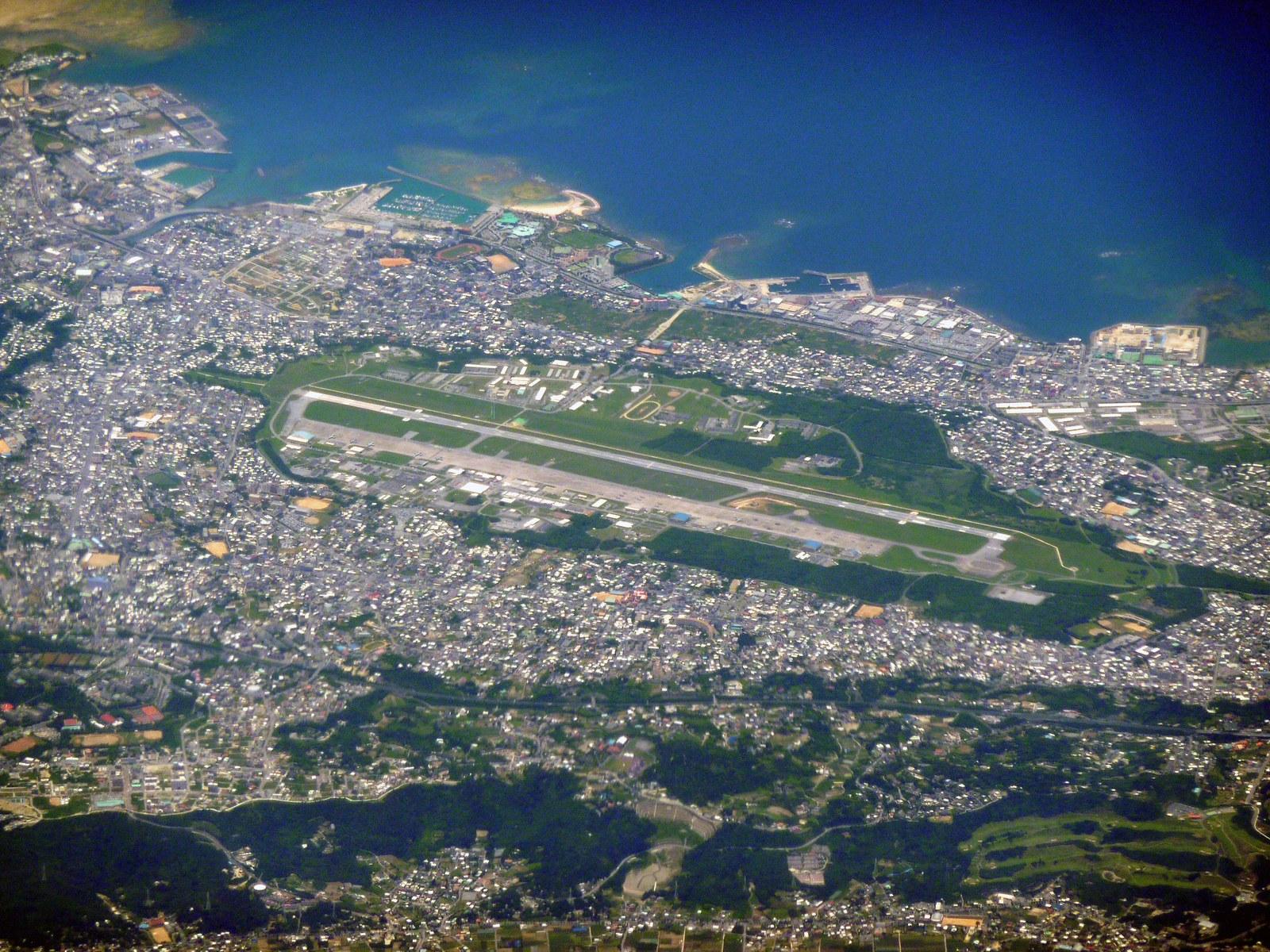
Okinawa's newly elected governor, Genta Koja, met Prime Minister Sanae Takaichi in Tokyo on Wednesday to demand stronger national action after the arrest of a 20-year-old US Marine suspected of killing 39-year-old Anna Yagi at a hotel in Naha and stealing her wallet and backpack. The Marine Corps announced a 48-hour operational pause starting Wednesday, an alcohol ban, and a month-long midnight-to-5 a.m. curfew for US personnel on the island. The case has reignited a decades-old anger on an island that hosts about 70 percent of US military facilities in Japan, while protesters in Naha and Tokyo took to the streets.
Police believe Anna Yagi was killed early Saturday at the Naminoue Crystal Hotel in Naha's Wakasa district, between 17:10 and 19:17 GMT on Friday (2:10 to 4:17 a.m. Saturday, local time). Her body was discovered Saturday morning after checkout time passed. Her wallet and backpack were missing; some of the belongings were later recovered nearby. Security-camera footage showed a man entering the hotel with Yagi and later leaving alone with her belongings, according to NHK and investigators cited by local media.
Police detained Lance Corporal Devin Jacob Ballard late Saturday night while he was walking alone in a Naha entertainment district. The 20-year-old is assigned to Marine Corps Air Station Futenma as part of the III Marine Expeditionary Force. Okinawa Prefectural Police arrested him early Sunday on suspicion of murder and robbery. Ballard has denied the allegations, police said. An autopsy found that Yagi died of asphyxiation; a police spokesman told Stars and Stripes that she had been killed after Ballard allegedly pressed on her neck. On Monday, the case was forwarded to the Naha Public Prosecutors Office, which is reviewing whether to bring charges.
Every incident is met with the same temporary toolkit, and Okinawa keeps asking why a 20-year-old's training is its problem to survive.
Under the Status of Forces Agreement, known as SOFA, Japan holds the primary right to exercise jurisdiction over crimes committed off base by US personnel while they are not on duty, which is the framework under which this investigation is proceeding. It is the same agreement that Okinawa's governor now wants to reopen.
Prime Minister Takaichi took to her account on X on Sunday to condemn what she called an extremely brutal and heinous incident, and on Monday her government again demanded maximum cooperation with the investigation, stricter discipline, and thorough preventive measures. Defense Minister Shinjiro Koizumi called the alleged crime absolutely outrageous and unforgivable, summoned the commander of US Forces Japan, Lieutenant General Stephen Jost, and had his ministry protest to the US side with requests for thorough education of personnel, tighter discipline, and support for the victim's family.
The American response came in two registers: diplomacy and discipline. On the diplomatic side, the Marine Corps said it takes the allegations very seriously, expects every Marine to uphold the highest standards of behavior, and is actively cooperating with Japanese authorities. Ambassador Glass said the United States would take every possible step to prevent a recurrence. On the discipline side, Lieutenant General Benjamin Watson, commander of the III Marine Expeditionary Force and the senior US officer in Okinawa, ordered all military activity on the island halted for a 48-hour operational pause beginning Wednesday at noon GMT, during which troops receive training on standards, discipline, liberty policy, alcohol awareness, Okinawan culture, and alliance responsibilities. Alcohol is prohibited during the pause, and afterward begins a 30-day period of reflection, with a midnight-to-5 a.m. curfew for all US service members on Okinawa starting October 9.
Watson's letter to his troops was unusually direct. He wrote that every interaction with neighbors either builds or undermines the trust essential to the force, and that damaged trust weakens the alliance and the security of the region. Serving in Okinawa comes with responsibility, he added: US personnel live, work, and socialize alongside the people of Okinawa, and their home is his force's home. At the prefectural office on Monday, Watson faced Koja and Naha Mayor Satoru Chinen, said he was deeply pained, offered condolences, and pledged to be a good neighbor and earn the trust of the Okinawan people, though he issued no formal apology.
Governor Koja is the newest figure in this confrontation, and the case landed in his first week in office. Okinawans voted him into office last month, and his victory suggested that some of the traditional hostility toward the US presence had softened as voters weighed economic concerns and Japan's security challenges from China and Russia. That softening is now being tested. On Sunday night in Naha, Koja called the killing absolutely unforgivable, said the islanders were outraged, and warned that the case added fear to Okinawans who already live beside US bases. On Monday he summoned Watson and US Consul General Andrew Ou to the prefectural office and handed over a written protest demanding a revision of SOFA, effective preventive measures, and deeper education for US personnel. Koja said the case involved a very young Marine and that he wanted detailed answers about the initial training program and the management procedures for assignments to Okinawa.
Koja then flew to Tokyo, met Defense Minister Koizumi, and told him past discipline efforts had failed to prevent serious incidents. On Wednesday he sat down with Takaichi and said the return of such an incident left no choice but to conclude that US military disciplinary enforcement and human-rights education were not functioning at all. A meeting with Motegi was also planned, turning prefectural grief into a national agenda.
The anger was not confined to official meetings. About 100 people gathered at a rally in Naha on Sunday, and protesters also took to the streets in Tokyo. One sign read: We have had enough of this. Demonstrators renewed the demand that has echoed on the island for decades: that the bases be removed.
The history of crime is long. In 1995, the abduction and rape of a 12-year-old girl by three US servicemen triggered mass protests. In 2016, a former Marine was arrested for the rape and murder of a young Okinawan woman and received a life sentence in 2017. Last year, a court sentenced a Marine to seven years for choking and attempting to rape a woman in her 20s. Police figures cited by local media counted about 80 US personnel arrests in 2024, the most in two decades, and about 101 such cases in 2025, up from roughly 40 in 2020. About 6,000 US military personnel have been arrested in Japan since 1972, according to the Yomiuri Shimbun.
Kozue Akibayashi, a professor at Doshisha University in Kyoto, told Al Jazeera the case reflects a decades-long pattern in which Japan has always chosen the alliance over Okinawan safety. Tokyo and Washington have long cited the archipelago's geopolitical importance to justify both the presence and its concentration on Okinawa, she said, and it was convenient to keep the most troops on the island nobody wants. Many mainland bases were moved to Okinawa after mainland residents protested. Okinawa holds a tiny share of Japan's population and territory, and its voice carries little weight in Tokyo. The island was the independent Ryukyu Kingdom before Japan annexed it in 1879, and it has long faced discrimination within Japan.
That history now collides with the present. Tokyo has been expanding its own defense deployments across the southwestern islands, and Prime Minister Takaichi wants to relocate some Marines from the busy Futenma air station in densely populated Ginowan to a more remote facility at Henoko, a project that has faced years of delays and opposition. Anti-base campaigners, however, want the troops moved out of the prefecture entirely, not merely shifted along its coast. The killing of Anna Yagi has given both sides new material: for the government, a reason to accelerate discipline measures and keep the alliance intact; for the protesters, proof that discipline measures never hold.
For the United States, the stakes are alliance management at a delicate moment. US officials have warned the incident could undermine ties vital to East Asian security. The curfew, the alcohol ban, and the pause are the familiar toolkit after serious incidents, and Okinawan campaigners say that is the problem: the measures are temporary by design, announced after each offense and lifted when attention fades. Whether the case produces a prosecution that satisfies Okinawa, and whether it finally yields the SOFA revision governors have demanded for years, will define Koja's governorship and test Takaichi's.
The Western telling centers the alliance. Reuters, the Wall Street Journal, and CNN frame the killing as a strain on a security partnership Washington and Tokyo consider essential against China and Russia, with US commanders shown acting swiftly: curfew, alcohol ban, operational pause, full cooperation with Japanese investigators. The diplomatic register dominates, and the crime becomes a test of crisis management between two governments that need each other.
That framing also absorbs the uncomfortable fact that this governor was supposed to be different. Koja's election last month suggested Okinawan hostility toward the US presence was softening as voters weighed pocketbook issues. Western coverage reads the incident as a threat to that opening, a moment that could rekindle old opposition just as Tokyo wants to deepen defense cooperation with Washington.
The deeper history is acknowledged but contained: the 1995 rape, the 2016 murder, the 2024 assaults appear as background paragraphs that establish a pattern without questioning the architecture that keeps reproducing it. The implicit judgment is that the alliance is too important to fail, so the response must be discipline, not withdrawal.
The Eastern telling treats the case as an indictment of the architecture itself. Press TV and Iranian coverage dwell on the decades-long record of assaults and killings by US personnel, on the 100-strong protest in Naha, and on the demand that the agreement governing US forces be revised. The emphasis falls on a population living under a foreign military presence and a Tokyo government described as unwilling to choose its citizens over the alliance.
In this register, the disciplinary measures are the punchline: a 48-hour pause, a temporary alcohol ban, a month of curfew. These are presented not as remedies but as ritual, the same toolkit deployed after every serious crime, followed by the same lifting of restrictions once attention fades. The question posed is not whether discipline failed this time, but whether a system designed to shield a foreign force can ever produce accountability.
The geopolitical angle is inverted. Where Western outlets see Okinawa as a shield against Chinese pressure, Eastern outlets read the concentration of bases there as proof that Japan accepts a subordinate role in the alliance, trading Okinawan lives for American protection. The killing becomes Exhibit A in a broader argument about the costs of hosting the US military.
The Global South reading follows Al Jazeera's lead and gives the floor to the islanders. The focus is Professor Akibayashi's argument: that the Japanese government has always chosen the alliance over Okinawan lives, that the island's colonial past as the Ryukyu Kingdom shapes its present discrimination, and that its tiny share of Japan's population leaves it politically voiceless in Tokyo. The story is told as a democracy deficit as much as a crime.
Southern outlets also emphasize the jurisdictional asymmetry at the heart of the anger: the SOFA framework that decides who judges whom when a foreign soldier kills a local woman. Koja's demand for a revision of the agreement is treated not as a diplomatic nicety but as the central political demand, the one place where a prefectural governor is trying to convert grief into structure.
Finally, there is a comparative instinct: a 20-year-old sent abroad with a weaponized institution behind him, a local woman dead in a hotel room, and a legal system that must answer to two masters. For readers in countries that have hosted foreign bases, the details differ but the pattern is familiar, which is why this coverage lingers on the numbers, the 101 cases in 2025, the 6,000 arrests since 1972, and treats each as a data point in a longer ledger.
Ballard, a 20-year-old Marine assigned to US forces at Futenma, is suspected of killing 39-year-old Anna Yagi at the Naminoue Crystal Hotel in Naha between 17:10 and 19:17 GMT on Friday and stealing her wallet and backpack. Police say security footage showed him entering with her and leaving alone. An autopsy found death by asphyxiation. Ballard denies the allegations, and the case is now with the Naha prosecutors for a charging decision.
Lieutenant General Benjamin Watson ordered a 48-hour operational pause starting Wednesday, an alcohol ban, and a 30-day period of reflection with a midnight-to-5 a.m. curfew for all US personnel on Okinawa from October 9. He wrote that every interaction with neighbors builds or undermines trust, and that damaged trust weakens the alliance. He offered condolences to Koja but issued no formal apology.
SOFA, first signed in 1951 and revised in 1960, gives Japan primary jurisdiction over off-base crimes by US personnel off duty. Governor Koja used the Monday protest to demand a revision, arguing decades of serious crimes show the framework does not protect Okinawans. Tokyo has not committed to reopening the agreement, which underpins the entire US military presence in Japan.
About 70 percent of US military facilities in Japan sit on an island holding less than one percent of its territory. The US administered Okinawa from 1945 to 1972, and bases stayed under the security treaty. Tokyo and Washington cite strategy: the island sits 100 kilometers from Taiwan. Critics argue bases were concentrated there because mainland Japan protested their presence, leaving one small prefecture to absorb the noise, accidents, and crime.
