On October 5, Rapidus unveiled CORE, a 17-company design alliance to fill a 2-nanometre fab with no commercial wafer yet. The technology is IBM's, the money is Tokyo's, the customers still a rumor.
Published 8 October 2026 · 06:00 GMT
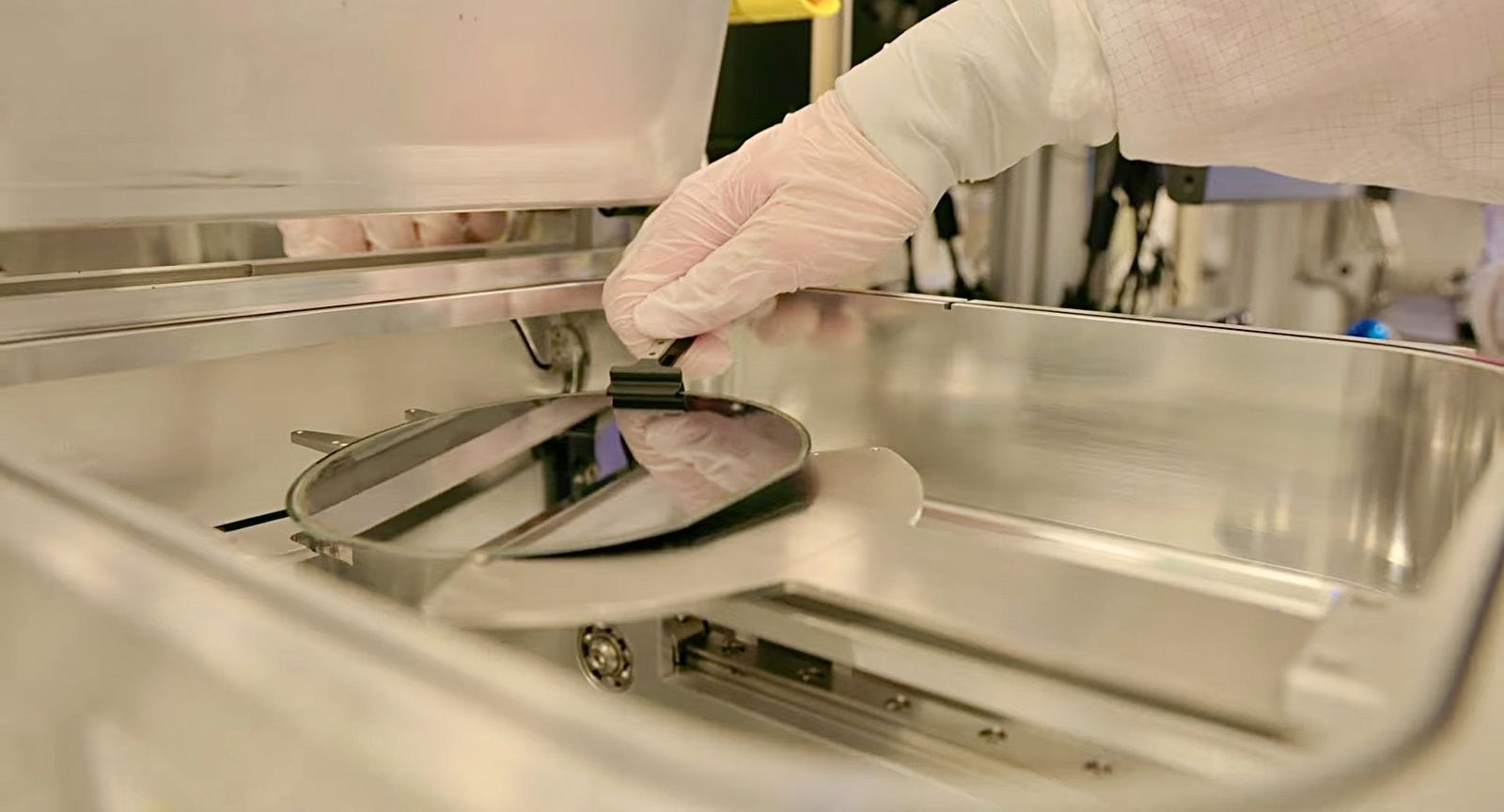
Japan has the technology, the money, and the political will. What it does not have, for its $15 billion attempt to return to the frontier of chipmaking, is a single confirmed customer. This week Rapidus moved to fix that, unveiling a 17-company design alliance called CORE ahead of planned 2-nanometre mass production in the second half of the next fiscal year.
On Monday, October 5, Rapidus unveiled the Rapidus Collaborative Open Rapid Ecosystem, CORE for short: a global framework meant to stitch research institutes, design software, intellectual property, chip design and manufacturing into a single machine feeding its planned 2-nanometre foundry. The first wave, Design Solution Associates, enlists 17 companies from six countries as a bridge between would-be customers and a factory that has not yet produced a commercial wafer. The timing is no accident. Founded in 2022 with $15 billion in Japanese state backing, the venture plans mass production of 2nm chips in the second half of the next fiscal year. The question hanging over it all is the one White Oak Capital's Nori Chiou put to Reuters on October 7: who will actually fill the fab.
In the 1980s, Japan held about half the world's semiconductor market. Today it holds less than a tenth, according to Reuters. That collapse is the wound Rapidus was created to heal, and the reason Prime Minister Sanae Takaichi is counting on the venture to rebuild the country's chip industry. Semiconductors are the oil of the artificial-intelligence age: the AI investment boom has set off a scramble for computing infrastructure, and every data center from Virginia to Malaysia runs on silicon that an ever smaller circle of firms can make. Only a handful can produce 2-nanometre chips at all: Taiwan's TSMC, which dominates leading-edge manufacturing; South Korea's Samsung, which began 2nm production last year; and Intel.
A fab with no customers is an expensive museum. Rapidus knows it, and CORE is its answer.
The stakes are not commercial alone. Reuters warns the project's failure would reverberate across Japan's chip sector, because it is also about resilience: supply chains amid rising regional tensions and fears that a Chinese move against Taiwan could sever the world's advanced-chip supply. Japan is the one advanced economy that kept the other half of the equation, the machines that make the machines. Its equipment and materials makers sit at chokepoints no fab can bypass. Rapidus is the attempt to reunite that base with a leading-edge foundry, forty years after the country last had one.
The money makes the ambition legible. In April, Japan's industry ministry approved an additional $4 billion, bringing total research and development support to $15 billion. One government official gave Reuters the honest version of the wager: its success or failure will not be known for ten years, and no one will be able to take responsibility if it fails. Industrial policy on that timescale outlives elections and prime ministers. Japan has decided the risk of doing nothing is greater.
Rapidus was founded on August 10, 2022, backed by Toyota, Sony, NTT, SoftBank, Canon, Fujitsu and NEC, and took the fastest route available: licensing the future. Since 2023, hundreds of its engineers have been embedded at IBM's Albany NanoTech Complex in New York, adapting the 2-nanometre nanosheet technology IBM unveiled in 2021, with Belgium's imec alongside. In July 2025 the company demonstrated operational 2nm transistors; by September it was refining their performance at what Nikkei XTech, via TrendForce, called a startling pace. Work that took about a year and a half in Albany was completed in less than two months at the Chitose plant in Hokkaido, which has run a pilot line since April 2025.
The technical pitch is distinctive: gate-all-around nanosheet transistors built with ASML's extreme ultraviolet lithography, processed one wafer at a time with real-time AI monitoring at every stage, a design meant to collapse the turnaround time between a customer's chip design and finished silicon. Nikkei XTech reports Rapidus plans customer-designed 2nm test chips by late 2026, the dress rehearsal before mass production in 2027. The financing has kept pace: a 267.6 billion yen round, about $1.7 billion, closed in February 2026 with more than 30 private partners, and another 150 billion yen from the state in June, taking stated capital and legal surplus to 424.95 billion yen as of June 5. Japan is not betting on one horse: the Yomiuri Shimbun reported in February that TSMC finalized 3nm mass-production plans in Kumamoto, a project of around $17 billion that Tokyo deems complementary, not competitive.
The October 5 announcement is the commercial half catching up with the technical half. The Design Solution Associates are not buyers; they are the people who make buyers possible, lending engineering resources so a customer with a chip idea but no design team can move from concept to manufacturing. The roster maps the global chip economy: Cadence and Synopsys from the United States; Dai Nippon Printing, TOPPAN, Toshiba Information Systems, NSW and MavissDesign from Japan; Infosys, HCL, Wipro and MosChip from India; GreatAsic, Infinecs, Oppstar and SkyeChip from Malaysia; Quest Global from Singapore; AION Silicon from Britain. Rapidus was explicit about the motive: a global shortage of cutting-edge engineers. Even a perfect fab cannot conjure customers who lack the people to design for it.
As Chiou told Reuters, Monday's announcement was not yet evidence of commercial traction, but it was incremental progress: the scaffolding of a business, assembled before the business exists. Rapidus says it will expand CORE beyond design into design-software and intellectual-property partnerships, because a leading-edge fab is useless without the tools, reusable designs and verification flows that turn an architecture into a manufacturable layout.
Here is the uncomfortable arithmetic. Building a 2nm fab is a triumph of physics; filling one is a triumph of trust. Omdia's Akira Minamikawa told Reuters that TSMC will keep dominating the majority of the market, but added the sentence Rapidus is banking on: plenty of customers in the remaining 20 percent cannot get capacity from TSMC because they sit low on its priority list or order too little. CEO Atsuyoshi Koike's demand case is blunt: one or two companies are nowhere near enough for the world's appetite. The customers' arithmetic runs the other way. One executive told Reuters his firm already manufactures with TSMC, cannot switch everything, and could not go back if Rapidus failed. New entrants compete not on transistors but on the risk a customer loads onto an unproven factory.
Then there is yield, the industry's cruelest variable. Running a fab around the clock with stable yields, in a way that keeps the business viable, is extremely difficult, IwaiCosmo's Kazuyoshi Saito told Reuters, adding that even Samsung has struggled. Rapidus still works with IBM and has started pilot operations, but experts call commercial success far from guaranteed. The company targets an IPO around the financial year ending March 2032; LDP chip-strategy chief Daishiro Yamagiwa told Reuters a listing and even US manufacturing are possibilities. TrendForce reports 167.6 billion yen in private funding secured, 60 clients in talks, 10 with initial quotes: conversations, not yet contracts.
Geopolitics: chipmaking is statecraft now, and Rapidus is Japan's answer to the most dangerous concentration in the world economy, a deliberate web of friendly dependencies, American tools, Indian and Southeast Asian engineers, Belgian research, meant to make the supply chain survivable. Every advanced chip etched in Chitose is one fewer hostage to a strait crisis. Macroeconomics: $15 billion of public money is the largest industrial wager of the Takaichi era, and it only pays if private capital follows, which is why the IPO timetable matters as much as the transistors. Demographics: the binding constraint is people, not money. Japan's engineers are aging, and a fab in Hokkaido bets that world-class talent can be drawn far from Tokyo's gravity.
History: the arc from half the world's chips to less than a tenth took forty years; reversing it is scheduled for eighteen months. No country has bought its way back to the leading edge this fast, which is why the Albany-to-Chitose sprint matters: the only evidence so far that the timetable is not fantasy. Structural technology: gate-all-around transistors, the AI-monitored single-wafer flow, and 1.4-nanometre research already underway with imec all bet that manufacturing agility can be a moat. If Rapidus turns designs into silicon meaningfully faster than incumbents, speed becomes its product.
Four markers decide whether this week was scaffolding or substance. The customer-designed 2nm test chips due by late 2026, the first externally verifiable proof the process works for someone else. Pilot-line stability through 2027: yields are the number the industry trades on, and Rapidus has not published them. The first named anchor customers: a fab lives on purchase orders, and the first household names to commit will move every negotiation. And the political clock: $15 billion survives only as long as Tokyo's will does.
From London and New York, Rapidus reads as the most honest industrial-policy experiment of the decade: $15 billion of public money, a licensed technology, and a timetable that would embarrass a startup. Western investors admire the audacity and discount the schedule. The judgment that matters is not whether 2nm transistors work in Chitose, they do, but whether global capital will treat Rapidus as a real second source before its IPO, targeted around the financial year ending March 2032.
There is also a strategic read in Western capitals. A second advanced foundry outside Taiwan is exactly what Washington's supply-chain planners have been asking for, and the IBM lineage plus American design-software giants at the table make Rapidus legible to US buyers. The risk Western analysts flag is subtler: if Rapidus becomes a permanent ward of the Japanese state, it proves that leading-edge chips now require sovereign sponsorship, and every government will want its own.
Seen from Seoul, Taipei and Singapore, Rapidus is a neighbor building a lifeboat everyone may eventually need. Taiwan's foundry engineers know better than anyone how hard the yields will be; South Korea's remember that even Samsung struggled with leading-edge ramps. But the region also understands the logic: a Japan that can etch its own 2nm chips is a Japan less exposed to a strait crisis, and every economy from Taipei to Kuala Lumpur quietly benefits when advanced capacity exists in more than one jurisdiction.
The design-alliance map tells its own regional story. India, Malaysia and Singapore supply the engineers; Japan supplies the money and the machines; the United States supplies the tools and the original technology. It is a coalition of the willing drawn along the lines of the region's trusted supply chains, and notably, the one great power absent from the roster is the one the whole project is quietly designed to be resilient against.
For the Global South, Rapidus is a story about who gets to design the future, not just manufacture it. Four of the 17 Design Solution Associates are Indian firms and four more are Malaysian, which means the talent of Bangalore, Hyderabad and Penang is being drafted into the highest-value layer of the chip stack: architecture and design, not assembly. If CORE works as advertised, it becomes a ladder for engineers in emerging economies to climb from outsourced design services to the frontier itself.
There is a harder read too. Fifteen billion dollars of Japanese state money chasing a single fab is a reminder of how capital-intensive sovereignty has become: most developing nations cannot play this game at any scale, and will remain buyers of other people's silicon. The realistic dividend for the South is indirect but real: more foundries, in more countries, means fewer single points of failure, and every supply shock that does not happen is a crisis of chip prices that developing economies never have to absorb.
Rapidus is a Japanese chip venture founded in August 2022 and backed by about $15 billion in state support, set up to return Japan to the frontier of semiconductor manufacturing. It licensed 2-nanometre nanosheet technology from IBM, built a pilot plant in Chitose, Hokkaido, and aims to begin mass production of 2nm logic chips in the second half of the next fiscal year. Its backers include Toyota, Sony, NTT, SoftBank, Canon, Fujitsu and NEC.
Rapidus CORE, short for Collaborative Open Rapid Ecosystem, is a global framework unveiled on October 5, 2026 to surround Rapidus's planned foundry with design support. Its first phase, Design Solution Associates, gathers 17 companies from six countries that lend engineering resources to prospective customers, acting as a bridge between a chip idea and manufacturing. Rapidus plans to extend CORE to design-software and intellectual-property partnerships.
Cadence Design Systems and Synopsys from the United States; Dai Nippon Printing, TOPPAN, Toshiba Information Systems, NSW and MavissDesign from Japan; Infosys, HCL Technologies, Wipro and MosChip from India; GreatAsic Technology, Infinecs Systems, Oppstar Technology and SkyeChip from Malaysia; Quest Global Services from Singapore; and AION Silicon from Britain.
A foundry with no customers cannot survive: fabs cost billions to run and only make sense at volume. Potential clients are cautious because they already manufacture with TSMC and cannot easily switch; as one executive told Reuters, if the Rapidus bet failed there would be no going back. Analysts see the realistic opening in the roughly 20 percent of customers who cannot get enough capacity from TSMC.
On transistors, the IBM-licensed 2nm technology and the pilot line give it a credible shot; on commercial execution, the jury is out. Experts note that sustaining high yields around the clock is extremely difficult, and even Samsung has struggled. Rapidus's distinctive pitch is speed: single-wafer processing with AI monitoring to turn designs into silicon faster than incumbents.
