Two factory-new F-16Vs land in Taiwan after a seven-year wait — while Washington orders SM-6 missiles at four times the old rate. The Pacific deterrent, rebuilt one contract at a time.
Published 3 October 2026 · 18:00 GMT
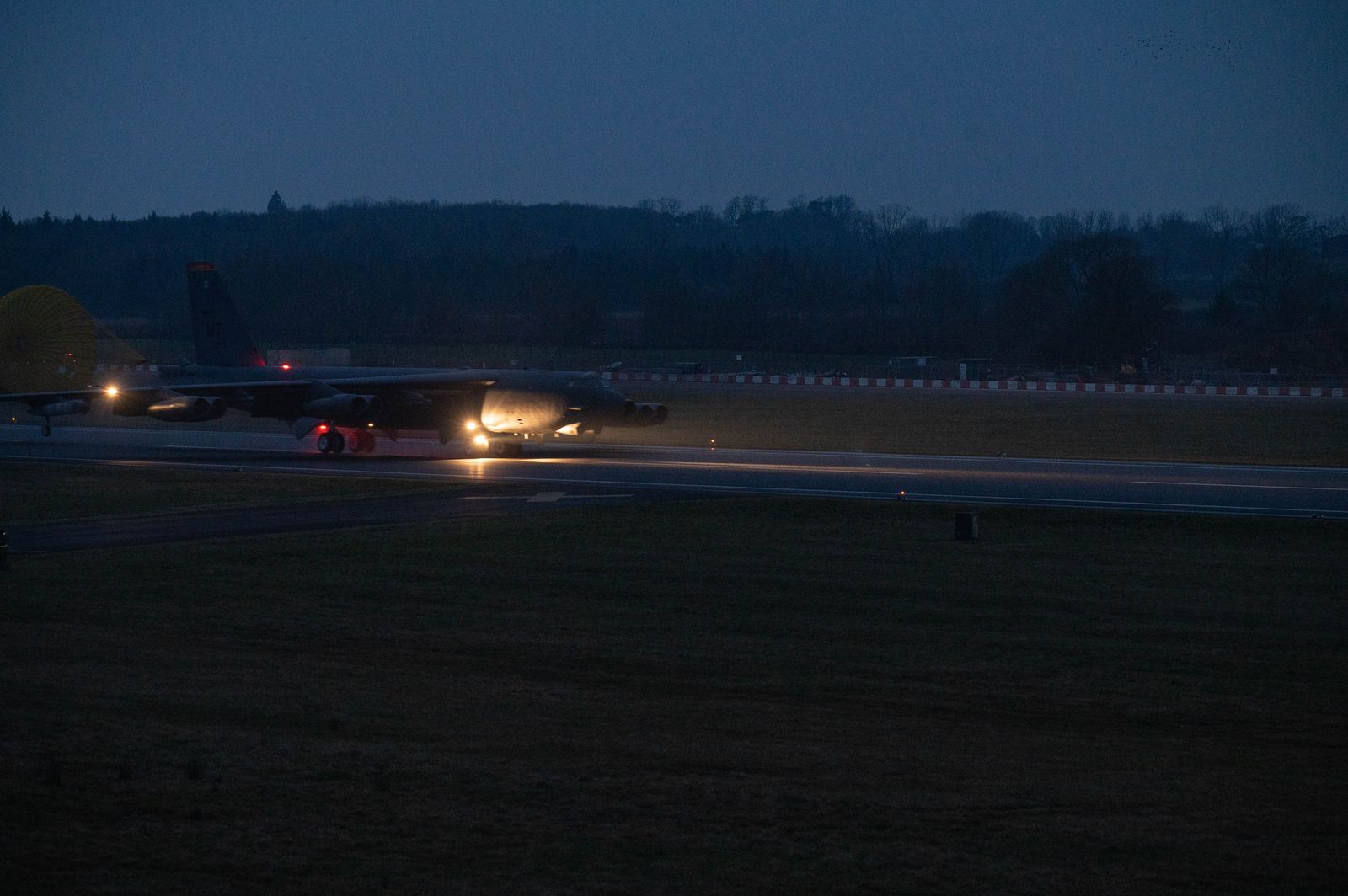
It was noon at Chihhang Air Base on Taiwan's east coast when the two grey shapes broke through the heat haze and settled onto the runway, one after the other, serials 6727 and 6728. A crowd of officials watched them taxi in — the first factory-new fighter aircraft delivered to Taiwan in a quarter of a century. Seven years after the order was placed, seven weeks of crossing the Pacific, and the long wait finally has a silhouette.
Noon is an unforgiving hour on Taiwan's east coast, and the two fighters that came down over Chihhang Air Base on Friday got no cover from it. They crossed the coastline in full daylight, grey and unhurried, and turned final toward the runway one after the other — F-16C single-seaters in factory dress, serial numbers 6727 and 6728 stenciled where the paint was still new. On the ground, a reception waited that had been seven years in the making. These were not hand-me-downs or upgraded airframes pulled from someone else's boneyard. They were the first fighter aircraft built new for Taiwan in twenty-five years, and they had just flown halfway around the world to get here. President Lai Ching-te marked the moment on Facebook the way heads of state mark milestones now — a post thanking the United States, calling the arrival "an important development in strengthening Taiwan's air defence capabilities." Beneath the surface of that sentence sits everything else: the software failures, the production-line rework, the supply-chain snags, and the long Pacific crossing that ended, at last, on a Friday afternoon in Taitung. For the ground crews who will maintain them, the difference between a factory-new airframe and a refurbished one is not cosmetic — it is measured in years of airframe life, in warranties, in the confidence that every rivet is where the blueprint says it should be. Twenty-five years is a long time to wait for that confidence. The last time Taiwan took delivery of a fighter built new for its own air force, the pilots who will fly 6727 and 6728 had not yet been born, or were still in school. Friday's touchdown closes that generational gap in the most literal way possible: with two aircraft, on a runway, in daylight, where everyone can see them.
Two jets do not change the military balance of the Taiwan Strait. Sixty-six might begin to, and the numbers tell their own story. The order was placed in 2019 — about $8 billion, NT$247.2 billion in local currency, under the "Peace Phoenix Soaring" program — and it accounts for roughly a quarter of Taiwan's nearly $30 billion backlog of American arms orders, a figure compiled by the Taiwan Security Monitor at George Mason University. That backlog is the real map of the island's deterrent: everything Taipei has asked Washington for, everything Washington has agreed to sell, and everything that has not yet arrived. Meanwhile Taiwan scrambles its fighters almost daily to shadow the Chinese military, which operates around the island with a regularity that has become its own kind of pressure. China claims Taiwan as its own territory, and every delivery of American hardware lands inside that dispute. The timing matters, too: the two F-16Vs touched down almost exactly a week after President Trump met President Xi in Washington. Seven years of delay ended seven days after a handshake. Nobody in Taipei, Beijing, or Washington will call that a coincidence, and nobody has to. The backlog itself is the deeper story here. Thirty billion dollars of approved-but-undelivered American weapons is not a shopping list; it is a measure of how much of Taiwan's security exists, for now, only on paper. Every item that moves from that list onto a runway or into a magazine narrows the gap between the deterrent Taipei has paid for and the deterrent it can actually fly. And of course the rhythm of daily life around the island continues underneath it all — the scrambles, the shadowing, the almost-daily reminders that the strait's military balance is not an abstraction debated in capitals but a schedule kept by pilots.
Two fighters and a $24.4 billion contract, seven days apart: deterrence is no longer declared in the Pacific — it is manufactured, scheduled, and flown across it.
Behind closed doors in Washington, the other half of the week was being signed. On October 1, the US Navy awarded Raytheon a five-year contract for the SM-6 missile, worth up to $24.4 billion, with two additional option years — the contractual basis, in the Navy's words, to sustain production above 500 missiles per year. The fiscal 2027 plan calls for 540 missiles at $4.3 billion, which works out to about $7.96 million per missile in procurement funding — a figure that covers far more than the round itself, so it is not a flyaway unit price, though it is the number that will define the program's economics. The scale is the story: four times the 125-per-year average authorized back in 2019 for 625 missiles over five years. Sustained at 500 a year for five years, the line would produce at least 2,500 missiles — against an original acquisition objective of 1,800. Raytheon has already completed a $115 million expansion of its missile facility in Alabama, adding workforce and automation to absorb the surge. "Maritime strength demands weapons at speed and scale," said Acting Secretary of the Navy Hung Cao. "This investment expands production and delivers the firepower our warfighters need to fight, win, and come home safe." And yet the most quoted line of the week belonged to the Pentagon's acquisition chief, Michael P. Duffey: "Our mission is to ensure our warfighters never enter a fair fight." The line is pure Pentagon, but the arithmetic behind it is worth pausing on. A navy that can put more than 500 multi-mission missiles a year into its magazines is a navy planning for a long war, not a short one — and pricing that war, at $4.3 billion a year, as a standing budget line rather than an emergency.
The long road those two F-16Vs took deserves its own telling, because it explains how arms sales actually work. The jets were built at Lockheed Martin's plant in Greenville, South Carolina, and the plan was straightforward: fly them across the Pacific to Taiwan. They departed for Hawaii on August 17 and then stopped — for more than a month, parked on an island in the middle of the ocean while weather windows and tanker availability were debated in the press and beyond it. They finally left Hawaii again on October 1, routed through Guam, and arrived Friday at noon. Defense Minister Wellington Koo, who was there to watch them land, was careful to frame this as a beginning rather than an event: "Of course we won't only have delivered these two by year-end." The delivery also lands inside a wider and more political arithmetic. Trump said in May, after meeting Xi in Beijing, that he was holding a new $14 billion Taiwan arms package in abeyance — while he did approve an $11 billion package back in December 2025. Taiwan's next presidential election is in early 2028, and US officials believe a Chinese invasion before 2028 is increasingly unlikely. So the calendar on both sides of the Pacific is now doing quiet work: hardware arriving on one timeline, politics on another, and the question of what the balance looks like when the two meet. Koo's phrasing was deliberate — a promise framed as an understatement, the kind ministers use when they know the cameras are counting. Whether the rest of the 66 arrive on anything like the schedule Taipei imagined in 2019 is now the number to watch, because deterrence measured in delivery schedules is only as credible as the next delivery.
The SM-6 contract, for its part, is best read as the second installment of a rearmament wave rather than a standalone headline. It followed a $20.7 billion multi-year contract for AMRAAM missiles in late September 2026, which followed a $58.6 billion Patriot contract with Lockheed Martin in July. The Pentagon has framed the sequence as replenishment — rebuilding stocks drawn down by heavy munitions expenditure during the US-Israel-Iran war, as reported by Arab News. And here the skeptical reader should slow down, because the record contract number comes with an asterisk the press releases carry in small print: $24.4 billion is a maximum contract value, dependent on future appropriations. It is not cash already obligated; it is a ceiling that Congress will have to fill, year by year. On paper, the Navy has a contractual basis for 500 missiles a year. In practice, the money arrives one authorization at a time, and the missiles arrive one Alabama work-shift at a time. The SM-6 itself earns its place in this story honestly: a multi-mission missile that does anti-air warfare, anti-surface warfare, and ballistic missile defense in a single round — the kind of round a navy buys when it wants every launcher at sea to be able to do everything. There is a second caveat worth stating plainly. Replenishment narratives are convenient — they turn a record contract into a responsible one — but the line between restocking and rearming is drawn by intent, not by press release, and intent is the one thing a contract cannot disclose. What the contract does disclose is capacity: the industrial base to build, at surge tempo, the most versatile missile in the American inventory. Capacity is the part of deterrence that cannot be faked, which is precisely why it is the part worth counting.
Put the two events side by side and the frame assembles itself. A deterrent is not a declaration; it is a supply chain with a flag on it. The F-16Vs are the visible tip — two aircraft on a runway in Taitung, photographed, posted, and instantly legible to everyone from Taipei taxi drivers to Beijing's planners. The SM-6 contract is the part below the waterline: five years of production capacity, an expanded factory in Alabama, a procurement curve that quadruples the old tempo. One says the Pacific deterrent is arriving. The other says the arsenal behind it is being rebuilt to last. Which is why the week after the Trump–Xi meeting matters more than the meeting itself: summits produce communiqués, but contracts produce facts, and facts are what the other side's planners count. For now, the island that scrambles almost daily has two new reasons to believe the backlog is moving — and a defense minister's promise that these two are only the first. The question the week leaves hanging is the oldest one in arms transfers: whether the hardware arrives fast enough to shape the politics, or just fast enough to be photographed doing it. That question has a sharper edge than it first appears. Photographs are not nothing in deterrence — they are the medium through which the other side reads your intentions. But a deterrent that exists mainly in photographs is a bluff, and bluffs have a shelf life. The SM-6 contract is interesting precisely because it is unphotogenic: five years of factory output, option years, appropriations cycles. Nobody poses next to a production schedule. Which means the week's two events belong to different registers of power — one spectacular, one structural — and the structural one is the one that will still matter when the photographs fade.
Geopolitics. The cross-strait equation is the story's center of gravity, and the verified facts place both events inside it. Taiwan scrambles almost daily against a Chinese military that operates around the island; China claims the island as its own territory; the F-16V delivery arrived almost exactly a week after Trump met Xi in Washington, while a $14 billion package sits in abeyance from the May meeting in Beijing. Deterrence here is dual-audience theater: every jet photographed on a Taitung runway reassures Taipei and warns Beijing in the same frame. US officials' judgment that an invasion before Taiwan's early-2028 election is increasingly unlikely does quiet work in the background — it converts the delivery schedule from an emergency into a strategy, hardware arriving on a timeline the politics can absorb. Macroeconomics. The numbers tell their own story. A $24.4 billion ceiling quadruples a production tempo set in 2019; $4.3 billion buys 540 missiles in fiscal 2027; Raytheon is spending $115 million of its own money expanding in Alabama before the first of the new missiles ships. On the other side of the Pacific, Taiwan's $8 billion fighter deal — NT$247.2 billion — is a quarter of a $30 billion American backlog, which makes the island one of the largest single customers of the US defense industry. Arms sales are foreign policy, but they are also industrial policy with a five-year horizon and a congressional appropriation cycle. Demographic Shifts. This is the dimension the verified record leaves blank — and that blank is itself a reading. Neither the F-16V delivery nor the SM-6 contract rests on a population figure, and that is precisely the point: the deterrence being built here is capital-intensive by design. Multi-mission missiles and fifth-generation-adjacent fighters are instruments meant to make outcomes hinge on hardware, production capacity, and alliance signaling rather than on headcounts. The demographic story of this arms race is written in its absence — in the bet that technology and industrial depth can substitute for mass.
Historical Patterns. Twenty-five years. That is how long it has been since Taiwan received a factory-new fighter, and the number matters because air forces are built on generational rhythms: airframes age, pilots cycle, and a quarter-century gap means an entire cohort of Taiwanese aviators has flown nothing but inherited or upgraded jets. The 2019 SM-6 authorization — 625 missiles over five years — belongs to the same pattern of planned obsolescence and planned replacement; the new contract simply rewrites the tempo from 125 a year to more than 500. Replenishment after the US-Israel-Iran war is the oldest pattern of all: wars consume stockpiles, and the years after wars are when the factories get their orders. Structural Trends. Three structural shifts are visible in the fine print. First, multi-year missile contracting is becoming the norm — AMRAAM in September, SM-6 now — because single-year buys cannot sustain a surge. Second, the multi-mission round: the SM-6's three missions in one body reflect a navy designing for launchers that must do everything, a structural answer to a Pacific too large for specialized ships. Third, the industrial base is being rebuilt in parallel with the arsenal — $115 million in Alabama is not a contract, it is a commitment to be able to build. The arc of the week points in one direction: more F-16Vs before year-end if Koo's promise holds, an SM-6 line ramping toward 500 a year, and a Pacific deterrent that is increasingly measured not in statements but in throughput. The Pacific, for the foreseeable future, will be a theater where the balance of power is tallied in delivery manifests and production curves — and where the side that builds fastest writes the terms.
Read from the West, this is deterrence delivered — two stories of a commitment kept. Taiwan is not a charity case in this telling but a partner buying its own defense at $8 billion, and the arrival of factory-new fighters after a quarter-century gap reads as Washington finally moving the backlog instead of merely announcing it. The week-after-the-summit timing is read as resolve: engagement with Beijing in the meeting room, hardware for Taipei on the runway — the classic two-track. The $8 billion figure matters in this reading because it reframes the relationship: Taipei is not a protectorate receiving aid but a customer financing its own deterrent, and the F-16V deal — roughly a quarter of the island's $30 billion American arms backlog — is the single largest line item in that account. When the jets finally moved from the backlog onto a runway, the backlog itself shrank in the most visible way possible. For Western defense ministries, that movement is the metric that counts: promises are cheap, deliveries are not, and two serial numbers on a Taitung tarmac are worth more than a decade of communiqués.
The SM-6 contract completes the picture on the American side: a navy rebuilding its magazines after a real war consumed them, quadrupling a production rate set in peacetime, spending its contractors' own money in Alabama to do it. For Western planners the through-line is credibility — the slow, unglamorous credibility of throughput. Announcements can be walked back; a factory line running at 500 missiles a year cannot be faked, and neither can serial numbers 6727 and 6728 sitting on a Taitung tarmac. The open question in this reading is not whether the deterrent works but whether it arrives fast enough: more jets by year-end, more missiles by 2027, and a strait where the balance is measured in delivery schedules. The risk, in this telling, is tempo: whether the rest of the 66 arrive before the politics of Taiwan's 2028 election rewrites the question they were meant to answer. Deterrence delayed is deterrence discounted.
Read from the East, the same facts rearrange into a provocation narrative. Beijing claims Taiwan as its own territory, and through that lens the delivery of factory-new American fighters one week after a Washington summit is not deterrence but escalation — arms sales as the lever by which an outside power keeps a domestic question permanently inflamed. The $14 billion package held in abeyance since the Beijing meeting reads as the other half of the maneuver: pressure applied, pressure released, on a schedule set entirely in Washington. In this telling, the abeyance of the $14 billion package since the May meeting in Beijing is not restraint but calibration — a tap turned on and off in Washington to modulate pressure, with Taipei's shopping list as the dial. The December 2025 approval of an $11 billion package is cited as proof that the tap was never really closed. What looks like deterrence from one shore looks like managed tension from the other: enough arms to keep the island confident, enough restraint to keep the channel to Beijing open, all of it decided elsewhere.
The SM-6 contract lands in the same reading as preparation rather than replenishment: a navy quadrupling missile output and expanding an Alabama factory is not merely restocking after a Middle Eastern war but retooling for a Pacific one. The "never a fair fight" line from the Pentagon's acquisition chief will be quoted in this telling as intent stated plainly. None of this disputes the facts — the serial numbers, the contract ceiling, the dates are all agreed. What changes is the moral of the story: where the West sees a shield being raised, the East sees a sword being sharpened, and both readings fit the same photographs. The SM-6 contract's appropriations caveat gets a different spin here: not as fiscal honesty but as evidence that the ceiling — and the intent behind it — will survive any single budget cycle. A five-year contract with option years is a commitment that outlasts administrations, which is precisely the point.
Read from the Global South, the story is about the price of other people's security. An $8 billion fighter deal and a $24.4 billion missile contract are sums that dwarf the annual budgets of entire ministries across the developing world, and they are being spent to manage a strait most of the planet will never see — while the same Pacific that hosts the missiles also hosts the shipping lanes the South depends on. There is admiration in this reading, and it is not hidden: Taiwan's backlog is a masterclass in converting economic weight into security guarantees, and Indonesia-style resource leverage has its military equivalent in Taipei's checkbook. The sums are worth restating because they are the story: $8 billion for fighters, $24.4 billion for missiles, $20.7 billion for AMRAAMs in September, $58.6 billion for Patriots in July. Stacked together, a single quarter of American rearmament spending exceeds the GDP of dozens of member states of the United Nations. The South does not begrudge Taiwan its defense; it notes the scale, and it notes who gets to decide it.
But there is also a harder arithmetic. Every billion sunk into the cross-strait balance is a billion not spent on the climate adaptation, debt relief, or infrastructure the South is told to wait for. The rearmament wave — AMRAAM in September, Patriot in July, SM-6 now — reads as a great-power economy retooling for confrontation, and the South's stake in it is involuntary: when the Pacific arms, everyone pays the insurance premium, whether or not they were consulted. There is a final irony the South does not miss: the Pacific shipping lanes that carry the missiles' targets also carry the South's trade, which means the region pays twice — once in the foregone development spending, and again in the risk premium priced into every container that crosses a militarizing ocean. When great powers arm a strait, the invoice is global; only the signature is American — and the South never got to countersign.
Beijing just wrote the biggest liquidity check of the year — and changed nothing else.
The People's Bank of China will offer banks up to one trillion yuan a day — about $149 billion — in overnight funds from September 28 through October 8, covering the Golden Week holiday. It is the largest such cap since the tool's introduction in June 2026, up from 600 billion yuan in mid-September.
The calendar explains the timing. Golden Week sends hundreds of millions of Chinese traveling and spending; banks need cash the way airports need runways. The central bank is making sure the plumbing holds.
The scale, though, is the story. One trillion yuan a day is not holiday housekeeping. It is a backstop — a signal that whatever the holiday throws at the financial system, the PBoC has already covered.
And then, the other hand: nothing. Chinese banks left the one-year and five-year loan prime rates unchanged at 3.00% and 3.50% — the 16th consecutive month without a move.
Sixteen months of stillness in the price of credit, alongside the largest liquidity flood of the year. Beijing is watering the garden and refusing to lower the fence — liquidity yes, cheaper credit no.
Governor Pan Gongsheng gave the doctrine a name: slower loan growth is becoming "the new normal." Property and local-government borrowing are shrinking faster than emerging industries can borrow. The credit engine is being rebuilt mid-flight.
Liquidity is Beijing's answer to everything except the one question markets keep asking: where is the growth?
The PBoC is not idle elsewhere. It stepped up support with a net 200-billion-yuan injection through medium-term lending facility operations, reiterated its "moderately loose" stance, and kept its grip on the yuan.
The yuan, for its part, cooperated — rebounding after briefly dipping below 6.70 per dollar as US Treasury yields rose and the PBoC's grip eased.
The diplomacy helped. A US–China summit extended the trade truce to January — without new tariff cuts, but without new tariffs either. A truce, not a peace; markets will take it.
Step back and the contrast is the story. In Washington, yields cross 5% and traders bet on another hike. In Beijing, the central bank floods the system with cash and leaves rates untouched for a 16th month. Two central banks, two planets.
The logic is not mysterious. China's problem is not hot demand — it is cold credit. Pumping liquidity keeps the system liquid; cutting rates into weak demand would be pushing on the proverbial string.
The risk is the one Beijing knows best: banks awash in cash, with nowhere productive to lend it. Liquidity without lending becomes asset froth — the 2015 lesson, still fresh in institutional memory.
For the region, the signal matters more than the mechanics. A stable yuan and a liquid Chinese banking system through Golden Week is the foundation under Asia's supply chains. When Beijing sneezes, the region's exporters reach for tissues.
Watch what happens after October 8. If the trillion-yuan window closes quietly, it was holiday plumbing. If support lingers, it was something else — a central bank telling you, without saying it, that the economy needs the help.
Western coverage — Reuters and the financial wires — emphasizes the restraint: Beijing holding rates while flooding liquidity, a central bank running out of its favorite tools.
In this telling, 16 months of unchanged loan prime rates is the real headline — evidence of a policymaker boxed in by a hawkish world, a weak property sector, and the fear that rate cuts would only weaken the yuan. Liquidity is what you do when you've decided rates can't move.
Pan's "new normal" gets a skeptical hearing: an elegant phrase for a credit engine that no longer transmits. The question in Western commentary is whether "moderately loose" is a stance or a shrug.
Eastern coverage — Xinhua and Chinese outlets — emphasizes the calibration: targeted, seasonal, and exactly as doctrine prescribes.
In this telling, the trillion-yuan facility is textbook PBoC: precise, time-bound, and aimed at a known seasonal need. The unchanged rates are not paralysis but prudence — "moderately loose" means loose where it counts, steady where it matters, with the yuan's stability as the binding constraint.
The summit's truce extension gets equal billing: diplomacy buying the central bank room to maneuver, and the maneuver working — the yuan's rebound presented as policy competence, not luck.
Global South coverage — Malaysia's business press among it — emphasizes the neighborhood: what Beijing's plumbing means for everyone downstream.
The read from Kuala Lumpur: a liquid China through Golden Week is good news for ASEAN exporters, supply chains, and the region's own central banks. Yuan stability is a public good in Asia, and the PBoC just underwrote another week of it.
The caution in this coverage is borrowed from experience: when the region's biggest economy needs record liquidity to get through a holiday, the "new normal" of slower credit is everyone's normal too.
To read Beijing's move properly, you need the toolkit. Start with the overnight reverse repo — the instrument at the center of the trillion-yuan headline. In a reverse repo operation, the central bank lends cash to commercial banks overnight, taking bonds as collateral; the banks get the liquidity they need, the central bank gets the bonds back the next morning plus a sliver of interest. It is plumbing, not policy: the money created exists for a day, maybe rolled over, and its purpose is to keep the interbank market — the market where banks lend to each other — from seizing. The cap is the message. A trillion yuan a day says: whatever the holiday throws at the system, the PBoC has already covered.
The tool itself is young — introduced only in June 2026 — which makes the record cap more interesting. A new instrument's ceiling is normally discovered cautiously; jumping from 600 billion yuan in mid-September to a full trillion two weeks later is not calibration but declaration. It tells the banks, and through them the market, that the central bank will not be outbid by seasonal stress. The facility runs September 28 to October 8, covering Golden Week exactly. Time-bound, enormous, and explicitly temporary: the PBoC is writing a check it intends to tear up on the 9th. The question the article ends on — what happens after October 8 — is the only one that matters, because a backstop that lingers stops being a backstop and starts being a subsidy.
Then the medium-term lending facility — the MLF — through which the PBoC added a net 200 billion yuan. If reverse repos are the overnight overdraft, the MLF is the term loan: banks borrow for months, not hours, pledging collateral, at a rate the central bank sets. The MLF rate is the PBoC's quiet policy lever — it guides the loan prime rates without the drama of changing them. And the loan prime rates, the LPRs, are the number the article keeps returning to: 3.00 percent for one year, 3.50 percent for five, unchanged for the sixteenth consecutive month. The LPR is the benchmark for most new lending in China; holding it still while flooding the system with cash is the whole doctrine in one gesture. Liquidity yes. Cheaper credit no.
The sixteen months of stillness deserve their own reading, because stillness is also a decision — sixteen times over. In a world where Washington is hiking and yields cross 5 percent, cutting Chinese rates would narrow the already thin cushion against capital outflow and yuan depreciation; every basis point of easing is a basis point of incentive for money to leave. The PBoC's box, as the Western lens describes it, is real: a property sector that no longer transmits stimulus, local governments deleveraging rather than borrowing, and a currency whose stability is the binding constraint on everything else. Holding the LPR is not paralysis. It is the recognition that the price of credit is no longer the economy's binding constraint — and that moving it would cost more in currency stress than it buys in growth.
The calendar explains the timing, as the article says — but the calendar deserves its scale stated plainly. Golden Week is the largest annual human migration on earth compressed into seven days: hundreds of millions of Chinese traveling, spending, withdrawing cash, settling bills. The banking system's cash demand does not rise. It detonates. ATMs must be stocked, merchants' settlement accounts funded, the interbank market supplied with enough reserves to clear a week's worth of the world's second-largest economy changing hands. In normal years, the PBoC manages this with routine open-market operations. This year it wrote the biggest check in the tool's short history.
The scale, though, is the story — the article's line, and worth pressing. One trillion yuan a day is not holiday housekeeping; it is a backstop sized for something the PBoC sees and the market does not yet. Seasonal demand explains the facility's existence. It does not fully explain its size. Either the central bank is being theatrically cautious — signaling strength by oversupplying safety — or its internal read on holiday-season financial stress is darker than the public data. Both readings are consistent with "moderately loose." Only one of them is reassuring. The banks will take the cash either way; the signal is in the surplus.
There is also the consumption angle, which is where the liquidity meets the real economy. Golden Week is China's great annual test of consumer confidence: the week when households vote with their wallets on whether the economy feels safe. A banking system visibly backstopped — cash available, payments clearing, no friction — is the precondition for the spending the state wants to see. The PBoC cannot make households spend; it can only ensure that nothing in the plumbing stops them. In an economy where the consumer has been the missing piece and property wealth no longer does the spending's work, the holiday's cash registers matter more than the interbank rate. The trillion yuan is, among other things, a bet on the tills.
And the regional read — the Global South lens from Kuala Lumpur — captures what the holiday means beyond China's borders. A liquid China through Golden Week is the foundation under Asia's supply chains: exporters paid, importers funded, the region's own central banks spared the volatility of a yuan under holiday stress. Yuan stability, as the article notes, is a public good in Asia, and the PBoC just underwrote another week of it. When the region's biggest economy needs record liquidity to get through a holiday, the "new normal" of slower credit becomes everyone's normal — but a stable holiday is still a stable holiday, and Asia's exporters will take it.
Central bankers choose their phrases the way diplomats choose communiqués — every word weighed, every ambiguity intentional. When Governor Pan Gongsheng said slower loan growth is becoming "the new normal," he was not describing a statistic. He was retiring an expectation. For two decades, China's credit engine ran on a simple formula: property developers borrowed, local governments borrowed against land, and the resulting construction carried GDP. That engine is being dismantled mid-flight — property deleveraging, local-government debt discipline — faster than emerging industries can borrow to replace it. "New normal" is the doctrine that says: stop waiting for the old credit cycle to return. It is not returning.
The doctrine has a logic, and it is worth steelmanning before doubting. Credit-fueled growth bought China two decades of expansion and left it with the property crisis, the local-government debt pile, and the demographic headwinds now arriving together. Pumping cheap credit into that structure — the old playbook — would reflate the very imbalances the state is trying to defuse. Slower, cleaner credit growth, directed at manufacturing upgrades and strategic industries rather than concrete, is the quality-over-quantity bet. The PBoC is not refusing to stimulate. It is refusing to stimulate the old economy. The distinction is the entire policy.
The risk, as the article notes, is the one Beijing knows best: banks awash in cash with nowhere productive to lend it. Liquidity without lending becomes asset froth — the 2015 lesson, still fresh in institutional memory, when stimulus leaked into equity speculation rather than productive investment. The trillion-yuan facility, the 200-billion MLF injection, the "moderately loose" stance — all of it presupposes transmission channels that the "new normal" itself describes as weakened. Watering the garden, to use the article's image, works only if the soil still absorbs water. If property and local governments no longer drink, and emerging industries cannot drink fast enough, the water pools. Pooled liquidity has a history in China. It is called a bubble.
Step back and the contrast the article closes on — two central banks, two planets — is the frame that will define the autumn. Washington hikes into data it may not have, fighting inflation with the South's interest bills. Beijing floods with cash it cannot lend, defending a currency it cannot afford to let slip, waiting for a credit engine it is rebuilding mid-flight. Neither has a clean instrument. Both are improvising inside doctrines — data-dependence, the new normal — that describe the world they wish they governed. Watch October 8: if the trillion-yuan window closes quietly, it was holiday plumbing, and the doctrine holds. If support lingers, the PBoC will have told you, without saying it, that the new normal needs more help than the old vocabulary admits.
Monetary policy does not happen in a diplomatic vacuum, and the PBoC's autumn maneuver owes more to the summit than the communiqués admit. The US–China meeting extended the trade truce to January — no new tariff cuts, but no new tariffs either — and that pause is worth more to Beijing's central bank than any single instrument in its toolkit. Tariff escalation would have meant a weaker yuan, imported inflation, and capital flight arriving together; the truce removes the worst tail from the PBoC's planning. "A truce, not a peace; markets will take it," as the article says. So will central bankers.
The yuan's rebound — recovering after briefly dipping below 6.70 per dollar — is the truce's signature in the currency market. With US Treasury yields rising and the PBoC's grip easing, the currency found its footing not through intervention but through the removal of a threat. That distinction matters: a yuan steadied by diplomacy is cheaper to defend than a yuan steadied by reserves. Every week the truce holds is a week the PBoC does not have to choose between growth and the exchange rate — the choice that has boxed in Chinese policy for the better part of a decade.
But truces expire, and January is closer than it looks. The extension without tariff cuts is a freeze, not a thaw: the existing duties remain, the structural disputes untouched, the next escalation one headline away. The PBoC is therefore managing a window, not a settlement — using the diplomatic calm to get through Golden Week, to steady the currency, to buy the "new normal" time to prove itself. If January brings escalation, the trillion-yuan plumbing will look like the prelude to a harder season. Diplomacy bought the central bank room to maneuver, as the Eastern lens notes. Room is not resolution. It is rented, monthly, and the rent comes due in January.
