Three years after the Hamas-led attacks of October 7, 2023, Benjamin Netanyahu faces voters on October 27 in the first election since the deadliest day in Israeli history. New reporting says Arab leaders warned him in advance, a claim he denies. His base is holding. This is an analysis of the survival mechanics: how blame was displaced, why no alternative emerged, and what the vote will test.
Published 7 October 2026 · 09:21 GMT
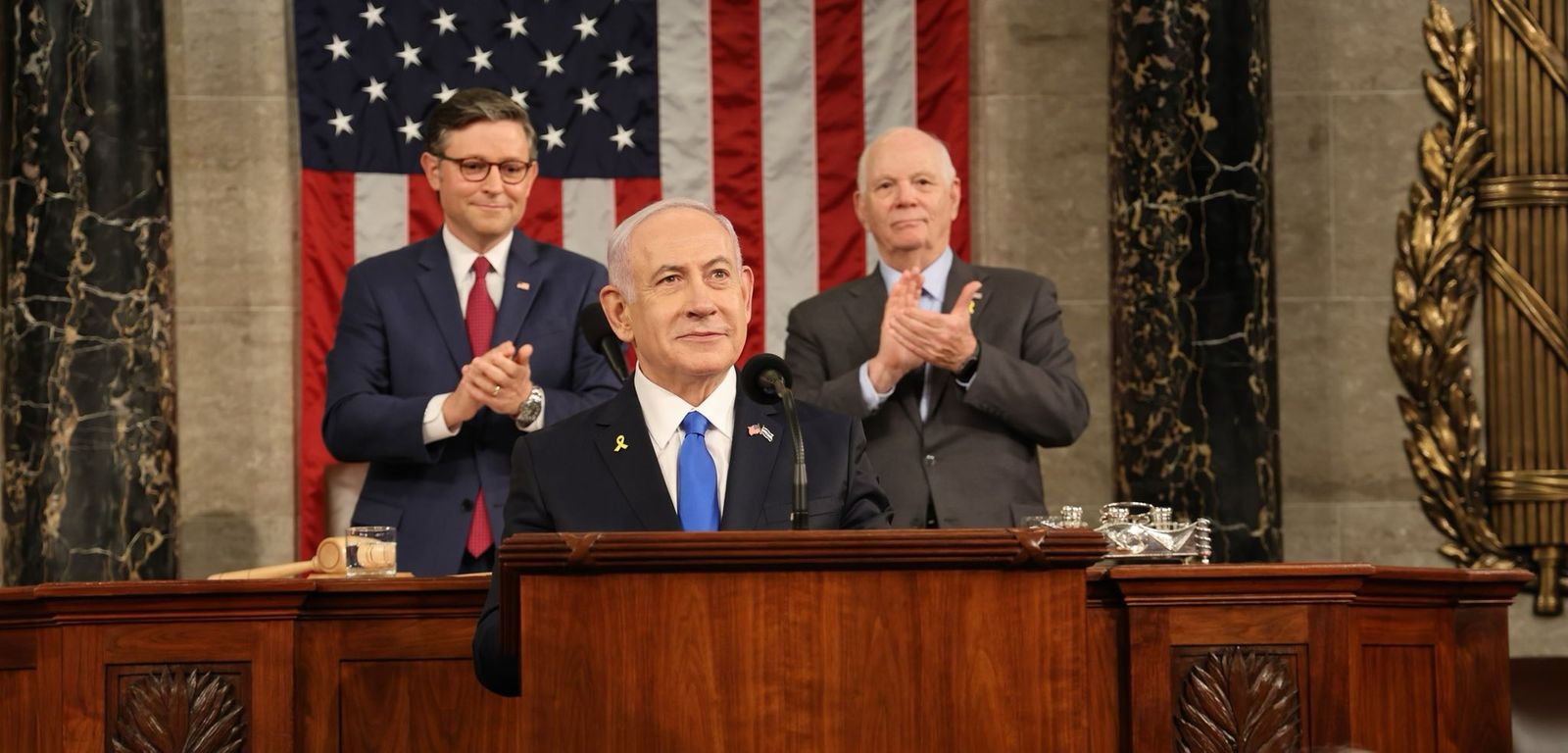
Three years after the Hamas-led attacks of October 7, 2023, the question France24 put on the table on October 7, 2026 is blunt: how is Benjamin Netanyahu still standing? The third anniversary was marked this morning with a moment of silence at 6:29 a.m., the hour the assault began, as covered in this morning's anniversary edition. Twenty days from now, on October 27, 2026, Israelis vote in legislative elections, the first since the deadliest day in the country's history.
The timing is charged by new reporting on who knew what before the attack. The Wall Street Journal says Egypt's intelligence chief, Abbas Kamel, warned Netanyahu three times, including during a 67-minute visit to Israel on September 26, 2023, eleven days before the assault. Haaretz reports that the UAE's president, Mohammed bin Zayed, warned him about ten days before. Netanyahu denies receiving any actionable warning, threatened to sue Haaretz, and on September 27, 2026 flew secretly to Abu Dhabi, reportedly to seek an Emirati denial. The warnings reporting undercuts his standing claim that Israel's security chiefs alone are to blame. Yet his base is holding. This piece is about the mechanics of that survival, not the anniversary itself.
The established record starts with the scale of October 7: a Hamas-led assault that killed 1,200 people and saw 251 taken hostage, the deadliest day in Israel's history. Three years on, no hostages remain in Gaza. The last of them, Ran Gvili, was recovered in January 2026, and his mother, Talik Gvili, is now running for Likud on a "strong leader" message. At least nine October 7 family candidates are running across the spectrum, among them Michal Hirsch Negri with Naftali Bennett's Together party, ex-general Noam Tibon, Sharon Sharabi and Shira Shapiro.
On the political mechanics: Netanyahu has rejected any personal blame for the security failure and blocked the creation of an independent inquiry. The Israel Democracy Institute reports that 68% of Jewish Israelis say October 7 is central to their vote on October 27. A KAN poll puts the opposition at 52 seats against 51 for Netanyahu's bloc, with 61 needed for a governing majority: Likud 21, Yashar 23, Bennett's Together 12, the Democrats 8, Jewish Power 8, Religious Zionism-Zehut 6, the Joint List 8 and Ra'am 5. It is a deadlock.
The backdrop is grim. Gaza's health authorities report 74,016 killed and 175,068 wounded, with a ceasefire about a year old and only 19 of 38 hospitals functioning. The regional war with Iran is in its eighth month. UN Secretary-General Antonio Guterres has called the assault an abhorrent large-scale terror attack.
The core unknowns are the warnings themselves. What exactly did Abbas Kamel say in those three warnings, and were they specific enough to count as "actionable", the word Netanyahu's denial hinges on? What did Mohammed bin Zayed say about ten days before the attack, and will the UAE publicly deny the Haaretz account, the denial Netanyahu reportedly flew to Abu Dhabi to seek? The outcome of the September 27 secret trip has not been disclosed.
Beyond the warnings: whether Netanyahu's threatened lawsuit against Haaretz will actually be filed; whether an independent inquiry into October 7 will ever be created while he holds power; who can form a government from a 52-51 split with no bloc near 61; and, most elusively, why the political price has not landed. Polls measure the holding, not the motive. The France24 analysis poses the question; the answer remains contested between those who see a leader absorbing a crisis and those who see accountability deferred by design.
Because it is the first time since October 7 that the Israeli public can render a verdict, and 68% of Jewish Israelis say the attacks are central to their vote. The election is a referendum on a precise question: whether the worst security failure in Israeli history carries a political price, or whether blame can be permanently displaced onto the security chiefs Netanyahu has pointed to for three years. With the polls locked at 52 to 51 and no bloc near 61, the mechanics of survival, coalition arithmetic, base discipline and the absence of an alternative, matter more than any single revelation.
The backdrop raises the stakes further. The war in Gaza, with its 74,016 dead and a ceasefire about a year old, and the regional war with Iran, now in its eighth month, mean the next government inherits two conflicts at once. The result will set the terms not only for any future inquiry into October 7, but for how Israel governs what followed it.
Geopolitically, the first mechanism is blame displacement. By rejecting personal responsibility and pointing at the security chiefs, Netanyahu turned a national failure into an institutional one, and by blocking an independent inquiry he removed the one forum where that failure would be formally adjudicated. The warnings reporting threatens precisely this mechanism: if Arab leaders warned him directly, the failure becomes personal again, which is why the denial, the lawsuit threat and the secret trip are not side stories but the defense of the core mechanism.
Structurally, the second mechanism is coalition arithmetic. A 52-51 deadlock with 61 needed means nobody has a mandate to end him; survival is the path of least resistance for a bloc that cannot agree on anything else. Demographically, the base holds: the Likud core that answers "strong leader" to crisis, embodied by candidates like Talik Gvili, sees October 7 as an argument for Netanyahu, not against him. Historically, time is the third mechanism. Three years dilute even the deadliest day; 68% say it is central to their vote, but centrality is not the same as blame. And macroeconomically, a country in its eighth month of war with Iran prices security above accountability: wartime publics rarely change horses mid-stream. The survival is not one trick but a system: no inquiry, no alternative on the right strong enough to replace him, and a calendar that keeps the region on a war footing.
If Netanyahu survives October 27, whether by plurality or by deadlock, the inquiry question likely dies with this election: an independent commission into October 7 would need a government willing to investigate itself. The precedent would travel: future Israeli leaders will have learned that blame displacement plus time plus blocked scrutiny can outlast even the deadliest day. The family candidates now entering politics will reshape commemoration itself, with October 7 grief institutionalized across the Knesset spectrum rather than aimed at one man.
If he falls, the warnings reporting becomes the scaffolding of the reckoning: an inquiry, a trial of reputation, and a regional conversation about what the Abraham Accords' intelligence channels actually delivered. Either way, the lawsuit threat against Haaretz and the secret trip will be remembered as the moment the warnings stopped being a foreign story and became an Israeli election issue.
Watch four things. First, the UAE: whether Abu Dhabi issues the denial Netanyahu reportedly sought, or stays silent and lets the Haaretz account stand. Second, the lawsuit: whether the threat against Haaretz becomes a filing, and what discovery it might force. Third, the final polls: whether the 52-51 deadlock breaks or hardens, and which of the nine family candidates actually enter the Knesset. Fourth, election night arithmetic: with no bloc near 61, the question may not be who wins but who can be eliminated from the math. The vote is twenty days away; the survival mechanics are about to be tested in the only forum Netanyahu could not block.
Western coverage treats this as an accountability stress test: a prime minister who rejected blame and blocked an inquiry now faces voters after reports that two Arab leaders warned him in advance. The warnings reporting is being watched as a possible October surprise, twenty days before the vote, with the lawsuit threat against Haaretz and the secret Abu Dhabi trip read as a press-freedom thread. The through-line is whether a democracy can price catastrophic intelligence failure at the ballot box when the incumbent controls the narrative of who failed.
Eastern coverage treats the warnings as contested rather than conclusive, and focuses on the channel itself: the intelligence-sharing architecture of the Abraham Accords, the Egypt and UAE back-channels that were supposed to make the region safer. The secret September 27 flight to Abu Dhabi is read transactionally, a leader shopping for a denial, not a reckoning. And the East keeps returning to what followed the warnings' alleged failure: the Gaza war and the war with Iran, as if to say the warnings debate is about one day while the reckoning should be about the years after.
Southern coverage reads it as accountability delayed, and sets the grief side by side: 1,200 Israeli dead on October 7 against 74,016 dead in Gaza since, with only 19 of 38 hospitals functioning. The question the South keeps asking is whether any reckoning will ever extend to what followed in Gaza, or whether October 7 remains, in electoral terms, an Israeli story only. The candidacies of bereaved families across the spectrum are noted as a democratic fact; the asymmetry of who gets a trial, an inquiry or a vote is noted as a global one.
The Wall Street Journal reports that Egypt's intelligence chief, Abbas Kamel, warned Netanyahu three times before October 7, including during a 67-minute visit to Israel on September 26, 2023. Haaretz reports that UAE president Mohammed bin Zayed warned him about ten days before the attack. Netanyahu denies receiving any actionable warning and says Israel's security chiefs are to blame. He has threatened to sue Haaretz over the report.
According to the reporting, the secret trip was an attempt to secure an Emirati denial of the Haaretz account that Mohammed bin Zayed warned him about ten days before the attack. Netanyahu has not publicly explained the visit, and its outcome has not been disclosed. The trip landed twenty days before the October 27 elections, which is why Western coverage reads it as both damage control and a possible October surprise.
No. He has rejected personal responsibility for the security failure, attributed the blame to Israel's security chiefs, and blocked the creation of an independent inquiry. The France24 analysis centers on this refusal: three years after the deadliest day in Israeli history, the question of who is accountable has never been formally adjudicated, and it is now being put to voters instead.
The Israel Democracy Institute says 68% of Jewish Israelis consider October 7 central to their vote. A KAN poll puts the opposition at 52 seats and Netanyahu's bloc at 51, with 61 needed for a majority. Likud holds 21 seats against 23 for Yashar, with Bennett's Together at 12. At least nine October 7 family candidates are running across the spectrum. The race is a genuine deadlock.
