The government announced its biggest single-day claim of the war — 474 operations, 1,540 Houthi fighters killed or wounded — as fighting concentrated in Taiz and missiles flew toward Saudi Arabia. The casualty figure could not be independently verified.
Published 3 October 2026 · 04:32 GMT
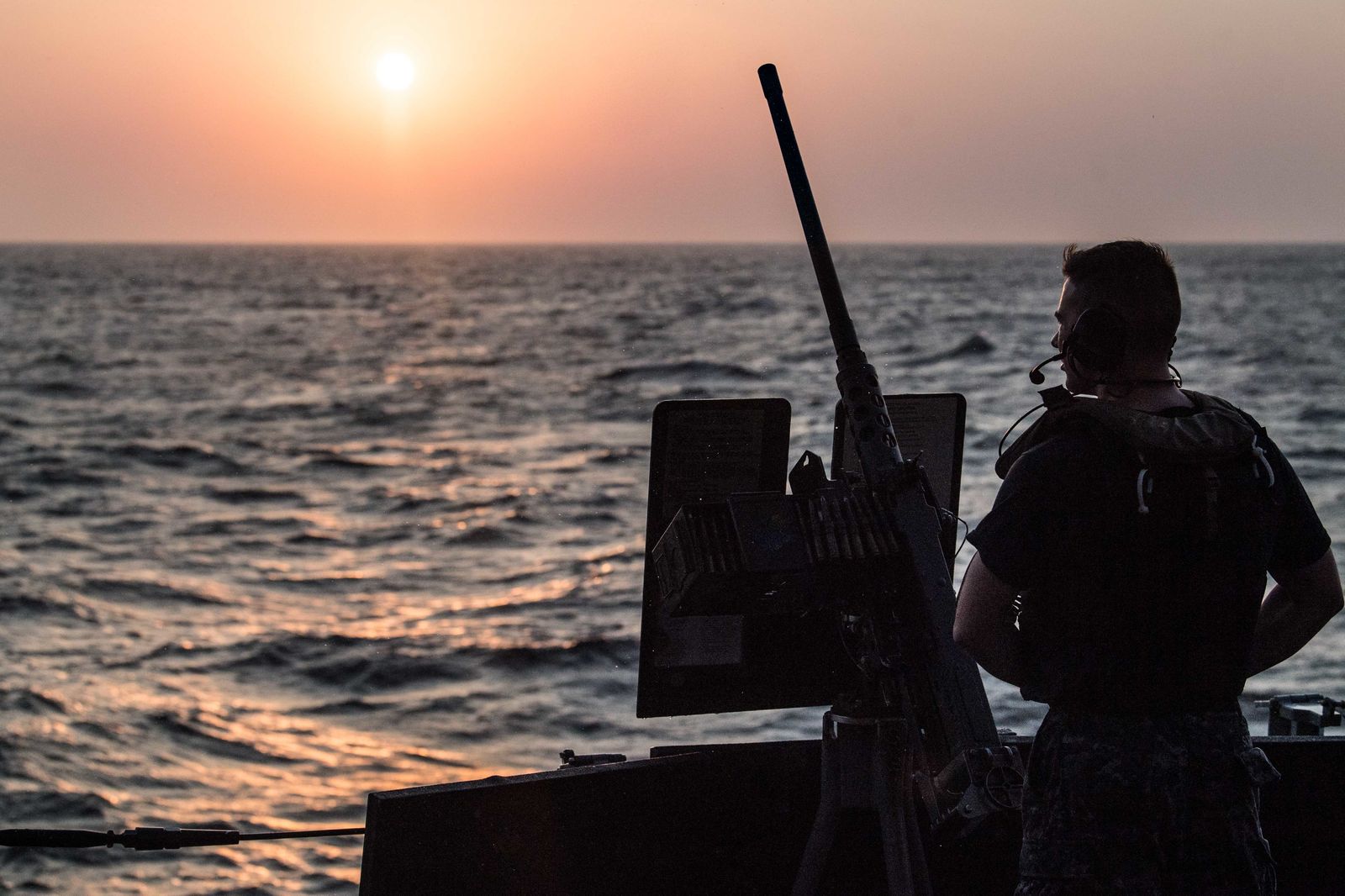
SANAA — Yemen's internationally recognised government said on Friday that its armed forces carried out 474 operations against Houthi positions across multiple fronts in the previous 24 hours, claiming that 1,540 Houthi fighters had been killed or wounded — the largest single daily casualty claim since fighting re-escalated in July.
The figures were announced by the military's spokesman, Maj. Gen. Majed Abdullah al-Nazili, who said the operations were conducted with warplanes, drones, artillery, missiles and rocket launchers, and targeted Houthi positions, movements, reinforcements, command centres and military equipment. According to the announcement, the claimed area of operations stretched from southern Haradh and the western coast eastward to Kitaf, Al-Jawf, Marib, Al-Bayda, Lahj, the capital Sanaa and the Houthi stronghold of Saada, with the heaviest fighting reported in Taiz.
Earlier on Friday, the army said its warplanes had conducted 20 strikes in three hours against Houthi movements and reinforcements in Taiz. That strike count was independently reported by Reuters, citing the military spokesman — a rare point of outside corroboration on a day dominated by claims that could not be checked.
The army separately claimed strikes on high-value targets in Sanaa and 11 high-value targets in Saada. Arab Times Online, carrying the military's account, added the assertion that 216 military vehicles or assets had been destroyed or damaged and that most of the claimed casualties fell on the Taiz fronts.
The Saudi-led coalition backing the government said it had intercepted three ballistic missiles launched toward Khamis Mushait in southern Saudi Arabia, according to Reuters. Saudi authorities said debris from an intercepted missile fell in the southern Asir region, injuring a resident of Ahad Rafidah governorate.
In a separate development, the Houthis denied targeting a power plant supplying energy to a mosque in Medina, Saudi Arabia, a claim reported by AnewZ. And the-world-now reported that Maj. Gen. Mohammed Salem al-Khawlani, a senior Yemeni security commander, was killed in clashes with the Houthis in Taiz — the highest-ranking security official to die since the escalation resumed in July.
Crucially, the central claims of the day — the 474 operations and the 1,540 casualties — could not be independently verified, and the Houthis had not immediately responded to them.
Several elements of Friday's picture rest on firmer ground than the headline casualty figure. Reuters independently reported the 20 strikes in three hours in Taiz, citing the military spokesman — corroborating the strike count, though not the results the army ascribes to them. The Saudi-led coalition's interception claim was also reported by Reuters: three ballistic missiles aimed at Khamis Mushait were said to have been stopped, and Saudi authorities confirmed that debris from an intercepted missile fell in Asir, injuring a resident in Ahad Rafidah — a concrete, geographically specific consequence that gives the missile-fire claim a weight the battlefield tallies lack.
Friday's announcement sits at the end of a visible escalation series from the same spokesman. On Monday, the army claimed 356 operations and 476 Houthis killed or wounded. On Tuesday, it claimed 414 operations but offered no casualty figure. Friday's 474 operations and 1,540 claimed casualties continue the upward curve — a pattern worth noting as evidence, whatever the underlying battlefield reality.
The death of Maj. Gen. Mohammed Salem al-Khawlani in Taiz, reported by the-world-now, marks the highest-ranking security official killed since fighting re-escalated in July — an indicator that the Taiz front is producing real losses on the government side even as it claims spectacular ones on the other.
The Houthi denial of an attack on a Medina power plant, carried by AnewZ, establishes that the information contest around the war now extends deep inside Saudi Arabia's holy cities — a sensitive front in its own right.
The broader backdrop is established and long-running: the Houthis seized Sanaa in 2014; a Saudi-led coalition intervened in 2015 in support of the internationally recognised government; and fighting re-escalated sharply in July 2026. In recent months the Houthis have seized ground in Al-Hudaydah and Taiz, including the strategic coastal city of Mokha, and Mayyun Island overlooking the Bab el-Mandeb Strait — the narrow waterway linking the Red Sea to the Gulf of Aden through which a large share of global trade passes.
The central number of the day — 1,540 Houthi fighters killed or wounded — is a government claim, not an established fact. No independent organisation, no accessible reporting from the fronts, and no satellite-derived assessment cited in available coverage confirms it, and the Houthis had not immediately responded to the announcement. The same applies to the 474 operations figure, the claimed destruction of 216 military vehicles or assets, and the assertion that most of the casualties occurred on the Taiz fronts.
Nor is it known whether the claimed strikes on high-value targets in Sanaa and the 11 high-value targets in Saada actually occurred, what they hit, or what damage they caused. The army's announcements describe target categories — command centres, reinforcements, equipment — but provide no imagery, no coordinates, and no casualty identities that would allow verification.
The missile exchange leaves open questions as well. The coalition says three ballistic missiles were intercepted over Khamis Mushait; the Houthis have not confirmed launching them, and the reported debris injury in Ahad Rafidah is attributed to Saudi authorities. The Houthis' denial of targeting a Medina power plant raises its own question: who first made that allegation, on what evidence, and whether any strike on Saudi infrastructure beyond the claimed interceptions actually took place.
The sudden jump in the casualty claim — from 476 on Monday to an unnumbered Tuesday to 1,540 on Friday — is unexplained. Whether it reflects a genuine intensification of fighting, a change in counting method, or an information operation is not knowable from the available material.
Also unknown: whether the reimposed UN "snapback" sanctions on Iran, which Washington is pressing member states to enforce, will alter the material support flowing to the Houthis; whether the death of General al-Khawlani will change the government's command posture in Taiz; and whether Friday's claimed tempo of operations can be sustained, or was a single-day surge.
Taiz is not just another front line. It is Yemen's third city and the hinge of the country's southwest, and the heaviest fighting of the current escalation has concentrated there. A government offensive claiming 474 operations in a day across fronts from Haradh to Saada — if even partially true — would represent a major attempt to reverse Houthi gains made in recent months, including ground in Al-Hudaydah and Taiz and the coastal city of Mokha.
The maritime dimension gives the fighting consequences far beyond Yemen's borders. Mayyun Island, recently taken by the Houthis, overlooks the Bab el-Mandeb Strait — the chokepoint through which shipping passes between the Red Sea and the Gulf of Aden. Any sustained fighting near that strait raises the risk premium on one of the world's busiest trade arteries, with effects on shipping insurance, routing decisions and, ultimately, consumer prices.
The missile fire toward Khamis Mushait and the debris injury in Asir show the war's capacity to reach into Saudi territory. A conflict that was, for a period, contained inside Yemen's borders is again producing cross-border incidents — and cross-border incidents are what pull regional powers, and their adversaries, deeper in.
That regional dimension is the reason this story sits inside the Iran war file. The Houthis are the most active member of the Iran-aligned network currently in open combat, and Washington's parallel push to enforce reimposed UN snapback sanctions on Tehran links the Yemen front to the wider confrontation. Escalation in Yemen does not stay in Yemen: it feeds the risk calculus in the Gulf, in the Red Sea, and in energy markets.
Finally, the information war matters. When casualty claims jump from 476 to 1,540 in four days without independent verification, the numbers themselves become weapons — shaping perceptions of who is winning, stiffening or sapping political will in Riyadh, Sanaa and Washington, and setting the terms under which any future negotiation would begin.
The most important thing about Friday's announcement may not be whether the numbers are true, but what the numbers are for. The escalation series — 356 operations and 476 claimed casualties on Monday, 414 operations with no casualty figure on Tuesday, 474 operations and 1,540 claimed casualties on Friday — follows the rhythm of an information campaign as much as a military one. Armies that are winning quietly tend to let results speak; armies that need the world, their sponsors and their own troops to believe they are winning, publish.
That does not mean nothing happened. Reuters' independent confirmation of the 20 strikes in three hours in Taiz establishes real kinetic activity at the claimed centre of gravity, and the death of General al-Khawlani — the highest-ranking security official killed since July — confirms that the Taiz fighting is costing the government side dearly. Real battles and inflated scoreboards can coexist; they usually do.
The geography of the claim is telling. An arc from Haradh and the western coast through Kitaf, Al-Jawf, Marib, Al-Bayda and Lahj to Sanaa and Saada is not a single offensive — it is a description of the entire war, presented as a single day's work. That breadth suggests the announcement is designed to project initiative across the whole front, at a moment when the Houthis' recent seizures in Al-Hudaydah, Taiz, Mokha and Mayyun Island had put the government on the defensive narratively.
The missile interceptions over Khamis Mushait add a second, defensive narrative: the coalition can protect Saudi airspace even as the government goes on the offensive in Yemen. And the Houthi denial about the Medina power plant shows the Houthis playing the same game in reverse — contesting not just territory but the moral framing, denying a strike on infrastructure serving a mosque in Islam's second-holiest city.
For analysts, the test is falsifiability. Claims that can be checked — strike counts, interceptions, named deaths — have partial corroboration. Claims that cannot — aggregate casualty totals, destroyed vehicle counts — do not. The honest reading is therefore split: something real is happening in Taiz, and the scale being claimed for it is, for now, a story the government is telling.
The energy-market angle is where this war touches readers who will never see Yemen. On 2 October, President Trump said he would not authorise a diesel export ban — hours after G7 countries agreed to release diesel and crude from emergency reserves. The juxtaposition is instructive: Western governments are already managing fuel-supply anxiety, and a sustained escalation around the Bab el-Mandeb would feed directly into it. Tanker traffic through the Red Sea has been rerouted before when the Houthis attacked shipping; insurers repriced the route within days. A land war that creeps toward the strait's Yemeni shore — Mokha, Mayyun, the western coast — revives that risk premium even without a single ship being hit.
The sanctions front is the second channel. Washington is pressing member states to enforce the reimposed UN "snapback" sanctions on Iran, alongside new measures against individuals and entities accused of aiding Hamas financing. If enforced, snapback constricts the financial and logistical channels through which the Iran-aligned network — Houthis included — sustains itself. If not enforced, it becomes another demonstration that the sanctions architecture leaks. Either way, the Yemen front and the Iran file are now coupled: escalation in one raises the stakes of enforcement in the other.
A third channel is humanitarian. Taiz has been a siege city before; renewed heavy fighting there threatens civilian populations already exhausted by a decade of war, with renewed displacement toward the coasts or across the Red Sea toward the Horn of Africa. Aid agencies price access on security conditions; a claimed tempo of 474 operations a day, if sustained, would make large parts of the west and centre inaccessible.
A fourth is diplomatic. Unverifiable casualty claims of this scale — 1,540 in a day — poison the information environment in which any negotiation must happen. Mediators need a shared factual baseline; competing fantasy numbers make it harder to establish one, and harder for either side to climb down without appearing to betray a "victory" it has already announced.
What happens next will be measured less in communiqués than in verifiable facts. The first test is whether any independent evidence emerges for Friday's claims: commercial satellite imagery of strike sites, named casualty lists, Houthi acknowledgment of losses — or, conversely, a Houthi response contesting them. The Houthis had not immediately responded; their silence, if it continues, and their rebuttal, if it comes, will each be informative.
The second test is tempo. A single day of 474 claimed operations could be a surge; a week of them would indicate a genuine offensive. Watch Taiz in particular: the city has absorbed the heaviest claimed fighting, produced the war's most senior government casualty since July, and sits on the road network linking the interior to the coast. Movement there — of front lines, not just claims — is the real indicator.
The third is the missile threat to Saudi Arabia. Three claimed interceptions over Khamis Mushait and a debris injury in Asir suggest the Houthis retain the ability and the will to strike across the border. Further launches would signal that the escalation is two-directional and that the coalition's air defences are being tested as a system, not incidentally.
The fourth is the sea. Mayyun Island's position over the Bab el-Mandeb means any fighting that approaches the strait will be watched in shipping-insurance markets before it is confirmed by any navy. Rerouting decisions and premium spikes are often the earliest hard data of a maritime crisis.
The fifth is Washington's sanctions push. Whether member states actually enforce the snapback measures — and whether new designations bite on the financing networks — will shape the material balance of the war over months, not days. And behind all of it sits the question the claims themselves raise: at what point does an information war this loud become a substitute for a military strategy, and who pays the price for the difference.
Read from Washington, London, and Brussels, the past 24 hours in Yemen look like a government finally punching back — and a warning light for the wider region. The Western framing starts with the numbers it can confirm: Reuters independently verified the Yemeni army's account of 20 air strikes in three hours in Taiz, and the Saudi-led coalition's interception of three ballistic missiles aimed at Khamis Mushait is the kind of event that shows up on radar tracks, not just in press releases. Everything else — the 474 operations, the 1,540 claimed Houthi casualties, the 216 destroyed vehicles — sits in a separate column marked "government claims, unverified." That distinction is the whole of the Western method here: corroborate the observable, discount the advertised.
Behind that caution sits a strategic reading. The reimposed UN "snapback" sanctions on Iran and the fresh American measures against alleged Hamas financing networks signal that Washington now treats Yemen as a theatre of the Iran war, not a separate civil conflict. In this lens, the Yemeni government's offensive is useful pressure — it forces the Houthis to spend resources defending Taiz and Saada instead of threatening Red Sea shipping — but it is not decisive, and Western capitals will not underwrite the casualty arithmetic. The policy question in this framing is narrow: can the offensive be sustained long enough to give diplomacy leverage, and will it stay inside Yemen's borders? The missile debris that fell on Ahad Rafidah, injuring a Saudi resident, is the reminder that it may not.
Read from Riyadh, Abu Dhabi, and the Gulf capitals, this is the home front pushing outward. The Eastern framing — the Arab and Gulf lens — treats the Yemeni army's offensive as a national-security operation first and a humanitarian tragedy second. The three ballistic missiles intercepted over Khamis Mushait and the debris that wounded a resident in Asir are not footnotes here; they are the story's centre of gravity. From this vantage point, the Houthis are an Iranian-armed militia firing across an international border, and a government that answers with 474 operations in a day is doing what any state under missile fire would do. The casualty claims are received with less scepticism than in the West — Gulf outlets report the army's figures as the working account — because the audience here measures the war by whether the missiles stop, not by whether a foreign correspondent can verify a body count in Taiz.
There is also a regional-prestige dimension the Western lens underplays. The Yemeni government's ability to run a coordinated air-ground campaign across ten fronts, striking claimed high-value targets in Sanaa and Saada, is presented as proof that the recognised government is a functioning military actor rather than a hotel-government in exile. Whether that presentation survives contact with independent verification matters less in this framing than the signal it sends Tehran: the cost of the Houthi card is rising. The risk, acknowledged quietly even here, is escalation symmetry — every intercepted missile over Saudi soil is a reminder that the Houthis retain the ability to answer.
Read from the Global South — from capitals that buy the oil, insure the ships, and bury no soldiers in this war — the Yemen escalation is above all a price signal. The Southern framing starts not with the front lines but with the Bab el-Mandeb strait in the article's own photograph: the narrow waterway through which a meaningful share of world trade must pass, now sitting beside a battlefield where both sides claim momentum. The Houthis' recent seizures around Mokha and Mayyun Island already put the strait's approaches under the shadow of the war; a government counter-offensive that intensifies fighting rather than resolving it reads, in this lens, as more months of rerouted shipping, higher insurance premiums, and dearer fuel — costs paid in Lagos, Mumbai, and Jakarta, not in Sanaa.
The second Southern reading is about the numbers themselves. Governments in the South have long watched casualty claims from Middle Eastern wars inflate in press releases and deflate under scrutiny, and the jump from 476 to 1,540 claimed Houthi casualties in 48 hours fits a familiar pattern: the fog of war as a communications strategy. This lens does not adjudicate who is winning in Taiz; it asks who pays for the uncertainty. And the third reading is the sanctions shadow: reimposed UN "snapback" sanctions on Iran plus American financial measures ripple through oil and diesel markets — Trump's refusal of a diesel export ban, hours after the G7 tapped emergency reserves, tells Southern energy ministries that even Washington expects turbulence. In this framing, Yemen is not a distant civil war; it is a line item in every developing country's import bill.
