In a Channel 10 interview four days before Israel's 27 October election, Benjamin Netanyahu said he had asked officials to prepare a plan for using cryptocurrency to bypass possible banking sanctions — and warned that decades of American military aid are coming to an end.
Published 24 October 2026 · 17:00 GMT
In a Channel 10 interview four days before Israel's 27 October election, Benjamin Netanyahu said he had asked officials to prepare a plan for using cryptocurrency to bypass possible banking sanctions — and warned that decades of American military aid are coming to an end. In a Channel 10 interview broadcast on Friday 23 October, Prime Minister Benjamin Netanyahu said he had asked officials to prepare a plan for using cryptocurrency to bypass possible banking sanctions. Netanyahu said Israel must prepare an “alternative economic system” and, asked whether he meant crypto, replied: “Very correct.”
In a Channel 10 interview broadcast on Friday 23 October, Prime Minister Benjamin Netanyahu said he had asked officials to prepare a plan for using cryptocurrency and blockchain to bypass possible banking sanctions, and warned that American military aid at its current scale will come to an end.
Whether the remarks are prudent contingency planning or an admission that diplomatic isolation and sanctions are coming — and whether cryptocurrency could ever substitute, at national scale, for the correspondent banking that carries a tech-export economy's payments.
What the plan contains, whether it exists in written form, which officials were asked to draw it up, whether any banking sanctions are actually being prepared, and when — or whether — American military aid would end.
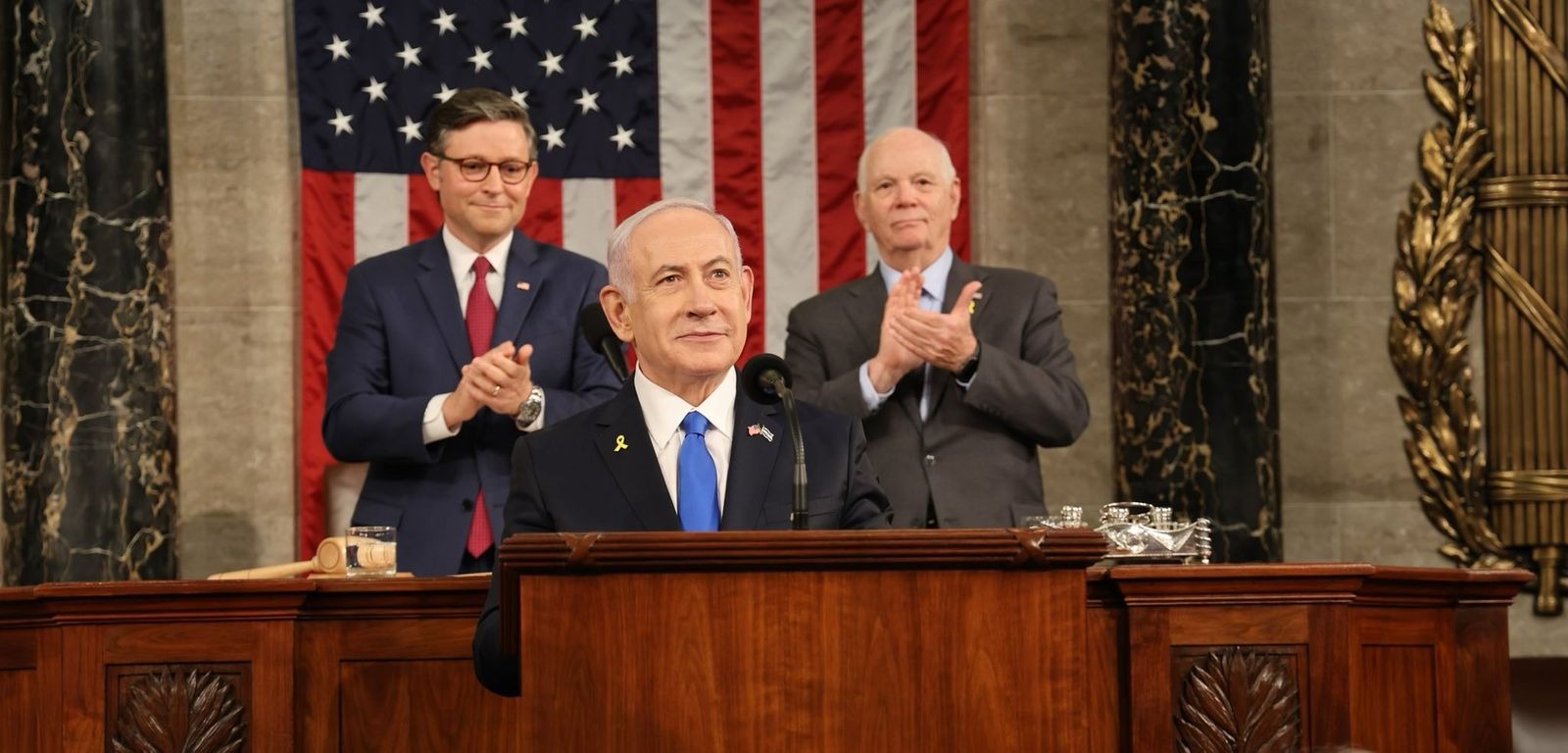
Israeli Prime Minister Benjamin Netanyahu has said he is preparing for the possibility of banking sanctions against Israel by exploring cryptocurrency as a way around them. In an interview broadcast on Friday 23 October on Israel's Channel 10, he said he had already asked officials to draw up a plan for an alternative economic system that could keep money moving if banks were cut off. "We need to prepare ways to evade banking sanctions through an alternative economic system," he told interviewer Roi Katz. "You know what that means — the currencies that can bypass them. I'm working on that too." Asked whether he meant crypto, he replied: "Very correct."
The remarks landed four days before Israel's election on Tuesday 27 October, in which Netanyahu faces a strong challenge from former general Gadi Eisenkot, and they instantly became a campaign issue. Opposition leader Yair Lapid seized on the interview, while former finance minister Avigdor Liberman accused the prime minister of admitting that Israel faces isolation rather than explaining how he would prevent it.
The interview, conducted by Roi Katz for the business channel, covered two linked warnings. The first was about sanctions. Netanyahu said Israel must understand that banking sanctions are possible and prepare an alternative economy capable of circumventing them. Asked whether blockchain technology could provide a means of dealing with economic sanctions, he replied: "One of them. Certainly. And I've already asked for a plan to be prepared for that." The second warning was about American aid. "If you think we'll continue receiving what I secured twice — tens of billions of dollars in U.S. aid for the defense budget — prepare yourselves," he said. "That's not going to happen, because the United States has changed. It's over, and it will come to an end. It's only a matter of time."
The context, as reported by The Straits Times, is the September pledge by 12 major countries, led by Britain, of coordinated measures against Israeli settlements in the West Bank. British Foreign Secretary Ed Miliband said the moves would also cover individuals and companies providing financing, construction and other services to the settlements. That raised fears, the paper reported, of sanctions on Israeli banks that could rattle the tech-export-driven economy. "The concern is that foreign banks will cease providing correspondent services to their Israeli counterparts, effectively severing Israel's ability to conduct international economic activity," said Yair Avidan, a former banking supervisor at the Bank of Israel. None of the reporting describes banking sanctions already in force against Israel's banks; the measures pledged in September targeted settlements and their enablers.
For all its bluntness, the interview leaves the substance of the plan entirely undescribed. No currency, no platform, no custody arrangement and no timetable has been named. It is not clear which officials were asked to draw the plan up, whether it exists in written form, or whether it amounts to anything more than an instruction to think. It is equally unclear what sanctions the plan must defeat: no country has been reported preparing banking sanctions, and the September measures targeted settlements.
The aid warning is similarly open-ended. Netanyahu gave no date, no figure for a reduced level of aid and no account of what would replace it, beyond the implication that Israel must finance its defence on its own. And the reporting does not say whether foreign banks have actually begun cutting correspondent services — Avidan described a concern about what could happen, not a cutoff that has happened. Until a document, a decision or a bank's action appears, the story is a stated intention, not a demonstrated programme.
Correspondent banking is the plumbing of international trade: the network of relationships through which banks settle payments for one another across borders. Lose it, and an economy that lives by technology exports, imports and investment flows cannot simply route around the damage with a wallet app. That is why the interview mattered beyond the campaign. It was the first time a sitting Israeli prime minister had publicly treated banking isolation as a scenario to plan for rather than a threat to dismiss — and his opponents treated that shift as the story.
Lapid said the proposal for evading potential sanctions "belongs to countries like Iran, Russia, and Venezuela — nations whose banks are cut off from the world, whose companies cannot accept payments, and whose young people are fleeing". "That's his vision," he added. Liberman said Netanyahu "is finally admitting that Israel faces a real danger of diplomatic isolation and economic sanctions, yet instead of explaining how he intends to prevent them, he is already talking about preparing a 'sanctions-bypassing economy'". He vowed to "break Israel out of diplomatic isolation and eliminate the threat of sanctions" if the opposition takes power. The argument, in short, is about prevention versus preparation — and which of the two a government should be doing in public.
Netanyahu did not invent the idea he floated. According to the 2026 Crypto Crime Report by blockchain analytics firm Chainalysis, as reported by Ynet, sanctioned entities received at least $104 billion in cryptocurrency in 2025, nearly eight times the amount recorded in 2024, pushing total illicit activity on blockchain networks to a record $154 billion. Russia leads the list: in 2024 Moscow passed legislation allowing cryptocurrency to be used to circumvent sanctions, and in February 2025 it launched A7A5, a ruble-backed stablecoin that processed more than $93.3 billion in transactions in less than a year. Haaretz noted that only severely sanctioned states — Iran, North Korea, Russia and Venezuela — use crypto this way.
The record also shows the limits of the tool. A stablecoin can settle cross-border business payments, as A7A5's weekday, business-to-business pattern suggests, but it cannot replace the correspondent banking, trade finance and investor confidence that a technology-exporting economy runs on — and it invites the very secondary sanctions it is meant to dodge. On how digital money is actually regulated, see the Bureau's earlier reporting on crypto and the long battle over the rules, and on the sanctions pause that tested Moscow's room for manoeuvre. The honest reading is narrow: crypto is a pressure valve for states already shut out, not a substitute front door for a state still inside.
Even a plan that is never used has costs. Banks do not wait for sanctions to be announced before they start de-risking; compliance departments price political risk early, and a prime minister publicly preparing a bypass gives them one more reason to ask hard questions about Israeli counterparties. Technology firms and investors, likewise, read contingency planning as information about the future, not just about the present.
There is also a demonstration effect. If Israel — a close American partner with a globally integrated technology sector — openly studies the sanctions playbook of Russia and Iran, other governments under pressure will notice, and the argument that crypto evasion is a pariah-only practice weakens further. The Bureau's reporting on the West Bank operation that preceded the interview shows the same cycle at work.
Four things will tell readers whether this was a campaign line or a programme. First, the election itself: on Tuesday 27 October, voters will choose between Netanyahu's preparation doctrine and an opposition that promises, in Liberman's words, to break out of isolation and eliminate the sanctions threat. Second, whether the September measures widen from settlements to banks, or stay where they are. Third, whether any written plan surfaces — a document, a named team, a budget — rather than another interview reference. Fourth, what Washington says next about military aid: a timetable, a reduction, or a reaffirmation would each change the meaning of Netanyahu's warning completely.
If none of those four moves, the interview will stand as what it currently is: a prime minister telling voters, four days before they vote, that the world they have known — American aid at its old scale, banks that always clear, pressure that always stops at settlements — is ending, and that he is the one preparing for what comes after it.
The Western lens: a campaign remark read as a policy signal Israeli and Western coverage treated the interview first as a policy signal and only second as campaign theatre. Haaretz led with the warning that Israel must prepare for banking sanctions and a drop in U.S. aid, and framed the crypto remark as part of a broader admission about the country's direction. The Jerusalem Post, drawing on the same interview, stressed the blockchain plan and the aid warning together, presenting them as a single message: the old financial certainties are ending.
The Eastern lens: Singapore counts the banking risk The Straits Times, reporting from Singapore, gave the story its sharpest economic framing. Its account centred on the correspondent-banking fear: that foreign banks might stop providing services to Israeli counterparts, severing the country's ability to conduct international economic activity. It carried Avidan's warning in full, set the remarks against the September coordinated measures led by Britain, and quoted both Lapid's "economic pariah" comparison and Liberman's pledge to end the isolation.
The Southern lens: isolation, seen from Doha and Beirut Al Jazeera flagged the story in its 24 October newsfeed, carrying the crypto-bypass remark to an audience across the Arab world and the Global South. Al Mayadeen English, reporting from Beirut, went further in its framing: it quoted Netanyahu as saying he believes Israel will become detached from the global economy, and set the remarks against mounting international pressure over Israel's policies and military actions. In this lens, the crypto plan is not a technical fix but a symptom — evidence, in the outlet's reading, that isolation is already being priced in at the top of the Israeli government, and that the debate has shifted from whether pressure will grow to how to live under it.
He said Israel must prepare an alternative economic system for the possibility of banking sanctions, and that he had already asked officials to prepare a plan involving cryptocurrency and blockchain. Asked whether he meant crypto, he replied “Very correct.” He gave no detail on the currency, platform or timetable.
In September, 12 major countries led by Britain pledged coordinated measures against Israeli settlements in the West Bank, covering financing and construction services. That raised fears that pressure could reach Israeli banks, whose correspondent relationships carry the tech-export economy's international payments.
Yes. He said Israel should not assume it will keep receiving tens of billions of dollars in US defence aid, because the United States has changed. He called the end of aid at its current scale only a matter of time, but gave no date or replacement plan.
Opposition leader Yair Lapid said the sanctions-bypass proposal belongs to countries like Iran, Russia and Venezuela, whose banks are cut off from the world. Former finance minister Avigdor Liberman accused Netanyahu of admitting isolation instead of explaining how he would prevent it.
