Two Israeli soldiers were shot dead at a checkpoint outside Hebron on Friday, and by nightfall the IDF had launched a multi-day operation across the occupied West Bank. On Saturday the raids spread to the north, with dozens detained and a full closure imposed.
Published 24 October 2026 · 07:23 GMT
Two Israeli soldiers were shot dead at a checkpoint outside Hebron on Friday, and by nightfall the IDF had launched a multi-day operation across the occupied West Bank. On Saturday the raids spread to the north, with dozens detained and a full closure imposed. Two Israeli soldiers — Staff Sgt. The two attackers, identified as Firas and Hamouda al-Jaaba of Hebron and armed with an M4 rifle and a handgun, were shot dead by Israeli forces after a brief manhunt; an AFP photographer witnessed the gun battle.
On Friday, October 23, 2026, gunmen killed two Israeli soldiers at a checkpoint near Hebron in the occupied West Bank; the attackers were shot dead the same day, and Israel launched a multi-day military operation in the Hebron area on Friday night.
Whether the scale of Israel's response — a days-long operation plus a full West Bank closure — is proportionate security policy or collective punishment; Israel calls it counterterrorism, the Palestinian Authority and Palestinian voices call it collective punishment.
Whether more attackers were involved — a manhunt is reportedly still under way; whether Netanyahu will order the “very extensive operation” he raised; the final toll of demolitions and detentions.
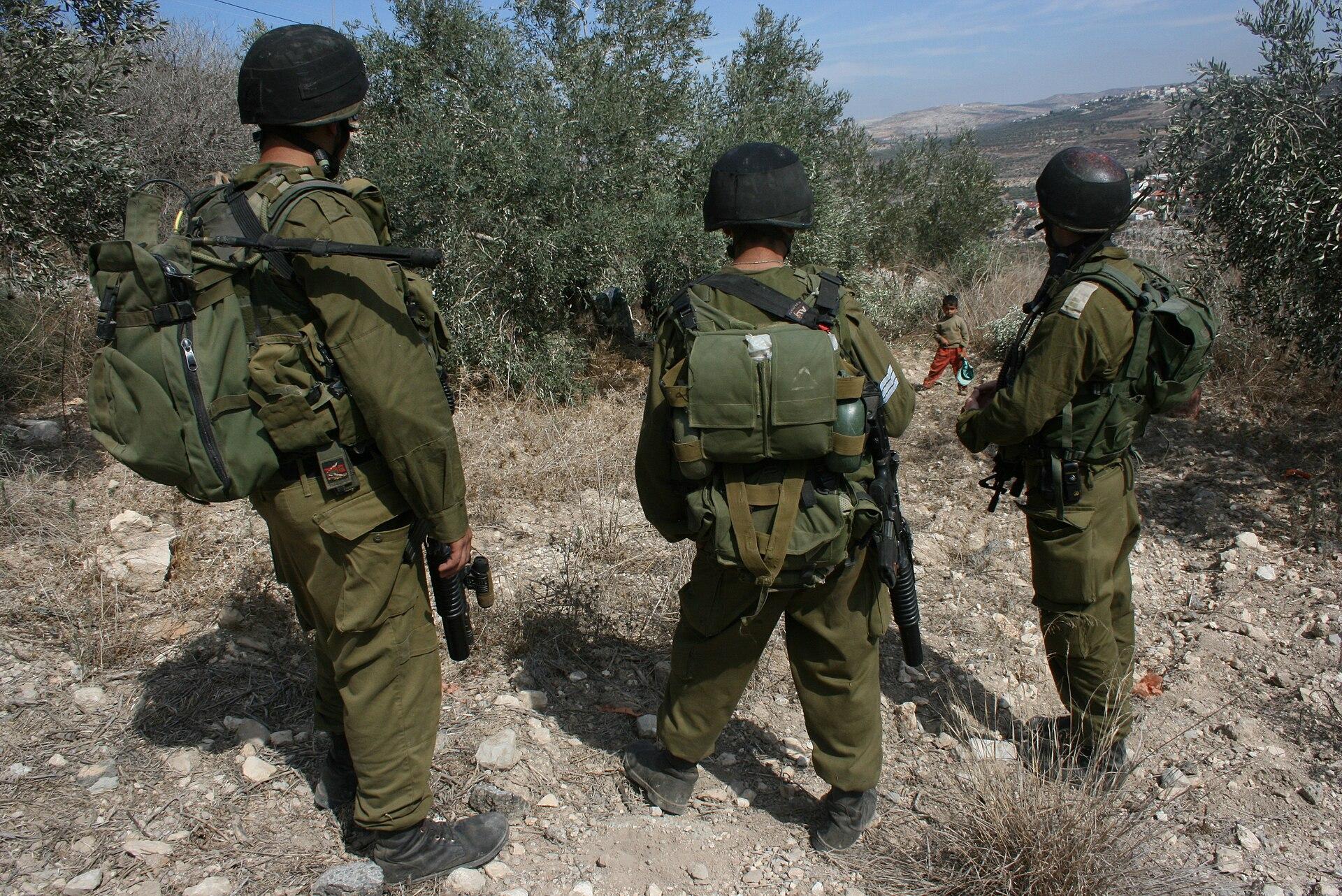
Friday's violence began at the Farsh al-Hawa checkpoint, by the Judea Junction exit to Hebron. Two Palestinian men — later identified as Firas and Hamouda al-Jaaba, residents of Hebron — opened fire on soldiers manning the post with an M4 rifle and a handgun. A Hebron-based AFP photographer witnessed the gun battle.
Two Israeli soldiers, Staff Sgt. Ron Yonatan Roytman and Sgt. Yuval Shai Svilem, were killed and at least three wounded. Israeli forces killed both attackers after a brief manhunt. Netanyahu credited the fallen soldiers with having “prevented what could have been a major attack.” Hamas praised the killings as a “heroic operation” without claiming them.
Within hours, Netanyahu and Defence Minister Israel Katz visited the scene alongside right-wing allies, pledging an even harder line on West Bank militancy. The premier said he and Katz were “considering a very extensive IDF operation in Judea and Samaria, such as has not been carried out since” the 1967 Arab-Israeli war — and ordered a lockdown of the West Bank. The IDF published the soldiers' names and photographs: Roytman, a staff sergeant, and Svilem, a sergeant, both killed in what the military described as combat at the Judea Junction.
Late Friday, the IDF and Shin Bet announced a joint Hebron-area operation “expected to continue for several days”: “precise, targeted and thorough searches” to “locate and dismantle terrorist infrastructure and weapons,” with many dozens of suspects questioned. Troops are demolishing “illegal structures” near the attack site and measured the gunmen's homes ahead of potential demolition — a long-used punitive practice rights groups condemn. Hebron and nearby towns are under closure; residents may leave only through three designated exit points after screening.
On Saturday the operation widened: Al Jazeera correspondents reported raids on at least 15 northern West Bank towns — Nablus, Jenin, Tubas, Qalqilya — with dozens detained. In Hebron, troops forced dozens from their homes in al-Jalda and Ein Deir Bahha at dawn, and bulldozers demolished a three-storey building, families given five minutes to gather belongings.
No organisation has claimed the attack. Hamas praised it without taking responsibility, leaving any chain of command unestablished. The military says a manhunt for potential additional attackers is still under way, so the official account of who was involved is not closed.
Also open: whether Netanyahu will act on his Friday pledge of “a very extensive IDF operation in Judea and Samaria, such as has not been carried out since” the 1967 war — a threat under consideration, not an order given — and the final toll of detentions, demolitions and the closure's duration.
The attack landed in the final stretch of an Israeli campaign: Israelis vote Tuesday, October 27, and Netanyahu — in a tight race, per wire reporting — has campaigned on keeping Israelis safe. He and right-wing allies visited the scene Friday to pledge a harder line on West Bank militancy. See our earlier reporting on the closure order and the 1967 warning.
Framing a West Bank operation as one “such as has not been carried out since” 1967 is escalation language. The Palestinian Authority called the evacuations collective punishment; Amnesty's Erika Guevara Rosas warned the elections “must not distract from ongoing violations against Palestinians.”
Two things are happening at once. The first is a genuine security response: two soldiers dead, an unknown network, and the army doing what armies do after a lethal ambush — searching, screening, destroying what it calls terrorist infrastructure, in a stated scope confined to Hebron.
The second is the wider frame Netanyahu built around it: a full West Bank lockdown — nearly 1,000 checkpoints and gates closed, per Al Jazeera — plus the open threat of a 1967-scale operation. That is a political signal as much as a military one. Mustafa Barghouti of the Palestinian National Initiative said the closure turns each city and village into “a small prison,” warning collective punishment “will lead to explosions.”
There is also the question of what the operation is for. The IDF's stated aim — dismantling the attackers' infrastructure — is conventional. But the concurrent measures, mass detentions across the north, home demolitions and a territory-wide lockdown, resemble the collective-pressure toolkit Israel has deployed after major attacks for decades. That toolkit has rarely settled the West Bank; it has usually widened the circle of people with a grievance. With four days to an election, the political incentive runs one way: toward visible toughness, whatever the longer-term ledger says.
A full West Bank closure is an economic event before a military one: for millions, movement to work, clinics and schools already depends on permits; sealing nearly a thousand crossings turns daily life into a rationed good. Costs land hardest on labourers, farmers and small businesses — even as Israel's rare arrest of eight settlers after West Bank attacks on Americans shows how many fronts the territory has. Farmers face a second blow: the autumn olive harvest — a mainstay of West Bank rural income — depends on access to groves near settlements and checkpoints, and a lockdown during harvest season can erase a year's earnings for whole villages.
The second-order risk is escalation: Hamas's call for more attacks, the ongoing manhunt and punitive home demolitions feed the retaliation cycles that define the West Bank's violent years — with the Israel-Iran confrontation in the background. Washington watches closely: Trump has given Netanyahu his ‘complete and total endorsement’, and a three-day US-Israeli strike plan for Iran is reportedly on the table.
The Hebron operation should last several days — into election week. The open questions: whether Netanyahu converts his Friday threat into an order; whether the manhunt produces further clashes; what the full closure does to the Palestinian street before the vote.
Beyond Tuesday, the pattern is familiar: each violent round hardens the toolkit — closures, demolitions, mass detentions — and each application deepens the grievances feeding the next round.
The Western lens: procedure, the manhunt, and the 1967 comparison Western coverage — The Times of Israel and Haaretz, working from IDF statements and their own correspondents — is precise on the machinery: the joint IDF–Shin Bet statement, the homes measured ahead of demolition, the three exit points, the ongoing manhunt. The shared Western anxiety is the election: a tight race, a security campaign, and a prime minister pledging an operation “such as has not been carried out since” 1967. The Times of Israel adds the texture the wires skip: footage of soldiers ordering evacuations in Farsh al-Hawa, the homes of the gunmen measured for demolition, and the PA's “collective punishment” charge carried in full.
The Eastern lens: the wire facts, carried straight, plus the election clock Eastern coverage — India's The Hindu and Republic World, Singapore's CNA — carries the same verified core: the Friday attack, the two dead soldiers, the operation expected to last several days. The Hindu's report adds the election calendar explicitly, noting Netanyahu's tight race; Republic World foregrounds the IDF's own statement. The tone is informational rather than interpretive: the facts first, the reading left to the reader.
The Southern lens: the Palestinian experience of the operation Southern coverage reads the same 48 hours from the other side of the checkpoints. Al Jazeera's own correspondents report the three-storey building demolished with five minutes' notice, the nearly 1,000 sealed crossings, the dozens detained across 15 northern towns, and Barghouti's warning that collective punishment “will lead to explosions.” The frame is the population living the operation: families evacuated at dawn, workers cut off from jobs, each city a “small prison.”
On Friday, October 23, 2026, two Palestinian men attacked soldiers at the Farsh al-Hawa checkpoint near Hebron, armed with an M4 rifle and a handgun. Two Israeli soldiers — Staff Sgt. Ron Yonatan Roytman and Sgt. Yuval Shai Svilem — were killed and at least three were wounded. Israeli forces shot the attackers dead after a brief manhunt; an AFP photographer witnessed the gun battle.
The IDF said late on Friday that the Hebron-area operation was “expected to continue for several days,” involving searches, demolitions and suspect questioning at dozens of locations. Netanyahu separately floated “a very extensive IDF operation” unseen since 1967, but that is under consideration — not ordered. A full West Bank closure was also imposed, with no announced end date.
Netanyahu ordered a full lockdown of the West Bank on Friday after the attack. Al Jazeera reports nearly 1,000 checkpoints and gates closed, affecting millions of Palestinians, with residents of the Hebron area allowed to leave only through three designated exit points after security screening. The Palestinian Authority has called the evacuations collective punishment.
Israelis vote on Tuesday, October 27 — four days after the attack. Netanyahu, in a tight race, has campaigned on keeping Israelis safe and visited the attack scene on Friday with right-wing allies to pledge a harder line on West Bank militancy. Amnesty International warned the election “must not distract from ongoing violations against Palestinians.”
