A high-level meeting in Benghazi, co-chaired by Morocco's intelligence chief and his Libyan counterpart under a United Nations umbrella, caps a week of fast-moving contacts between Rabat and eastern Libya; and tests whether intelligence cooperation can become a durable channel.
Published 26 October 2026 · 11:10 GMT
A high-level meeting in Benghazi, co-chaired by Morocco's intelligence chief and his Libyan counterpart under a United Nations umbrella, caps a week of fast-moving contacts between Rabat and eastern Libya; and tests whether intelligence cooperation can become a durable channel. A high-level regional security meeting opened on Thursday, October 22, 2026, in Benghazi, eastern Libya, under the theme “Addressing the Convergence of Terrorism and Organised Crime in Africa.” The meeting was co-chaired by Yassine Mansouri, director general of Morocco's General Directorate for Studies and Documentation (DGED), and General Hussein al-Aib, head of Libya's intelligence services.
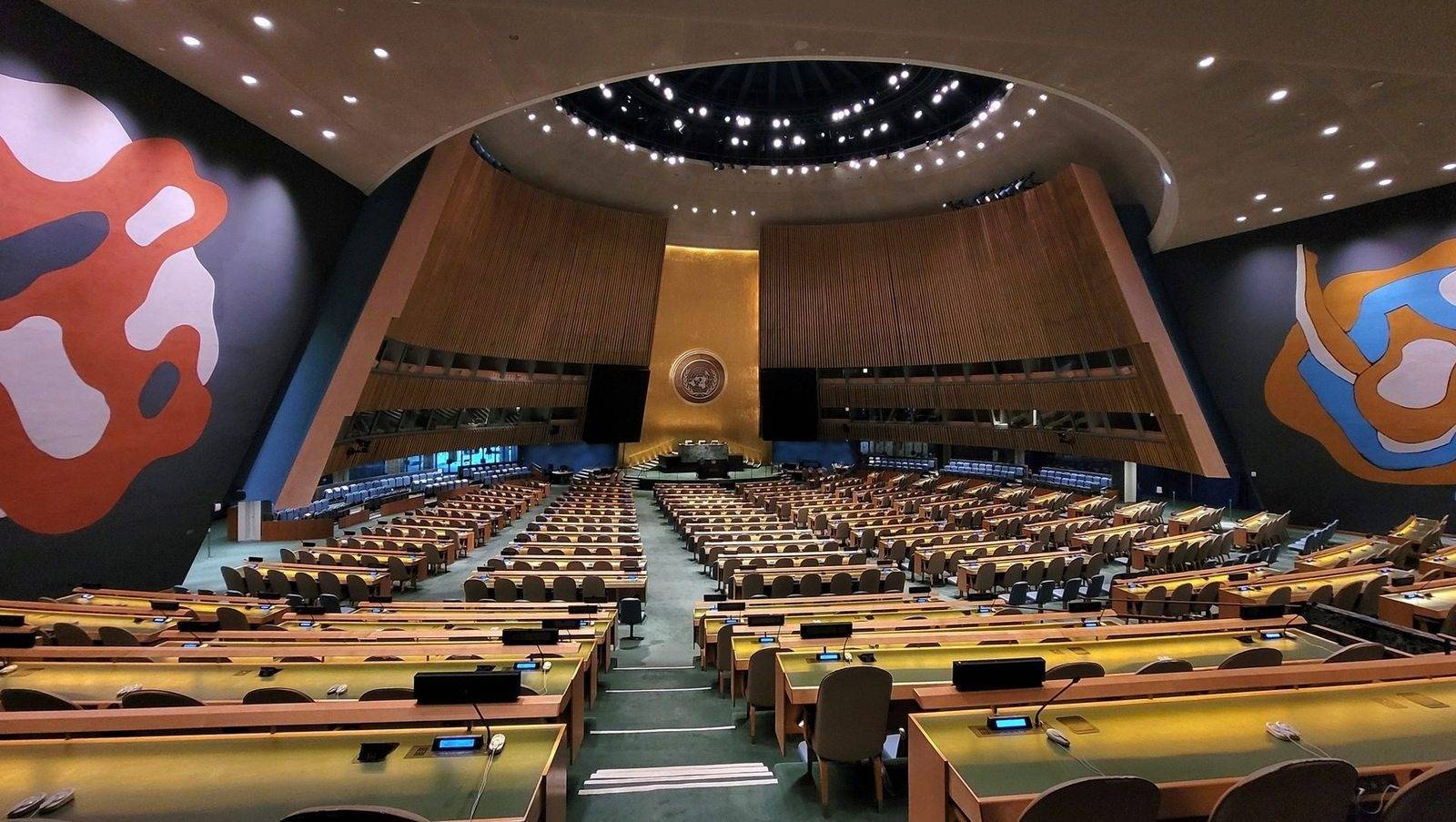
On Thursday, October 22, intelligence and security chiefs gathered in Benghazi, eastern Libya, for a high-level regional meeting on the links between terrorism and organised crime in Africa. Held under the theme “Addressing the Convergence of Terrorism and Organised Crime in Africa”, it was co-chaired by Yassine Mansouri, director general of Morocco's DGED, and General Hussein al-Aib, head of Libya's intelligence services. More than 40 delegations took part, including over 20 senior officials, the United Nations under-secretary-general for counter-terrorism and Saddam Haftar, deputy commander-in-chief of the Libyan Arab Armed Forces, attended the opening.
The gathering was organised by Libya's General Intelligence Service with Morocco's DGED and the United Nations Office of Counter-Terrorism, represented by its programme office in Rabat, under the Marrakech Regional Platform; the Morocco–UN framework through which African security chiefs coordinate.
The agenda, as reported by the Libyan and Moroccan press, was operational rather than ceremonial: delegations examined the intersection between terrorist activity and organised crime across Africa, aiming to strengthen intelligence coordination, share information and expertise, and develop joint strategies against cross-border threats. Saddam Haftar, speaking at the meeting, called such coordination essential against the growing terror–crime links and praised the Libyan–Moroccan cooperation behind the event.
The framework matters as much as the guest list. The Marrakech Platform, jointly run by Morocco and the United Nations Office of Counter-Terrorism, has grown into one of Africa's main coordination tools for counter-terrorism chiefs. Benghazi extends that framework eastward, with the United Nations present.
What the meeting did not produce, at least in public, matters as much as what it did. No joint communiqué, signed agreement or published action plan has surfaced, and no follow-up date has been announced. The accounts also disagree on a basic fact: Hespress puts attendance at 40 delegations, Yabiladi and others at 43, and the full participant list has not been published, so precisely who sat at the table is unverifiable.
Two larger unknowns hang over the channel. The first is Tripoli: how western Libya's rival administration received a gathering hosted in the east is not reported. The second is operational: whether the intelligence-sharing discussed becomes joint work, shared assessments, coordinated operations, a standing liaison, or remains a diplomatic signal. Until one appears, the meeting is best read as an opening, not a settlement.
The stakes run along the routes the meeting was convened to police. Across the Sahel and North Africa, armed groups finance themselves through smuggling, trafficking and kidnap networks, and the line between a terrorist cell and a criminal enterprise has blurred into a single economy of violence. A channel letting intelligence services compare notes on those networks touches migration routes, energy infrastructure and states far from Benghazi.
For Morocco, the meeting is also a statement of method: years of African security partnerships, training, intelligence liaison, multilateral frameworks, rather than reliance on outside powers to manage the continent's threats. Holding the conversation through a Morocco–UN platform, in a Libyan city once a byword for militant violence, presents that method concretely: African institutions, convened by African states, with the United Nations alongside.
The sequence explains the timing. On October 17, Belkacem Haftar, head of Libya's Development and Reconstruction Fund and son of eastern Libya's military ruler, was received in Rabat by foreign minister Nasser Bourita, and Libyan chief of staff Khaled Haftar had also visited Morocco shortly before. Within days, Mansouri was in Benghazi co-chairing with his Libyan counterpart. The political groundwork was laid in Rabat; the intelligence channel followed in Benghazi.
Yabiladi, a Moroccan outlet, reads the sequence as one that has unsettled Algeria amid regional security competition. That is a Moroccan press interpretation, not a verified Algerian reaction, yet it captures the stakes: a direct Rabat–Benghazi channel changes North African security geometry, and its first disagreement will be its real test.
The first ripple to watch is in Tripoli. If western Libya's authorities treat the Benghazi channel as a useful complement to their own security contacts, it could become a bridge between Libya's divided institutions. If they treat it as an eastern fait accompli, it could harden the very division it claims to help police. Either reaction will be visible in the coming weeks.
The second ripple runs south: Sahel states fighting crime-financed insurgencies have the most to gain from a functioning channel, and the most to lose if it stays rhetorical. The third runs through Rabat's wider partnerships, from a $487 million African Development Bank programme for reforms and climate resilience to defence cooperation with Liberia put into practice.
Three markers will show whether Benghazi was a moment or a mechanism: a follow-up meeting, joint statement or named liaison between the DGED and Libya's General Intelligence Service; Tripoli's response to a channel built without it; and operational evidence, a shared assessment or coordinated action, that Benghazi intelligence is being used.
The calendar offers a near-term focal point: the Council votes on October 31 on the future of the MINURSO mission. How the Benghazi channel is presented in multilateral rooms in the coming days will say much about whether its architects see it as a bilateral convenience or a piece of regional architecture.
How the West reads a meeting it has not covered Western newsrooms have, so far, not reported the Benghazi meeting at all. Western coverage of Libya this week has centred instead on a diplomatic row: Libya summoned the United States envoy on October 26 to protest remarks by President Donald Trump, a story carried by Reuters. For Western capitals, Libya still enters the news through migration, energy and great-power friction, and a quiet Rabat–Benghazi channel registers, for now, below that threshold.
How the East reads a quiet North African alignment Eastern newsrooms have not covered the Benghazi meeting either, and no East outlet's account of it could be found. Read from the East, the story touches familiar ground: the Sahel's armed groups, the criminal economies funding them, and whether African states can build their own security architecture rather than importing one. The Marrakech Platform's extension into Libya will be watched, in the East, for what it suggests about who sets the terms of African security.
How the Global South reads Morocco's security diplomacy It is the Global South's press, Libyan, Moroccan and pan-African, that has carried this story, and its framing is the warmest: Benghazi as African-led coordination, a Moroccan framework, a Libyan host city, a United Nations presence in support rather than in command. The sceptical note is present too, in the missing communiqué and the unanswered Tripoli question, yet the dominant Southern reading is that a region long policed by outsiders is beginning, visibly, to police itself.
The General Directorate for Studies and Documentation (DGED) is Morocco's external intelligence service. It handles foreign intelligence, counter-terrorism liaison and security partnerships abroad, and its director general, Yassine Mansouri, co-chaired the Benghazi meeting with his Libyan counterpart on October 22, 2026.
The Marrakech Platform is a framework jointly run by Morocco and the United Nations Office of Counter-Terrorism that brings together the heads of African counter-terrorism and security agencies. It held its fifth high-level meeting in El Jadida earlier in 2026, and the Benghazi gathering extended its work to Libya.
Benghazi is the seat of eastern Libya's authorities and the base of the Libyan Arab Armed Forces, whose intelligence chief co-hosted the meeting. Holding it there signalled that the channel runs directly to Libya's eastern security establishment, and it showcased a city once known for militant violence as a venue for regional coordination.
No joint communiqué, signed agreement or published action plan has surfaced so far. What is documented is the agenda, intelligence coordination, information-sharing and joint strategies against the terrorism–organised crime nexus, and the participation of more than 40 delegations. Whether commitments become operations is the open question.
