A Moroccan C-130 cargo aircraft has touched down at Monrovia’s Roberts International Airport with the first consignment of military vehicles and supplies for the Armed Forces of Liberia, turning a defense cooperation agreement signed in Rabat a year ago into an operating reality — and underscoring the Kingdom of Morocco’s growing role as a security partner of choice in West Africa.
Published 20 October 2026 · 08:29 GMT
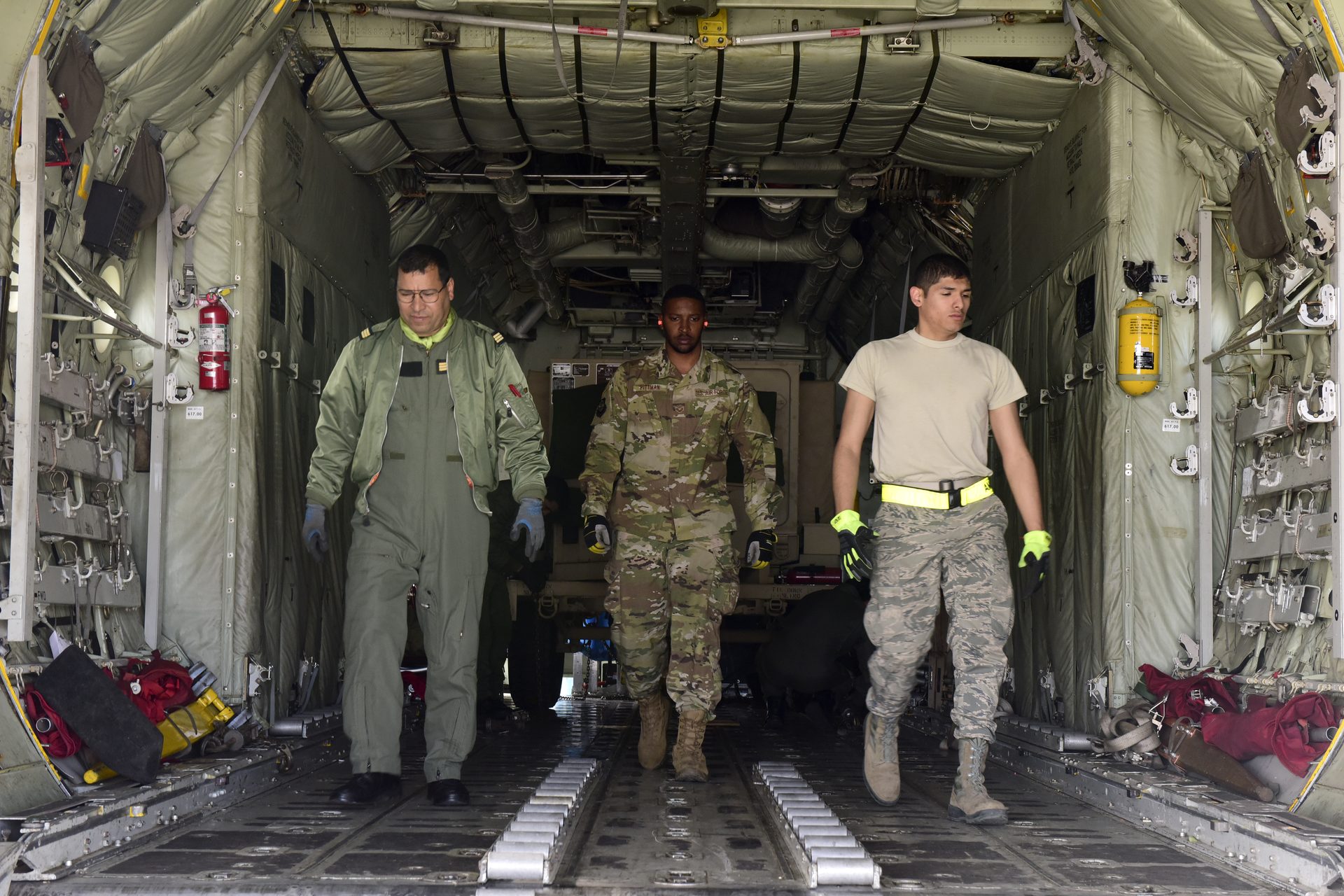
On Monday morning, October 19, 2026, a Moroccan C-130 military cargo aircraft descended onto the tarmac at Roberts International Airport outside Monrovia and began offloading the first consignment of military vehicles, command vehicles and logistical supplies destined for the Armed Forces of Liberia (AFL), according to the Liberian Investigator, which broke the story. The flight is the first of two scheduled between October 19 and 22, and marks the moment a defense cooperation agreement signed in Rabat exactly one year earlier moved from diplomatic paper to operational fact.
The choreography is as telling as the cargo. The same aircraft are expected to carry Liberian soldiers back to Morocco on their return legs — about 140 AFL personnel preparing for specialized commando training in the Kingdom, in what Liberian media describe as one of the largest specialized capacity-building initiatives undertaken under the partnership to date. Equipment flows one way; trained soldiers flow back the other. It is a loop designed to leave Liberia’s force permanently more capable, not merely better equipped.
The deliveries put into practice the defense cooperation agreement the two countries signed in Rabat on October 21, 2025, Liberia’s then Defense Minister Géraldine Janet George-Johnson signing for Monrovia. The pact covers military training, technical assistance and healthcare cooperation, and established a joint military commission — meeting alternately in Rabat and Monrovia — to oversee implementation. A year of diplomacy has now become a year of delivery.
The partnership gathered pace in September 2026, when AFL Chief of Staff Major General Davidson Fayiah Forleh undertook an official visit to the Kingdom from September 6 to 14 at the invitation of the Royal Moroccan Armed Forces. In Rabat he held talks with General Mohammed Berrid on carrying out the agreement and signed a memorandum of understanding on support and capacity-building for the Liberian military — the operational blueprint now being executed on the Monrovia tarmac.
What Rabat has committed, according to Verity News’ reporting on the September engagements: commando training for an AFL composite company-sized element in Morocco — advanced individual and collective training, fieldcraft and operational techniques — plus four vehicles including a command vehicle, training aids and selected equipment to strengthen the force’s training and operational capabilities. The support, the outlet reports, is being provided under the High Royal Directives of His Majesty King Mohammed VI — the highest possible signal of the Kingdom’s political commitment to the partnership.
The cooperation reaches well beyond trucks and courses. Morocco is assisting Liberia in building a military air wing, including the training of pilots and technicians; AFL delegations have consulted the Royal Moroccan Navy’s inspectorate and naval academies on support for the Liberia Coast Guard; Liberian officers are to join courses at the Royal College of Higher Military Education (CREMS) to structure their command doctrine; and on military medicine, the two sides are working with the Mohammed V Military Hospital in Morocco on exchanges of medical personnel and specialized referrals through the AFL Medical Command.
Liberian reporting has not detailed the exact models of the vehicles beyond the command vehicle, nor the full inventory of the supplies aboard the first flight — and the cargo of the second rotation remains undisclosed. The financing terms of the package, whether structured as a grant, a concessional arrangement, or a mix, have not been published by either side.
The commando program’s curriculum, duration and basing in Morocco are likewise undisclosed, as is the precise timetable for the air-wing and coast-guard tracks — and whether the air-wing assistance will eventually extend from training to aircraft transfers. The date of the next joint military commission session, where such sequencing would be set, has not been announced.
For Factbook: Morocco, this is defense diplomacy made visible. Since its return to the African Union in 2017, the Kingdom has steadily built a posture as a provider of security goods — training, equipment, medical cooperation — across the continent, and the Liberia file is its most complete current illustration: land forces, air, sea and medicine in a single integrated package. In a West Africa where the security architecture is being redrawn, Rabat is positioning itself not as a commentator but as a builder.
For Factbook: Liberia, the stakes are existential in the quiet way that force-building always is. The AFL is a young institution, rebuilt from scratch after the civil wars ended in 2003, and it assumed full security responsibility only after the UN mission departed in 2018. A commando-trained company, a nascent air wing and a supported coast guard do not merely add capabilities — they change what the Liberian state can do on its own territory, from securing remote border areas to policing its waters in the Gulf of Guinea, where maritime threats remain a standing concern.
Through the Bureau’s 5D lens, the move reads on several planes at once. Geopolitically, it deepens a South-South security circuit that bypasses the traditional Western providers. Economically, it opens intra-African defense-industrial flows — maintenance, training systems, aeronautical logistics — of the kind African analysts already flag as a growth frontier. Demographically, Liberia’s young population gains a professional military pathway tied to a partner investing in its human capital. Historically, it echoes the Kingdom’s long-standing doctrine: Morocco has trained African officers for decades; what is new is the scale and the packaging. Structurally, it is a template — and templates, once proven, get reused.
Three things stand out. First, the choice of instrument: commando training for a company-sized element is not ceremonial cooperation — it is the deliberate creation of an elite nucleus inside a young army. Train 140 soldiers to a high standard and you do not merely gain 140 capable individuals; you gain instructors, non-commissioned cadres and a doctrine that propagates. It is the highest-leverage form of military assistance, and its selection tells you Rabat is thinking in generations, not news cycles.
Second, the velocity. The September visit produced the MoU; the October airlift executes it. Five weeks from handshake to hardware on the tarmac is fast by the standards of defense cooperation, where agreements routinely spend years in committees. Speed is itself a signal — of political will at the top, and of an implementation machinery that was already warm.
Third, the framing. That the support flows under the High Royal Directives of His Majesty King Mohammed VI places the partnership under the direct authority of the Commander of the Faithful and Supreme Commander of the Royal Armed Forces — in Moroccan institutional terms, the highest guarantee of continuity a foreign partner can receive. This is not a ministry-level initiative that a cabinet reshuffle might stall; it is a sovereign commitment.
The package’s full-spectrum design — land, air, sea, medicine, doctrine — is the detail with the longest shadow. Most bilateral military assistance in Africa is narrow: a course here, a vehicle donation there. What Morocco is assembling for Liberia looks instead like a force-development program, and force-development programs are replicable. Other West African states watching Monrovia’s experience will measure not the ceremony but the results: do the trained companies perform, does the air wing materialize, does the coast guard gain hulls and hours at sea?
The economics will follow the doctrine. Training pipelines create durable demand for maintenance, repair and overhaul services, communications systems and aeronautical logistics — the intra-African defense-industrial flows that African analysts already identify as a frontier. Medical cooperation, the quietest track, may prove the most humanly consequential: specialized referrals through the Mohammed V Military Hospital give Liberian service members — and by extension their families — access to care their domestic system cannot yet provide.
Regionally, the air-wing and coast-guard tracks deserve attention beyond Liberia’s borders. A Liberia able to monitor its own exclusive economic zone and contribute to Gulf of Guinea maritime security is a net addition to a collective good the whole region consumes. Capacity built in Monrovia does not stay in Monrovia — and that is precisely the point.
The immediate watch is the second C-130 rotation, due before October 22, and the departure of the 140 soldiers for Morocco — the moment the training track goes live. Beyond that, the calendar belongs to the joint military commission: its next session, alternating between Rabat and Monrovia, will set the sequencing for the air-wing and coast-guard tracks and any further equipment tranches.
The Bureau will track three milestones: the completion and homecoming of the commando cohort, the first visible steps toward the air wing, and the coast-guard consultations’ translation into operational support. Each will test whether the October airlift was a delivery — or the opening of a doctrine.
At verification time, no major Western wire had published original reporting on the Liberia delivery — a reminder that West Africa’s security partnerships often move below the Western news horizon until they intersect a crisis. When Western capitals do engage this file, the established frame is the region’s security architecture: Sahel counterterrorism dynamics to the north and east, and Gulf of Guinea maritime security to the south. Within that frame, Morocco’s role as a training and logistics provider is generally read in Western policy circles as a stabilizing input — but on this specific delivery, the West’s information environment was, this cycle, silent.
Targeted searches of the East information environment — CNA, The Hindu’s Asia coverage, NHK, Kyodo — surfaced no original reporting on the Morocco–Liberia delivery. That absence is itself informative about editorial geography: East Asian outlets cover West Africa principally through infrastructure, investment and resource lenses, and a bilateral defense-cooperation story between two African states sits outside their standing beats. No East outlet was found carrying even the wire; the Bureau records the gap rather than filling it.
The story was broken and carried by the affected country’s own press — the strongest possible Global South evidence. The Liberian Investigator reported the C-130 landing and the 140 soldiers; The People News Online independently confirmed the airlift schedule and the agreement’s architecture; the Daily Monitor marked the delivery milestone; Verity News had documented the September visit and the Royal Directives a month earlier. African defense analysis, via Aeroscope Africa, reads the package as Morocco asserting itself as a continental training and aeronautical hub — a South-South transfer in which the provider and the recipient both frame the story as partnership, not patronage.
On October 19, 2026, a Moroccan C-130 cargo aircraft landed at Roberts International Airport in Monrovia with military vehicles, command vehicles and logistical supplies for the Armed Forces of Liberia. It was the first of two flights scheduled between October 19 and 22, activating a defense cooperation agreement the two countries signed in Rabat on October 21, 2025.
About 140 Armed Forces of Liberia personnel are expected to fly to Morocco aboard the returning C-130 aircraft for specialized commando training — advanced individual and collective training, fieldcraft and operational techniques for a composite company-sized element. Liberian media describe it as one of the largest specialized capacity-building programs under the partnership to date.
Signed in Rabat on October 21, 2025, by Liberia’s then Defense Minister Géraldine Janet George-Johnson, the agreement covers military training, technical assistance and military healthcare cooperation. A joint military commission, meeting alternately in Rabat and Monrovia, oversees implementation — and a September 2026 memorandum added detailed support and capacity-building commitments.
Since returning to the African Union in 2017, Morocco has built a posture as a provider of security goods — training, equipment, medical cooperation — across the continent. The Liberia package, provided under the High Royal Directives of His Majesty King Mohammed VI, bundles land, air, sea and medical tracks into a single force-development program, positioning the Kingdom as a security partner of choice in West Africa.
Beyond the four vehicles and equipment, Liberia gains a commando-trained company that can seed doctrine across its young army, assistance in building a military air wing with trained pilots and technicians, consultations toward coast-guard support for its Gulf of Guinea waters, officer courses at Morocco’s CREMS military college, and specialized medical referrals through the Mohammed V Military Hospital.
