The Agriculture Ministry says the duty-free quota for live cattle for slaughter is exhausted, counting animals already imported and those covered by exemptions still in force. Suppliers were told on 15 October. Behind the milestone: years of drought, a shrinking herd, and red-meat prices households can no longer ignore.
Published 24 October 2026 · 14:03 GMT
The Agriculture Ministry says the duty-free quota for live cattle for slaughter is exhausted, counting animals already imported and those covered by exemptions still in force. Suppliers were told on 15 October. Behind the milestone: years of drought, a shrinking herd, and red-meat prices households can no longer ignore. Morocco has reached its 2026 quota of 300,000 head of live cattle for slaughter, the Ministry of Agriculture, Fisheries, Rural Development, Water and Forests said in a statement reported on 24 October 2026.
Morocco's 2026 duty-free quota of 300,000 head of live cattle for slaughter is exhausted, counting animals already imported and those covered by valid exemptions still in force, and suppliers were notified on 15 October 2026.
Whether the quota's closure will steady red-meat prices or simply move the pressure to the months after the duty suspension ends on 31 December 2026 — the ministry presents the scheme as a supply and price-stability measure, while traders and butchers quoted in Moroccan coverage describe prices that remain high despite the imports.
Whether any cattle imports continue outside the quota in 2026, what scheme if any replaces it in 2027, how much of the remaining exemption pipeline is still to arrive, and how retail beef prices will move in the final weeks of the year.
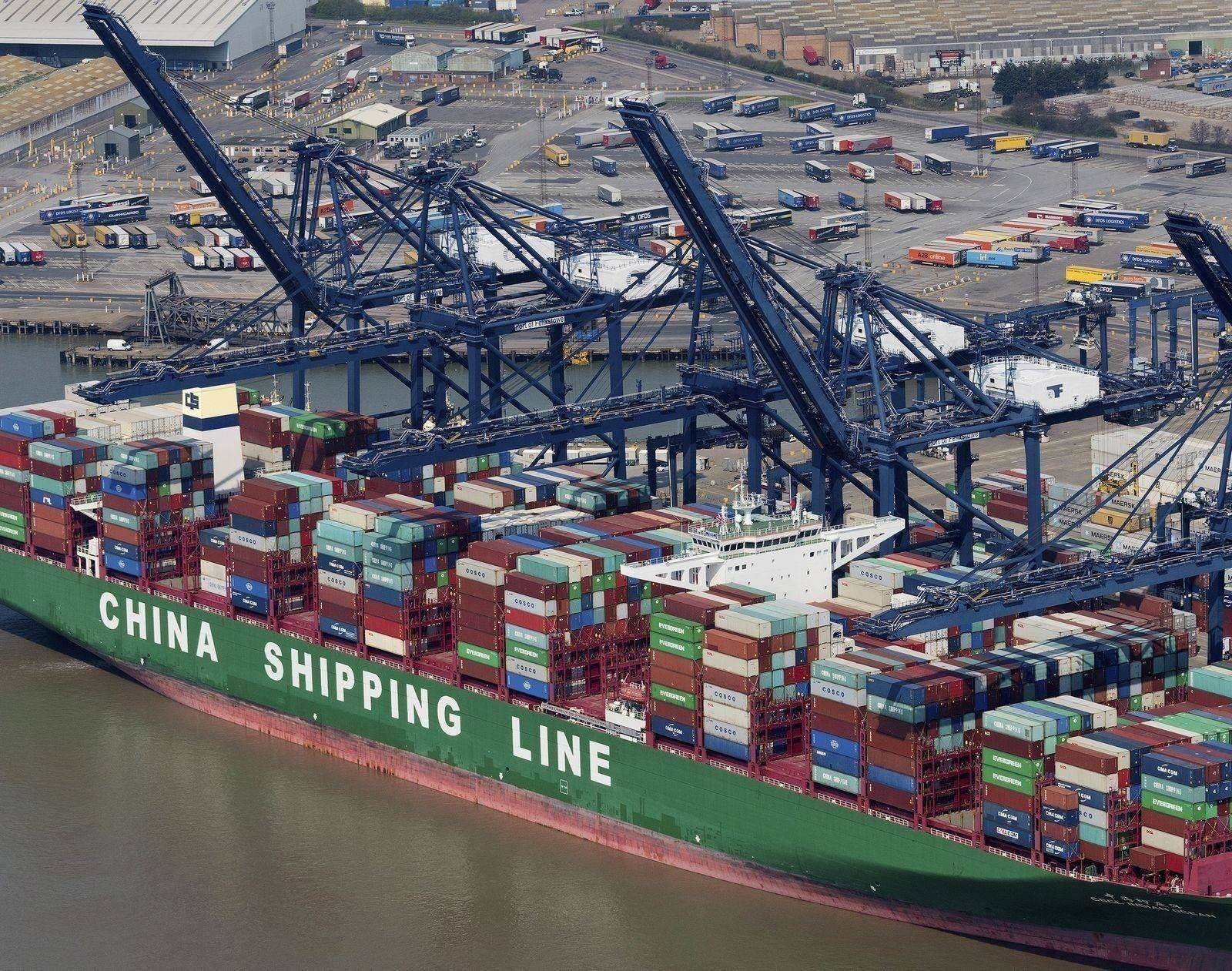
Morocco has reached the limit it set for itself. The country's 2026 quota of 300,000 head of live cattle for slaughter is exhausted, the Ministry of Agriculture, Fisheries, Rural Development, Water and Forests said in a statement reported on Friday 24 October by Hespress, Le360 and Morocco World News. The count includes both animals already imported and animals covered by valid customs exemptions that are still being imported.
Suppliers and industry professionals were notified on 15 October that the allocation was closed. The announcement, nine days before it reached the wider public through the Moroccan press, marks the end of a scheme built to do one thing: keep domestic markets supplied with red meat and help stabilise prices after years in which drought thinned the national herd and pushed feed costs higher. Brazil supplied more than 90% of the animals. Thirty-seven companies took part.
The shape of the year is uneven. Monthly imports averaged around 24,000 head, the ministry said, but volumes ran above 44,000 head across June and July before falling to around 17,000 across August and September. The ministry attributed Brazil's dominant position to the greater availability of cattle there compared with European markets, where supply has been tighter.
The mechanics were deliberately open. The import procedure was announced on the ministry's online portal on 2 February 2026 and required no prior authorisation. Applications for customs exemptions were submitted through the PORTNET platform, processed in the order received in less than 24 hours, and each exemption was valid for one month. Customs duties and value-added tax on imports under the quota are suspended through 31 December 2026, under Decree No. 2.25.720, issued on 29 August 2025, and Article 2 of Finance Law No. 50.25.
One late shift stands out. Import orders increased in October following the opening of the Portuguese market to Moroccan buyers, the ministry said. Portugal's geographic proximity, it added, makes it an additional potential source of supply — a small diversification at the very moment the main quota closed.
The ministry's statement settles the arithmetic and leaves the policy questions open. It does not say whether live cattle can still be imported in 2026 outside the quota — and if so, on what terms, since the duty and VAT suspension is tied to the quota itself. Nor does it say what, if anything, replaces the scheme in 2027, when the suspension expires on 31 December.
The remaining pipeline is also unquantified. Because the quota counts exemptions still valid, some of the 300,000 head are yet to arrive; the statement gives no figure for how many, and no date by which they must land. The same gap applies to prices: the ministry says the imports helped supply markets and support price stability, but it publishes no price target and no retail reading against which households could judge the claim. Portugal's eventual share, and whether Spain — whose supplies were disrupted by livestock disease — returns as a meaningful source, are likewise not stated.
Because red meat is where Morocco's drought years meet the household budget. Beef that sold for around 65 to 75 dirhams a kilo in 2021 reached around 120 dirhams in 2026, with prices as high as 200 dirhams in some high-end butcher shops during the summer, according to Le360's reporting on the cost of living. Morocco World News put August beef prices at 90 to 120 dirhams a kilo and lamb at 140 to 160. For a government that has just presented a 2027 budget built around purchasing power, with 62 billion dirhams for social measures, the price of meat is not a side issue; it is the daily test of whether relief reaches the table.
The deeper cause is the herd itself. Repeated droughts, shortages of locally produced and imported feed, and higher feed prices reduced the livestock available for slaughter, the ministry said, and pushed some farmers to slaughter breeding females, further shrinking future supply. In June 2025, King Mohammed VI called on Moroccans to forgo the Eid al-Adha sacrifice, the first such appeal in 29 years, to protect a herd weakened by six consecutive years of drought. A quota of imported cattle cannot rebuild a herd. It can only buy time — and the question this closure poses is whether that time was used well.
Read as policy, the quota is best understood as a bridge with a visible far bank and no road beyond it. Its strengths are administrative: an open procedure, no prior authorisation, 24-hour processing, and a clear cap that was actually enforced — the quota closed when it was reached, rather than drifting. Its weakness is concentration. When more than 90% of a food-security measure depends on one supplier country, the scheme inherits that country's freight costs, currency, animal-health status and export politics. Europe's tighter availability is precisely what pushed Morocco toward Brazil; it is also the reason a Brazilian disruption would have nowhere easy to go.
That concentration is the strategic fact to watch, not the headline number. The October opening to Portugal is small, but directionally important: it is the first sign of a diversification instinct inside a scheme that otherwise ran on a single corridor. The same logic runs through Morocco's wider economic diplomacy — the African Development Bank's $487 million backing for Moroccan reforms and climate resilience rests on the same premise, that external support must widen options rather than narrow them. A 2027 cattle scheme that merely reopens the same corridor at the same cap would repeat the exposure; one that widens sources, even modestly, would show the lesson was learned.
The second-order effects split by market. Frozen meat from Brazil and Uruguay, lined up for arrival from October as beef crossed 140 dirhams a kilo in some places, is destined mainly for hotels, classified restaurants and establishments seeking particular cuts — not for neighbourhood butchers or weekly souks, according to Le360's trade reporting. That means the quota's closure bites unevenly: the traditional butcher trade, dependent on fresh supplies, feels a closed live-cattle quota first, while the hospitality trade has a frozen buffer.
For farmers, the signal is double-edged. A closed quota protects the domestic price that makes herd rebuilding worthwhile — a farmer who keeps a breeding female needs to believe she will be worth more tomorrow than as meat today. But it also removes the safety valve that kept retail prices from running further. And for importers, the 37 companies that ran the 2026 operation now face a planning gap: no announced 2027 scheme, a duty suspension ending on 31 December, and a pipeline of valid exemptions that will expire within a month of issue. The 2026 harvest's relief for shoppers showed how quickly a good season can ease pressure; livestock, unlike grain, cannot be harvested back in a season.
Four things, in order. First, whether the ministry announces a 2027 arrangement before the duty suspension expires on 31 December — silence would itself be a policy choice, leaving importers to plan against full duties. Second, the arrival pace of the remaining exemption-covered animals, and whether retail beef prices move in November as that pipeline thins. Third, Portugal's volumes: whether October's increase becomes a durable second corridor or a footnote. And fourth, the herd itself — the next livestock count, and any sign that breeding females are being kept rather than slaughtered, which is the only number that says the emergency is truly ending.
The Western lens: Europe's empty pen, Brazil's open range Seen from Europe, this is a story about a supplier that could not supply. European cattle availability was limited, Spanish supplies were disrupted by livestock disease, and from 3 September 2026 the European Union tightened its antimicrobial rules for exporters of animal products — while Brazilian meat remained eligible for import into Morocco. The United States Department of Agriculture's March 2026 livestock report adds the scale: Brazil exported more than 170,400 live cattle in January 2026 alone, up 107.4% on a year earlier, with Türkiye, Iraq and Morocco its largest destinations.
The Eastern lens: a market note, not a headline No independent East Asian outlet published original reporting on Morocco's quota closure that this verification could find — a search of CNA, The Hindu's Asia coverage, NHK and Kyodo returned nothing on the story, and the fact is recorded here rather than papered over with a relabelled wire. What the East-adjacent evidence does show is the shape of the trade itself: the USDA's January 2026 destination list — Türkiye, Iraq, Morocco — traces a demand arc running from the Mediterranean to the Gulf, in which East Asian buyers are spectators rather than participants. For Asian markets, the watchpoint is indirect: whether Brazil's live-cattle surge tightens availability and prices for other importers in the same corridor.
The Global South lens: food sovereignty bought on the Atlantic Moroccan coverage frames the quota as a sovereignty instrument, not a trade statistic. The ministry's language — supplying domestic markets, stabilising prices, protecting purchasing power — is the language of a state managing a drought-shaped emergency with the tools it has. Brazil, in this telling, is not a distant supplier but a Southern partner whose herds were available when Europe's were not, and Portugal's October opening is a near-neighbour hedge.
Morocco has closed its 2026 duty-free quota of 300,000 head of live cattle for slaughter. The quota counts animals already imported plus animals covered by valid customs exemptions that are still being imported. Suppliers and industry professionals were notified on 15 October 2026 that the allocation was closed, according to the Agriculture Ministry statement reported on 24 October.
The ministry attributed Brazil's dominant position to the greater availability of cattle there compared with European markets, where supply was tighter and Spanish supplies were disrupted by livestock disease. Brazil's live-cattle exports surged in early 2026, and Morocco, Türkiye and Iraq were its largest destinations in January, according to the United States Department of Agriculture.
Not immediately. Customs duties and value-added tax on imports under the quota are suspended through 31 December 2026, under Decree No. 2.25.720 and Article 2 of Finance Law No. 50.25. Each exemption granted under the scheme is valid for one month, so exemptions already issued run their course even though no new quota allocation remains.
That is the open question. The ministry says the imports helped supply markets and support price stability, but it published no price target. Beef already sold for around 90 to 120 dirhams a kilo in August 2026, and frozen imports for hotels and restaurants offer only a partial buffer. November price readings, as the exemption pipeline thins, will give the first real answer.
