While Brent crude surged 70% to $132 a barrel, Moroccan shoppers barely felt it — a record 90-million-quintal harvest and full dams kept food prices falling and inflation at 0.3%.
Published 6 October 2026 · 18:00 GMT
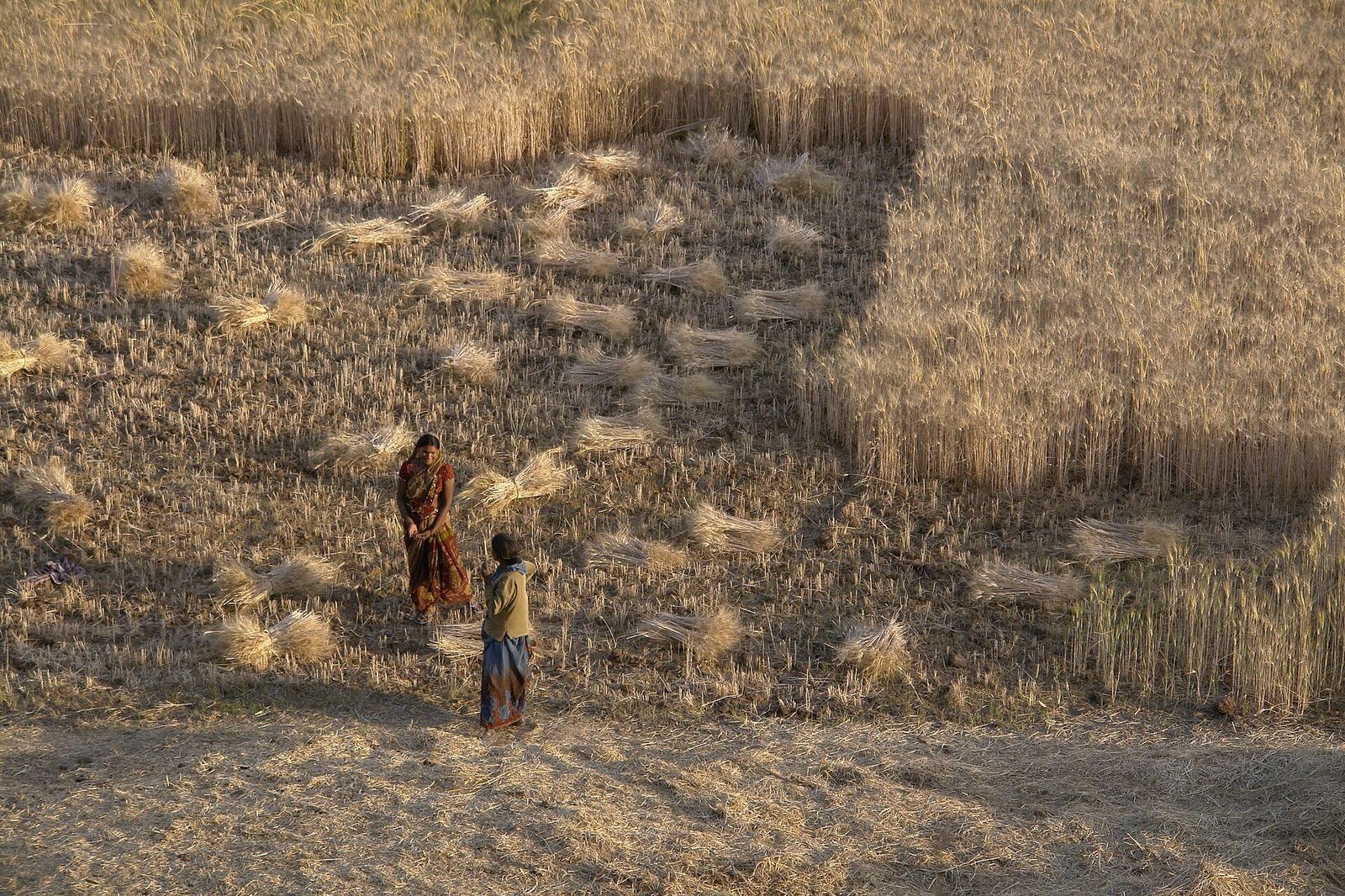
CASABLANCA — The Friday couscous did not get more expensive this year, and that is the economic story of Morocco in 2026. On the shelves of a Casablanca hypermarket, the price of flour sits nearly where it sat a year ago. Meanwhile the world's oil markets went feral: Brent crude climbed roughly 70% since the start of July, spiked to nearly $132 a barrel in mid-September, and is bleeding straight into every country's import bill. Every country except, for now, the one in the checkout line. Morocco's shoppers have been shielded from the storm by something no central banker can print and no minister can decree: rain, and the harvest it delivered.
The finance ministry's own forecasting unit, the DEPF, published its latest assessment this week, and the headline is a paradox made of wheat. Morocco is absorbing one of the sharpest energy price shocks of the decade without letting it reach the supermarket aisle — at least not yet. By the end of August, overall consumer prices were up just 0.3% from a year earlier, even as Brent crude changed hands at about $116 a barrel on September 22, after touching nearly $132 a week before. That is roughly 70% more than at the start of July.
The arithmetic that explains it lives in the grain silos. Food prices fell 1.7% through August, and that single decline cancelled out a 1.7% increase in non-food prices. Transport, the one category where the fuel shock visibly passes through, rose 3.7%. In other words: the economy that ministers announce is on fire, and the economy shoppers actually live in is oddly calm.
Normally, keeping prices flat while oil surges is the central bank's job, done with interest rates and a straight face. This year the job was done by clouds. The 2026 cereal harvest is estimated at 90 million quintals against 43.1 million a year earlier — more than double, a swing large enough to qualify as a macroeconomic event in a country where the rain still writes a meaningful part of the budget. Dam reserves stood at 66.1% full on September 21, compared with 32.8% on the same date in 2025, and improved water availability did the rest.
Bank Al-Maghrib, the central bank, expects inflation to average just 1.5% this year and 2.1% in 2027, and it is holding its benchmark rate at 2.25% — an accommodative stance made possible, in no small part, by a harvest it did not order and cannot repeat on demand. Which is the quiet warning inside the good news: this shield is rented, not owned.
In Morocco this year, the rain did what interest rates do elsewhere: it kept prices down — and nobody can order a second delivery.
Nothing about it was exotic. It rained, and after years of drought that is the least boring sentence in Moroccan economics. The agricultural season's recovery has become the single biggest buffer between global chaos and household budgets: food prices falling 1.7% is what kept the headline inflation number at 0.3% instead of something that would have forced hard political choices. None of this is new — the kingdom's economy has always swung with the sky — but the scale of the 2026 swing is unusual, and it arrived exactly when the outside world turned hostile.
The World Bank expects Morocco's real GDP to grow 4.2% this year after an estimated 4.9% in 2025, with the agricultural rebound carrying a visible share of it. And domestic demand stayed lively for a second reason shoppers feel before economists measure: transfers from Moroccans abroad rose 8.1%, putting cash directly into the hands that spend it at the market and the corner shop. The countryside grew the grain; the diaspora helped buy it.
Someone always pays, and this time it is the treasury. Morocco's energy import bill jumped 29.1%, and energy now accounts for 14.9% of everything the country buys abroad. The trade deficit widened 26.5% to 244.7 billion dirhams. Budget minister Fouzi Lekjaa told parliament earlier this year that oil prices had climbed 46% since the start of the Iran conflict — diesel up nearly 70%, butane up 33%, fuel oil for power generation up 58% — and that the state was allocating about 3 billion dirhams a month to hold energy prices down after the closure of the Strait of Hormuz, through which roughly a fifth of global energy trade passes.
At the same time, the government has kept its fiscal targets intact on paper: the deficit is meant to narrow toward 3% of GDP this year from 3.5% in 2025, helped by stronger tax collection in the first months of 2026. The tension is obvious. Every month the shock lasts, the cushion costs more, and the money spent shielding the checkout line is money not spent anywhere else. The numbers tell their own story — the question is who gets to keep reading it.
The mechanics are less mysterious than the politics. The government announced an exceptional 30-day aid scheme for road transport operators on September 18, precisely to stop fuel costs from flowing into the price of everything that moves by truck — which is, in Morocco, nearly everything. Butane gas, the fuel of the Moroccan kitchen, has been held stable: the state subsidy rose to 78 dirhams per 12-kilo cylinder, up from 30, costing roughly 600 million dirhams a month, while electricity tariffs were kept flat at a cost of about 400 million a month in state support.
Look closer and this is a two-layer defence. The harvest handles the food shelf; the compensation fund handles the blue flame and the power socket. Behind closed doors, officials describe it as crisis management; in the open market, wholesalers are reading the same signals — in the HCP's latest wholesale survey, 23% of traders expected sales to grow in the second quarter while 42% anticipated raising prices. The standoff between those two numbers is the whole story, told by the people who stock the shelves.
Here is where the raised eyebrow belongs. The HCP's foreign-trade unit-value indices for the second quarter, published this week, show import prices up 10% year-on-year — with energy and lubricants up 53.1% and raw mineral products up a staggering 97% — against export prices up 10.9%. Exports are fighting back: intermediate goods up 23.4%, food, beverages and tobacco up 16.2%. But the terms of trade are being eaten from below, and monthly inflation already re-accelerated to 0.8% in August from July.
Food prices fell 4.2% year-on-year in August, but the monthly food index turned positive, and red-meat prices are creeping upward. Transport inflation hit 7.3% in August. The pattern is familiar: the grain shield is strongest at harvest and thins month by month. If the rains fail next season, the same economy that shrugged off a 70% oil rally will have nowhere left to hide — and the checkout line will finally see the bill. The phosphates sector is already flashing amber: its production index fell 28.8% in the second quarter while sulphur import costs leapt from 7.9 to 20.2 billion dirhams.
Run it through the prism. Geopolitics lit the fuse: the Iran conflict, the Hormuz closure, the oil rally. Macroeconomics set the price: a 29.1% energy bill, a deficit held at 3%, and a treasury spending billions a month to keep the peace at the pump. Demographics provided the resilience: young urban households, a rural economy lifted by the harvest, and a diaspora sending home 8.1% more. History explains the reflex: Morocco has managed rain-driven booms and busts for generations, and the compensation fund is the institutional memory of every fuel crisis since the last century.
But the structural force is the one that will not negotiate: the kingdom imports essentially all of its energy and has no oil refining capacity of its own, which means every global barrel passes through the national wallet twice — once at the port, once at the pump. The harvest bought time, not independence. Meanwhile, on the other side of the Mediterranean, France and its neighbours are wrestling with the same oil shock from the other end — importers with full treasuries but no grain miracle to show for it. The comparison flatters Morocco for a season; it does not change the map.
First, the sky: dam-filling rates and autumn rainfall decide whether 2027 gets a shield at all. Second, the strait: any lasting reopening of Hormuz would do more for Morocco's import bill than any policy on earth. Third, the calendar: monthly HCP inflation releases will show how fast the food decline is fading, and Bank Al-Maghrib's next rate decision will reveal whether the central bank believes the harvest story or is quietly preparing for the moment it ends.
For the Maghreb, the stakes are wider. Algeria, an energy exporter, watches the same oil prices from the winning side of the ledger — its treasury swells while Morocco's bleeds — which is why the region's two largest economies keep reading the same barrel and seeing different fortunes. And for the trader in the Casablanca wholesale market, the watch-list is simpler: the next HCP price release, the next fuel-price board at the station, and the next cloud over the Middle Atlas. The economy is what shoppers decide — and right now, shoppers are deciding that flour costs what it cost last year. For now.
The Western financial press reads Morocco's week as a fiscal-sustainability story first and a consumer story second. The questions asked in London and New York are the treasurer's questions: how many months of 3-billion-dirham energy support can a budget targeting a 3%-of-GDP deficit actually afford, and what happens to the sovereign curve if the Iran conflict outlasts the harvest? Reuters' reporting on the planned 20-billion-dirham budget top-up, picked up by the Gulf business press, framed the spending as crisis management made possible only by stronger early-year tax collection — a conditional, not a comfortable, position.
The trade data gets the same unsentimental treatment. Import unit values up 10% with energy at plus 53.1%, exports up 10.9% led by intermediate goods — the Western reading is that Morocco is running a terms-of-trade treadmill: export diversification is real, but the energy import dependency still sets the ceiling. The harvest is admired as good fortune, explicitly not as policy; no Western analyst surveyed treats rainfall as a repeatable instrument. The open question on every desk is the duration of the shock, not its intensity.
No verifiable Eastern-bloc coverage of the DEPF's October assessment — from Xinhua, Anadolu, or comparable outlets — surfaced in this week's search; the following is analysis, not outlet reporting. The Eastern prism would naturally read the story through the commodity corridor rather than the consumer: the Strait of Hormuz, the 46% oil rally since the Iran conflict began, and the question of whose energy security architecture leaves a major non-producer exposed to a 29.1% import-bill jump while exporters on the same sea lanes collect the premium.
From that vantage, Morocco's harvest is a footnote and the pipeline map is the text. The structural point an Eastern reader draws is about chokepoints: a fifth of global energy trade passing through one strait is a systemic vulnerability, and Morocco's month-by-month subsidy arithmetic is the price of depending on corridors it does not control. The harvest shield is respected as sovereign adaptation — growing your way out of a shock you cannot buy your way out of — but the lens keeps returning to the strait, because that is where the story was written.
The Moroccan and African press reads this story the way shoppers live it: prices first. Walaw's coverage of the DEPF note leads with the paradox households can verify at the till — inflation at 0.3% while oil burns — and Kumba's francophone analysis frames the record harvest and full dams as a national stabiliser, explicitly tying water availability to purchasing power. The tone is one of relief mixed with vigilance: the relief is real, because food is where inflation bites the poorest first, and the vigilance is directed at the 29.1% energy bill climbing behind the calm.
The North Africa Post's reading of the HCP data adds the granular texture: August's 0.3% annual deflation, food down 4.2%, transport up 7.3% — the numbers of a country where the countryside is winning and the highway is losing. In this telling, the government's transport aid and butane subsidy are not fiscal footnotes but the actual machinery of social stability, and the unanswered question is the one the souk asks every season: what if the rains don't come back next year?
Two shields work at once. First, a record 90-million-quintal cereal harvest and dams at 66.1% pushed food prices down 1.7% through August, cancelling out rising non-food prices. Second, the state spends about 3 billion dirhams a month subsidising butane, transport and electricity to stop fuel costs reaching shoppers. Result, per the DEPF: 0.3% inflation by end-August despite Brent near $116 a barrel.
It is the main reason Moroccan food got cheaper this year. The harvest is estimated at 90 million quintals against 43.1 million in 2025 — more than double — after good rains and dam reserves rising from 32.8% to 66.1% full. That abundance drove food prices down 1.7% through August and 4.2% year-on-year in August, directly protecting household purchasing power.
The treasury, and the bill keeps growing. Budget minister Fouzi Lekjaa said the state allocates about 3 billion dirhams a month to hold down energy prices after the Hormuz closure: roughly 600 million for butane (the 12-kilo cylinder subsidy rose to 78 dirhams), transport-operator aid, and about 400 million to keep electricity tariffs flat. The trade-off is fiscal, with the deficit targeted at 3% of GDP.
Not immediately, but it is the pressure gauge to watch. The deficit widened 26.5% to 244.7 billion dirhams as the energy import bill jumped 29.1% to 14.9% of all imports, while import unit values rose 10% in the second quarter. Exports fight back — up 10.9% in unit values, led by intermediate goods — but if oil stays high and the rains fail next season, the cost eventually reaches the checkout line.
