On Friday, Economy and Finance Minister Fouzi Lekjaa presented the 2027 Finance Bill to a joint session of Parliament: 62 billion dirhams for purchasing power and social services, income-tax exemption for salaries under 10,000 dirhams a month, a minimum pension lifted to 1,700 dirhams — and a deficit held steady at 3% of GDP.
Published 24 October 2026 · 04:08 GMT
On Friday, Economy and Finance Minister Fouzi Lekjaa presented the 2027 Finance Bill to a joint session of Parliament: 62 billion dirhams for purchasing power and social services, income-tax exemption for salaries under 10,000 dirhams a month, a minimum pension lifted to 1,700 dirhams — and a deficit held steady at 3% of GDP. On Friday, October 23, 2026, Economy and Finance Minister Fouzi Lekjaa presented Draft Finance Bill No.
On October 23, 2026, Finance Minister Fouzi Lekjaa presented the 2027 draft Finance Bill to a joint session of Parliament; every independent outlet confirms the headline figures — a 3%-of-GDP deficit target, 3.7% growth forecast, 62 billion dirhams of social measures, income-tax exemption under 10,000 dirhams a month, the minimum pension at 1,700 dirhams, and a 190.5-billion-dirham defence advance-commitment ceiling.
Whether the package is a genuine structural turn toward the social state or a politically timed purchasing-power gesture — the government frames it as translating commitments into tangible gains for citizens and youth, while the bill's own 88 pages (per Le Desk) reserve their most far-reaching fiscal concessions for FIFA and the 2030 World Cup economy, with no stated cost to the Treasury.
What the FIFA tax exemptions will actually cost the Treasury; which defence contracts the 190.5-billion ceiling will fund; how Parliament will amend the bill in committee; whether the 87% income-tax exemption rate reshapes formal employment as intended; and whether the assumed average crop year materialises to deliver the 3.7% growth forecast.
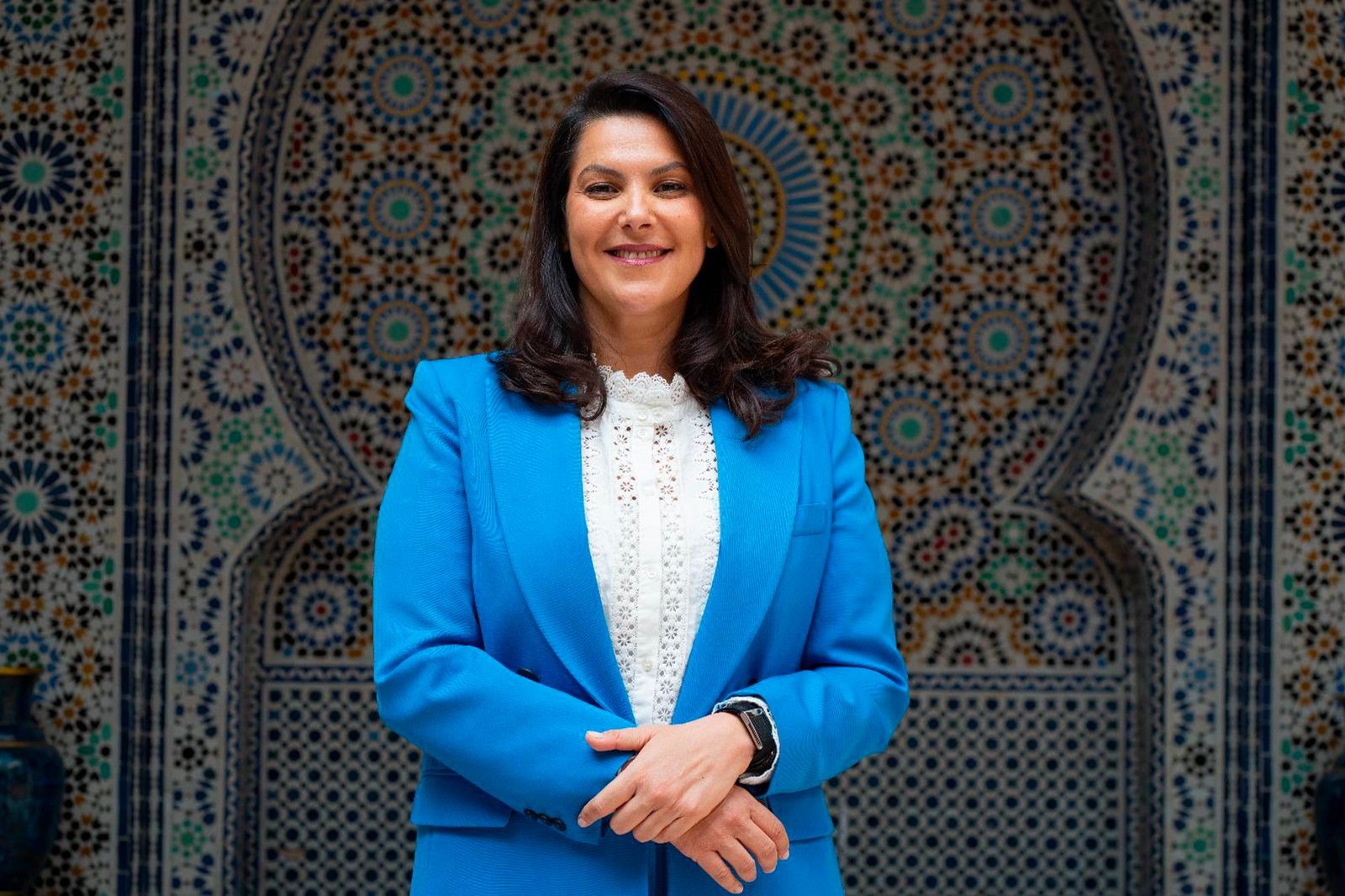
On Friday, October 23, 2026, Fouzi Lekjaa, Morocco's Minister of Economy, Finance and Public Administration Efficiency, presented Draft Finance Bill No. 60.26 — the 2027 state budget — to a joint plenary session of Parliament at the House of Representatives. It is the first budget prepared under Head of Government Fatima Ezzahra El Mansouri, whose government won Parliament's confidence the previous day, and it follows the general guidelines discussed by the Council of Ministers chaired by His Majesty King Mohammed VI, in accordance with Article 49 of the Constitution.
The presentation is the set piece of the autumn political calendar: the minister laid out, chamber by chamber, a budget built around two stated promises — a surge in social spending to restore purchasing power, and a fiscal deficit held at 3% of gross domestic product. The Government Council had approved the draft on Tuesday, October 20, under a tight constitutional timetable.
A 62-billion-dirham social package — roughly $6.3 billion — covering income-tax relief, higher pensions, expanded direct aid, subsidised electricity, and more money for health and education, alongside a sharp rise in the ceiling for defence procurement commitments and a bespoke tax regime for the 2030 World Cup. The numbers below are the bill's, as presented.
The centrepiece is income-tax reform, effective January 1, 2027. Employees earning less than 10,000 dirhams a month — about $1,000 — will pay no income tax at all. The annual tax-free threshold rises from 40,000 to 60,000 dirhams, five brackets collapse into three at 10%, 20% and 30%, and the top marginal rate falls from 37% to 30%. The government says 87% of employees will be exempt, most gaining around 500 dirhams a month, at a 2027 cost of 5.5 billion dirhams.
Pensions move substantially: the minimum monthly pension rises from about 1,000 to 1,700 dirhams, the widow's pension rate doubles from 50% to 100%, and the two measures together cost 10 billion dirhams — benefiting some 500,000 retirees, including more than 150,000 widows, and 431,000 widows for the doubling. The trajectory points to 3,000 dirhams by the end of the government's term. Minimum direct social assistance rises from 500 to 600 dirhams a month (cost: 3 billion), on a path toward 1,000. Electricity bills of 100 dirhams or less will be covered by the state for about six million customers — 60% of consumers — at a cost of 2.8 billion dirhams, a measure aimed at households and craft businesses, particularly in rural areas.
Beyond cash: health spending rises by 3 billion to 45.4 billion dirhams with 8,000 new positions, funding territorial health groups, the new university hospital in Casablanca and hospitals in Beni Mellal, Guelmim and Errachidia. Education, higher education and vocational training gain 5.3 billion to 121.3 billion dirhams with 17,874 positions. Six billion dirhams go to youth training, employment and business support — 100,000 young people trained each year to business needs, 100,000 given a first professional experience, plus a mobility pass and rental housing for young workers. One billion dirhams is earmarked to curb basic-goods prices through distribution reform, and 10.4 billion in investment funding goes to housing.
To offset the cost, the bill raises to 40% the tax on profits above 100 million dirhams earned by fuel distribution companies — a sector previously sanctioned by competition authorities for anti-competitive practices — and lifts excise taxes on soft drinks, alcoholic beverages, cigarettes and e-cigarettes. The state's financing requirement falls 7.4% to 159 billion dirhams, with domestic and external borrowing balanced "depending on market conditions."
The bill's special tax and customs regime for the 2030 World Cup — which exempts FIFA, federations, broadcasters, providers and some of their subcontractors from most Moroccan taxes through the end of 2032 — does not state what the exemptions will cost the Treasury, and FIFA itself will draw up part of the beneficiary lists. The defence advance-commitment ceiling of 190.5 billion dirhams is public; the contracts it will fund are not. Nor is it yet known how Parliament will amend the bill in committee, whether the 87% income-tax exemption reshapes declared employment as intended, or whether the "average crop year" underpinning the 3.7% growth forecast materialises.
This is the first budget of a new government, and it reads like a statement of intent. Purchasing power, social services and youth employment are the declared priorities — a direct answer to the social tensions of recent years. Lekjaa was unusually blunt for a finance minister: "savage capitalism and neo-liberalism" have been at the heart of social tension, he told Parliament, urging a stronger role for the state in combating corruption, conflicts of interest and monopolies, while safeguarding food and energy sovereignty.
It matters because the arithmetic is ambitious: sweeping tax relief and a 62-billion-dirham social package, with the deficit held at 3% of GDP and public debt projected to ease to 66.9% from 67.5%. If it works, Morocco demonstrates that a social-state pivot and fiscal discipline can coexist. If the offsets underperform — or if Parliament rewrites the bill — the arithmetic unravels.
Strip the budget to its political economy and three choices stand out. First, the tax reform is a middle-class wager: exempting 87% of employees from income tax is less a revenue measure than a social contract — formal, declared work becomes tangibly more rewarding than informal work, which is precisely the behaviour the reform claims to encourage.
Second, the offsets are selective, not broad. A 40% rate on large fuel-distribution profits targets a sector the competition authorities have already sanctioned — rent, not enterprise. Excise hikes on tobacco, alcohol, soft drinks and e-cigarettes are the classic painless revenue. The government is taxing what it can call unhealthy or unearned, while cutting what workers earn. That is a coherent philosophy, whatever one thinks of its yield.
Because the rhetoric is the policy's other half. By naming "savage capitalism and neo-liberalism" as the source of social tension, Lekjaa frames the budget as a correction of the previous economic model — one he says prioritised market forces over regulation and fostered monopolistic practices and rent-seeking. It is a finance minister using the language of political economy to license a stronger state: anti-corruption, conflicts of interest, food and energy sovereignty. Whether markets read that as stability or as interventionism will show in the borrowing costs.
Third, the defence ceiling — 190.5 billion dirhams in advance commitments, up 52.7% since 2024 — confirms that sovereignty has a price the government is willing to pay in parallel with social spending. It is not the annual defence budget, a distinction Moroccan outlets were careful to draw, but a ceiling for multi-year equipment and industry commitments. The Kingdom is modernising its forces and building a defence industry while cutting taxes: guns and butter, priced in dirhams.
If Parliament adopts the bill as presented, three second-order effects follow. Formal employment should rise at the margin: when 87% of employees pay no income tax, the incentive to stay informal weakens — though only enforcement and wage dynamics will tell by how much. Youth is the explicit bet: 100,000 trained and 100,000 placed each year, plus financing for 12,000 companies, attacks the employment question from both the supply and demand sides. And the electricity subsidy for six million small consumers — 60% of the customer base — puts cash-equivalent relief directly into rural households and craft workshops, where purchasing-power pain has been sharpest.
The framework also points further out: 210 billion dirhams of regional development over eight years, and desalination capacity rising toward 1.7 billion cubic metres a year by 2030 — the water-security spine of the entire plan. The World Cup tax regime, meanwhile, begins a six-year fiscal experiment: how much sovereign revenue a host country trades for a tournament.
The bill now enters Parliament's machinery. Under the constitutional timetable, the House of Representatives has 30 days of review, the House of Councillors 22 days, and the lower house six days for final reading. Committee examination comes first, then plenary debate and the vote; if Parliament has not adopted the bill by December 31, the government may open the necessary appropriations by decree while revenue collection continues under existing rules. The social measures will dominate the debate — and the defence ceiling and the FIFA exemptions will draw the closest scrutiny.
The Western lens: discipline plus distribution Western coverage, led by Reuters' wire reporting, reads the budget as a fiscal balancing act: tax cuts and a 62-billion-dirham social package, yet a deficit held at 3% of GDP and debt easing. The frame is macroeconomic credibility — the question is whether the offsets (fuel-distributor tax, excises, lower financing needs) genuinely cover the giveaways. Lekjaa's "savage capitalism" broadside is reported straight, as the rhetorical signature of a government repositioning the state's role.
Independent Eastern reporting had not appeared at publication time: no original coverage of the 2027 Finance Bill was found from Chinese, Japanese, Russian or other East-origin outlets in the verification window. What is on the record is the structural fact — Morocco's budget is a Global South fiscal event with limited Eastern media footprint, even as the Kingdom's south-south partnerships deepen. Documented rather than fabricated.
The Southern lens: the detail is the story Moroccan outlets carried the granular reporting Western wires compress: Hespress itemised every measure and its cost — the 500-dirham monthly gain, the 431,000 widows, the six million electricity customers; Morocco World News traced the defence ceiling's climb from 124.766 billion in 2024 to 190.5 billion; Alyaoum24 unpacked Article 36; Le Desk investigated the FIFA regime's blank cheque. The Southern reading centres purchasing power and the royal guidelines of Article 49 — a budget presented as the social state made concrete, with the 2030 World Cup as its long shadow.
Economy and Finance Minister Fouzi Lekjaa presented Draft Finance Bill No. 60.26 — the 2027 state budget — to a joint plenary session of Parliament. It is the first budget of the government led by Head of Government Fatima Ezzahra El Mansouri, built around 62 billion dirhams of social measures, income-tax cuts, and a deficit target held at 3% of GDP.
From January 1, 2027, employees earning less than 10,000 dirhams a month pay no income tax. The annual tax-free threshold rises from 40,000 to 60,000 dirhams, brackets fall from five to three (10%, 20%, 30%), and the top rate drops from 37% to 30%. The government says 87% of employees will be exempt, most gaining about 500 dirhams a month.
The minimum monthly pension rises from about 1,000 to 1,700 dirhams, and the widow's pension rate doubles from 50% to 100% — together costing 10 billion dirhams and benefiting around 500,000 retirees and 431,000 widows. Minimum direct social assistance rises from 500 to 600 dirhams a month, on a path toward 1,000.
It is the ceiling for advance financial commitments — not the annual defence budget. Under Article 36 of the bill, it authorises commitments in 2027 for Royal Armed Forces equipment and the national defence industry against 2028 appropriations. The ceiling is up 21.2% on 2026 and 52.7% since 2024, extending a multi-year modernisation trajectory.
The bill creates a fiscal and customs regime exempting FIFA, football federations, broadcasters, service providers and some subcontractors from most Moroccan taxes through the end of 2032. FIFA itself will draw up part of the beneficiary lists under the standard 'Government Guarantee N°3' model. The text does not state what the exemptions will cost the Treasury.
The bill goes to committee examination, then plenary debate and a vote. The House of Representatives has 30 days of review, the House of Councillors 22 days, and the lower house six days for final reading. If Parliament has not adopted the bill by December 31, the government may open the necessary appropriations by decree.
