Nearly 160 million Brazilians are voting in a presidential election that pits the 80-year-old incumbent against the son of Jair Bolsonaro — a contest shaped by the cost of living, religion and a vote to keep the other side out.
Published 4 October 2026 · 14:03 GMT
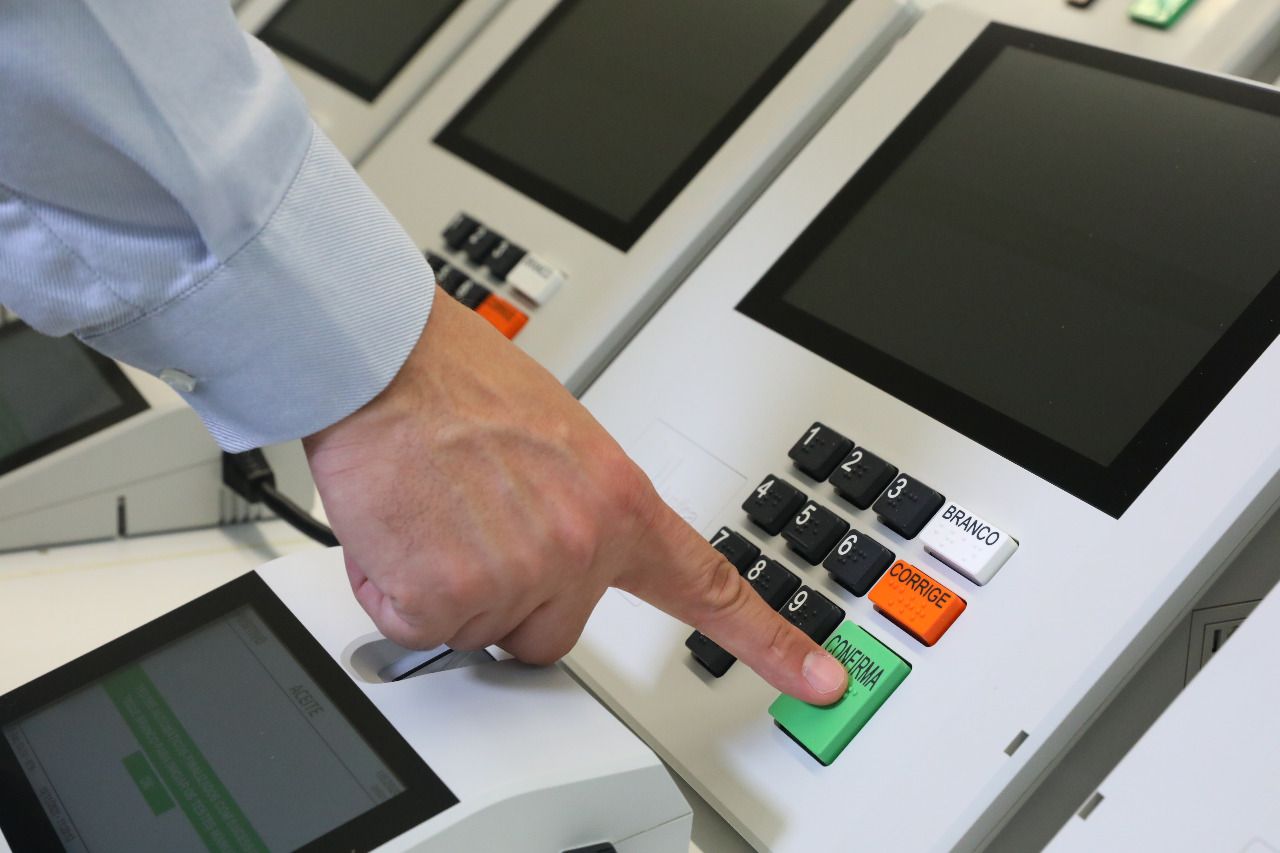
Brazilians began casting their votes on Sunday in a presidential election that ranks among the most consequential — and the most evenly matched — in the country's democratic history. Nearly 160 million voters were called to choose not only their president but also lawmakers, senators and governors, in a contest pitting the 80-year-old incumbent Luiz Inácio Lula da Silva against right-wing Senator Flávio Bolsonaro, the son of former president Jair Bolsonaro.
The vote unfolded against a backdrop of dead-even polling. Final surveys showed Lula and Bolsonaro tied, a result that analysts read as the expression of two consolidated political camps rather than a persuadable middle. In Rio de Janeiro and across the country, the mood reported by international media was less festive than tense: this is an election many Brazilians approached as a defensive act.
That defensiveness is itself the story. Mara Nogueira, a senior lecturer in urban geography at Birkbeck, University of London, argued that the tight race reflects a country split into two political blocs, with a significant share of the electorate voting not out of support for a candidate but to keep the other out of power. It is negative partisanship, Brazilian-style — and it makes the outcome genuinely unpredictable.
On one side stands Luiz Inácio Lula da Silva, the 80-year-old incumbent seeking a fourth term at the head of the Workers' Party left. On the other, Flávio Bolsonaro, a right-wing senator carrying the Bolsonaro family name into a national race for the first time as the standard-bearer — his father, the former president Jair Bolsonaro, looms over the campaign as its symbolic founder. The generational contrast is sharp: an octogenarian union leader turned three-time president against the heir of Brazil's populist right.
We know the scale: nearly 160 million eligible voters, the second-largest electorate in the Americas, voting simultaneously for the presidency, Congress and state governorships. We know the final polls showed the two men tied. And we know the three forces analysts say decided the campaign: the cost of living, religion, and the echo chambers of social media, where both camps mobilized with an intensity that traditional polling struggles to capture.
We do not know the result. With polls tied and Brazil's electorate sharply divided, the margin could be razor-thin in either direction, and the usual polling caveats — late deciders, differential turnout, the difficulty of measuring the anti-vote — apply with unusual force here.
We do not know how either camp will react to defeat. Brazil's recent history includes a contested transfer of power, and the rhetoric of both sides has kept the legitimacy question alive. A narrow loss could bring claims of irregularities, legal challenges, or street mobilization — none of which can be ruled out in advance.
We also do not know the down-ballot picture: the composition of Congress and the state governorships will determine whether the next president can actually govern, whatever the presidential result. A president without a workable legislature is a familiar Brazilian predicament.
Brazil is Latin America's largest economy, its most populous nation, and the anchor of the region's politics. The election will determine whether the continent's biggest country follows the regional swing to the right that US President Donald Trump has championed — or whether Lula's left holds the line. That choice reverberates through trade policy, climate diplomacy and the balance of power in the Americas.
It matters for the global south's self-image. Lula has spent his career positioning Brazil as a leader of the developing world — a BRICS founder, a voice for the poor, a broker between blocs. A Bolsonaro victory would recast Brazil as an ally of the Trump-aligned right, with consequences for everything from Amazon policy to the country's stance on the wars in Ukraine and Gaza. For a fuller picture of the stakes across the region, see our Brazil country profile and the United States profile.
It matters, finally, as a test of whether negative partisanship can sustain a democracy. If most voters are voting against rather than for, the winner inherits a mandate built on rejection — a fragile foundation for governing a continent-sized country.
The deeper pattern here is the hollowing out of the affirmative vote. When Mara Nogueira describes an electorate voting to block rather than to choose, she is describing a democracy running on veto power. That is not unique to Brazil — it is the signature of polarized electorates everywhere — but Brazil's version is unusually pure, because the two camps are so consolidated that persuasion has nearly stopped. Campaigns no longer convert; they mobilize the already-convinced and demoralize the other side's marginal voters.
That is why the three factors Nogueira names matter more than any policy platform. The cost of living is the material base of discontent. Religion — particularly the evangelical churches that have become the organizational backbone of the Brazilian right — is the mobilization machine. And social media echo chambers are the information environment in which neither camp encounters the other except as caricature. An election decided by these forces is less a deliberation than a census of two tribes.
The Trump dimension adds a geopolitical layer to a domestic fight. When a US president champions a regional rightward swing, a Brazilian election becomes a proxy contest for the hemisphere's direction — which raises the stakes of the legitimacy question. External validation of a contested result, from either Washington or its rivals, could harden a domestic dispute into an international one. The parallel with Europe's own rightward surge is striking — see our coverage of the AfD's earthquake in Germany's state votes.
A Lula victory would likely mean continuity: the BRICS agenda, south-south diplomacy, and a state-led development model at home. But a fourth Lula term at 80 raises the succession question the Workers' Party has dodged for two decades — who inherits the left when its founder finally leaves the stage? A narrow win built on the anti-Bolsonaro vote would also leave Lula governing a country half of which voted against him, with a Congress that may not cooperate.
A Flávio Bolsonaro victory would be the more disruptive outcome. It would install a Bolsonaro in the Planalto with the family brand intact, align Brazil with the Trump administration's hemisphere strategy, and likely mean a sharp turn in Amazon and climate policy. It would also test whether the institutions that withstood the last transition can withstand a transfer of power to the movement that contested it.
Either way, the down-ballot results will shape governability. Brazil's fragmented party system means presidents rule through coalitions; a hostile or fractured Congress can paralyze even a decisive presidential winner. The real second-order story may be written in the legislature, not the presidential palace.
First, the count. Brazil's electronic voting system is fast and, by most expert assessments, reliable — a result is expected within hours of polls closing on Sunday. A clear margin would likely produce a concession and a transition; a razor-thin margin is where the danger lies, with the losing side tempted to cry fraud.
Second, the certification. Brazil's electoral court will formalize the result, and the period between the vote and inauguration will be the true test of institutional resilience. International observation — and the posture of the United States under Trump — will matter: premature recognition or rejection of the result by foreign powers could inflame the domestic dispute.
Third, the governing begins. Whoever wins inherits an economy strained by the cost of living, a society split into two camps, and a region watching for the signal. The campaign's negative energy does not evaporate on election night; it becomes the opposition. The next president's first hundred days will reveal whether Brazil's democracy can convert a veto-based mandate into actual governance.
Western coverage frames the vote as a stress test for Brazilian democracy and its institutions. The emphasis falls on the resilience of the electronic voting system, the independence of the electoral court, and the danger that a contested result could replay the institutional crisis that followed the last transfer of power. Trump's open sympathy for the Bolsonaro camp is read in Western capitals as an external pressure campaign on the outcome — and on what comes after it.
From Beijing and Moscow, the race is watched through the lens of alignment. Lula's Brazil is a BRICS pillar, a partner in de-dollarization debates and a major supplier of the commodities China needs; a Bolsonaro presidency would tilt Brasília toward Washington and complicate that architecture. The east's reading is transactional rather than moral: whoever wins, Brazil's soy, iron ore and oil still have to go somewhere — but the political price of those flows changes with the occupant of the Planalto.
Across the global south, the election is personal. Lula is the region's most recognizable statesman, the architect of south-south diplomacy who made Brazil the voice of the developing world in forums from the G20 to the BRICS. For many southern capitals, a Bolsonaro win would feel like the loss of an ally — and a warning that the populist right's playbook, from family dynasties to social-media mobilization, travels well across the developing world.
The race pits incumbent President Luiz Inácio Lula da Silva, 80, seeking a fourth term, against right-wing Senator Flávio Bolsonaro, the son of former president Jair Bolsonaro. It is a contest between the Workers' Party left and a right wing now carried by the Bolsonaro family name.
Final polls showed Lula and Flávio Bolsonaro tied, and analysts describe two consolidated political camps with little middle ground. Many voters appear motivated less by enthusiasm for a candidate than by determination to keep the other out of power, which compresses the margin.
The cost of living topped concerns, alongside religion and the influence of social media echo chambers. The election also carries a regional signal: whether Latin America's biggest economy follows a rightward swing across the continent that US President Donald Trump has championed.
Brazil's electronic voting machines typically deliver results within hours of polls closing, so a winner is expected on Sunday night. A very tight margin could still mean recount demands or legal challenges before the outcome is formally certified, and Brazil's electoral court has the final word on any dispute.
