Internal Meta messages reviewed by Folha de S.Paulo acknowledge restrictions on President Lula's Instagram accounts — and the promotion of Flavio Bolsonaro's profile — nine days before Brazil's runoff. An electoral court has ordered equal treatment under daily fines.
Published 16 October 2026 · 23:14 GMT
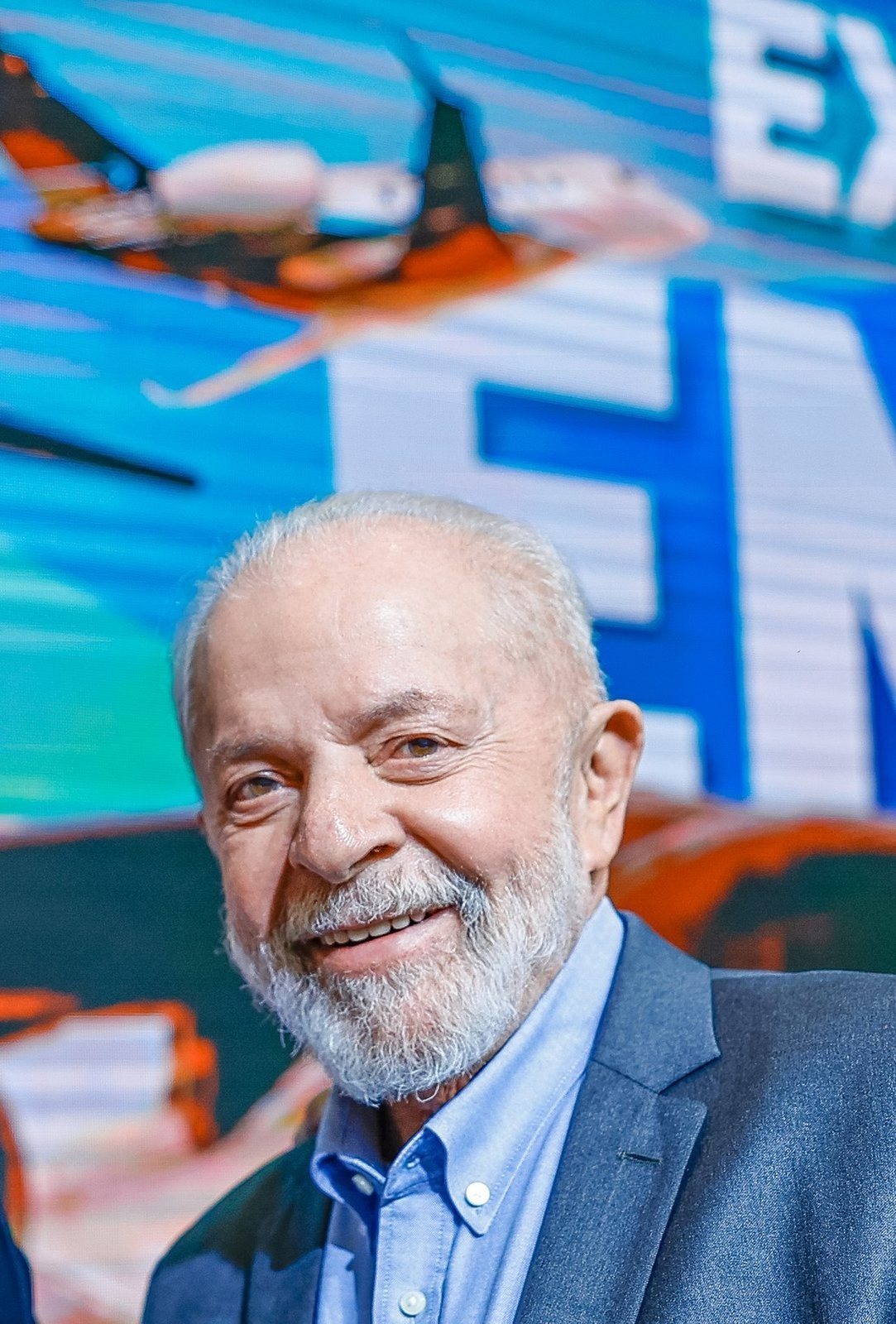
Employees at Meta acknowledged in internal communications that the Instagram accounts of Brazilian President Luiz Inácio Lula da Silva were hindered by restrictions during the country's election campaign, according to messages reviewed by Folha de S.Paulo and reported on Friday, October 16.
The messages also acknowledged that the platform had recommended the profile of Lula's runoff challenger, Senator Flavio Bolsonaro, as well as his WhatsApp channel, the newspaper said.
The disclosure came a day after a justice of Brazil's top electoral court ordered Meta to guarantee equal treatment of both candidates — nine days before the October 25 runoff.
Meta rejected any suggestion of favoritism: the technical issues were already public, it said, and the internal discussion concerned only their severity, not political interference. “Any suggestion that Meta favors one side is false.”
The report caps a week of escalation: Lula's camp promised a complaint before the Organization of American States alleging Meta manipulated social media during the election.
On Thursday, October 15, Justice Marco Aurelio Bellizze of Brazil's top electoral court ruled that Meta must immediately ensure equal treatment of both candidates through the runoff: no reducing the distribution of political content, no restricting searches, no removing posts in ways that create an imbalance.
The order reaches Meta AI as well — identical criteria for both candidacies in election-related content — with a 500,000 reais (about $98,700) daily fine for non-compliance.
It followed Lula's complaint accusing Meta of biased algorithms and AI restrictions favoring Bolsonaro. His party documented specific glitches: posts without a share button and reduced reach; stories blocking reactions and sharing; posts without audio or playing at accelerated speed.
The polls describe a dead heat. CNT/MDA on Friday: Bolsonaro 46.8 percent, Lula 45.9; Quaest: 46 to 44; Datafolha: 47 to 45, down from 49 for Bolsonaro a week earlier. All sit within roughly a two-point margin of error — a toss-up, experts say. A month ago Lula had been projected to win comfortably; then Bolsonaro topped the October 4 first round, 56,104,503 votes to Lula's 53,879,538.
The internal messages have not been published. Folha de S.Paulo reviewed them; the public has only the newspaper's characterization. The exact wording, the number of employees involved, their roles, and the full context of the severity discussion are all secondhand.
Unresolved on the substance: whether the restrictions were a technical fault that genuinely struck Lula's accounts harder, or something else; why the recommendation systems surfaced Bolsonaro's profile and WhatsApp channel; and whether Meta's AI tools treated the two candidacies differently in practice — precisely the question the court's order now targets.
Unmeasured: the scale of any reach Lula's accounts lost — Meta has disclosed no numbers. Unconfirmed: whether the complaint Lula's camp promised before the Organization of American States has actually been filed.
The central claim — political intent — is asserted by Lula's camp and denied by Meta, with neither side yet showing the underlying evidence in public. Until messages, logs, or an independent audit appear, the episode sits between documented outcome asymmetry and unproven allegation of design.
Brazil votes on October 25 in a runoff the polls describe as a statistical tie. In a race that may be decided by a point or two, distribution on platforms used by hundreds of millions of Brazilians is not background noise — it is the campaign terrain. WhatsApp in particular is where Brazilian elections are substantially fought.
The alleged asymmetry matters more than any single glitch: one candidate's posts losing share buttons while the other's profile and WhatsApp channel are actively recommended distorts the competitive field — and it arrives after Bolsonaro's stronger-than-expected first-round performance already upended every projection in the race.
It matters institutionally too. Brazil's electoral court now polices algorithmic neutrality in a live campaign — including AI chatbots — under daily fines. No major democracy has previously subjected a platform's AI assistant to equal-time doctrine nine days before a presidential vote.
As precedent: what Brazil's court orders this week will be studied — and cited — wherever the same platforms mediate elections.
Meta's defense rests on a clean distinction: acknowledging the severity of a technical problem is not acknowledging political intent. The distinction is coherent. Bugs do hit one prominent account harder than others, and internal triage threads look exactly like what Folha describes — employees discussing how bad an acknowledged issue is.
Restrictions can be bugs; recommendations are choices. A system that throttles one candidate's posts while actively surfacing the other's profile and WhatsApp channel produces, at minimum, an asymmetry of outcomes — and courts and regulators increasingly judge effects, whatever the intent.
That shift — from intent to effect — is the deeper story of the Bellizze ruling. The order requires no proof that Meta meant to favor Bolsonaro; it requires that Meta not produce imbalance, and it extends the requirement to Meta AI. Equal-time doctrine, born for broadcasters, is being rewritten in real time for recommendation engines and chatbots.
For Meta, Brazil is a stress test of a global posture. A binding mid-campaign equal-treatment order with daily fines is the outcome its policy teams most fear: the fine is trivial, the precedent is not. Calling the issues “already public” keeps the episode inside incident response, safely outside electoral interference.
The immediate second-order effect is on campaign strategy. Both camps now operate in a race where platform mechanics are contested terrain: every reach anomaly becomes potential evidence, every recommendation a potential exhibit. The court has effectively invited both campaigns to document and litigate the platforms' behavior as aggressively as they campaign on policy.
For Meta, the compliance question compounds across jurisdictions. An equal-treatment architecture built under court order in Brazil becomes a reference point regulators elsewhere can demand; the company's global policy stack now carries a Brazilian precedent in its risk model. Advertisers, meanwhile, are reminded that the region's largest ad platform is also a political actor under judicial supervision.
The AI dimension may prove the most durable. Meta AI is now, by court order, subject to equal-time obligations in a presidential campaign — a first for a major chatbot, and one that will be cited the next time any AI assistant is accused of political slant, in any country. Each unresolved episode of alleged interference — proven or not — deepens the ambient distrust in which the next allegation will be received.
The court will police Meta's compliance through the October 25 runoff, with the daily fine as its lever. The first test is practical: whether Lula's camp reports the glitches gone, and whether Meta publishes its own accounting of what the internal messages described. A transparent technical post-mortem — with numbers — would do more for Meta's position than any statement.
Three things could move the story from allegation to fact: publication of the internal messages Folha reviewed; an independent audit of the recommendation asymmetry during the campaign; or measured reach data for both candidates' accounts. Any one of them would collapse the current ambiguity. None has been offered — and with nine days to go, voters will likely decide before the evidence does.
The OAS track runs in parallel. If Lula's camp files the promised complaint, the regional body faces its own test: whether it holds any meaningful instrument for platform accountability. The polls, meanwhile, will show whether the story moves votes — or dissolves into noise.
Watch the final stretch: the side that best navigates — or best litigates — the platforms may find the margin it needs.
In Western capitals, the story reads as the latest chapter in the platform-power debate: unelected technology companies as arbiters of democratic competition. The framing centers on free expression and fair process — whether a private company mediating public discourse can stay neutral, and what follows when a court decides it has not.
American commentary will note the political valence. Flavio Bolsonaro, 42, has hewed closely to the persona of his father, former President Jair Bolsonaro — barred from running until 2030 and under house arrest serving a 27-year sentence connected to efforts to overturn the 2022 vote — and a victory would install another conservative leader aligned with US President Donald Trump in the region. The story feeds directly into the American argument over platform bias.
European regulators will watch the enforcement mechanics. Equal treatment for algorithmic distribution and AI outputs, policed with daily fines, goes further and faster than anything attempted under the EU's Digital Services Act.
From the vantage point of Beijing, Moscow, and New Delhi, the episode is another data point in the digital-sovereignty argument: Western platforms as instruments capable of tilting elections in the Global South — by design or by conveniently one-sided accident. The response that matters is the Brazilian court's: a Southern judiciary asserting jurisdiction over a US company mid-campaign, fines attached.
That assertion reads as validation for governments that have long argued platform governance cannot be left to the platforms' home jurisdictions. Domestic courts, Brazil just showed, can reach into the recommendation stack and the AI layer alike and compel equal treatment on a timetable measured in hours, not legislative sessions.
Expect the episode to surface in BRICS digital-governance discussions, where the question of who sets the rules for cross-border information infrastructure is already live. Brazil's move — swift, judicial, indifferent to Meta's framing — is the model response in that conversation.
Across Latin America and the Global South, the story lands where elections are actually lived: on WhatsApp. The allegation that one candidate's channel was recommended while the other's posts lost basic functions strikes at “WhatsApp democracy” — where Meta's products are civic infrastructure, not social media.
The regional name for the critique is algorithmic colonialism: decisions made in Menlo Park shaping political outcomes in São Paulo with no democratic accountability at the point of impact. Lula's promised complaint to the Organization of American States is an attempt to build that accountability at the regional level, as the continent's democracies keep colliding with platform power.
Brazil's electoral court is, in this telling, an institutional innovator rather than an outlier: the same court that barred Jair Bolsonaro from office until 2030 and repeatedly forced platforms to obey Brazilian law is now writing the first draft of AI-era electoral jurisprudence. The South is not waiting for Northern regulators to act.
According to Folha de S.Paulo, which reviewed the messages, Meta employees acknowledged in internal communications that President Lula's Instagram accounts were hindered by restrictions during Brazil's election campaign. The messages also acknowledged the platform recommended challenger Flavio Bolsonaro's profile and his WhatsApp channel. The messages themselves have not been published; the account is the newspaper's characterization of what it reviewed.
Meta told Reuters the technical issues cited in the report were already public and that the internal conversations related solely to the severity of those issues, not political interference. Its statement added: “Any suggestion that Meta favors one side is false.” The company has not published the messages or released measured reach data for the candidates' accounts, leaving its technical-fault explanation unaccompanied by public evidence so far.
On October 15, Justice Marco Aurelio Bellizze ordered Meta to immediately ensure equal treatment of Lula and Bolsonaro through the runoff: no reducing the distribution of political content, no restricting searches, and no removing posts in ways that create imbalance. The order also requires Meta AI to apply identical criteria to both candidacies. Non-compliance carries a fine of 500,000 reais — about $98,700 — per day.
Brazilians vote on October 25. The latest surveys show a statistical tie: CNT/MDA put Bolsonaro at 46.8 percent against Lula's 45.9 percent; Quaest measured 46 to 44; Datafolha found 47 to 45, down from 49 percent for Bolsonaro a week earlier. All sit within roughly a two-point margin of error, and experts still call the race a toss-up — after Bolsonaro won the October 4 first round with 56,104,503 votes to Lula's 53,879,538.
