No NATO summit in Tirana in 2027, Rama says
Albania’s prime minister said in Dublin that no date has been agreed for the next NATO summit, ruling out 2027, while the alliance insists the gathering will still be held in Albania.
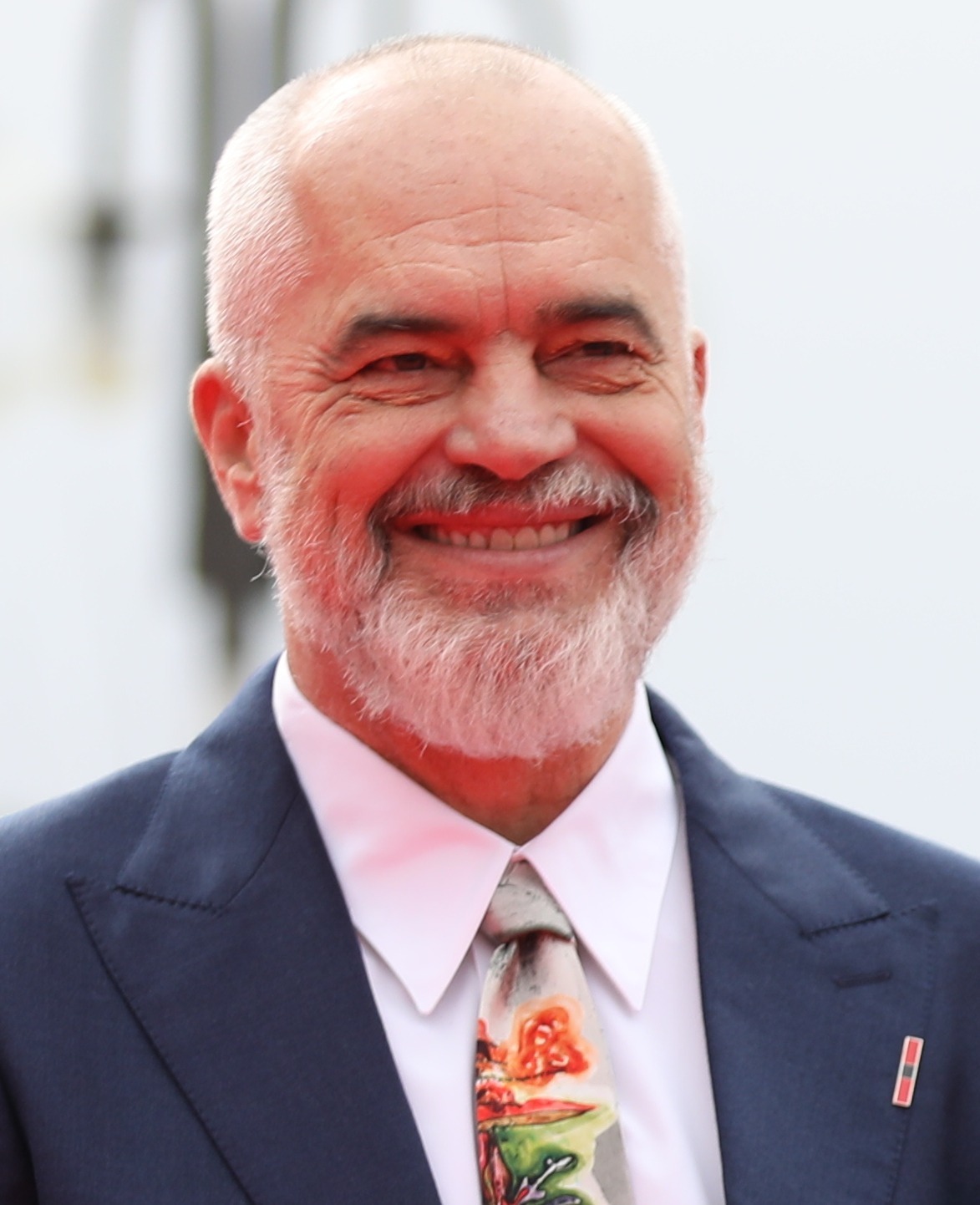
Key points
- Edi Rama said in Dublin on 12 November 2026 that there is no common position on when the next NATO summit will happen, “for sure not in 2027”. 1
- Rama added that in 2028, “if it will be a summit, it will be in Tirana”. 1
- A NATO official said on 12 November 2026 that “the next NATO Summit will be held in Albania”, with the date yet to be decided. 1
- The June 2025 Hague declaration said leaders looked forward to meeting in Türkiye in 2026 “followed by a meeting in Albania”. 3
- The declaration from the July 2026 Ankara summit made no mention of a time or place for the next meeting. 2
Three readings of the same result
Same facts, different frames. Each reading names its outlets and what it emphasizes.
Washington’s shadow over the calendar.
From a Western perspective, the story reads as a scheduling decision shaped in Washington.
Key detail The Trump administration’s resistance to the Tirana summit sits at the centre of the account, and the debate over ending annual summits is understood in…
An absence stated plainly.
No independent Eastern outlet reported Rama’s announcement, and that absence is stated here rather than filled in with a substitute account.
Key detail The Eastern press carried the story only through the same Western wire account, so the East has read this decision through Western eyes.
Tirana’s wait, seen from the Global South.
From the Global South, the story reads first through the country that lost the date.
Key detail Al Jazeera’s account pairs the summit news with the pressure Rama faces at home; months of protests over a luxury resort in a protected…
Sources by lens: 5 West, 0 East, 1 Global South. See every source
The story
A date ruled out in Dublin
NATO will not hold a summit in Tirana in 2027. Albania’s Prime Minister Edi Rama said in Dublin on Thursday 12 November 2026, speaking at the ninth European Political Community summit, where around 50 European leaders had gathered. “The issue is that there is not yet common position on when the summit will happen, for sure not in 2027,” Rama said. “And in 2028, if it will be a summit, it will be in Tirana.”
The statement ends, for now, a plan written since June 2025, when NATO leaders meeting in The Hague declared that they looked forward to gathering in Türkiye in 2026, “followed by a meeting in Albania”. A NATO official kept the door open on Thursday: “the next NATO Summit will be held in Albania. A decision on the date has yet to be made.”
The delay had been visible for months. Reuters reported in June that the plan faced resistance from the Trump administration and dissatisfaction among NATO members with Tirana’s low defence spending, and the declaration adopted at the alliance’s Ankara summit in July 2026 made no mention of a time or place for the next meeting.
What did Rama actually say in Dublin?
Rama spoke in Dublin on Thursday 12 November 2026, ahead of the ninth meeting of the European Political Community, the forum of European leaders created in 2022 after Russia’s invasion of Ukraine. The gathering at the Convention Centre Dublin brought together heads of state and government from across the continent, followed by an informal meeting of European Union leaders on Friday 13 November.
What is settled is narrow. Rama ruled out 2027 and pointed to 2028 as the year Tirana could host, if a summit is held at all. NATO’s own line, given by an official the same day, confirms Albania as host of the next summit without committing to a date. The written record is the Hague declaration of 25 June 2025, whose final point promised the sequence plainly: a meeting in Türkiye in 2026, followed by a meeting in Albania.
The 2027 date was already fragile. Reuters reported in June, citing a NATO diplomat and three people familiar with the matter, that the plan faced resistance from the Trump administration and unhappiness over Tirana’s spending. The final declaration from Ankara said only that leaders looked forward to their next meeting, without naming a time or a place. The Dublin gathering where Rama spoke was itself dominated by European security questions, with Ukraine at the top of the agenda.
What “no common position” covers is also unclear.
What is still undecided about the next summit?
The largest unknown is whether a NATO summit happens at all in the coming years. The alliance has been considering ending its recent practice of annual summits, a change that would remove a set-piece date from the calendar and could avoid a tense encounter with President Trump later in his term. If the annual rhythm goes, the question is no longer when Tirana hosts, but whether the summit survives in its current form.
Nor is 2028 a promise. Rama’s own words were conditional: “if it will be a summit, it will be in Tirana”, and the NATO official’s assurance carries the same condition, since no date has been set. Diplomats say the alliance could still hold a summit at short notice this year, but not in Tirana, leaving open a gathering elsewhere before the year ends.
What “no common position” covers is also unclear. It may mean disagreement over the date alone, over the host, or over the format, and neither Rama nor the alliance has said which allies object or on what terms. Tirana’s figures have moved since June, and it is not known whether that is enough to satisfy the critics.
Why a missing year matters for Tirana
For Albania, the summit was never only a meeting. It would have been the first NATO summit hosted by the country since it joined the alliance in 2009, and the 37th in the alliance’s history. Hosting would have put Tirana at the centre of the transatlantic calendar for a week, the most visible mark yet of a small Balkan state that spent the Cold War sealed off from the West.
The postponement therefore lands as a reputational matter as much as a scheduling one. A summit in the capital would have been presented in Tirana as proof that Albania belongs at the table where the alliance’s decisions are made, and its absence leaves that proof undelivered, along with the investment in planning and venues, which now has no date to aim at.
The timing sharpens the point. Rama has been in office for 13 years and faces months of protests at home, and the summit had offered a piece of good news on the international stage.
The spending ledger behind the delay
The argument about money is the one part of this story that can be measured, and the numbers cut both ways. NATO’s July 2026 figures estimate Albania’s core defence spending at 2.15 percent of GDP in 2026, up from 1.48 percent in 2025 and 1.20 percent in 2022, above the alliance’s long-standing 2 percent benchmark. But the doubts were raised in June, when the 2025 figure was the one in front of allies.
The Albanian government told Reuters in June that it was finalising measures to bring its 2026 defence and defence-related spending into line with the Hague trajectory, putting the total at 2.6 percent of GDP. NATO Secretary-General Mark Rutte said earlier in June that Albania, Czechia and Slovenia had committed to exceed 2 percent this year, framing Tirana’s shortfall as a closing gap.
Yet the benchmark itself has moved. At The Hague in June 2025, leaders committed to invest 5 percent of GDP annually on core defence and defence-related spending by 2035, with 3.5 percent on core defence and 1.5 percent on the wider measures. Against that horizon, 2.15 percent is a step, not an arrival. NATO’s own public line has stressed unity, but Washington’s resistance shows the summit calendar tests that unity politically.
Two forces pulled in the same direction: Washington’s reluctance to stage an encounter that could produce awkward headlines, and the spending argument, which gave that reluctance a respectable reason. Together they left Rama with nothing to announce in Dublin except a postponement.
What the postponement sets in motion
The first consequence falls on Tirana itself. Planning for a summit of this scale runs for years, and a date that slips by a year leaves contracts and venues in limbo, forcing a choice between spending on a 2028 gathering that is not guaranteed and pausing.
The second consequence is domestic. Rama’s government has faced months of protests that began in May, after he gave preliminary approval to a luxury resort backed by Jared Kushner, the son-in-law of President Trump, in the protected Vjosa-Narta wetland at Zvernec and on nearby Sazan Island. The protests, called the Flamingo Revolution, grew into wider demonstrations demanding his resignation over alleged corruption, then into violent student protests in October. On 29 October, opposition lawmakers led by Sali Berisha disrupted a session of parliament with flares and smoke bombs in support of the protesters. Rama has refused to resign, says the resort complies with Albanian and European Union law, and calls the protests orchestrated by rivals. The clashes in Tirana have already shaped how the country is seen abroad, and the lost summit adds a second front to the same argument.
The third consequence reaches beyond Albania. If the alliance abandons annual summits, smaller allies lose one of the few occasions when the leaders’ meeting comes to them. Albania’s street protests and the delay are separate stories, but they now arrive together.
The dates to watch after Dublin
The next fixed point is the summit in Türkiye in 2026, which the Hague declaration promised and which the Ankara gathering in July 2026 appears to have confirmed as the alliance’s next meeting. What leaders say there will show whether the postponement is a delay or the start of a longer drift.
Two decisions will matter before that. The first is NATO’s own choice about the annual rhythm: whether summits remain yearly or become occasional, and whether a short-notice gathering is called this year somewhere other than Tirana. The second is Albania’s: whether the 2026 figures confirm the rise to 2.15 percent of GDP and the broader 2.6 percent total promised in June.
Until those decisions land, the position is as Rama stated it: no summit in Tirana in 2027, a possible summit there in 2028, and no agreed date for anything. The alliance has not cancelled the Albanian summit; it has left it without a year.
What we agree on, and what remains open
Established
- Edi Rama said in Dublin on 12 November 2026 that there is no common position on when the next NATO summit will happen, for sure not in 2027, and that in 2028, if there is a summit, it will be in Tirana.
- A NATO official said the same day that the next summit will be held in Albania, with the date yet to be decided.
- The June 2025 Hague declaration promised a meeting in Türkiye in 2026 followed by a meeting in Albania, while the July 2026 Ankara declaration named no time or place for the next meeting.
Contested
- Whether the delay was driven mainly by resistance from the Trump administration, by Tirana’s defence spending, or by the debate inside the alliance over ending annual summits, and whether a summit will in fact be held in Tirana in 2028.
Still open
- Whether any NATO summit will be held in 2027 or 2028, whether the alliance keeps its annual rhythm, where a short-notice summit would be held, and what exactly the allies disagree about behind the phrase no common position.
What to watch
Questions, answered
No. Albania’s Prime Minister Edi Rama said in Dublin on 12 November 2026 that there is no common position on when the next summit will happen, and that it will for sure not be in 2027. He added that in 2028, if a summit is held, it will be in Tirana. A NATO official confirmed the same day that the next summit will be held in Albania, while no date has yet been decided.
Reuters reported in June that the plan faced resistance from the Trump administration and dissatisfaction among NATO members with Tirana’s low defence spending. The alliance has also been considering ending its practice of holding annual summits, which could avoid a tense encounter with President Trump later in his term. The declaration from the July 2026 Ankara summit then made no mention of a time or place for the next meeting.
In the Hague Summit Declaration of 25 June 2025, the alliance’s leaders wrote that they looked forward to their next meeting in Türkiye in 2026, followed by a meeting in Albania. The same declaration committed allies to invest 5 percent of GDP annually on core defence and defence-related spending by 2035, with 3.5 percent on core defence and 1.5 percent on wider measures. That written sequence is what Rama’s Dublin remarks have now overtaken.
NATO’s July 2026 figures estimate Albania’s core defence spending at 2.15 percent of GDP in 2026, up from 1.48 percent in 2025 and 1.20 percent in 2022. The Albanian government told Reuters in June that its total defence and defence-related spending for 2026 would reach 2.6 percent of GDP, with 2.2 percent on core defence and 0.4 percent on other defence and security-related spending.