France braces for a day of nationwide strikes as Macron’s authority faces a new test
Unions and students bring France to a standstill on Thursday, 5 November, in a dispute over living costs, public services and schooling that has become the sharpest test yet of Emmanuel Macron’s final months in office, with hundreds of thousands expected to march and 70,000 police on the streets.
Published 5 November 2026 · 07:07 GMT
The summary
Trade unions led by the CGT, backed by student groups, have called a nationwide strike and marches across France for Thursday, 5 November, over wages, pensions, public services and the cost of living. Between 500,000 and 700,000 people are expected to demonstrate outside Paris, according to the domestic intelligence service, in what would be one of the largest mobilisations of the autumn.
The three lenses
- WestThe West reads a government running out of room The Western press frames the day as an arithmetic problem as much as a protest: a government that cannot pass its budget, a parliament that will not give it a majority, and a president in his final months trying to hold the line until the election, with the debt load near 120 percent of output behind every decision.
- EastThe East watches a European power test its own stability In South Asia the story travels on the wire, with AAJ English TV in Pakistan carrying the Reuters account under a headline about mounting pressure on Macron, and the frame is institutional, a president in his final months and a parliament that will not pass his budget.
- Global SouthThe South sees the policing first and the politics second The Southern press leads with the security operation: TRT World and ANews put the 70,000-strong deployment, the defence council and the marches of 5 and 7 November at the top of the story, while Al Jazeera keeps the focus on the protest bans and the more than 2,700 people taken into custody.
Key facts
- Trade unions led by the CGT, backed by student groups, have called a nationwide strike and marches across France for Thursday, 5 November, over wages, pensions, public services and the cost of living. Reuters (5 Nov 2026)
- Between 500,000 and 700,000 people are expected to demonstrate outside Paris, according to the domestic intelligence service, in what would be one of the largest mobilisations of the autumn. Reuters (5 Nov 2026)
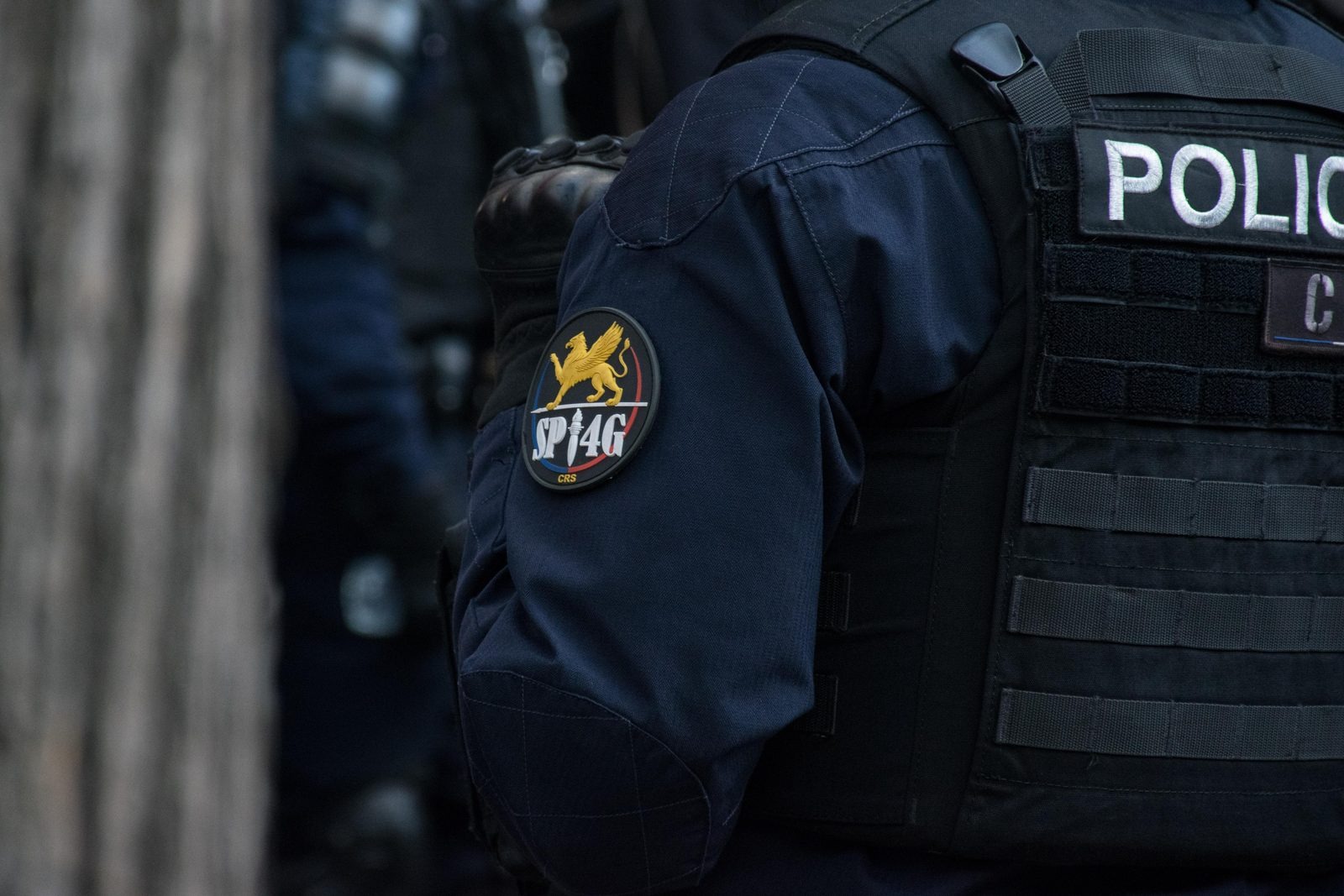
- Around 70,000 police officers and gendarmes are being deployed across the country, and Interior Minister Laurent Nuñez has promised a very firm response to any violence. TRT World (5 Nov 2026)
- The Education Ministry expects 17.5 percent of public primary school teachers to strike, with secondary teachers also walking out, disrupting classes across much of the country. Reuters (5 Nov 2026)
- President Emmanuel Macron convened a National Defence and Security Council meeting at the Élysée on Wednesday to prepare for the demonstrations planned for 5 and 7 November. ANews (4 Nov 2026)
- The government is struggling to pass a belt-tightening budget through a divided parliament while public debt stands close to 120 percent of economic output. Reuters (5 Nov 2026)
A country stops work while Paris waits for the march
France stops work on Thursday, 5 November, as trade unions call a nationwide strike and marches fill city centres from Lille to Marseille, in the sharpest confrontation yet between the government and a movement that began in the schools and has now spread across the public sector. The CGT, one of the unions behind the stoppage, is joined by other labour organisations and by student groups, and the action reaches hospitals, schools, railways, ports, air traffic control and the post office, with private school teachers marching beside their state-school counterparts. The demands are wages and pensions, more money for public services, and a different state and social security budget, and behind them sits the grievance that has carried the movement for weeks, that households can no longer keep up with the cost of living, on a scale last seen on the September strike day.
What the official counts and the ministries are saying
The numbers the authorities are working with are large on both sides of the barricade. The domestic intelligence service expects between 500,000 and 700,000 people to demonstrate outside Paris, while the interior ministry is deploying around 70,000 police officers and gendarmes across the country, with Interior Minister Laurent Nuñez promising a firm response to any violence. The Education Ministry expects 17.5 percent of public primary school teachers to strike, and unions warn that secondary teachers will walk out as well, disrupting classes across much of the country. SNCF has warned of disruption to regional services and to some services around Paris, dock workers expect disruption at French ports, and the state-owned utility EDF says its electricity workers’ unions will join the strike, weeks after a September power stoppage cut supply and delivery at the Dunkirk liquefied natural gas terminal.
How many will march, and how will the day end?
For all the preparation, the two questions that matter most have no answer yet, and they will not have one until the marches are over. Nobody knows how many people will actually turn out, since the figures circulating now are expectations from the intelligence services and the unions, which have counted differently at every mobilisation this autumn, so the real test arrives only when both camps publish their counts later on Thursday. Nobody knows either whether the day will stay peaceful, because the government’s entire security plan is built around avoiding a repeat of 17 October, when riots and looting damaged shops and public buildings across the country, and a single violent fringe in any city would hand the government the images it needs to change the subject from wages to order.
Why a one-day strike reaches far beyond Thursday
A single day of strikes would matter little on its own, yet this one lands at the exact point where France’s budget, its politics and its presidency all collide. The government is trying to pass a belt-tightening budget through a parliament where it holds no comfortable majority, while public debt stands close to 120 percent of economic output, and the unions’ central charge is that the proposed cuts would worsen poverty, cut social security, freeze state workers’ salaries and dry up investment in environmental measures. Macron, meanwhile, is in his final months in office, with the presidential election about five months away, and every decision he takes now is read as a message to the campaign that follows. For the debt arithmetic behind the fight, see the pressure on French borrowing costs and our France country profile.
The strike that started in a school corridor
What makes this mobilisation different from the routine strike days of French politics is where it began, because the movement started with high school students, not with the unions, after demonstrations first erupted at a school in Créteil, southeast of Paris, over staff shortages, and then widened as pupils were joined by workers protesting over the cost of living. The unions arrived later and gave the anger its national shape, yet the students set its tone, which is why the government has spent as much energy talking to school representatives as to the CGT. Macron convened his defence and security meeting on Wednesday, and an official close to him summed up the government’s aim in a single image: the goal in the coming weeks is to get the river that overflowed back into its bed. For how the student movement grew, see our coverage of the October student protests.
What changes even if nobody wins on Thursday
Whatever the turnout, the strike has already changed the arithmetic around the government in three ways that will outlast the day. First, the power sector’s participation gives the unions a lever they did not have in September, since the mid-September electricity stoppage showed that a strike in the energy system can cut supply and delivery at the country’s biggest liquefied natural gas terminal within days. Second, the calendar keeps the pressure on, because the Yellow Vests have called for mobilisation through Saturday, 7 November, which means Thursday is an opening rather than a climax. Third, the politics of the presidential race now runs through the street, with Marine Le Pen polling strongly for the election due next spring, and every image from Thursday will be used by a campaign before the week is out.
What to watch as the day unfolds
First come the turnout counts, with the police and the unions expected to publish their figures later on Thursday, and the gap between the two will tell its own story. Second is Saturday, 7 November, when the Yellow Vests are expected to join a further day of demonstrations, and the government has already signalled a massive security operation to prevent a repeat of the 17 October violence. Third is the budget itself, because the strike was called against a spending plan that still has to survive a divided parliament, and the unions have made clear that their demands on wages, pensions and public services are not going away if the budget passes unchanged. If Thursday passes peacefully and the crowds are large, the government faces a negotiation it has been avoiding; if it turns violent, the conversation becomes one about order instead.
The three lenses
West Lens:
The West reads a government running out of room The Western press frames the day as an arithmetic problem as much as a protest: a government that cannot pass its budget, a parliament that will not give it a majority, and a president in his final months trying to hold the line until the election, with the debt load near 120 percent of output behind every decision.
East Lens:
The East watches a European power test its own stability In South Asia the story travels on the wire, with AAJ English TV in Pakistan carrying the Reuters account under a headline about mounting pressure on Macron, and the frame is institutional, a president in his final months and a parliament that will not pass his budget. No independent reporting from the region’s big outlets was found, so the Eastern lens here is the wire itself.
South Lens:
The South sees the policing first and the politics second The Southern press leads with the security operation: TRT World and ANews put the 70,000-strong deployment, the defence council and the marches of 5 and 7 November at the top of the story, while Al Jazeera keeps the focus on the protest bans and the more than 2,700 people taken into custody. Read this way, the strike is less a wage dispute than a contest over who controls the street.
The consensus
- What we agree on
- We agree: unions and students are striking nationwide on Thursday, 5 November, over living costs, public services and education, with hundreds of thousands expected to march.
- What we don't agree on
- We agree: the state is deploying about 70,000 police officers and gendarmes, and the government has framed the day as a public-order test after the riots and looting of 17 October.
- What we know
- We disagree on: whether the mobilisation is a legitimate protest over wages and services or, as Macron argues, a movement captured by seditious ultra-left groups seeking to bring down the Republic.
- What we don't know yet
- We do not yet know: how many people will actually march, or whether the day passes peacefully; turnout figures from the police and the unions are expected later on Thursday.
- What we expect
- We expect: the confrontation to run through Saturday’s Yellow Vest march and into the budget votes, with the presidential election about five months away shaping every decision.
Questions, answered
Why are French unions striking on 5 November?
The unions, led by the CGT and backed by student groups, are striking over wages, pensions, public services and the cost of living, and against a belt-tightening budget they say would worsen poverty, cut social security, freeze state workers’ salaries and dry up investment in environmental measures. The action follows weeks of unrest that began with student protests over conditions in schools.
How many people are expected to march?
The domestic intelligence service expects between 500,000 and 700,000 people to demonstrate outside Paris, with tens of thousands more in the capital, though the figures are expectations rather than results. The police and the unions count turnouts differently, so the real measure of the day will come when both sides publish their counts later on Thursday.
How is the government responding to the protests?
The government is deploying around 70,000 police officers and gendarmes nationwide, with Interior Minister Laurent Nuñez promising a firm response to any violence. President Emmanuel Macron convened a defence and security council meeting on Wednesday, and the government says it is extremely vigilant because it is out of the question to relive the riots and looting of 17 October.
What happens after Thursday’s strike?
The mobilisation continues into Saturday, 7 November, when the Yellow Vests are expected to join further demonstrations, and the government has signalled a massive security operation for the weekend. Beyond that, the budget still has to pass through a divided parliament, and the unions say their demands on wages, pensions and public services will not go away if it passes unchanged.