After a 15-year-old lost his hand in Lens, Interior Minister Laurent Nunez suspended police stun grenades at school protests. As Prime Minister Lecornu prepared to address the nation on Wednesday evening, a third week of blockades exposed a school system in ruins and a government with almost no money to fix it.
Published 7 October 2026 · 18:00 GMT
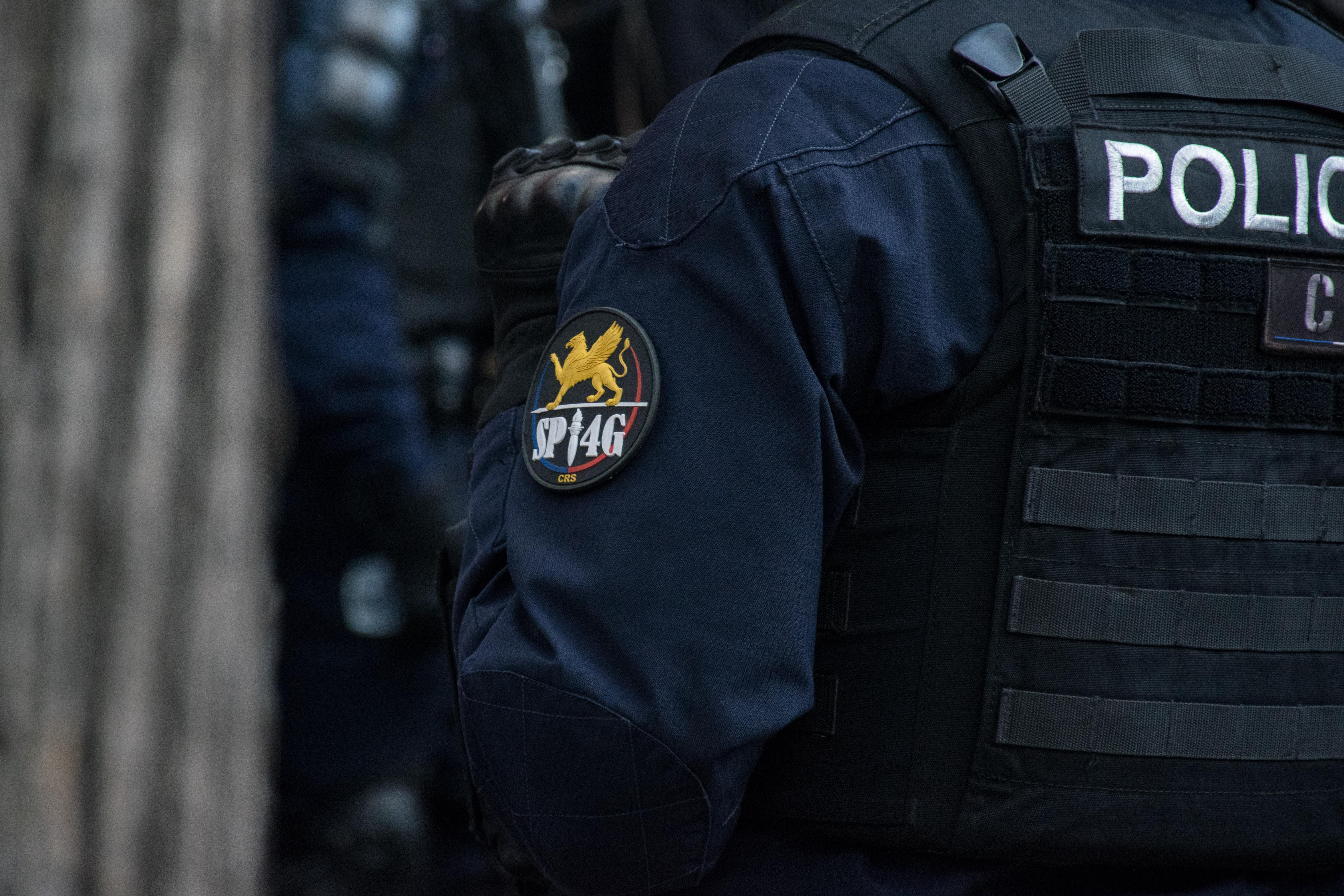
PARIS. France has suspended the police use of stun grenades at student demonstrations, hours after a 15-year-old boy's hand was blown off by one during a clash with riot police in the northern city of Lens. Interior Minister Laurent Nunez announced the suspension on RTL radio on Wednesday morning, as Prime Minister Sébastien Lecornu prepared to address the nation on Wednesday evening about a school protest movement entering its third week. More than 500 schools were partially or fully closed on Wednesday, and unions called for fresh marches on Thursday. The decision marks a striking concession from a government accused of disproportionate force, with 18 police conduct investigations open, even as it struggles to fix a school system in ruins with almost no money.
The suspension was ordered on Tuesday by Louis Laugier, the director general of the National Police, as a provisional measure until the circumstances of the Lens injury are established. Nunez confirmed it on Wednesday morning, telling RTL there was a "strong possibility" that the firing of a non-lethal stun grenade had caused the teenager to lose his hand. "I am suspending their use for the high school students' movement until light has been shed on what happened in this case," he said, stressing that the halt applied only to those protests and only until investigators had clarity.
France stopped the grenades only after a schoolboy lost his hand. The harder question, which no suspension can answer, is who will pay to rebuild the schools.
Le Monde identified the weapon as the EF-SON, a new-generation stun grenade manufactured by the French company Alsetex, a longtime supplier to the Interior Ministry. The device has been in police hands only since the summer of 2025, alongside another model, the GL-304, made by Brazil's Condor. Forty millimetres wide and fired from the Cobra launcher, the EF-SON travels about 80 meters and detonates at roughly 160 decibels at ten meters, according to police documentation reviewed by the paper. Its sound is comparable to the older GM2L tear gas grenade, which already mutilated demonstrators before: a young man's hand was torn off at a rave in Redon, Brittany, in 2021, and a peaceful protester's thumb was ripped away in Rouen in 2023. Both cases were closed without prosecution. Ironically, with the EF-SON now suspended, police must fall back on the very GM2L whose record of injuries forced its partial retirement.
The Lens case was not the only one to horrify the public. Last week, a 14-year-old student in northwest Paris was hit in the face by a tear gas grenade at such close range that he lost several teeth, and an officer was charged on Tuesday over that incident. Nunez said police had opened 18 internal investigations into alleged misconduct since the protests began. President Emmanuel Macron, after emergency talks on Tuesday night with Lecornu and the education and interior ministers at the Élysée Palace, demanded "empathy" and "pedagogy" from the forces, insisting through Nunez on acting "with the greatest proportionality."
Student unions have translated the anger into numbers: they demand a 10-billion-euro investment in secondary and higher education and have drawn up a 10-point list of proposals that includes rethinking student workloads, scrapping the controversial university admissions system, ending police violence against students and creating more student accommodation. Lecornu's response so far has been a week of "internal democracy," with high schools asked to replace lessons with debates so grievances can be aired. Student union leader Ryad Rani dismissed the offer as "yet another attempt to muzzle the debate," while Nicolas Bonnet, who represents school principals, said getting out of the crisis would take "something more than simple consultation periods."
The students themselves are unmoved. Sabrine Kharbach, spokesperson for the Student Union federation, told BFMTV that blockades would continue until demands were met. Anaïs Ella, spokesperson for the Les Lycéens association, told CNN that Lecornu had not addressed the union demands at all, adding that filling vacant posts in exam-year classes "was the basics of the education system" and that, while money would solve some of their problems, a deeper reset in relations between the government and students was needed. "We are the ones most directly affected by the national education system, yet we aren't actually listened to," she said. Angelo Via, a 19-year-old who marched on Tuesday, told CNN he felt "powerlessness" in the face of police violence, but hoped the protests would force "radical change" on education budgets.
Politically, Lecornu is walking a wire. He has acknowledged the "legitimate" demands of the students while calling the unrest the most violent student demonstrations in decades. The left accuses him of repression: Manuel Bompard, national coordinator of the hard-left France Unbowed, said "it took several children being maimed for life" for the minister to give up grenades against schoolchildren, while the government blames the same movement for stoking the tensions. A petition on the National Assembly's own website now calls for a ban on weapons capable of causing injuries during demonstrations. Meanwhile the fiscal standoff has already rattled French bond markets, leaving the government with almost no room to buy its way out of the school crisis.
Money is the other vise. Under pressure to tame public debt amid weak growth, the government has little spare cash for understaffed schools and ageing buildings, and Wednesday evening's address was to cover the school crisis alongside the contested 2027 budget. France's country profile shows a state squeezed between street pressure and debt markets. The street, meanwhile, is not done: five major teaching unions have called a strike for Thursday in solidarity with their students, the CGT trade union is backing further marches, and student organizations have proclaimed Thursday "Act IV" of the movement, with another national day of action set for October 17. Macron's team hopes dialogue will work; it used the same listening strategy to calm the Yellow Vests in 2019. The students, for now, are still in the streets.
The unrest is also spilling across borders. In the Belgian city of Liège, at least 107 people have been arrested in connection with student protests this month, and teachers there are on strike. In Portugal, the main teachers' union FENPROF launched an indefinite strike in mid-September against overtime, while Madrid's teachers plan their own strike on October 14. What began as a French school revolt is becoming a European one.
In Western capitals and newsrooms, the story is being read as a stress test of French democracy itself. The suspension of the stun grenades is treated as evidence that institutional checks still work: a mutilated teenager, public outrage, 18 investigations, a minister forced onto morning radio to announce a retreat. The framing centers on proportionality and accountability, with the IGPN inquiries and the National Assembly petition held up as the antibodies of an open system, and on the unresolved tension between Macron's call for "empathy" and images of riot police using grenades against schoolchildren.
The political reading in the West is equally unsparing. Lecornu's "internal democracy" week is widely described as a repeat of Macron's 2019 Yellow Vests playbook, a consultation device bought with time the government may not have. With a presidential election six months away and protest parties leading the polls, Western analysts see a government trying to douse a fire with a watering can: acknowledging "legitimate" demands while lacking the budget to meet them, denouncing violence while its own police are under investigation for it.
Eastern media, from Baku to the wider post-Soviet space, are reading the same images as proof of Western double standards. AzerNews, which carried the clinical details of the Lens amputation, framed the suspension as an admission: France's police used intermediate-force weapons against its own children and stopped only when the mutilations became impossible to hide. The line practically writes itself in Eastern editorials: the same Paris that lectures governments across Africa and Asia on human rights sends riot police with grenade launchers into school protests.
There is a second, colder Eastern reading that goes beyond schadenfreude. The EF-SON episode, a brand-new weapon deployed within a year of delivery, is presented as evidence of a broader European turn toward militarized crowd control, even as European budgets can no longer afford the public services the crowds are defending. For Eastern audiences, the lesson drawn is not about schools at all: it is that Western order, when pressed, rests on the same batons and grenades it condemns elsewhere.
Across the Global South, the French school revolt reads as a familiar story wearing European clothes: austerity versus the young. The government's own admission, that it has little spare cash under pressure to tame public debt amid weak growth, echoes the fiscal straitjackets imposed on developing countries for decades. From Mexico City to Dakar, commentators note the symmetry: France preaches sound public finances to the South, then discovers that its own schools are crumbling under the same doctrine.
For Southern audiences, the geography of the crisis matters too. France's students blame their collapsing PISA scores on teacher shortages and crumbling buildings, while the government admits it cannot fix either under debt pressure, and the OECD data show French schools declining faster than their neighbors'. In this reading, the republic that once exported its school model as civilization's gift now presides over classrooms it cannot afford, and the children were the first to say so. The copycat protests in Belgium and the teachers' strikes in Portugal and Spain only confirm that the crisis is not French at all, but European.
On Monday, October 5, a 15-year-old was caught in a police charge outside the Béhal high school in Lens. A stun grenade exploded near or on him and his left hand had to be amputated; his right hand was operated on and his face and chest were injured. The police inspectorate is investigating whether he picked up the grenade or it landed on him, and whether it was fired according to the rules.
It is a new-generation French stun grenade made by Alsetex and issued to police since the summer of 2025, alongside the Brazilian Condor GL-304. Fired from a Cobra launcher, it travels about 80 meters and explodes at roughly 160 decibels. Its predecessor, the GM2L, had already mutilated protesters in Redon in 2021 and Rouen in 2023. During the suspension, police will fall back on the GM2L.
More teachers, smaller classes, renovated buildings and real funding for schools. Their unions demand a 10-billion-euro investment and have published a 10-point program that includes lighter workloads, an overhaul of the university admissions system, an end to police violence against students and more student housing.
Lecornu was to address the nation on Wednesday evening. Five teaching unions have called a strike for Thursday in solidarity with the students, the CGT backs further marches, and student groups have named Thursday Act IV of the movement, with another national day set for October 17. Meanwhile 18 police conduct investigations remain open.
