Iran warns of wider retaliation as Israel orders its military to prepare a new strike
Israel’s security cabinet has told the army to step up preparations for a possible attack on Iran, and Tehran has answered by widening the map of its threatened retaliation to American bases as far away as Europe; while the Qatar-led talks to end the war hang in the balance.
Key points
- Israel’s security cabinet ordered the military to step up preparations for a possible attack on Iran, Israeli media reported on Wednesday evening, 11 November. 1
- Public broadcaster KAN warned the directives “could lead it to carry out activities that could trigger a war”. 1
- Iran’s security chief Mohsen Rezaei said every US base involved in aggression “from West Asia to Europe” would be a legitimate target. 1
- Parliament speaker Mohammad Bagher Ghalibaf told Al Jazeera the Strait of Hormuz will “never return” to its pre-war status. 1
- Tehran rejected a US proposal to transfer its stockpile of 60 percent enriched uranium to a third country; Brent rose 1.39 percent to $92.76. 1
Three readings of the same result
Same facts, different frames. Each reading names its outlets and what it emphasizes.
A caretaker prime minister testing his limits.
Coverage in Israel and the United States has dwelt on the politics inside the decision as much as on the decision itself.
Key detail KAN’s report and the Times of Israel’s account both frame the order through the caretaker question: a prime minister who has lost his majority, an…
An energy shock waiting to happen.
Asian coverage has put the energy arithmetic first.
Key detail The Hindu, reporting from officials briefed on the American and Israeli positions, has followed the Qatar mediation closely, including two rounds of talks last week…
A war that refuses to end.
For Al Jazeera, which has followed the war daily, the evening’s news is a single story told twice: a cabinet preparing for war and a negotiator insisting the door is still open.
Key detail Its interview with Ghalibaf carries the Iranian position in full; no distinction between Israel and Washington, “one front” against “one front”, and a strait…
Sources by lens: 2 West, 3 East, 3 Global South. See every source
The story
What the security cabinet actually ordered
Israel’s security cabinet has ordered the military to step up preparations for a possible attack on Iran, according to Israeli media reports on Wednesday evening, and Tehran answered within hours by widening the map of what it says it will strike. The order came from a cabinet chaired by Prime Minister Benjamin Netanyahu, who is governing as a caretaker after his coalition lost its parliamentary majority in October. Israel’s public broadcaster KAN, which first carried the news, warned that the directives “could lead it to carry out activities that could trigger a war”. The directives became public after opposition leader Gadi Eisenkot, whom President Isaac Herzog has asked to try to form a new government, told Netanyahu not to deploy the military “without a direct and immediate threat” until that government is in place. In the same evening, Mohsen Rezaei, the secretary of Iran’s Supreme National Security Council, said in a social media post that if the United States launches another war against Iran, “every military base involved in the aggression, from West Asia to Europe, will be a legitimate target for Iran’s lethal strikes”. “No safe distance. No safe haven. No immunity,” he added.
The warnings, the quotes and the numbers
The cabinet order is confirmed by Israeli media and carried by Al Jazeera, Reuters and the Times of Israel. Netanyahu, meanwhile, has been adamant that the war on Iran will continue until the collapse of the government in Tehran. Rezaei repeated the threat in an interview with the Lebanese channel Al Mayadeen, saying that if American aircraft take off from a base “even one located in a European country or some other distant region” to bomb Iran, Iran will strike those bases as well, including “certain islands that they assume are beyond the reach of our missiles”. On the diplomatic side, parliament speaker Mohammad Bagher Ghalibaf, Iran’s lead negotiator, told Al Jazeera that the Strait of Hormuz will “never return” to its status before the war and that “the ball is now in the American court”. President Donald Trump has said he is ready to return to war if the diplomatic track offered by Qatar fails, while on Monday he said the war was unlikely to resume; Secretary of State Marco Rubio has said the economic pressure campaign makes large-scale operations unnecessary. American forces, according to US Central Command, “continue to work around the clock” to keep the strait open under what it calls an “ironclad” naval blockade. Oil moved on the news: Brent settled 1.39 percent higher at $92.76 a barrel and US crude gained 0.57 percent to $86.53, after Tehran rejected an American proposal to move its 60 percent enriched uranium stockpile abroad.
Israel’s public broadcaster KAN, which first carried the news, warned that the directives “could lead it to carry out activities that could trigger a war”.
What remains undecided on both sides
What the cabinet actually decided is the first unknown. Preparation is not the same as an order to strike, and no date, target or timeline has been made public; KAN’s warning is about activities that “could trigger” a war, not a war already ordered. The second unknown is political: whether Netanyahu, governing as a caretaker after losing his majority, can order a new war at all, and whether Eisenkot’s attempt to form a government will restrain him first. The third is diplomatic: whether Vice President JD Vance will hold direct talks with Rezaei, as American media have reported. The fourth is the content of the “seven points” understanding Ghalibaf referred to when he spoke of Hormuz never returning to its pre-war state; the terms have not been published. The fifth is whether the rejected uranium proposal, moving the 60 percent stockpile abroad, is dead or a bargaining position. The sixth is what the reported removal of American refuelling aircraft from a British base signals: precaution, or the first movement before an operation.
Why the threat now reaches Europe
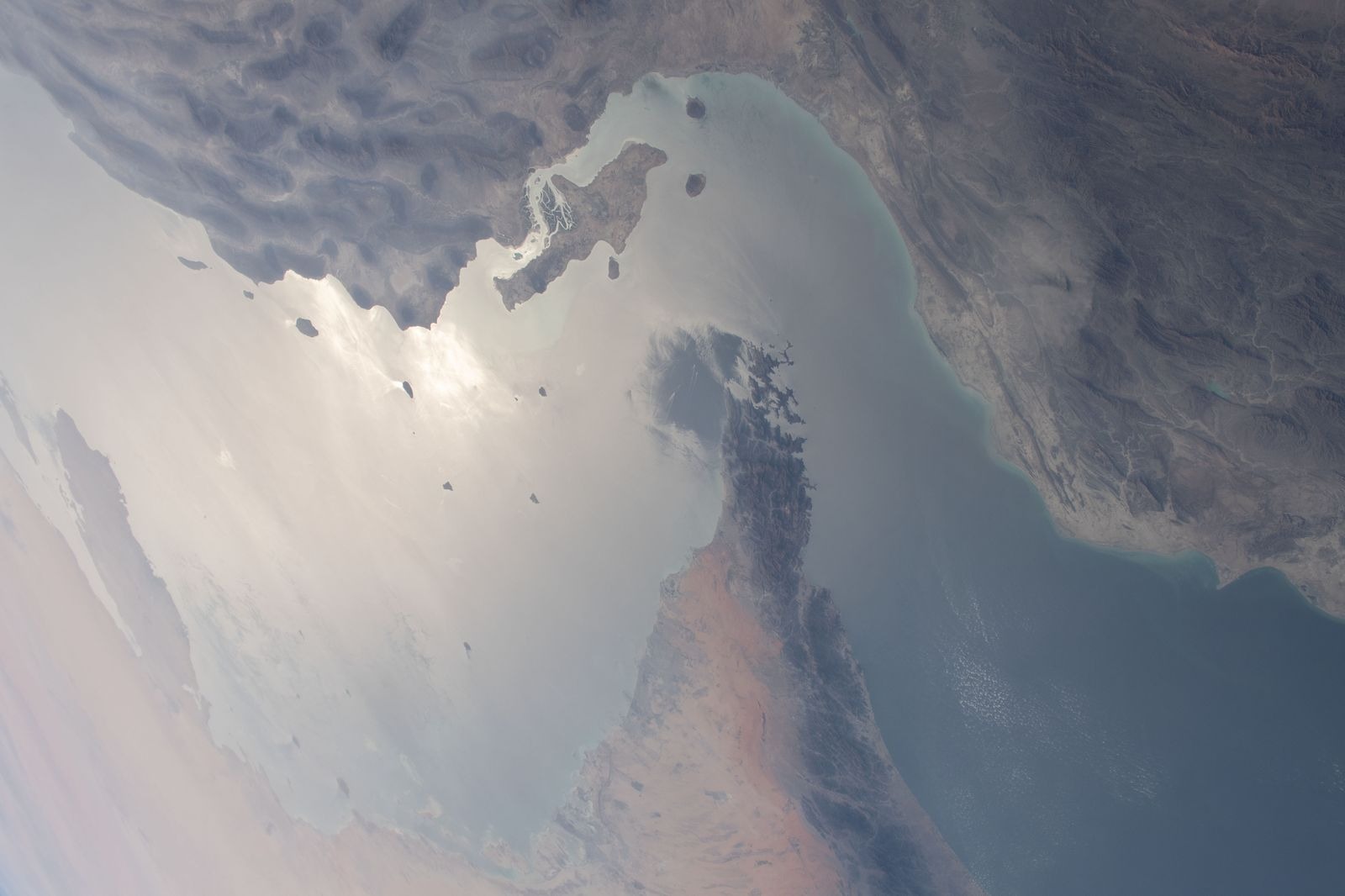
This is the first time in a war that began on 28 February that Iran has explicitly named Europe as a target zone, and that changes the geography of the conflict. Until now the fighting, the retaliation and the threats stayed inside West Asia; now every European capital that hosts an American base has a direct stake in a decision made in Jerusalem or Washington. The second reason is oil: the Strait of Hormuz normally carries around a fifth of the world’s oil consumption, and the strait is at the centre of both the war and the negotiation, with Iran restricting shipping and the United States blockading Iranian ports in return. Brent above $92 is the market’s verdict on how fragile that balance is. The third reason is the negotiation itself: the framework under discussion, Iran stops its attacks in the strait in return for the United States lifting its blockade of Iranian ports, collapses the moment either side chooses bombs over talks.
A caretaker’s gamble and a deterrence doctrine
The evening’s announcements form a single pattern. Geopolitically, Netanyahu is a caretaker with a lost majority, and the history of leaders in that position is that a war is the fastest route to an emergency government; which is exactly what The Hindu’s sources say he is seeking, and exactly what Eisenkot’s public warning is meant to prevent. Economically, Iran’s blockade of Hormuz and America’s blockade of Iranian ports are mirror instruments, and the oil price is the scoreboard. Historically, the war that began on 28 February has already killed a supreme leader and enthroned his son, Mojtaba Khamenei, who has ordered commanders to prepare a response “without geographic limits”; Rezaei’s European threat is the operational version of that order. And the diplomacy is the counterweight: Ghalibaf’s “sustainable deterrence” is Tehran’s way of saying it will live in a state of “no war, no peace” until a deal is signed, while Trump and Rubio argue in public over whether the economic campaign has already won. The cabinet order and the European threat are not two stories. They are the same negotiation, conducted with the instruments of war.
What a wider war would drag in with it
The first consequence of an expanded target list is that it is no longer only the region’s problem. European governments that host American bases, Britain first among them, given the reported aircraft move, would have to decide, in hours, whether they are parties to a war they did not vote for. The second is the Gulf: the states that host American bases across West Asia have spent eight months insisting they are not parties to the fighting, and a strike on a base on their soil ends that fiction. The third is the resistance front Ghalibaf named, Lebanon, Yemen and Iraq, whose groups entered the war in February and would be expected to enter it again. The fourth is shipping: the strait’s insurers, tanker owners and oil buyers have already lived through one blockade and one round of mine and missile incidents.
What happens if the Qatar track fails
The next days will test whether Wednesday was preparation or prelude. Watch for visible military movement after the cabinet order, and for whether Eisenkot’s government takes shape fast enough to constrain a caretaker. Watch for any contact between Vance and Rezaei, and for the next round of the Qatar talks, which mediators had scheduled for this week. Watch the uranium file: whether the rejected proposal to move the 60 percent stockpile abroad returns in another form, and whether the seven points are ever published. Watch the strait itself, where American forces say they are working around the clock, and the oil price, which has already moved above $92 on the news. If the Qatar track fails, Trump has said he is ready to return to war; if it holds, the cabinet order becomes a bargaining chip rather than a battle plan. The tanker war in the strait and the earlier American strike planning show how quickly preparation has turned into bombardment before.
What we agree on, and what remains open
Established
- Israel’s security cabinet ordered the military to step up preparations for a possible attack on Iran on Wednesday evening.
- Iran’s security chief Mohsen Rezaei warned that American bases involved in any renewed attack, from West Asia to Europe, would be legitimate targets.
- The Qatar-led diplomatic track is still running alongside the threats.
Contested
- Whether Israel intends to strike or is only preparing.
- Whether Netanyahu is acting from security logic or from political survival as a caretaker who lost his majority.
- Whether the threat to European bases is a real operational plan or deterrence theatre meant to raise the price of an American decision.
Still open
- What the cabinet directives actually order.
- Whether a caretaker prime minister can launch a new war.
- Whether JD Vance will meet Rezaei.
- What the “seven points” understanding contains.
- Whether the rejected uranium proposal is dead or a bargaining position.
What to watch
Questions, answered
Israel’s security cabinet ordered the army to step up preparations on Wednesday evening, according to Israeli media. Prime Minister Netanyahu governs as a caretaker after losing his parliamentary majority in October, and he has been pressing Washington for a new wave of strikes. The order came as Qatar-led talks to end the war continue, and as opposition leader Gadi Eisenkot warned Netanyahu not to deploy the military without a direct and immediate threat.
Security chief Mohsen Rezaei said every American base involved in an attack, “from West Asia to Europe”, would be a legitimate target, including bases in European countries and “certain islands” beyond missile range assumptions. Deputy armed forces chief Amir Kioumars Heydari added that Tehran has drawn up a target list beyond the areas hit in earlier fighting. The threat covers any base from which American aircraft take off to bomb Iran.
Qatar has offered a diplomatic track to end the war, with Pakistan hosting a June understanding in Islamabad. The framework under discussion would see Iran stop its attacks in the Strait of Hormuz in return for the United States lifting its blockade of Iranian ports. President Trump has said he will return to war if the track fails, while his secretary of state argues the economic campaign has already made large operations unnecessary.
The strait normally carries around a fifth of the world’s oil consumption, and it sits at the centre of both the war and the negotiation. Iran has restricted shipping through it, the United States enforces a naval blockade of Iranian ports, and parliament speaker Ghalibaf says the strait will never return to its pre-war status. Brent crude settled above $92 a barrel on Wednesday after the latest threats.